
VJMP Reads: David Seymour’s Own Your Future VI

A Liberal Vision for New Zealand in 2017

This reading carries on from here.

The fifth chapter in Own Your Future is ‘Welfare’. Here Seymour opens with what appears to be sympathy for the disadvantaged, telling a story about the children without shoes or food at Raumanga Middle School, before white flight took all the pakeha kids (including him) elsewhere. This doesn’t last long. Within a few paragraphs, he’s fuming about how welfare “saps the will to live”.

Seymour then tells a story about how Michael Joseph Savage, when he carried a table through the front door of the first state house in New Zealand, put that table down immediately after passing through that door. It’s not clear why this story is told here, because it doesn’t fit the rest of the section. It seems to simply fit Seymour’s narrative that anything done to help people is bad.

Like a 21st-century echo of Ebenezer Scrooge, Seymour decries the entire welfare system, going all the way back to 1937. The problem isn’t so much the usual right-wing canards of welfare queens and benefit fraudsters, the problem is that the welfare system is designed to “allow the disadvantaged to live full lives participating in equal footing in the community”.

In this section, the brutal and dishonest reasoning at the heart of neoliberalism is laid bare. Seymour makes a list of all of the problems in society and then blames them all on welfare, without providing any evidence or even so much as an argument that the two are connected. He lists a number of statistics about people on welfare, but provides no comparison to other times and places so that we can judge if those numbers are angstworthy.

Without a hint of irony, Seymour writes that “A Treasury report on life outcomes showed that at every stage of life, having parents relying on benefits predicted worse outcomes for children.” The fact that he conflates being on a benefit, rather than poverty, with being the cause of these poor outcomes, is the central error in Seymour’s reasoning, in the ACT Party’s reasoning, and is why the party can never and will never succeed electorally.

He talks about being on welfare as if it was a simple choice, and the man writing that is every bit the man writing about the horror of getting a tennis ball to the head. Seymour comes across as so out of touch that it’s almost comical, such as when he argues against the idea that “welfare is good for the people receiving it”.

The idea that welfare is bad because it makes people lazy is a fringe belief of the American Republican Party, considered gauche even by them, but it’s front-and-centre here. “Being out of work harms people, and more importantly it harms their children,” Seymour wails, crocodile tears spurting. One can easily imagine him as the overseer of a cotton plantation in the antebellum South, cracking the whip for his wealthy employers.

In an outburst of raw neoliberalism, Seymour quotes John Key when it comes to describing Working For Families as an example of “Communism by stealth”. Seymour goes as far as suggesting that not offering tax cuts when possible is equivalent to totalitarianism by stealth. Not ashamed of absurdity, he even accuses National, who slashed the welfare system so badly that we now have the developed world’s highest youth suicide rate, of not being opposed to Communism.

Laughably, Seymour claims here that ACT supports greater access to mental health care. Anyone who has been a mental health patient for long will know that the Fifth National Government slashed funding and access to mental health care, going as far as cutting benefits to severely mentally ill people – and the ACT Party supported them every step of the way. This is why there was a very strong correlation of -0.66 between voting ACT in 2017 and being on the invalid’s benefit (c.f. Dan McGlashan’s Understanding New Zealand).

It’s most notable that nowhere in this essay does Seymour mention the supply side of the welfare question. At no point does he touch on the poor wages in New Zealand, and at no point does he suggest that Kiwi employers ought to do their bit by offering a fair wage. Employers are completely exempt from playing any role in motivating workers to work by offering them a wage that they can live on or buy a house with.

*

If you enjoyed reading this essay, you can get a compilation of the Best VJMP Essays and Articles of 2017 from Amazon for Kindle or Amazon for CreateSpace (for international readers), or TradeMe (for Kiwis).

Writing Conduct Disorder

Unlike most of the conditions in this book, Conduct Disorder (CD) is only diagnosed in children and adolescents. As the name implies, people who get diagnosed with it conduct themselves in ways that the clinician considers disorderly, in particular when it comes to respecting the rights of other people. This article looks at how to write believable and interesting characters with the condition.

The most important thing is to distinguish CD from Antisocial Personality Disorder. CD is the developmental precursor to Antisocial Personality Disorder – it can only be diagnosed in those too young to have a diagnosis of Antisocial Personality Disorder (i.e. 18 years of age). It is therefore a developmental condition.

One of the key symptoms of CD is a lower level of fear. This will express itself in a wide variety of ways.

The most notable way that a lower level of fear expresses itself in young people is when it comes to transgressions. A young person has not yet had time to internalise knowledge about the effects that their actions have on other people. They therefore have to learn to be afraid of punishment. This corresponds to Level 1 of Kohlberg’s Scale of Moral Reasoning.

A young person with CD will have a hard time internalising rules about those transgressions, in part because they don’t feel much fear, and so don’t have as much inhibition when primitive impulses towards violence and destruction start playing up on them. Because of this, they regularly violate boundaries relating to other people’s personal space and property.

Another way low levels of fear find expression is in transgressions against one’s own health. Young people already play fast and loose with their health when it comes to having a good time; young people with Conduct Disorder are nihilistically reckless. If the protagonist of your story has Conduct Disorder, chances are that they will be into the booze, weed and pills from their early teenage years.

A character with CD will likely be something of a daredevil. If they are male, they might find themselves drawn to racing motor vehicles or street fighting; if female, to shoplifting and starting trouble between men.

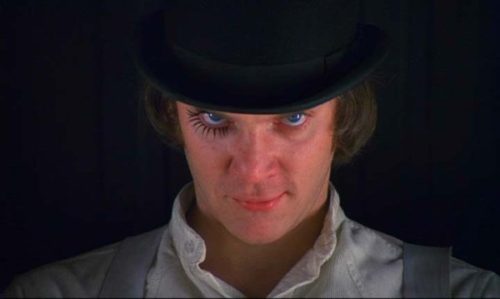
A story with a protagonist who has Conduct Disorder might read like J. D. Salinger’s Catcher in the Rye. Care must be taken here, therefore, not to sound cliched. Anti-hero stories mostly appeal to the same young audience, because they will most readily identify with the spirit of rebellion expressed by such a character. People with Conduct Disorder push the boundaries, for good or ill.

Punk stories, in particular cyberpunk, often feature protagonists who would appear (at least from the authorities’ perspective) to have Conduct Disorder. Young men like John Case of Neuromancer or Jonty Gillespie of The Verity Key are unrepentant criminals, usually because they have to be in order to make a living in the cracks of the edifice of respectable society.

After all, one man’s Conduct Disorder is another man’s righteous rebellion against a tyrannical oppressor. So a character with the condition might be the perfect choice of protagonist if your story involves going up against a large, faceless, totalitarian entity. After all, most of us have a point which, if pushed beyond, we will no longer behave in a co-operative manner.

If a character with CD is pitted against a malicious, evil entity (corporation or government), much of the difficulty in writing your story will come from making that entity unsympathetic enough that the reader readily comes to identify with that character. The more credibly this can be done, the less that character will look like a CD sufferer and more like a righteous hardarse.

Unsurprisingly, Conduct Disorder is highly correlated with all forms of early childhood abuse. A character with the condition might have learned by way of mimicry of their parents that violence and cruelty are perfectly acceptable ways to advance one’s interests, and that fear is for the weak and an invitation to be destroyed.

So if you are writing a character with CD they might not necessarily be a cool, daring and adventurous antihero. Realistically they are more likely to be somewhat brutal. If your protagonist encounters such a character, they might find them intimidating – the class bully, or local street thug.

If your protagonist encounters a character with CD, they could respond in a wide variety of ways, depending on how they themselves are (and their decision will be very revealing to the reader). They might consider that character a cool rebel to be befriended, they might consider them a danger to be avoided, or they might consider them a little brat to be corrected.

Conduct Disorder often occurs at the same time as Attention Deficit Disorder. It’s likely, therefore, that any character with it will have extreme difficulty at school, at work, or with either friends of family. Their life will probably be very chaotic, and will considerable Police or social worker involvement.

*

This article is an excerpt from Writing With The DSM (Writing With Psychology Book 5), edited by Vince McLeod and due for release by VJM Publishing in the summer of 2018/19.

The New Zealand Government Has Been Separating Children From Their Cannabis-Growing Parents for Decades

This is no worse than what our own Government is doing to us

Today’s mass media assault on consciousness involved emotional images from America of Mexican children in cages. The ensuing outrage was based around the fact that when a Mexican family is apprehended crossing the American border illegally, the children are temporarily separated from their parents. Although this is regrettable, what the media is ignoring is that the New Zealand Government has been doing the same thing to its own citizens for decades.

For one thing, it’s standard practice for the New Zealand Government to separate children from their parents if those parents are going into custody for breaking the law. In this regard, the New Zealand Government’s normal actions are no better than what the American Government is doing. Even worse than this is the fact that many of those parents are going to jail for offences that don’t harm anyone, unlike (arguably) illegal immigration.

The fact that cannabis is a medicine is a fact near enough to universally acknowledged by the young people of the world, even if Baby Boomer politicians have been slow to understand it. However, cultivation of it remains a crime punishable by up to seven years imprisonment in New Zealand, despite that the plant has a wide range of medicinal effects and is used all over the country to alleviate needless suffering.

Because cannabis is so good for alleviating suffering – taking away pain, nausea, insomnia among other maladies – people continue to grow it, despite the law. But because of the law, a significant number of these people end up being apprehended by Police and sentenced to prison.

Many of the medicinal cannabis growers who have been put in prison over the past 40 years have had children. Those children were forcibly separated from their parents by the New Zealand Government for the sake of enforcing a law that should never have been a law.

So all the perfectly natural dismay that Kiwis have been induced to feel at what the Mexican children at the American border are forced to endure – a traumatic forced separation from their parents as a consequence of an arbitrary law enforced by armed men – could just as well arise as a result of thinking about what Kiwi children have to go through as a result of cannabis prohibition.

In fact, our own children have it worse, because they will often not get to see their parents again for a long time.

So if people in New Zealand are going to get upset because of an outrage that the global corporate media manufactured in order to target a conservative American President, let’s get equally upset about similar and equally evil actions in New Zealand.

Every time a New Zealander gets put in prison for a cannabis offence that has harmed no-one, leaving a child on the outside who is now missing a parent, we ought to react with the same outrage towards our own Government as we had today for the Trump Administration. If we’re going to expend energy on outrage let’s at least direct it somewhere where it can do some good.

*

If you enjoyed reading this essay, you can get a compilation of the Best VJMP Essays and Articles of 2017 from Amazon for Kindle or Amazon for CreateSpace (for international readers), or TradeMe (for Kiwis).