
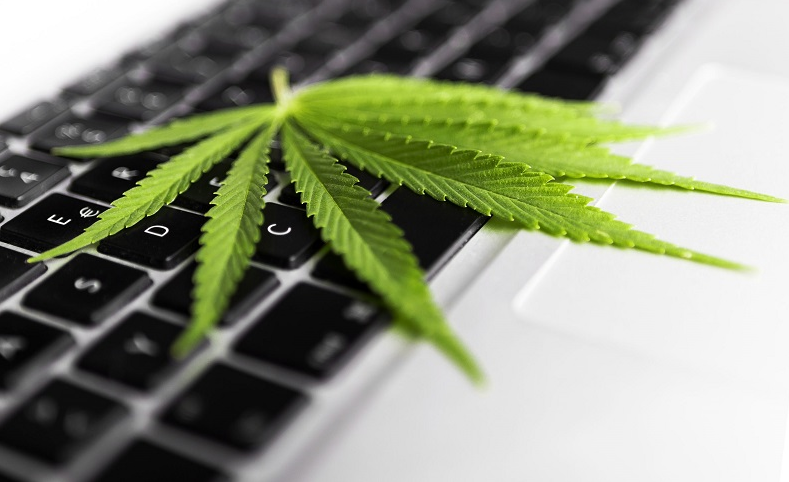
The Case For Cannabis: Cannabis Meets the Industrial Needs of This Century

For better or worse, humans will always use drugs to help them cope with the demands placed on them by the daily need to survive. Whether to help focus, relax, kill pain or to see beyond, people will always find reasons to want to change their perceptions so as to best meet the demands placed on them. This article will argue that cannabis law reform is superior to prohibition when it comes to meeting the industrial demands of our time.

During the Age of Exploration, the drug of choice was alcohol, usually rum in particular. Rum had a high alcohol volume and was easy to keep. For men spending months or years at sea in ships, rum offered the best bang for the buck. Wherever European sailors took harbour, the rum trade followed. Names like Port Royal and Kororareka became synonymous with drunken debauchery and destruction.

In the first half of the 20th century, we ran out of places to explore and started killing each other over what had been discovered. This required a combination of drugs, and these – because of the necessities of wartime – were indulged in without shame or sanction. Alcohol was still used to a great extent, particularly for its ability to give men the courage to face enemy gunfire, but use of opiates and tobacco were also widespread, the former on account of its use in physical medicine and the latter on account of its use in psychological medicine.

In the second half of the 20th century, the focus shifted from killing the enemies of liberal capitalism to making money. During this time, people were mostly tasked with social office work. This required more tobacco, but also more caffeine. It was here when the idea of becoming “caffeinated” to deal with the pressures of the day came from. The idea was that the buzz from caffeine would make the inherently safe and secure office jobs less boring.

So far this century, a lot of this work has become antisocial. This has necessitated the rise of caffeine, in order to concentrate for longer periods of time despite low levels of stimulation. This rise has been aided by the increasing unfashionability of tobacco smoking, so that caffeine has now become the go-to drug for anyone wanting more yang energy.

It’s not easy to forecast the precise details of the future, but if one understands the basics of a subject it’s possible to forecast general trends. What seems apparent, in the case of the Western World, is that cannabis has come to replace some of these other drugs as the one that best helps people meet the demands of the workplace, and will continue to do so.

Because of automation, it’s no longer as important for the workforce to be attentive, alert and focused. This is still important for certain roles, but those roles have become an ever-diminishing proportion of the workplace. The roles that have become an ever-increasing proportion of the workplace are those in the creative professions, and the demands of these roles are compatible with cannabis use.

It’s widely known and accepted that much of the world’s production of quality music is made by people on drugs, and this is true to a lesser extent of literature as well. Cannabis (especially cannabis sativa) helps with the process of creativity by breaking down old conditioned pathways of thought and replacing them with novel ideas. This has made it a favourite substance of people in many creative occupations – not just music and writing but also design, cuisine, hospitality and programming.

In order to meet these industrial needs, we will not only need to legalise cannabis, but to go further. At a minimum, cannabis will need to become legal so that people who need to use it for the sake of their work can do so. For the sake of creative occupations, it will need to be gently encouraged in the workplace in the same way that coffee is encouraged in offices, and tobacco is encouraged in factories, already now.

The world is changing faster and faster, and as a result of this people find themselves confronted with original situations ever more frequently. These original situations demand original ways of thinking. The desirable qualities for employees of the future will be flexibility, originality and breadth of thought, instead of the obsessive focus and repetition that has characterised the workplaces of the past. These qualities are well enhanced by cannabis, which makes it a good choice for the workplace of the future.

*

This article is an excerpt from The Case For Cannabis Law Reform, compiled by Vince McLeod and due for release by VJM Publishing in the summer of 2018/19.
The Case For Cannabis: Governments Shouldn’t Conduct Wars Against Their Own People

The War on Drugs is a war that governments of the world fight against their own people, supposedly to protect people from the harmful effects of these substances. In the vast majority of cases. such governmental measures cause more harm than they solve. This essay will argue that cannabis prohibition is necessary because it is immoral for a government to conduct a war against their own people without their consent.

The War on Drugs was ramped up to full aggression by Richard Nixon in the late 1960s and early 1970s. Although the majority of recreational drugs were already illegal, the enforcement of them was not brutal until Nixon entered the scene. With the increase in aggressive drug law enforcement came an increase in the incarceration rate of Americans – now four times higher than it was in 1972, even when adjusted for the increase in population.

Nixon’s former domestic policy chief, John Ehrlichman, is quoted in a Harper magazine interview saying “We knew we couldn’t make it illegal to be either against the war or black, but by getting the public to associate the hippies with marijuana and blacks with heroin. And then criminalizing both heavily, we could disrupt those communities.” This quote encapsulates the entire logic of the War on Drugs.

The truth about the War on Drugs is that governments don’t really fight this war against drugs, they fight them against their own people who use drugs. The War on Drugs is really a war against their own people.

In particular, the War on Drugs is a war against those the ruling classes want to destroy. As is clear from the Ehrlichman quote above, the ruling party is not representative of the people. They have their particular enemies, and in the case of the Military-Industrial Complex that profits immensely from defence contracts and from endless war, peaceniks are the enemy.

Likewise for blacks: the Prison-Industrial Complex demands a steady supply of slave workers to labour in prisons. This prison labour is immensely profitable for the prison owners, who occupy the same role as the slave plantation owners of the antebellum American South. So a draconian crackdown on drugs that were known to be used heavily by blacks had the calculated effect of drawing large numbers of them into the prison system.

The reason why the security services are divided into the Police and the Army is because the Army is for fighting wars, and the Police for keeping the peace. When the Government sets the Army onto the people, it’s usually a sign that the Government is rotten to the core and probably not far from collapse. So when the Police are also fighting a war against the people on behalf of the Government, it’s a very, very bad sign.

Everyone knows that the Government isn’t really a protective, benevolent force. Everyone knows that Western governments are not representatives of their people, but rather of whatever corporate interests have declared themselves to have a stake in the country. The point is, this should not be accepted, and governments should never act to the detriment of their own people for the sake of corporate profits.

Conducting a War on Drugs makes it possible for the ruling classes to divide and conquer the people, by way of subjecting some of them to harsh legal punishment and not others. This is a grossly anti-democratic phenomenon, and should not be allowed.

Cannabis prohibition should be repealed because the Government should not fight a war against its own people. The War on Drugs is a war that the Government fights against the same people that the Government is supposed to represent and protect. It’s time for a ceasefire.

*

This article is an excerpt from The Case For Cannabis Law Reform, compiled by Vince McLeod and due for release by VJM Publishing in the summer of 2018/19.
The Four Elements of Health

Alchemism holds that the metaphysical world is comprised of four masculine elements of clay, iron, silver and gold. Because we can apply the maxim as above, so below, we can reason that there are patterns within the physical world that reflect this. This essay look at personal health through the prism of the four masculine elements.

The first element of clay relates to eating well. There are two aspects to this.

Fundamental to physical health is simply getting enough food. This fact has long been forgotten in the West on account of our centuries of abundance, but it’s still a biological reality for all creatures. The primary survival challenge for creatures similar to us in a state of Nature is to gather enough food resources to meet their metabolic needs. If this is not possible it will lead to hunger, then weakness, then death.

Another important aspect is that one gets the right food. It’s not simply a matter of filling one’s stomach: one must eat food that is actually healthy. Acting correctly at the level of clay will see a person avoid sugar and fatty cheeseburgers in favour of fruits, vegetables and home-cooked meals. Someone who has mastered life at this level will act as if food is medicine.

Iron relates to physical discipline in the pursuit of health. There are also two aspects to this.

Most obvious is exercise. The body has to be used, otherwise it will fall into decay. Humans were very active during the biological past, and this is reflected in the biological present. Properly applying the element of iron to one’s health means that one will get up and stay fit, whether through walking, running, swimming or biking. thereby one becomes physically hard, like iron.

Iron is the masculine element, and as a consequence it is the element that imposes boundaries. Therefore, part of the realm of iron is preventing unwanted substances from entering one’s body. This is obviously true in the case of poisons, but become trickier when applied to drugs and medicines. Acting correctly in the element of iron will see a person keep harmful things out of their body.

Silver relates to intellectual exercise. This shares elements of both clay and iron, and like clay and iron there are two distinct aspects to silver.

The former relates to what you put into your head. This relates to quality of information. A person acting at the level of silver will take care to not read low-information sources. They will tend to avoid gossip mags and FaceBook. Someone succeeding at this level will read full books from start to finish, and will cross-reference claims made in the media with other sources before believing them.

The latter relates to the discipline necessary to keep using the mind. The brain is like a muscle: you will lose it if you don’t use it. It’s important to keep reading everyday, and thinking about what one has read, as well as challenging what one thinks is known. Part of the realm of silver is intellectual debate, and a healthy individual at the level of silver will be able to do with words what the man of iron does with a sword.

The element of gold relates to spiritual exercise. Again like the previous elements, this is achieved in two ways.

The first is to keep incorrect thoughts out of one’s head. Gold is different to silver here because the realm of gold deals with frequencies, and not information like silver. So this does not relate to keeping bad information out of the head, but rather bad frequencies. Correct application of gold to health involves avoiding people and situations that cause bad energies, as well as patterns of thought that lead to same.

The most important spiritual exercise, of course, is meditation. Only through meditation does an individual arrive at the peace of mind and self-knowledge necessary to make correct decisions. Meditation is the final transmutation of the previous three elements into the gold of enlightenment. This brings what is usually referred to as “mental health”, involving a calm acceptance of things.

These four elements combine to create a complete picture of health. An individual who succeeds in applying these four elements to their health will be physically, mentally and spiritually healthy.

*

If you enjoyed reading this essay, you can get a compilation of the Best VJMP Essays and Articles of 2017 from Amazon for Kindle or Amazon for CreateSpace (for international readers), or TradeMe (for Kiwis).

The Bogan-Faggot Spectrum

This essay introduces a new concept in psychology: the B-F spectrum. This is short for Bogan-Faggot spectrum, which is a way of measuring maladapative personalities on a scale from 1 to -1, with a score of 0 a good healthy medium that will allow for well-adjusted behaviour in most instances.

At one far end of the B-F spectrum is the Bogan Pole, represented by the extreme value of 1. This is essentially the pole of maladapted masculinity, or an excess of masculinity. This is so named after the hyper-aggressive, low-intelligence bogans that make life really hard for working-class people, by causing society to think of them when they think of the working class.

Here we find a masculinity so stubborn and unyielding that parents regularly hit and verbally abuse their children, reasoning that the children need to grow up “hard” in order to cope with the challenges of life. At the Bogan Pole, all emotional expression is for faggots. Expressing an emotion is a sign of weakness because it is evidence that one has lost one’s self-composure.

At the Bogan Pole, there is to be no similarity between men and women. Men are hard, women are soft, end of story. There are a set of actions and displays that are only permissible for men, and there are others that are only permissible for women. Any man or woman who performs an action or display characteristic of the other gender is subhuman.

At the other end of the B-F spectrum is the Faggot Pole, represented by the extreme value of -1. This is the pole of maladapted femininity, or excessive femininity. It is named after the hyper-passive-aggressive, overly sensitive faggots that make life really hard for homosexual people, by causing society to think of them when they think of homosexuals.

This is a kind of toxic femininity that demands that everyone and everything be forced to be equal. It is a kind of slave morality, in that it demands that everyone be meek and self-effacing, lest they be shamed into it by the collective. At the Faggot Pole, all assertive expression (such as the setting of boundaries) is for bogans. Anyone who has a high self-esteem has to be ripped down the level of the collective.

At the Faggot Pole, there is to be no difference between men and women. An individual can possess any characteristic whatsoever, or fail to possess any characteristic whatsoever, and still assert that they are either man or woman (or anything else). Anyone who claims otherwise is a filthy bogan, because they are setting boundaries and that is masculine.

Also at the Faggot Pole is a relaxed attitude to sexual abuse of children. In much the same way that people at the Bogan Pole, being hyper-masculine, don’t consider violence against children to be a bad thing, neither do people at the Faggot Pole, being hyper-feminine, consider sexuality towards children to be a bad thing. People at this pole are far more likely to believe that they are doing children a favour by molesting them.

The B-F spectrum is an alchemical triangle in the sense that the healthiest behaviour lies in the middle. Both the Bogan Pole and the Faggot Pole represent extremes of behaviour that are not well adapted to the challenges that our society offers. The central position, represented by 0, refers to behaviour that is neither hypermasculine nor hyperfeminine – just balanced, intelligent, appropriate behaviour.

It could be that some situations genuinely demand the taking of a particular position on the B-F spectrum, or at least one close to one of the poles. If an individual goes to war, it makes sense to take a B-F position closer to 1 on account of the violence and deprivation that they will encounter. If an individual makes love, it makes sense to take a B-F position closer to -1 on account of that one is in a situation where boundaries are dissolved.

It’s worth noting that the poorer a person is, the more likely they are to approach the Bogan Pole, and the wealthier a person is, the more likely they are to approach the Faggot Pole. This is a long-observed phenomenon. The most common downfall for any man mighty enough to make himself into a king was having a son who becomes effeminate as a result of the wealth and comfort in which he lives, and who thereby becomes too weak to maintain his position.

There is, as of yet, no questionnaire that will estimate where an individual is on the Bogan-Faggot spectrum. Future research will have to identify variables that correlate with excessive masculinity or excessive femininity, and from there it will be possible to develop a set of questions. In any case, intuitive estimations might still have some use.

*

If you enjoyed reading this essay, you can get a compilation of the Best VJMP Essays and Articles of 2017 from Amazon for Kindle or Amazon for CreateSpace (for international readers), or TradeMe (for Kiwis).