The Dual Aspect Of Self

In any discussion of the psyche, there is reference to two primary aspects of the self. There are possibly other levels or gradations, but for our purposes here, I just want to elaborate on the two most commonly encountered groupings of the self as relevant to the human level. I intend to draw comparison between the True Self and the False Self, that latter of which is sometimes referred to as ‘ego’ or ‘small self’.

I don’t want to imply that this sense of self is false in the sense that no experience gained from that dimension is useful or valid, as limitation can certainly be learned from. I mainly wish to communicate that the False Self is a very limited and fragmented aspect of who we are, while True Self, by comparison, is where the energetic majority of our true identity naturally resides, whether we recognize it or not.

While we refer to the views of the False Self as illusory or false, I find it more useful to emphasise not so much the falsity of the aspect, but how limited in view the False Self is.

The view from the perspective of False Self is the internal modelling of how we appear in the world on the most superficial level, namely that we are a separate, individual ‘someone’ going about our business in time and space, which of course, is what it very much looks like at first glance. This view has been reinforced culturally, particularly in the West, although to some extent in most times and places.

The attributes of this view of the False Self are marked by a world of suffering and feeling alone, fearful, limited or trapped. They typically include some sense of being contracted, deluded, conflicted and existentially separate. It is not all misery, because this also accommodates thrills, exhilaration and an unbalanced sense of reward when our ego is seemingly approved of, enhanced or complimented. The view of the False Self is the basic platform from which the majority of human delusion operates.

The True Self, by contrast, is that which is naturally present when identity is withdrawn from the False Self. This can happen to a greater or lesser degree, and is often spontaneous and unpredictable.

Some people refer to the True Self as pure awareness, consciousness or any number of other names. The names really don’t matter here, because the nature of the True Self is categorically beyond language. When you touch upon it for the first time, this point cannot be missed. For our purposes, the only name we need here is one that will sufficiently distinguish it from the False Self.

When our identity has been reclaimed as True Self, it presents as expansive, peaceful, authentic and quite viscerally connected to Being. It accommodates all experience, but does not get caught up in any aspect of it. The True Self understands that experience doesn’t diminish or enhance it, so no sense of ‘self’ is invested in outward ventures. There is no further question as to the nature of our identity – it becomes a matter of immediate fact rather than theory.

How is it that we came to feel so separate in the first place when all that is really possible is the unity of being? This is unknown. Some have speculated a multitude of reasons such as an original fall from grace, humanity adopting language, or the divine wishing to explore itself eternally through lower, simpler forms in order to come to a complete knowing of itself through its various manifestations.

Perhaps it is a path of eternal discovery, or perhaps there is even some kind of progressive path hidden behind higher dimensions of illusion. I really wouldn’t know. I am only comfortable talking about that which I have touched upon experientially.

What I can talk about is these two primary aspects of the self, and their phenomenological investigation. One is highly limited, therefore affording a very closed and limited perspective of separation, whilst the other is connected, expansive, truth-congruent and holds a quality of depth that runs deeply into the source of what nourishes us energetically from within.

I like the image of a tall medieval tower fortress.

The sky above and all that it encompasses is the Source, The Ground of Being, or Reality. The perspective of the False Self is a little like a thin arrow slit somewhere toward the lower portion of the tower. From this narrow perspective, only a small amount of light is available, and only a sliver of the outside world can be apprehended, and not clearly at that. The direction is fixed, so alternative perspectives cannot be accommodated.

The view from the True Self, on the other hand, takes place atop the tower where the maximum view in all directions is afforded. Since there is no roof, you are as connected to the open sky as you can be. Nothing separates you from it, and your view over the parapets is unobstructed. A conscious reconnection with this expansive sense of self is sometimes referred to as ‘awakening’ or ‘enlightenment’, which are words that have been loaded with unhelpful implications.

Before I proceed further, I would like to elaborate on this point. Occupation with the True Self does not mean that you become holy, righteous, omniscient or omnipotent. We do not become our personal version of God. This is actually the furthest from how this works. False Self imagines ascension to godhood, while that which is true in us responds naturally in prostration before divine unity. The view of the False Self is tantalised by its idea of ascension to godhood, as an ego.

If you were a fish in the ocean, and you were limited by an egoic point of view, at some point you become taken with the notion of becoming the biggest fish in the ocean, able to dominate and exert its will over any other creature in the ocean. This is predictable, because it is inherent in the nature of ego to divide and conquer.

This view is limited at best, and at worst, immature and juvenile. Here we are coming back to the limitation of the view of the False Self again – this ego fish only conceives the solution to smallness and lack being upscaled to an imaginary quest for bigness and abundance. This is not an aspiration to transformative change, but a mere transposition of confusion from one scale to another.

The immensity of unity does not cater to egos, big or small. The True Self has no overlapping interests with the False Self. Everything that the False Self comes up with is a warped fantasy, totally removed from true abundance. The bigger picture is that this ego-ensnared fish is not at all separate from the totality of the ocean, the source of its life and being.

Because this understanding has nothing to offer a power-hungry, self-identified ego, the prospect of unity or nonseparation offers no appeal to the fish. If something is available to all people equally, ego cannot see its value. This is why to the False Self meeting a Hollywood celebrity is viewed as special while seeing the Moon in the sky is not, despite the Moon being far more famous throughout history than any celebrity. Some people have been able to meet this celebrity, while others have not. Nearly everyone, poor, wealthy, popular or friendless, gets to see the Moon at some point.

The vast majority of humans have been prey to the same predicament as this imaginary fish for centuries. The False Self has a pattern of encouraging derision toward people who have reconnected with being as pretenders to the throne of godhood who fail to deliver, and therefore ought to be scoffed at and ridiculed. Either that, or it worships them, aspiring to what it imagines them to have achieved.

This is because ego doesn’t see reality, it only projects other egos. It sees through its own filters, obscuring reality.

There is nothing to ridicule in being connected to the depths of your being. It is not a personal claim to godhood. Immodesty is something we quite willingly leave at the door when we retire from the demands of ego. We relax in the face of it. The True Self knows that there is no possibility of another being superseding another in worth. This is an ego game, and the play is very limited, which is why we must eventually come to find it tiresome both in ourselves and others. This pain is a grace that spurs us on to a more mature view of reality, along with our place within it.

I mentioned earlier that the terms ‘awakening’ and ‘enlightenment’ are somewhat overused, and I don’t believe these terms are necessarily helpful in this process. When we are talking about this, we aren’t talking about something that one person has access to while another doesn’t, or something that someone else has earned or been granted, while another has not.

In many important ways, Reality is quite ordinary in its nature – its miraculous gift is to be simply what it is. The terms of ‘awakening’ and ‘enlightenment’ pertain to a state of being, not a state of having. To recognise that which is already present and available is the culmination of the spiritual project, at which point it can be dispensed with.

Our true nature actually involves effortlessness. When we have crossed the river, we don’t need to go to the effort of carting the raft around on our backs. We do not dispense with being human, instead we begin to learn what being human means from a whole perspective that connects us consciously to Spirit and includes us in our human form, even with the view of the False Self not needing to be deliberately excluded.

Awakening does not produce gods or hyper-evolved supermen. People who have experienced a view of their true nature are still subject to the same range of potential errors as anyone else. They can still make idiots of themselves, they can still temporarily dip into unconscious behaviours, and even make choices that hurt other people.

We are not perfected in awakening to our True Self.

Sometimes awareness participates only in awareness, and at other times awareness can participate quite devotedly (or distractedly) in the contents of awareness by way of forms, thoughts, and other ephemera of the soul. There is no shame in this, only learning and the inevitable return to Truth. Distraction seems to be as much a part of awakening as awakening itself, in the same way that you can’t learn to bake a cake skilfully if there is not also the possibility of baking a cake unskilfully.

I think it would be more helpful to suggest that any glimpse of awakening however brief or minor, contributes to something I call operational clarity. This is how we come to the beginning of where we need to be if we are in recognition of our involvement in our natural identity as the True Self.

In this manner, we have a deeper and broader field of perspective to draw from, what others have referred to as ‘the thickness of the now’. The limited perspective of False Self is possessed of an exceptionally narrow sliver of now, which is why the decisions that come from it are generally unskilful, short-lived and operationally confused. Those decisions often lead to suffering.

The perspective of the awakened True Self, while not necessarily one of all-knowing godhood, is nevertheless one born of an awareness in a thicker now moment, allowing our choices to be naturally wise, spontaneous, and clear of purpose.

The ongoing challenge is keeping the mind and heart clear of obstruction, not so that we can be wise, but that universal wisdom may flow through us. We can’t possess it. Awareness, Source, God, Dao – call it what you like, only wants to give more and more of itself, so we never need to pretend we own it.

Our living birthright is also our living claim to un-specialness, from the perspective of ego. As long as we think we want something because it is special, or reserved for a select few, you can be sure you have revealed more fantasy on the part of the False Self.

*

Simon P Murphy is a Nelson-based esotericist and philosopher, and author of His Master’s Wretched Organ, a brilliant collection of weird fiction stories.

*

If you enjoyed reading this essay/article, you can get a compilation of the Best VJMP Essays and Articles from 2021 from Amazon for Kindle or Amazon for CreateSpace (for international readers), or TradeMe (for Kiwis). Compilations of the Best VJMP Essays and Articles of 2020, the Best VJMP Essays and Articles of 2019, the Best VJMP Essays and Articles of 2018 and the Best VJMP Essays and Articles of 2017 are also available.

*

If you would like to support our work in other ways, subscribe to our SubscribeStar fund, or make a donation to our Paypal! Even better, buy any one of our books!
Diversity Fatigue

A new psychiatric condition has befallen Clown World: diversity fatigue. Diversity fatigue is believed to affect the majority of Westerners at time of writing, but is especially strong in major metropolitan centres like London, New York, Paris and Los Angeles. It’s also strong in consumers of mainstream corporate media. This essay explains.

The simple way to understand diversity fatigue is that it’s like future shock but for demographics. Like future shock, it’s a state of becoming mentally and physiologically overwhelmed by reactions to undesired change. The difference is that diversity fatigue is caused by long-term exposure to high levels of tension brought about by diversity.

Diversity of races and cultures means diversity of moral values. This demands greater energy expenditure as each individual has to remain aware of a multiplicity of different ways of doing things. Instead of being able to relax and assume that the person one is interacting with is on the same wavelength, one must constantly expend energy on determining what might offend them.

The major symptom of diversity fatigue is withdrawal.

This initially manifests as a kind of learned helplessness. This occurs when people realise that they can no longer escape diversity. After years of seeing one’s social environment become more diverse and, at the same time, become more violent, insecure and chaotic, people start to tire of new diversity initiatives, and of seeing diverse faces in public areas.

The most acute form of learned helplessness occurs when people realise that diversity is being pushed on them by powerful forces that can barely be comprehended, let alone resisted. People become NEETs, or unhinged conspiracy theorists, when they realise that diversity is a weapon wielded against advanced societies by globohomo.

Understanding the truth, but not being able to speak it, people surrender. Not knowing what sort of humour is still politically correct, people stop making jokes. On a micro level, the individual begins to withdraw from their immediate environment, and retreats into their own heads. This process is often accompanied by intense dissociation.

Withdrawal also occurs on the macro level, with people physically moving away from diversity (usually by moving from an urban to a rural area). Some describe this as ‘white flight’, but it isn’t so much a race-based pattern as a wealth-based one. Wealthy browns and blacks tend to get out of the ghetto as fast as they can, whereas working-class whites tend to get stuck there themselves.

There are several major causes of diversity fatigue.

One of the most obvious is the increased demand on mental energy from being exposed to foreign languages, cultures and moral schedules, sometimes multiple such. A person has to strain their attention in order to determine which language is being spoken, or which cultural or moral values are currently prevailing, which costs energy.

This process is amplified when the fashionable classes invent new words, or moral imperatives, that everyone has to keep up with or be shunned from society. The New Zealand ruling classes are doing this right now by turning the local dialect of English into an English-Maori creole, and then ostracising anyone who can’t or won’t speak it, inevitably accusing them of racism first.

Related to this are the increased mental energy demands from exposure to all manner of novel threats. Some of these threats are physical, in the form of violence or theft, but others are social, such as threats to one’s reputation if one doesn’t keep up with the latest moral fashions. Because diversity usually brings with it higher levels of violence or property crimes, people in diverse societies are forced to spend extra energy maintaining vigilance.

Other energy drains come from demoralisation.

The major source of demoralisation in Clown World today comes from constantly being called racist by authority figures. In this regard, racism serves the same niche that sexual desire served 500 years ago – an excuse that authority figures use to browbeat us into submission. Where the medieval priest told everyone they were evil because they had sexual thoughts, now our moral leaders tell everyone they are evil because they believe in racial differences.

This relates to the other major source of demoralisation: all the lies one is asked to accept. Every honest person knows that different races have different gene frequencies, and that human behaviour patterns are mostly genetic, and therefore different races naturally have different behaviour patterns. It’s humiliating to have people constantly demand that one ignore the evidence of one’s own eyes, and pretend that human biodiversity isn’t real.

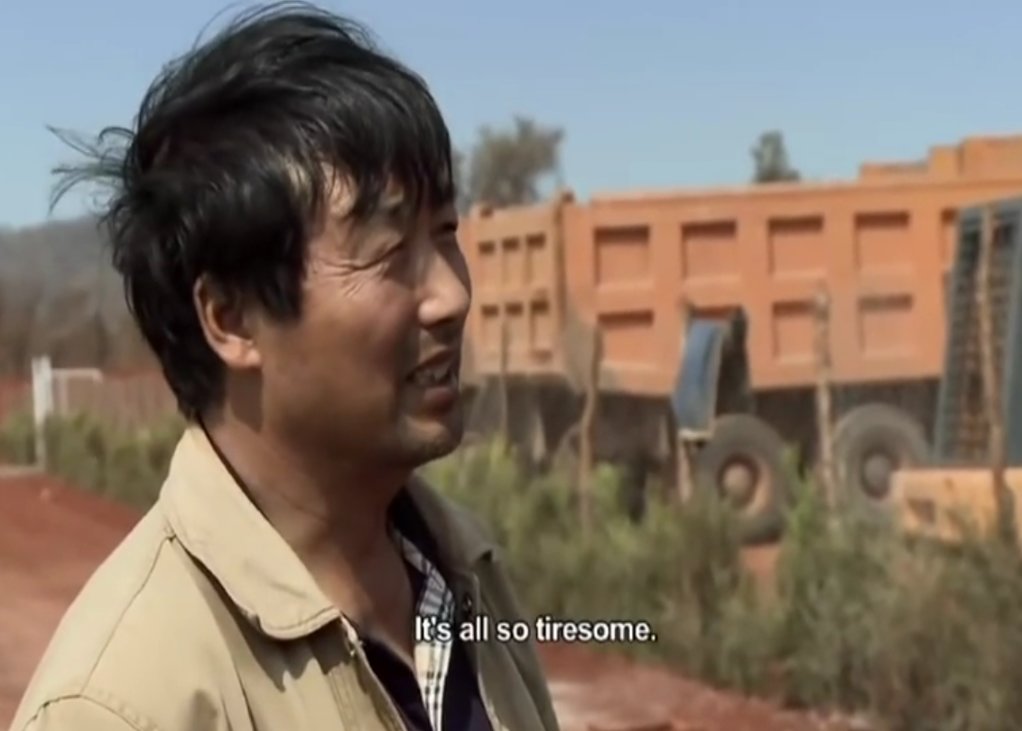
Physiological exhaustion and demoralisation combine to give us the ever-present “It’s all so tiresome” mindset that is true diversity fatigue.

Unfortunately for us, our rulers appear to have understood that diversity makes the populace fatigued and thereby less willing and able to come together to resist exploitation and injustice. Amazon understands that diverse workplaces are less likely to unionise, and by a similar logic, diverse electorates are less likely to oppose their ruling classes.

*

If you enjoyed reading this essay/article, you can get a compilation of the Best VJMP Essays and Articles from 2021 from Amazon for Kindle or Amazon for CreateSpace (for international readers), or TradeMe (for Kiwis). Compilations of the Best VJMP Essays and Articles of 2020, the Best VJMP Essays and Articles of 2019, the Best VJMP Essays and Articles of 2018 and the Best VJMP Essays and Articles of 2017 are also available.

*

If you would like to support our work in other ways, subscribe to our SubscribeStar fund, or make a donation to our Paypal! Even better, buy any one of our books!
The Awakening Of The Heart

You might have noticed that awareness is an integral component of who and what we truly are. Where we are, it is, and where it is, we are. The time usually arrives when the task at hand becomes to deepen our level of engagement with what is true.  The reason is that if you’re undergoing an experience of awakening on the level of awareness and mind, you are only seeing part of the experiential component to awakening as a whole.

There’s something else asking to be attended to in waking up that is really indescribable, but in order to distinguish the process from concerns directly pertaining to awareness and the morass of mental constructs, I will refer to it as the heart. It isn’t really the physical heart, and it is not separate from any other aspect of awakening, but we are limited by language in this enterprise.

A person can undergo an enormous existential shift as a result of awakening at the level of what we call the mind, the ego or the reflexive self. It can have multiple effects that may take years to settle. During this time, you may not even begin to realise there was anything behind awareness in the subtle emotional body.

This is the heart, waiting patiently in line to wake up.

It contains and encompasses the entire energetic history of our choices, values, and relationships. This encounter can be confusing to those who have awakened from mind, especially since the ‘awareness’ aspect of you often has to spend so long coming to an even keel after seeing through all of its various beliefs and illusions.

Awakening from mind can be disillusioning, disarming, and liberating. Sooner or later, however, it does become plainly obvious that waking up only at the level of mind is not a full expression of who we truly are all the way in. I don’t mean to sound mysterious about it, but this is just something that arises in you, in some form or another.

This whole process is really all very straightforward and natural. It is just that we have invested so much of our life energy in surrounding ourselves with that which is not natural that it becomes confusing even trying to look toward the sun to find the light of day.

The ‘modern’ problem, seemingly going back at least as far as anyone can recall, is that nothing is clear anymore. Somewhere along the way, we humans have collectively lost our clarity of vision (that is, if we have ever had it). We don’t know who we are, we do not know the nature of our own deepest being. If that were true, conflict at any level would no longer be possible.

More than ever before, the focus of society is in feeding distraction, exacerbating differences and normalizing the role of conflict at every level.

Identification with anyone or anything is being aggressively encouraged globally.  The consensus version of knowing who you are approximates to ‘I am resolutely fixed at these points of identification’, which is actually about as far removed from understanding our true nature as is humanly possible. This is the new benchmark of insanity, and its continuation is only possible if we delay remembering our true nature, at which point the conditioned insanity of identification is retired. 

True to form, the Earth is faithfully showing us outwardly what our children are set to inherit, which is a polluted world, both in the sense of our environment and our encultured values. The modern world is a realm of rapid influx of refuse, mental and physical, and we have all contributed as consumers. To at least clear this debris from our inner world, we need to begin by acknowledging that which is true, beginning with an understanding of ourselves.

In the case of mind, this is a new world altogether to become accustomed to when you realise that you inhabit a living reality and not simply a screen of thoughts, beliefs and other projections.

The illusions of the heart are much more subtle energetic confusions than those of the mind, and ask of us an even deeper commitment to inquiry and examination than those of the mind. You can be brightly awake and grounded at the level of mind, and at the level of the emotional body, you can still very much experience the ongoing throes of confusion and separation.

For example, you may be well aware that who you are is not limited by your beliefs or thoughts, yet still experience wounding from spurious comments about you, or you still may experience emotional dysfunction with your close relationships, even if your feelings go unspoken.

Often, the initial entry into awakening leads us to be even less likely to address our own feelings. This doesn’t all settle automatically; it is for most of us a very gradual process of sifting through old energetic cycles and gently reminding ourselves to disengage. You can delay heart-centred awakening forever, and most people do.

I think there are a couple of reasons for this.

When you have experienced a lot of suffering, it can be relatively expansive and liberating to suddenly realise your freedom from mind, therefore it can be quite a welcome fit. In this regard, awakening can allow is to go for a very long time insulated by an imaginary wall from the neck up.

With the awakening of the heart, however, truth is asking us to return headlong into the heart of the emotional disturbance when this is what awakening from thought promised to relieve. When we awaken from the dream of separation at the level of mind, we are very tempted into living life in a withdrawn and detached kind of way.

Ironically, in some ways, awakening from mind can shift us even more into our head than we were before, just without all of our usual thought identifications. This is an easy way to get stuck, at least in the beginning. Once you have had a taste of freedom from separation, it looks at first as though you are separate from separation – a strange illusion, to be sure.

People caught in this phase will often come across as emotionally detached, dispassionate, and even quite routinely dismissive of others thoughts and feelings because the default attitude becomes ‘everything is just an illusion’. The opening stages of awakening make it look like this is it, the end of the line.

After some time, this new version of things begins to stagnate. This is because the realization is fundamentally incomplete. You don’t just have an awareness asking to be awakened, you really have an entire soul or psyche waiting to be attended to, including mental and emotional realms, and multidimensional energetic systems that aren’t referenced anywhere in modern maps of western psychological literature.

The soul is so complex that it is literally unknowable through external conditions. It can be experienced, but it cannot be contained or subjugated.

We have a collective tendency to occupy so little attention within the space of our own energetic environment. This is why emotional attachments and fixations return again and again, even in what appears to be ‘awakened individuals’. There is an entire inner galaxy of energy waiting to be met by this awakened awareness, and none of it is resolved until we allow that remembrance of our ground of being to settle down into our heart space, the most aggressively knotted and well-armoured of all energetic spaces.

You wouldn’t believe what is down there.

When you really get to know yourself in the quiet reflection of solitude, it can be as astonishing as watching the birth of a universe being renewed in each moment. The filters of our thoughts and expectations make these kinds of revelatory experiences uncommon except in often extreme cases. You really don’t need to die to become more intimately acquainted with the truth of who you are. It can happen in this life, in this moment. Look deeply for yourself and see that which was never born and that which never dies.

Remember, I’m not presuming to announce the truth here- this is all merely a manner of speaking intended to evoke a response in the form of a direct inner reflection on your part. This is all pointing at something important within all of us, and available at this moment.

The expectation here should be to start out very small.

Even broaching the question of whether you ever feel things that are difficult to name or pin down conceptually is a significant beginning. Your dedicated peeks into the unknown, like someone learning the skill of navigating in the dark, will eventually result in glimpses that become irreversible and life-altering. You will not be able to verbally share the depth of your experience with others, nor will you ever feel you need to.

*

Simon P Murphy is a Nelson-based esotericist and philosopher, and author of His Master’s Wretched Organ, a brilliant collection of weird fiction stories.

*

If you enjoyed reading this essay/article, you can get a compilation of the Best VJMP Essays and Articles from 2021 from Amazon for Kindle or Amazon for CreateSpace (for international readers), or TradeMe (for Kiwis). Compilations of the Best VJMP Essays and Articles of 2019, the Best VJMP Essays and Articles of 2018 and the Best VJMP Essays and Articles of 2017 are also available.

*

If you would like to support our work in other ways, subscribe to our SubscribeStar fund, or make a donation to our Paypal! Even better, buy any one of our books!
Biology Denial

One of the most influential social phenomena in the modern world is also one of the least understood. It is the widespread denial of the laws of biology and of the biological reality in which the human species has evolved. Although this might seem, to some, to be an academic point, denial of biological reality can have an immense impact on a person’s values and political opinions.

The reality is that human society and behaviour is primarily a biological phenomenon.

Psychologists today know that all the warring and aggression shown by humans in today’s society is little more than adaptations to a biological past where violence was commonplace. In a state of Nature, resources are scarce. Because of this scarcity, it can happen that multiple creatures desire them. When that happens, conflict is the inevitable result.

The same is true of co-operation and love. It’s been well established, ever since the publication of Edward O. Wilson’s The Social Conquest of Earth, that it’s impossible to make sense out of human history without understanding that the human species evolved sociality for the sake of overcoming survival challenges.

Human society, then, is most easily understood as a web of mutual aid that increases the survival and reproductive opportunities of all of its members. The more cohesive groups drive out the less cohesive ones. The Rambo-style individualist doesn’t survive a state of Nature, because one serious injury will kill him. The tribe that works together, on the other hand, can easily recover from non-fatal injuries to individuals.

However, this neat and elegant explanation for much of the complexity of the world does not appeal to some. There are some out there who deny that human behaviour is analogous to primate behaviour, or that human behaviour has evolved to meet survival and reproductive challenges in the natural world, or that significant biodiversity exists within the human species, or that ethology and evolutionary psychology are valid approaches that can make accurate predictions.

This insanity is known as biology denial.

As it turns out, there are several reasons why a person would deny biological science.

One of the most common reasons is narcissism. This is particularly true when it comes to evolution by natural selection. Many people don’t like to think that they evolved from a common ancestor with today’s monkeys. They prefer to think of other animals as a different category to themselves, something categorically lower.

This is related to another major reason to deny biology – religious reasons. The fundamentalist religious nutter believes that Yahweh created the entire Universe, perhaps as recently as 6,000 years ago, and therefore there’s no such thing as evolution. As anyone who knows anything about biology can tell you, if you deny evolution you deny all of biology. This is the reason for the “never say dinosaur” strain of Christcuckery.

The main reason why people deny biology is for political reasons.

This is most obvious when it comes to the subject of race and IQ. Every primary school student learns that there are no two things within Nature that are exactly the same – no two snowflakes, no two cats, no two mountains, no two races. Because biological life evolves to fill different ecological niches, the characteristics of life within those niches is always different.

On the subject of race and IQ, however, the truth is just about the most politically incorrect subject that it’s possible to speak of. As per Ibram X. Kendi, one of the world’s foremost biology deniers, “the races are meaningfully the same in their biology and there are no genetic racial differences”. Anyone who disagrees is cancelled.

In reality, Blank Slate Theory (what Kendi is pushing) is a form of biology denial, because it denies the heritability of natural characteristics. This goes against the available evidence, which is why Steven Pinker was able to meticulously and comprehensively demolish it in his book The Blank Slate. That biology denial can reach pathological proportions is evident from the magnitude of the evidence in favour of heritability.

Because biology denial is political, it varies in intensity depending on the aspect of biology under discussion.

Some people deny it totally. One notorious case involves a university student who believed that the reason why men are stronger than women is because they are encouraged to play more sports as children. Most children figure out when very young that there are significant physical differences between men and women. That an adult might deny this is incredible.

The modern transexual fad is another example of biology denial. Some heterosexual men are getting called bigots for preferring biological women over biological men pretending to be women, as if there was truly no difference between the two.

That men are naturally more violent than women, on the other hand, is accepted without question. That this heightened propensity towards violence necessitates exclusion of males from female spaces is, likewise, accepted without question. Any degree of biology can be denied, but whether it is depends on who would benefit from the denial.

All are equal, but some are more equal than others.

The ultimate end effect of biology denial is delusion and suffering. As Philip K Dick wrote: “Reality is that which, when you stop believing in it, doesn’t go away.” Westerners are now discovering that human biodiversity is a real thing, and that immigrants from low-IQ nations can’t simply be educated to behave exactly the same way as everyone else.

Biology deniers are so twisted up in their irrational thinking that they believe Asian immigrants to America to have white privilege. Asian students in America frequently find themselves having to get better grades than non-Asians to access the same privileges. Sometimes they need to get even better grades than white students.

Biology denial can only lead to inaccurate perceptions of reality, and thereby to a failure to accurately predict human behaviour, and thereby to political policy that harms instead of helps. Had it been widely understood that intelligence was genetic and that some human populations are an entire standard deviation or more less intelligent than whites, the mass immigration of cheap labour from the Third World to the West might never have happened.

At time of writing, biology denial is one of the greatest threats to our ability to wisely navigate the ship of civilisation through the challenges facing us.

*

If you enjoyed reading this essay/article, you can get a compilation of the Best VJMP Essays and Articles from 2021 from Amazon for Kindle or Amazon for CreateSpace (for international readers), or TradeMe (for Kiwis). Compilations of the Best VJMP Essays and Articles of 2020, the Best VJMP Essays and Articles of 2019, the Best VJMP Essays and Articles of 2018 and the Best VJMP Essays and Articles of 2017 are also available.

*

If you would like to support our work in other ways, subscribe to our SubscribeStar fund, or make a donation to our Paypal! Even better, buy any one of our books!