Understanding New Zealand: Voting Greens

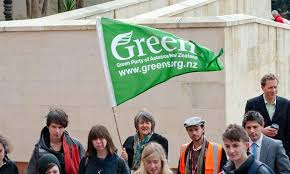
Long stereotyped as a fringe movement for harmless eccentrics, the New Zealand Green Party appears to be following the general upward trend for environmentalist parties in the West as the social democrats continue to fragment into special interest groups. The Greens in New Zealand are large and established enough to be a political force in their own right and ought not to be considered an adjunct to the Labour Party.

Despite a nominal adherence to the left wing of Parliament, the Greens have a number of striking differences with the Labour Party to whom they appear shackled.

The most notable is that the Greens are a party for comfortably wealthy people, but not the ones creaming it. This might surprise many who still consider the Greens to be a party for students and semi-employed Golden Bay hippies. The correlation between voting Green in 2014 and Personal Income is 0.31, which is not as strong as National’s 0.53 but is much closer to that than to Labour’s -0.51.

Voting for the Greens in 2014 may have had a negative correlation with Median Age, but it was not significant at -0.17. This belies the image of the Greens as a student’s party, especially if one compares to the correlations between Median Age and voting Cannabis Party in 2014 (-0.55) and voting Labour (-0.70). This suggests that the average Green voter is significantly older than the average Labour voter.

The average Green voter was the best educated of those of all the parties, with a correlation between voting Green in 2014 and having a Master’s degree of 0.64. The only party to come close to this is ACT with 0.57 – National is the closest major party, with a not significant 0.20.

Also, the average Green voter was about as likely as the average National voter to have no qualifications. The correlation between having no qualifications and voting Greens in 2014 was -0.49, for National -0.43, for Labour 0.34 and for New Zealand First 0.79.

One factor that correlates highly with support for the Greens is not being religious. Not being religious and voting Green in 2014 had a correlation of 0.56, which was much higher than for any other major party (National 0.10, New Zealand First 0.12, Labour -0.50). Only the Cannabis Party was close: voting for them in 2014 had a correlation of 0.34 with being religious.

Unsurprisingly, Green voters are very unlikely to be Christians. Voting Green in 2014 and being Christian had a correlation of -0.57. This was at variance with all other parties except Internet MANA (-0.40) and Cannabis Party (-0.41). None of the other major parties are so antichristian. Being Christian and voting National had a correlation of 0.29, with voting Labour it was 0.10 and with voting New Zealand First it was -0.11.

Perhaps the oddest correlation is the one between voting Green in 2014 and having spiritualism as a religion. This is a fairly significant 0.52. This was shared with the Cannabis Party, who had a correlation with being a spiritualist of 0.36, and is a notable point of difference with the ACT Party, with who the correlation with being a spiritualist was -0.43.

Perhaps these points can be explained by the fact that cannabis use tends to turn people strongly away from the exoteric side of religion and strongly towards the esoteric side, an interest they will share with the spiritualists.

Although the Greens are mostly a white person’s party, there is just barely a signification correlation between being of European descent and voting Green in 2014 – this is 0.24. There was also a barely significant correlation in the other direction (-0.27) between being of Pacific Islander descent and voting Green in 2014. For being of Maori descent it was a not significant -0.09, and for being of Asian descent it was perfectly uncorrelated.

So the Greens are an odd mix – like Labour when it comes to taxes, like National when it comes to personal income, like the ACT party when it comes to education and like the Cannabis Party when it comes to religion. The only party they are really opposed to seems to be New Zealand First. Probably the bulk of their voters come from people who are educated in the hard sciences in particular and the humanities to a lesser extent.

*

This article is an excerpt from Understanding New Zealand, by Dan McGlashan, published by VJM Publishing in the winter of 2017.

If Violence is Unwanted, Why Force People to Consume a Drug That Makes Them Violent?

Violence is the scourge of our society. The long-term cumulative psychological damage from all the various acts of violence committed by New Zealanders is atrocious. For the most part, we all agree that violence is something that ought to be dealt to strictly, but we can’t agree on how.

This is the standard pattern of social interaction in New Zealand: Monday to Friday afternoon – work. Friday afternoon to Saturday night/Sunday morning – consume alcohol. Sunday – recover from the effects of the alcohol.

This pattern has served us for over a century.

Back in the day, life was cheap, and we didn’t care. Of course the working men who loaded up in the six o’clock swill went home and beat the shit out of their wives, but Abrahamic morality held way and women were considered the property of their menfolk.

New Zealand loves violence, but not in the way it’s usually portrayed. The All Blacks aren’t really violent because they play against consenting adult men. Rugby is sport, not violence. Kieran Read has never done anything on a sports field even one percent as violent as arresting and caging a medicinal cannabis user.

However, our culture is violent. We take people who create drugs that make people less violent and put them in cages, and we take people who create drugs that make people more violent and give them knighthoods.

Why do we do this?

Probably the main reason is a cultural artifact relating to the strategic considerations that led to New Zealand existing in the first place.

New Zealand was, after all, founded as a military colony, once British colonial planners came to appreciate that whoever controlled the Aotearoan archipelago could easily project power upon the poorly defended, but by now reasonably populated, Australian East Coast. Whoever controlled that controlled the continent.

Being founded as a military colony, it was natural for the ruling class to encourage a warrior culture among the New Zealanders, in case it was ever necessary to send them overseas to die for the Empire. This meant that New Zealanders had to be molded into a hard, cruel people, and that meant violence, and that meant alcohol.

So the booze flowed, and New Zealand bestowed all manner of honourable titles upon the men who kept the booze flowing and the fists flying. After all, if New Zealanders were given free access to a peaceful drug like cannabis, they’d be much less willing to go overseas to kill the enemies of the ruling classes of the Empire.

Some people will counter that no-one is forced to drink alcohol. Usually people making this argument are some kind of puritan or wowser who never does any drug because they hate themselves and are terrified of what they might find in their souls if they were compelled to take a look.

But the counterargument is that people are compelled to drink alcohol in New Zealand if they want to meet their natural social needs, because all attempts to build a recreational drug culture around anything other than alcohol are crushed by the Police.

Let’s not pretend that these social needs are not needs. Humans cannot survive alone – not for want of intelligence, adaptability or ingenuity but for mental health reasons. A total lack of social interaction will result in a oxytocin deficit which will lead to terminal depression.

Of course, cannabis users are just meeting up anyway, only in private and in smaller groups. This is perhaps a win for those who profit from the continuation of alcohol culture, such as shareholders in breweries and wineries. But it’s a massive loss for New Zealand.

Why Nietzsche is Hard

The experience of reading and contemplating Nietzsche is fundamentally different to that of the majority of thinkers. A natural consequence of this is the unprecedented degree to which Nietzsche is misunderstood.

Appreciating Nietzsche isn’t a simple matter of considering a number of competing claims to the truth and deciding if his case is the strongest. He is not such a man that will brook standing in the dock while his ideas are tried by plebs.

Nietzsche is hard for the same reason that integrating a psychedelic trip is hard. This is because to understand him, first you have to concede to his basic contention: that everything you know might be wrong. This makes Nietzsche appear to be a nihilist for anyone who stops reading him at this point, which most people do.

But to appreciate Nietzsche, at least initially, you have to accept that the very way you think may be fundamentally flawed.

His contention is that people have been lied to so often by the church, by the state, by centuries of half-wit philosophers, by power-crazed kings and by the bleating of the herd, that they’re too confused to even begin thinking their way out of it. The way people think is so fundamentally flawed that to make progress the first point of order is to forget all the lies that they currently consider to be true – and there are many.

In fact, you can’t merely forget them – you have to deliberately and purposefully smash them. To get to the truth you have to escape the labyrinth of lies, and so you have to “philosophise with a hammer”.

Understanding the truth of Nietzsche is thus not a pleasant and straightforward experience like sitting in a kindergarten listening to the sweet voice of a kind teacher guiding you gently away from ignorance. It’s more like Hell Week of the Navy Seals, in which a person’s entire personality has to be torn to the ground so that a new, stronger one can be rebuilt in its place.

Regular readers of this column will recognise this phenomenon as the task of the mystic, the shaman or the schizophrenic. Nietzsche himself clearly recognised this when he subtitled Thus Spake Zarathustra as “A Book fof Everyone and No-one.”

This is very evidently not a task for the man of clay; Nietzsche had no intention of founding his own religion for the masses (probably this explains the appeal of Nietzsche among those of the left-hand path).

All of this helps to explain why the name of Nietzsche has been associated with the Nazis.

Any political power who seeks to tear down the established order (which in Hitler’s time was the Anglo-American Empire) and impose their own based on transvaluated values (the Nazi Empire) has one immense – but superficial – connection with Nietzsche’s philosophy in so far that both are revolutionary.

Both seek to tear down old ways that they see as corrupt or decadent. Indeed, crusades against ‘decadent’ art was one of the ways the early Nazis built outrage in their favour, and rhetoric about the corrupting effect of Jews on German society was regular.

Moreover, Nazism was one of the most striking historical examples of a supremacist movement, and supremacists of all stripes find a superficial interest in Nietzsche’s talk of the ‘Superman’.

The great irony here is that Nietzsche would likely have considered the Nazis – like all egoic supremacists – a pack of plebs.

If We Are in A Period of Excess Yin, How Would We Know?

If Francis Fukuyama is correct, and the Great Pendulum of the World swings back and forth every 60 or 70 years or so, then this would suggest right now that we are at a period of peak yin. We can surmise this because the last time there was clearly a period of excess yang it ended in the violent paroxysm of World War II, 71 years ago.

It is certainly not a time of excess yang right now in 2016. We know what that would look like – violence. This is literally the least violent time in human history (however, there is absolutely no evidence that things are guaranteed to remain this way indefinitely).

What are the characteristics of an age of excess yin? As below, so above – we can guess that the characteristics of the world would be a macrocosm of the characteristics of all of us.

Yang is also characterised, especially in Western alchemy in its aspect as the masculine principle, as order. Thus we can expect that excess yin might manifest itself as destructive, senseless chaos.

This would not manifest as the proportionate yin of a predatory beast who destroys with a view to impose a higher form of order, but more like the mindless rage of a school shooter or an Islamic suicide bomber, or even like the 2003 invasion of Iraq, which made little sense to anyone at the time and makes none now.

The masculine discriminates, the feminine does not discriminate. Therefore, in a time of excess yin, the fundamental error is to fail to discriminate when one should have discriminated. Perhaps this is what has happened with the immigration policies of the Western world in recent decades.

It’s especially evident in Europe, for example, where the man in the street has seen his quality of life drop sharply as a consequence of his nation’s naive lack of discrimination and foresight (and it’s been worse for the womenfolk).

The attitude from Western politicians towards people claiming to be refugees over the past 20 years was to open the bosom to allcomers, and to use social pressure to cow into submission anyone questioning this policy.

If yang is the heavens and yin the earth, the immense materialism of our age is perhaps also evidence that this is a period of excess yin. Our mainstream religious traditions are so thoroughly and irrevocably corrupted that expressing a will to become a priest is tantamount to a confession of sexual deviancy – whether justified or not.

There isn’t a skerrick of spirituality to be found in any of the long-dead rituals or in the emotional and manipulative rhetoric, yet our priests ride around in massive Mercedes and fly private jets, and lecture us on our duties to the poor from thrones of solid gold.

So materialistic are we that even most people who educate themselves to postgraduate level – much less the others – cannot conceive of an origin of consciousness different to the current “magic brain” model, in which one has unshakable, 100% confidence and faith in the belief that science will one day prove that the brain generates consciousness through electrobiochemical means.

Finally, we can see it with the rampant overpopulation of the Earth. The yin is associated with love and reproduction, but it is obvious that our recent interest in this is excessive. There are so many of us that we are in the middle of one of the six biggest extinction events in the history of the planet.

Despite the carnage that we are wreaking virus-like on the planet as we consume everything that lives on or under its surface, few seem to have any compunction about bringing another litter of kids into the world to compete for ever-diminishing resources.

Taken together, the reasons to think that we are in a time of excess yin seem overwhelming. This means that the world is about to start heating up – alchemically, if not physically.