
Chaos Worship Is The 21st Century Manifestation of Slave Morality

Muslim culture might express significant contempt for homosexuals, but the two groups are nonetheless united in their resentment for those strong enough to uphold the current world order

Looming over the world stage of today is a shaky alliance of groups who not only appear to have little in common, but whose goals appear to be directly antithetical to each other. There is, however, a unifying tenet within this group of people: that order is inherently bad. In other words, they are chaos worshippers.

On the surface of things, it’s not obvious what a homosexual rights activist might have in common with a Muslim. Homosexuals are hated by Muslims; the Koran and hadith make it clear that homosexual acts are sins deserving of punishment.

Indeed, in all of Afghanistan, Brunei, Iran, Iraq, Mauritania, Nigeria, Saudi Arabia, Sudan, United Arab Emirates and Yemen, homosexual activity carries the death penalty.

Nor is it obvious what either of these groups have in common with communists. Both Islam and homosexuality were heavily suppressed by the Soviet Union, with adherents of either practice regularly shipped off to the gulags.

So what is the basis of this modern alliance of homosexuals, Muslims and communists?

The answer lies in what Nietzsche called slave morality. In particular, it is the resentment of the weaklings towards the strong that have seen those weaklings put their differences aside (or at least pretend to) and unite against The Man.

A similar phenomenon can be observed in chimpanzee troops, where weaker males sometimes come together in order to take out an individual stronger male.

Essentially what many individuals in these groups have in common is a grudge against the current order of things.

Homosexuals want to be treated with the same respect as heterosexuals, but they never will be because their sexual orientation does not maintain the existence of the human species.

Muslims want to be treated with the same respect as non-Muslims, but they never will be because the moral principles at the foundation of their religion lead inevitably to segregation, mistrust and violence.

Communists want to be treated with the same respect as those of other political orientations, but they never will be because their philosophy expresses a contempt for individual human life that the majority of people consider abhorrent.

Because all three of these groups have found themselves in a position of weakness, on account of that all three of them have been shunned for expounding a way of life that is detrimental to the human survival project, they have found cause to unite around their common resentment of the current order.

Their resentment is so great (this being the outwards projection of their immense self-hatred) that they have no interest in modifying or refining this order.

What they want is simply to destroy it. Whether or not a better order will arise after this act of destruction is not important. The overall goal is to destroy the current order.

In other words, many individuals in these groups are chaos worshippers.

Chaos worshippers don’t believe in correct order. To a worshipper of chaos, all order is bad because it is all oppressive. Thus, any individual or group serving to maintain that order is the enemy, no matter who they are or for what reason they maintain order.

Sometimes the chaos worshipper goes as far as to disbelieve in concept of order at all. This can manifest as a refusal to believe in the march of history.

Some chaos worshippers believe that the laws of human psychology that have led to the march of history no longer apply, or that things will be different this time. As a result they refuse to learn anything from history, mindlessly insisting that the world can be made into a paradise merely through sufficient adherence to an ideology.

One disastrous consequence of this attitude has been the European decision to let in tens of millions of Muslim immigrants in the belief that they would all decide to fit in to the local culture and essentially become Europeans with slightly swarthier skin.

The reality is that mass immigration of anyone to a foreign locale almost never benefits the locals, as is plainly obvious to anyone who has studied any amount of history.

This is irrelevant to the chaos worshipper, for whom mass immigration has the benefit of destroying existing social bonds at all of the local, national and super-regional levels.

In other words, mass immigration of obviously incompatible cultures is great because it spreads chaos. This is why chaos worshippers universally support it.

After all, if you are a pathetic loser at the bottom of society, then all order is bad. All order is oppressive. All order is necessarily immoral. All order is “keeping you down”.

So for these losers, enslaved not by chains of iron but by chains of silver and gold, destruction for destruction’s sake has become its own imperative.

This is the form that slave morality has taken in the 21st century.
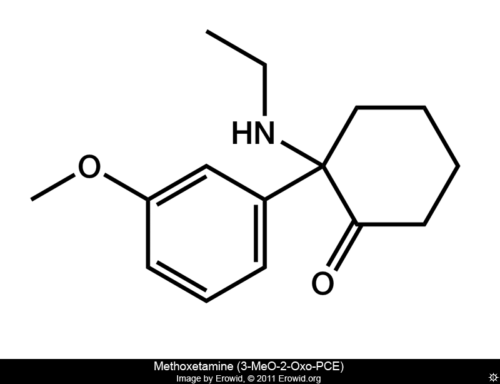
Trip Report: 100mg Methoxetamine

2100: I take a gelcap with 50mg methoxetamine. I am at home with only my mother and two cats for company. I have just had an excellent week on holiday with some good friends and so my mindset is optimal.

+0.30: I take a second gelcap with 50mg methoxetamine. This makes it a total of 100mg, which is a very heavy dose. The reader ought to note that I weigh 115kg, and so the vast majority of people would not need as strong a dose as 100mg to have a similar experience.

+1.00: It’s starting to come on for real. I turn my head to the side and it seems to take a while for my perception to catch up.

It’s not like how it usually is, where the turn of the head seems to take place at the same time as the change in focus. Somehow there is a sense of viewing everything though a camera.

It’s as if there is some kind of perceptual space in between the sensory action that is detecting the physical world and my consciousness that observes it.

As if my eyes have been removed and replaced with cameras, and these cameras feed input directly to my consciousness somehow.

+1.30: I’m enjoying watching myself do things. There is a strong sense of comedy, as my body appears to be doing things without an exercise of will on my part.

For example, I just went out of my house to go up the stairs to another house, and it’s more like watching an extremely boring movie (although the novelty of one’s life being observed second-hand like a movie makes it interesting).

I realise that I am in a state of dissociation, and there is a mild sense of alarm at the possibility that I might do something without being in control of myself, and come to regret it.

This alarm never becomes anything major, as my body fortunately rolls along without doing anything stupid.

+2.45: It’s interesting to pat a cat in this state because of the dissociation. The cat seemed to me as it usually does, except for one distinction.

I was happy for the cat because I knew the person patting it was a good person who meant no harm. Because this person was going to bring happiness to the cat, I was happy for the cat’s sake.

That it was my cat and that it was me patting it didn’t come into the picture, despite that this is the usual course of events.

I knew it was my cat and I knew that the cat being happy made me happy, it’s just that I was unable to comprehend that it was me making the cat happy. It was as if my consciousness just hung in physical space, a short distance from the man I was watching, and followed him around like a will-o-the-wisp.

+3.30: The dissociation has helped me to realise something. That the person I’m observing in this highly dissociated state is actually a decent fellow.

It’s an interesting state because I don’t usually feel this way about myself, a feature of having clinical depression. But the dissociation has allowed me to view myself as if through the eyes of another. It seems natural to assume that this is a more objective state, having been stripped of all the psychic flotsam that otherwise occupies the mind.

I realise that everyone’s opinion of themselves is, to a large extent, conditioned and therefore has been arrived at by involuntary means.

That I appear to be watching myself, and that this self that I am watching is a decent fellow who I don’t need to be afraid of, doesn’t seem particularly strange in this moment.

+4.00: It has occurred to me that methoxetamine is an excellent anti-depressant. I have not taken my anti-depressants for a week before this trip so as to avoid serotonin syndrome (methoxetamine, like my prescribed sertraline, is a serotonin reuptake inhibitor).

I am feeling pretty happy, but not in a high way. Methoxetamine doesn’t appear to be an especially giggly drug like the classical psychedelics.

The sense of joy rather comes from a removal of the cloud of ignorance that I had about myself. It’s as if I dared to peek behind a perceptual curtain and was rewarded by feeling better about myself.

+5.00: The trip is starting to wind down. One pleasant thing about dissociatives is that the comedown tends to return the user to their familiar, everyday state of doing things in a way that is a relief.

This contrasts with the feeling I get on psychedelics, in which the comedown to familiarity often comes with a sense of disappointment, of being stuck here again.

All in all, I’d highly recommend a solid dose of methoxetamine, however I would only do so under certain caveats.

In particular, this drug is probably a terrible choice for going out partying or in public, on account of that the dissociation makes normal human communication a bit of a crapshoot.

On the flipside, it seemed like an excellent choice for hanging out at home and getting to know yourself better. Thus I would suggest that using it more or less like psilocybin should work out okay.

Also, I get the feeling that methoxetamine should probably be avoided if a person has low self-esteem or hates themselves. This is because the dissociative effect might bring this lack of self-regard starkly to the fore.

Is The New Zealand Government About to See A Repeat of The 1990s?

The 1990s began with the chaos of a disintegrating Labour Government and ended with the chaos of a disintegrating National one

In the leadup to the 1990 General Election, the New Zealand Labour Party appeared to be falling to pieces. They had gone through three leaders in 15 months, with Mike Moore the most recent to wrest control of the jinxed idol, having convinced the hapless Labour Party caucus that he was a better bet for staving off what was looming as an electoral disaster.

The move turned a disaster into a catastrophe – the National Party won 67 seats in the election compared to Labour’s 29, as the Italy-style rapid changes in leadership gave the wider public the impression that Labour had lost the plot entirely.

This majority was enough for the National Party to force on the nation what the people called “Ruthanasia” – a Budget so callously tight-fisted that it appeared that National were trying to cull the poor through starvation.

The Budget was so unnecessarily cruel – in many cases leaving solo mothers unable to feed their own children at the end of the week – that even New Zealanders were appalled by it, and only by demoting the clearly psychopathic Ruth Richardson to the back benches did the National majority survive the 1993 General Election.

By the next election in 1996, the National Party had eroded most of the trust that Jim Bolger had earned in opposition, and they were only able to govern thanks to a rickety alliance with the New Zealand First Party.

When Jenny Shipley rolled Bolger in 1997, New Zealand had another psychopath in an influential position, and this made the alliance with Winston Peters untenable. Being neither a psychopath nor willing to submit to one, Peters was unable to work with Shipley and was duly sacked.

New Zealand First then disintegrated under the gravitational pull of the National Party as it tried to withdraw from its influence, and the New Zealand electorate responded to the wheels falling off the alliance by chucking the whole thing on the scrapyard.

The National Party was duly destroyed by Helen Clark’s Labour in 1999.

Since Helen Clark took the reins at the end of the 90s there has been nothing but orderly Government, but “History, with all her volumes vast, hath but one page…”

Our current situation in the winter of 2017 is fairly precarious, with Bill English having taken the leadership at the resignation of John Key last year. Any development that brought the stability of Bill English’s leadership into question could well lead to a comprehensive National Party loss this September.

The most likely way this would happen is by some scandal being followed by a poll that hinted suggestively at a National Party loss, at which point the National Caucus panics, then Paula Bennett does a Jenny Shipley and convinces the Caucus to support her leadership instead (ironically it was English himself who replaced Shipley as leader of the National Party in 2001).

In other words, Paula Bennett may seize upon any weakness shown by the blundering incumbent PM in order to achieve her own Prime Ministerial ambitions, despite being grossly unfit for the role.

Judith Collins might also play the role of Shipley, depending on who moves first and with what support.

Either would be suicide for the National Party, because there’s nothing less orderly than an involuntary change of leader.

What the public wants, more than anything, is that the Government maintains good order, and what the public needs, more than anything, is that the Government maintains good order.

We don’t actually need it to do much else. If it can simply keep the peace, the rest of us can get on with our lives of commerce and trade. We can make ourselves rich and happy without their help – all we need is for them to not interfere.

From 1840 to the early 1900s New Zealanders developed our country from the Stone Age to first place among all the living standards of the world, and this was achieved without any of the National, Labour, Green or New Zealand First parties existing.

All we need is for the megalomaniacs at the top of the national dominance hierarchy to maintain good order, and we can do the rest.

This is why many political commentators miss the mark when they decry Andrew Little for his lack of charisma.

It’s true that Little has the charisma of a brick, but so what? He’s not going to be personally leading a company of men into battle. He’s going to be inheriting the reins of a civil machine that has been fine-tuned for almost two decades.

His job, as mentioned above, is to maintain order. To that end, being boring is a qualification. He hasn’t said a word about either of the two hot issues stirring up the left at the moment (cannabis law reform and increasing the refugee quota), and this is no doubt a carefully calculated tactic to make him appear suitable as the man to steady the ship.

After all, it’s a heavy increase to the refugee quota that is more likely than anything else to bring a massive amount of chaos to these shores, as both the Green and Opportunity Parties are gagging for it.

Some say that the National Party are the natural ruling party of New Zealand. If there’s any truth to this it’s because the National Party are the best at maintaining good order.

If Little really wants to become Prime Minister this year, all he has to do is what Helen Clark did two decades before him – simply maintain good order in his own party, and wait for the ambition and greed of the National MPs to cause them to devour each other.

Trip Report: 35mg 2C-B-FLY (Doors of Deception)

2000: Took 17.5mg 2C-B-FLY in gelcap form. I am with two very good friends, R and S, who I am visiting on holiday. We are at R’s place, and we are all in a very positive mood on account of this social encounter, which we had been looking forward to for some time.

R’s place is pretty cool, a quiet house on a section of the coast about an hour North of Wellington, New Zealand. Very chilled, there’s a friendly black cat hanging out with us and R strums some tunes on his bass guitar.

+0.30: Feeling talkative, a bit high, but not really buzzing. Took another 17.5mg on the basis that I had not felt anything negative from the first gelcap.

For anyone else thinking of taking 35mg of 2C-B-FLY, do take into account that I weigh 115kg, am a highly experienced psychedelic drug user, and in retrospect consider this dose very strong. A person unfamiliar with this substance will almost certainly have a better time taking less than 35mg.

+0.40: Laughing a lot, starting to come on. This is consistent with the trip reports I read immediately pre-trip, which seemed to suggest that the real effects began after 45-50 minutes.

+1.15: A very light-hearted buzz. R, S and I are cracking jokes and the laughter is deep and such that I feel lost in it, a kind of laughter that makes me forget all my problems.

It may just be the set and setting, but I have a good sense that 2C-B-FLY is a legitimate entactogen in its own right, as the three of us are having a great time just conversing with heightened perceptions.

+1.45: I am holding court on the nature of God. My contention is that, because God is perfection God necessarily takes the form of infinite and eternal purity. Although this is perfect there are perspectives and dimensions in which it isn’t perfect on account of suboptimal levels of novelty.

God has therefore allowed itself to become degraded in a fractal form. Each of us are a subset of the Great Fractal, the precise morphology of this subset being a unique iteration of a function of the ways in which God has allowed its purity to become concealed behind a veil of impurity.

The exact pattern of this impurity is what gives life its colour, for in a state of perfection such colour does not exist. Therefore, God has achieved a higher purpose than perfection through its own voluntary degradation.

Every single one of us is some kind of glorious cripple, in our freakiness even higher than God.

R seems to agree, and seems impressed with this insight. S seems a bit more skeptical.

+2.00: I go outside for a joint. Coughing my guts out, but I notice that I am feeling extremely positive, like I have an intuitive premonition that I am about to get exactly what I wanted. A sense of anticipation is building from a warmth in my body.

+2.45: Feel almost sober now. This lasts for a while, at least ten minutes, and I am convinced that this means the end of the trip. Mild to moderate disappointment.

+3.30: The trip has now surged back to a new high. I am clearly still peaking, even coming up to four hours after dropping the first cap. R and S agree that they have had similar feelings of the trip being over but they are also feeling new levels of high.

+4.00: I’m outside in winter with a cold wind blowing but feel very warm. It’s as if an internally generated heat from within my very centre is providing easily enough warmth to keep my skin warm.

This feeling is one of my favourite psychedelic vibes. It’s a sense of remembering that ultimately everything is fine in the universe. Considering that this is about 40 hours before the winter solstice at 41 degrees latitude it is reasonably cold in meatspace, so in my head I know I am overcoming my immediate challenges.

+5.30: At the peak of the trip, there is an odd incident with R’s front door. S and I are outside having a joint, when R comes out appearing highly confused.

R tells us that when he went to open the front door from the inside, it was locked, even though S and I were outside, and the door could not have been locked from the outside because there is a key in the lock on the inside.

I genuinely don’t remember opening the door to go outside. I remembered opening it on the other occasions that I went through earlier in the night, because the locking mechanism is complicated and unfamiliar to me and so it required some thought to navigate.

Somehow it seems obvious to me, in this moment, that there are multiple dimensions of time that are only reliably available to consciousnesses greater than ours, but that even lower beings like humans can sometimes operate in five-dimensional space if the circumstances are correct.

For example, I am aware that the reality in which I am standing outside is very, very, very close in the Great Fractal to the reality in which I am standing inside. Therefore, moving from the latter to the former should not require a particularly great effort. Indeed, it could be so little an effort that a sufficiently advanced consciousness could do it on autopilot and not remember.

This necessarily means that whether or not the door was closed is entirely irrelevant. If you can move in five-dimensional space then three-dimensional obstacles such as closed doors cannot properly hinder you, any more than a two-dimensional obstacle such as a gently inclined path could properly hinder a person walking in four-dimensional space.

At the same time, I appreciate that this logic cannot properly be comprehended in a non-psychedelic state, and might well strike me as baffling in the morning.

+6.00: By now I have convinced myself that 2C-B-FLY is a genuinely top shelf psychedelic.

The most interesting thing about it is its unpredictability. There were many times in the first four hours of the trip that I had convinced myself that it had started to wear off.

+8.00: I am talking to R. Although I can make sense of the words he is saying, the face with which he says it keeps distorting. I always see a man of about the same age, his features keep changing – from bald to having short blonde hair, and from that to having a shaven head with a long brown ponytail, like a Hare Krishna.

His eyes and nose are imprecise and seem to keep shifting and streaking away, not dissimilar to the experience of Hunter S. Thompson checking into the Mint Hotel, as depicted in Fear and Loathing in Las Vegas.

+9.30: All three of us are still on a pronounced high, but there is a definite sense of brain resources now being depleted and the necessity of sleep is looming. Despite that, the conversation shifts to salvia divinorum, of which we have a small pile.

We take turns in ceremonially smoking fat bowls of salvia from a big pipe, and our consciousnesses leave meatspace entirely. Profoundly intense hallucinatory experiences (and here is not the place to describe them) and I think being on 2C-B-FLY may have potentiated the salvia.

+11.30: Time for bed, not really tripping any more but still on a high from having had an excellent time. Sleep comes quickly.

All in all, the experience is highly reminiscent of a good mescaline + MDMA trip, but without anything close to the body load or nausea that usually comes with either cactus or MDMA.

It had both a psychedelic and an entactogenic effect on me. Perhaps the psychedelic element was slightly muted compared to the entactogenic one. Sometimes I felt like I was drunk at a party because I didn’t give a fuck but in contrast to booze the 2C-B-FLY did not give me any bad physical effects, not during the trip or the day after, when I felt perfectly fine.

It was definitely much better to do this with a few friends than at home by myself. The experience was not much like psilocybin and it was probably even more masculine than LSD, so there didn’t seem to be much value in a introspective silent darkness style use of the substance.

Because of its unpredictability, I definitely would not want to drive or hang out in public on 2C-B-FLY. It shifted gears strongly and swiftly and without warning – which is awesome fun in the right setting, with the right friends and low levels of drama.