Masculine and Feminine Expressions of Political Aggression

Aggression is a universal phenomenon within the human species. Both genders and all races are capable of it. Not only are we capable of aggression when it comes to sex, property and dominance but we are also capable of it when it comes to politics. This essay looks at the masculine and feminine expressions of political aggression.

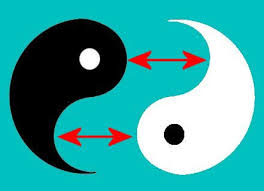
The nature of the masculine is to discriminate. This is represented metaphysically by the straight line, the angle and the number one, and is represented biologically by the sperm. A straight line is, after all, the shape of a sword, and the purpose of a sword is to separate and keep apart those things that the wielder believes should be separated and kept apart.

The nature of the feminine is to bring together. This is represented metaphysically by the circle, the curve and the number zero, and is represented biologically by the egg. The circle is the optimal way to achieve the largest possible surface area for the smallest possible perimeter, and is therefore the most inclusive shape that can be drawn.

The characteristic masculine political sensibility is disgust when confronted with disorder. This means that the masculine is that which desires to keep the peace and to keep things under control. This is partially achieved by means of the sword – to be more precise, the masculine keeps order by inspiring fear with its use of violence.

The ultimate feminine emotion is fear, and so the masculine right wing fights an eternal “War on Terror.” This it carries out by attacking places of excessive chaos. And so, it can be observed in the modern West that masculine aggression finds a political expression in conservatism, which seeks to impose order on as much of the world as possible.

The Republican Administration of George W. Bush is an excellent example of this. Under George W. Bush the masculine sentiments of Americans found a home in the War on Terror – which is essentially a war on the excess of feminine emotion. This led them to attack the Middle East in the belief that it was a chaotic place that produced terrorists, and which therefore needed order imposed upon it.

The characteristic feminine political sensibility is horror when confronted with oppression (this probably developed as a consequence of being confronted with the possibility of rape). This means that the feminine seeks to include as much as it can (in other words, to discriminate as little as possible).

This can be observed by looking at the nature of a circle, which is the appropriate shape for including as many people as possible on even terms. Inclusiveness, and a belief in the value of inclusiveness, was probably how prehistoric matriarchal societies prevented any frustrated reproductive instincts among its malefolk from spilling over into jealous violence.

The ultimate masculine emotion is hate, and so the feminine left wing fights an eternal “War on Hate.” This it carries out by attacking places of excessive order. And so, it can be observed in our societies that feminine aggression finds a political expression in liberalism.

There are any number of examples of this, perhaps the best one being the neo-Communist street gang Antifa, who are known for indiscriminate violence in the name of fighting discrimination.

Feminine political aggression is usually expressed as a will to tear down all borders, walls and hierarchies that separate people. Feminine political aggression thus occurs when the masses get together to get rid of a monarchy, for example, or through voting Marxist policies into law in democratic elections.

In many ways, these two sentiments work together. Most Westerners consider slavery, for example, to be both disorderly and oppressive, and consequently the vast majority of Westerners abhor the practice and it is illegal in all Western countries. Likewise, public health epidemics create both disorder in making people sick and oppression in making people suffer from the disease, and so society is capable of working together harmoniously to fight such things.

In other ways these sentiments work directly against each other. The most obvious example of this is immigration, especially immigration from refugees. The masculine sentiments are generally against refugees turning up because of a belief that they create disorder and disharmony, and many masculine thinkers are duly disgusted by politicians who argue in favour of this.

The feminine sentiments, on the other hand, are generally in favour of refugees because they do not want to exclude them from the perceived benefits of society. To exclude, after all, is to discriminate, and that is a masculine political expression.

Another common example is that of the drug war. Because using drugs causes original thoughts and original behaviours to arise, the natural masculine reaction is to punish their use in the belief that they cause chaos. The natural feminine reaction, on the other hand, is to reject punishment for taking drugs in the belief that this is oppression.

These two differing forms of aggression share what is common to all aggression, namely a will to remake the world in the image of the aggressor. They only differ in terms of what is targeted for destruction – chaos in the case of masculine aggression, and order in the case of feminine aggression.

Te Reo With Mnemonics: Competition Words

Match – whakataetae

A boxer is about to engage in a boxing match. One of his eyes is wide open and the other squinting tight. He gets a punch in the squinting eye – his opponent whacked a tight eye.

win – toa

A reporter is interviewing a runner who has just won a race, with a gold medal around his neck. The runner says “I tore out of the starting blocks and then tore past my opponents and I won.”

lose – ngaro

Two men are rowing a boat in a race. One of them gives up and says “There’s no point – we’re going lose.” The other man yells “Nah! Row!”

draw – ōrite

The Black Knight from the film Monty Python and the Holy Grail, missing his arms and legs, says “Alrighty, we’ll call it a draw.”

Result – tukunga iho

A man is watching some Test Match Cricket. A friend comes in and says “Have we got a result yet?” The first man replies “The result is taking an eon.”

Strategy – rautaki

Two boys a playing a strategy game, like Risk or Chess. One of them thinks for a long time, then lays out on the game board a row of tacks.

The Maori word for ‘attack’ – huaki – sounds like the English word ‘hokey’ as in hokey-pokey icecream

Tactic – rauhanga

Two girls are playing tic-tac-toe on a sheet of paper. After the game is over, one of them takes the paper and hangs it up in a row of similar papers. She is the row hanger.

Violence – whakarekereke

There are two wrecked cars, and a man comes and whacks them with a stick. He is trying to whack a wreck wreck.

attack – huaki(-na)

A woman is carrying a container of hokey-pokey icecream. Suddenly the hokey-pokey grows arms and attacks her.

defend – wawao

A boxer is throwing punches at a sparring partner, who is defending them. Then the boxer pulls out a dagger, and the sparring partner says “Whoa, whoa!”

Competition – tauwhāinga

There is a throwing competition where competitors have to pick up a dwarf by the toe and fling him through the air. The competition is for toe flingers.

cooperate – mahi tahi

A swarm of servants is cooperating to dress a man in a business suit. They finish cooperating, but he does not have a necktie, so he asks “Where is my tie?”

*

The above is an excerpt from the upcoming Learn Maori Vocabulary With Mnemonics, by Jeff Ngatai, due to be published by VJM Publishing in the summer of 2017/18.
When Cannabis Becomes Legal, Psychedelics Are Next

Almost all of the arguments for legal cannabis apply for legal psilocybin

21% of Americans now live in states that have legal recreational cannabis, and an overwhelming majority of them live in states with legal medicinal cannabis. It’s now obvious to every honest person that cannabis is a medicine, and that the recreational positives of it vastly outweigh the negatives. However, even when cannabis law reform wins its inevitable comprehensive victory, it won’t be the end of the struggle for cognitive liberty.

The struggle for cognitive liberty has been waged for several thousand years. It arguably begun when the first ever conversational topic became taboo – perhaps when some alpha male enforced a rule that meant his tribe were forbidden to speak of a certain subject. Since then, the forces of cognitive enslavement have only become more aggressive and more sophisticated.

In the New Zealand of today, we plebs are not even allowed to smoke medicinal flowers such as cannabis, not even if one of us has a severe medical condition that causes them to suffer badly. We’re not allowed to because the deconditioning effect of cannabis means that all of the shameless bullshit and lies that the political class have pumped into our heads for decades would be at risk of getting rejected.

Because the conditioning that enslaves us is profitable to the ruling class – as it makes us compliant, submissive and obedient – it is worth money. It could effectively be considered capital. This means that allowing the population cognitive liberty to question their own psychological enslavement, and the means to achieve this liberty, is a risk to the accumulated wealth of the ruling class.

This is true of cannabis, and is true ten times over for psychedelics.

Ultimate cognitive liberty comes from the complete destruction of the conditioned mind (or programmed mind). The behaviours that have been deliberately programmed into us have, and are intended to have, the ultimate effect of making us unhappy, because there is nothing more profitable than human misery.

This refers to the programmed behaviours that the ruling class force into your head at school, in the workplace, and through the mass media. They do this because your slavery is profitable, and because it allows them to impose a form of order on society that is beneficial to them. For these two reasons, the ruling class opposes the legalisation of drugs that allow cognitive liberty to flourish.

For example, it is known well enough by the people who need to know such things that smoking cannabis makes a person less desiring of, and less attached to, material possessions. This is because it has the effect of reducing suffering, which makes a person less likely to work long hours to save the money necessary to buy the crap that they mistakenly believe will make them happy. So reduced suffering means reduced profits for the ruling class.

Therefore, maximum profitability demands that the cognitive liberty of the people who might question this brainwashing be minimised.

When the Western World was first exposed to the power of psychedelics, we just shat our pants. We were in no way emotionally mature enough to deal with an entheogen that reunited our individual consciousness with that of God. Reuniting one’s consciousness with God is the same as absolution from all suffering, and we were in no way ready for that.

However, now that many of us are mature enough to treat cannabis as what it really is – a deconditioning agent that alleviates psychological suffering – we are starting to become aware that much of the suffering we endure on a daily basis has been forced on us from positions above us on the dominance hierarchy.

This means that the further we can decondition ourselves, the less suffering.

This fact was understood by Kevin Saunders, who is the man behind the recent Californian ballot initiative that seeks to “exempt adults 21 and older from penalties of possessing, selling, transporting, or cultivating psilocybins.” Saying that the ballot is “a natural progression from marijuana legalization,” Saunders relates a personal story of overcoming heroin addiction as a result of the deconditioning effects of the drug.

Psychedelics have incredible potential for alleviating all suffering arising from psychological conditions that are caused by excessive conditioning, in particular anxiety, depression, post-traumatic stress and addiction. Many people are aware of this, though they are currently shunned by the mainstream narrative, which has been set (as mentioned above) by those who profit from the suffering.

Over time, however, the truth will out, and this means that the legalisation of psychedelics is an inevitability.

Climate Change Is The Left Wing’s War On Terror

When George W. Bush declared a “War on Terror” in the wake of 9/11, right-wing parties in every Western nation immediately won a great victory. Ever since then, they have been able to appeal to the need to fight this war on terror in order to get votes. This has given them a big advantage over the left-wing parties, but now the left wing has its own equivalent of the War on Terror: climate change.

George W. Bush and his Republican Party knew full well that there would never be an end to terror, because there will never be an end to the human nature that impels sexually frustrated young men towards political violence. The Middle East will always be violent, because it’s in their nature to be, and even if they weren’t someone else would be.

Somewhere in the world, there will always be violence and terror, and this means that the War on Terror is an endless war. It is a battle that can never be won. No matter the circumstances, right-wing parties will always be able to use the violence somewhere in the world to justify increasing military spending and cracking down on civil liberties.

This has given them a permanent advantage over the left wing – until now.

If there’s one thing that can be said for certain about Nature it is that she is ever-changing. And she always will be – for over four billion years, Nature has thrown up an ever-shifting set of environmental conditions and admonished her children to adapt or die. There is absolutely nothing we can do about this, because Nature is infinitely stronger than even our collective will.

At any given time, somewhere in the world, there will be people suffering due to the whims of Nature. Somewhere in the world there will be droughts, somewhere else there will be floods, and in other places there will be storms, hurricanes, earthquakes, typhoons and tsunamis.

What the left wing has recently caught on to is the fact that, insofar as we have a moral obligation to fight climate change, this obligation will never and can never be discharged.

If the political class is at all capable of persuading the people they rule to submit to further taxation in the belief that the money will be used to “fight climate change”, they will be able to do so in perpetuity, because the climate will always change.

Because it’s a law of Nature that the climate will always change, no matter what humans do or don’t do, the left wing will always be able to use climate change as a justification for increasing government reach and cracking down on civil liberties. In this regard, the left wing has a weapon that matches the power of the right wing’s War or Terror. Any time anything bad naturally happens as a result of freak weather events, the left wing will be able to use it as an excuse to turn the screws.

This is how we have ended up with politicians like Jacinda Ardern saying that climate change is the “nuclear free moment” of our generation. The Labour Party knows that it can thump the drum of climate change forever, and therefore there is greater scope for long-term gathering of political capital if they prioritise this issue rather than issues like cannabis law reform (which will be soon be solved and moved on from).

Ten years, twenty years, fifty years from now, the left wing will still be prattling on about climate change.