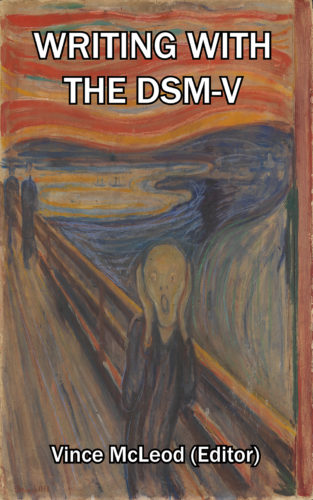
Writing With the DSM-V (Writing With Psychology Book 5)

The print version of the International Edition of Writing With the DSM-V is available from Amazon for USD9.99.

The Kindle version of the International Edition of Writing With the DSM-V is available from Amazon for USD4.99.

*

This book, fifth in VJM Publishing’s Writing With Psychology series and released in the Summer of 2018, details how to write engaging characters who have mental illnesses listed in the Diagnostic and Statistic Manual of Mental Disorders.

Mental illness is a popular subject in creative fiction – and it’s easy to get wrong. To get it right, it’s helpful to turn to the experts, such as the authors of the Diagnostic and Statistical Manual of Mental Disorders (DSM-V). This book, the 5th in the Writing With Psychology series, uses the DSM-V to help you write more accurate, believable and engaging creative fiction featuring characters with mental disorders.

There are three major reasons why the subject of mental illness and mental disorder is of particular interest to an author of creative fiction.

The first and most obvious reason is to provide a more dramatic portrayal.

Although the subject is often treated lightly, the truth is that mental illness is one that almost all of your readers will have felt some pain from. Mental illness is common enough that anyone who doesn’t have one themselves will know someone who does. Many of your readers will have seen a life destroyed by a severe mental illness. So it’s a subject that easily engenders a strong emotive response.

Mental illness is stressful, chaotic and often destructive, and all of these qualities can contribute greatly to your creative fiction. Alfred Hitchcock once described drama as “life with all the dull bits cut out”. In this book, all incidences of mental good health are cut out. All of the conditions in the DSM-V have the potential to provide the seed for extremely dramatic fiction.

A person’s life can be stopped cold by a mental illness, as surely as from having one’s legs broken. So if a character in your story develops or has one of the mental illnesses in this book, your reader will know that character is in for a hard time. Also, a story that is weak can be livened up by the introduction of a mentally disordered character, who is apt to shake things up.

The second major reason is to provide a more accurate portrayal.

Creative fiction is dependent on the suspension of disbelief. In order to really feel the magic of a story, the reader has to feel like the story being told is plausible enough that they can ignore the fact that they’re only reading about it and not really seeing it happen in front of their eyes. To this end, it has to be realistic.

The reader will not enjoy your story if the characters in it do not behave like real people, because not only will they not believe it but they won’t be able to identify with those characters, and it’s being able to identify with those other characters that is the key to being swept away by the magic of a story. The more real the characters behave, the more the reader can let go and fall into the story world.

If your story features a mentally ill character, this book will help you write them more accurately, so that the reader is more likely to become engaged in your story and thereby enjoy it. Understanding the chapter of this book relating to any mental disorder will help you portray characters with that disorder in a way that the reader will believe, or that the reader will recognise if they are familiar with the condition themselves.

The third major reason is to provide a more compassionate portrayal.

Key to a more compassionate portrayal of mentally ill people is a realistic portrayal of their lives. The majority of mental disorders are believed to have an origin in early childhood trauma or family dysfunction, and not from personal weakness or moral failure. So showing this is the key to getting the reader to empathise.

Showing not only a mentally ill character, but also the environment and circumstances that can conspired to make them mentally ill, is an excellent way of demystifying that condition and people with that condition. After all, some mental illnesses are actually perfectly sane reactions to insane circumstances.

This compassionate portrayal will help the reader like and commiserate with the characters in your story who have mental disorders. It’s easy enough to cast a mentally ill person as a villain, but casting one sympathetically requires that their background is understood.

Using this book, the writer of creative fiction will be able to write excellent characters based around the conditions in the DSM-V. It’s possible to read this whole book cover to cover for ideas, or to simply choose a chapter to base a character around. Just don’t use this book to diagnose yourself or other people!

Chapters:

1. Borderline Personality Disorder
2. Obsessive-Compulsive Disorder
3. Avoidant Personality Disorder
4. Schizotypal Personality Disorder
5. Antisocial Personality Disorder
6. Narcissistic Personality Disorder
7. Paranoid Personality Disorder
8. Histrionic Personality Disorder
9. Phobias
10. Dependent Personality Disorder
11. Conduct Disorder
12. Oppositional Defiant Disorder
13. Narcolepsy
14. Bulimia Nervosa
15. Anorexia Nervosa
16. Illness Anxiety Disorder
17. Dissociative Identity Disorder
18. Depersonalisation Disorder
19. Post-Traumatic Stress Disorder
20. Generalised Anxiety Disorder
21. Clinical Depression
22. Bipolar Disorder
23. Schizophrenia
24. Attention Deficit Hyperactivity Disorder
25. Autism Spectrum Disorder
26. Hallucinogen Persisting Perception Disorder
27. Panic Disorder
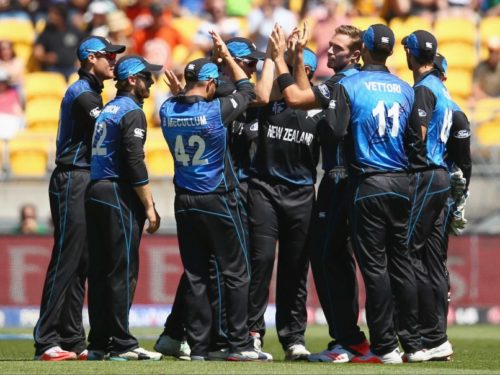

Black Caps vs. England, Champions Trophy Pool Match Preview

The Black Caps demolished England the last time these two sides met in a major competition, with Tim Southee taking 7/33. The England team of today, however, is an entirely different beast

The washout against Australia a few nights ago gave Black Caps fans a lesson in expectation akin to being given a lesson in orgasm denial from a professional dominatrix. With Australia reduced to 53/3 in the tenth over of their chase, all signs were pointing towards an opening round upset as shocking as the Black Caps’ win over Australia in the 1992 Cricket World Cup.

Instead, the rain came in to deny us a fair finish to the contest. So the Black Caps will be champing at the bit to have a go at England tonight (9:30 p.m. NZT) in Cardiff, in a match that they almost have to win in order to advance to the semifinals.

The English side has been heralded as prospective champions from all corners, and this is reflected in the short odds offered on BetFair for England to win this contest: $1.52, compared to $2.90 for the Black Caps.

Looking at the achievements of the England batting unit it’s not hard to see why.

Joe Root looks unstoppable at the moment, with an ODI batting average of 49.68 and just coming off 133* against Bangladesh. Around him are three batsmen who are ranked just behind Ross Taylor on the ODI charts right now: Alex Hales, Eoin Morgan and Jos Buttler.

All of these batsmen, including Root, are capable of batting at a very fast clip, and so are opener Jason Roy and allrounder Ben Stokes.

So the Black Caps will go into the match knowing that a failure to take early wickets will likely leave them chasing a gigantic score. They need to at least get Joe Root out early if they want to have a real chance of bowling England out.

But if English batting stocks are strong, the bowling stocks are another question.

Chris Woakes has been ruled out of this match through injury and Ben Stokes may not be able to bowl his full quota of 10 overs on account of a minor knee injury.

On top of this, Jake Ball has been very expensive in recent games and neither David Willey, Mark Wood nor Steven Finn have shown a particular talent for taking wickets. This means that Liam Plunkett – at 16th – is likely to be the highest-ranked English bowler on display.

The weak English bowling is where, if anywhere, the match is most likely to be decided. They will have to get Kane Williamson and Taylor out cheapish, and avoid being hit out of the game by Martin Guptill or Luke Ronchi at the top, to have any realistic chance of winning.

If they can, then they will be into the currently misfiring Black Caps middle order. The Black Caps lost 7 for 37 at the end of their innings against Australia, mostly thanks to their middle order finding Australian fielders with most of their lofted shots.

The New Zealand middle order had already been identified as a point of weakness before this tournament, so the English bowlers should feel confident of restricting the Black Caps to a small total if they can get into it before the death overs.

However, if they can’t, then they will not be able to defend anything less than 350, because otherwise the Black Caps will hit them out of the game.

Adam Milne was extremely impressive against Australia, despite only bowling a few overs. This will make him, alongside Trent Boult and Mitchell Santner, the likely choices for bowlers.

They will be partnered by either Tim Southee or Jeetan Patel, depending on which of the two appear best suited for the conditions, and a combination of Corey Anderson and Jimmy Neesham as the fifth bowler.

All of Milne, Boult and Santner are more impressive than any bowler England is fielding – for reasons of pace, skill and economy respectively – so it is most likely to be here that the Black Caps win the match.

The Government Giveth; The Government Taketh Away

There was some excitement in the New Zealand cannabis community this week after the news that the Government would remove restrictions on doctors who wanted to prescribe cannabidiol (CBD) in the form of an oil. It was the first admission from the Government, ever, that cannabis actually had medicinal value, and for this reason it was significant.

Those of us who are not enamoured of politicians are naturally eager to point out that, after twenty years of sick Kiwis being completely ignored when it came to the cannabis question, progress is only now being made in the foreshadow of a general election.

Neither are we surprised to see hordes of Green Party hacks swarm the battlefields of social media to play down the magnitude of this change. The consensus tactic appears to be describing the changes as “not medicinal cannabis”, despite the fact that CBD is the component of cannabis that has shown by far the greatest medicinal promise.

After all, it’s important for the Green Party – now that the will of Kiwis for some cannabis law reform is undeniably clear – to craft a narrative of having been at the forefront of cannabis law reform all along.

Politicians being what they are, the Greens will deny at all costs the truth: that they sucked up cannabis law reform votes from 1999 and gave back nothing but contempt, until a few months before Peter Dunne (of all people) changed the law himself, without Green Party input.

All of this shitfighting distracts, and is intended to distract, from the fact that if the Greens do get into Government and change the cannabis laws to something intelligent and reasonable, they will, at the same time, make some other aspect of legislation stupid and unreasonable – and this is the necessary flipside of the deal.

The Government giveth; the Government taketh away. This is the nature of politics. The Government never simply gives freedoms back to the people it manages.

We are losing rights now, and will continue to lose them into the future, because the Government and all parties running for Government are in agreement about taking away our rights to use tobacco.

Many people have been able to predict that we will get legal cannabis at the same time as we lose legal tobacco. The rhetoric from the Government is for a “Smokefree New Zealand” by 2025, and we know that they will pursue this futile goal (previously described by this column as a sadistic idea dreamed up by morons) with the same mindless zealotry that they did the goal of making New Zealand cannabis-free.

And it will be equally as futile. Tobacco may be less fun to smoke than cannabis, but people still do it – not because they are “addicted”, as our moronic mental health establishment would have it, but because tobacco has a strong medicinal effect to people suffering from a wide range of mental problems, in particular psychosis and/or excess anxiety brought about from complications of trauma.

Statists and control freaks everywhere are mewling: “But we used to think tobacco was medicinal, but now science has advanced and now we know better.”

But this was exactly what they said when they made cannabis illegal.

Cannabis has been widely used by humans for centuries, and the propaganda against it early this century was all based on a two-pronged attack: first, deny any and all benefits of the substance, no matter how obvious; and second, attribute any and all detriments to the substance, no matter how peripherally related.

And so, in much the same way that we just had nearly a century of hearing that cannabis causes psychosis and schizophrenia and brain tumours and amotivational syndrome and blah blah blah, and how all of the positive effects that people had noticed from cannabis use were really just delusions brought about by the psychotogenic effects of the plant, now we’re going to hear all the same rubbish about tobacco.

Mental health patients will continue to tell politicians and doctors that tobacco use significantly alleviates their suffering, as it has done for mentally ill people for centuries, and they will increasingly be ignored as the devotion to the righteousness of the crusade against tobacco overrides all logic and reason.

We’re sure we banned the right thing this time!

Of course, at some point in the future we’ll get legal tobacco back, because the suppressed mental health benefits of its use will at some point be rediscovered, and then another campaign of spending decades trying to talk basic commonsense to goat-stubborn morons and brainwashed doctors will begin.

And when that process ends, we will lose legal alcohol, probably on the grounds that it causes too much violence and brain damage. At this point, the massive social and emotional benefits of alcohol will be suppressed and forgotten.

The Government giveth; the Government taketh away.

Understanding New Zealand: Demographics of Income

Some demographic patterns of income will already be apparent from voting patterns, and others are well-known by all, but this section will go into details.

There is a significant correlation between median age and median personal income – this was 0.27. Many will have expected this correlation to be stronger, in much the same way that the correlation between median age and voting National in 2014 was much stronger. But age is not as closely correlated with wealth as other demographic factors are.

Indeed, while there were significant negative correlations between being in any of the age brackets 19 years or below, this can be simply explained by the fact that this age group is generally too young to work.

The correlation between being in the 20-29 age bracket and median personal income was essentially uncorrelated at 0.04. Of course, people in this age band will nonetheless end up with less money than the average Kiwi on account of paying relatively more of their income in rent.

The vast bulk of the income received by anyone in New Zealand is received by the 30-49 age bracket, which had a correlation with median personal income of 0.73. This is actually the only age bracket to even have a significant positive correlation with median personal income.

The correlation between being in the 50-64 age bracket and median personal income was 0.18 – positive but not significant. This age bracket may contain a large proportion of the people who are in highly paid C-suite positions, but the absolute numbers of these people are small, and they are outnumbered many times over by the people in this age bracket who have wound down to part-time work.

Being in the 65+ age bracket had a correlation of -0.02 with median personal income. Although this is actually less than what people in the 20-29 age bracket get, people who are 65+ are far more likely to live on freehold land, and as a consequence their expenses will be relatively low.

Kiwis of European descent were the only ethnicity to have a significant positive correlation with median personal income – this was 0.35. Asians, however, were marginally significant at 0.22.

Being a Pacific Islander had a correlation of -0.29 with median personal income, and being Maori had one of -0.48, which tells us that the average Maori is a fair bit poorer than even the average Pacific Islander, probably a reflection of the fact that it is more difficult for the Pacific Islander underclass to migrate to New Zealand.

The religious tradition with the strongest positive correlation with median personal income was Judaism, at 0.63. Buddhism and Catholicism were next, with correlations of 0.32 with median personal income, and then was no religion with a correlation of 0.27.

These correlations mostly reflect that people of the first three religious traditions are especially likely to have immigrated to New Zealand on the basis of the points system, which gives bonus points to any applicant that has a degree.

The significant positive correlation between median personal income and no religion was mostly because of the fact that the indigenous New Zealand subcultures that value education the most are the same ones that are most likely to reject religion.

Further underlying the point that our immigration system makes it easier for people with degrees to move here, we can see that there is a correlation of 0.53 between being born in Britain and median personal income, and a correlation of 0.33 between being born in North East Asia and median personal income.

Similarly, the correlation between median personal income and being born overseas in general was significantly positive, at 0.34.

Education is clearly the decisive factor, above anything else, that explains most of the variance in the incomes of New Zealanders.

The correlation between having no academic qualifications and median personal income was a very strong -0.68, and the correlation becomes more positive with every step upwards in education all the way up to having an Honours degree, which had a correlation of 0.72 with median personal income.

The crossover point was close to what used to be known as 7th form – the correlation between having a highest educational qualification of NZQA Level 3 or 4 and median personal income was 0.12.

What this describes is a very simple pattern: generally speaking, the greater a person’s intellectual capacity, the greater the responsibility they will be capable of competently discharging, and the greater the responsibility so discharged the greater the renumeration they will receive.

Basically the entire taxpayer-funded educational system is predicated on this pattern and it is fundamental, not just to New Zealand, but to human life.

The industry that had the strongest positive correlation with median personal income was scientific, technical and professional services – this was 0.76. Other well-paid industries were financial and insurance services (0.69), information media and telecommunications (0.54) and rental, hirinig and real estate services (0.49).

Naturally, these are the industries that have the most highly educated workers.

Being male was right on the border of being significantly positively correlated with median personal income, at 0.23. If one takes into account that men are more frequently active in the labour force than women, then the lack of significance of this correlation tells us the idea of the “gender gap” in renumeration is overstated.

Underlining the degree to which median personal income is correlated with education, which is a proxy for intelligence, we can see that median personal income also correlates strongly with other correlates of intelligence.

For example, the correlation between median personal income and being a regular smoker was a strongly negative -0.61, whereas with never having smoked it was 0.57.

Contrary to the stereotype, people who take the bus to work have a higher income than those who take a private vehicle to work. The correlation between median personal income and the former is 0.51, and the correlation between median personal income and the latter is -0.24.

Some will find this very surprising, but the fact is that people who live and work in major urban centres have much better access to both bus services and to the jobs that pay the highest wages, and the opposite is true of people who live in smaller centres where taking a personal car to work is more viable or necessary.

The occupation with the strongest positive correlation with median personal income was professionals at 0.68. Next were managers at 0.49 and clerical and administrative workers at 0.43.

The occupation with the strongest negative correlation with median personal income was machinery operators and drivers at -0.59. Next were labourers at -0.51 and community and personal service workers at -0.31.

It doesn’t really make a difference which island you live on – the correlation between living on the South Island and median personal income was 0.03.

*

This article is an excerpt from Understanding New Zealand, by Dan McGlashan, published by VJM Publishing in the winter of 2017.