New Zealand Should Only Let Female Refugees In

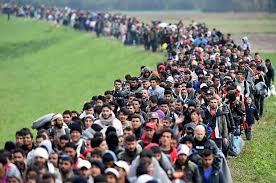
The hordes of refugees that Europe has let in have mostly been male, and the results have been catastrophic – let’s do the exact opposite

New Zealand, like much of the rest of the Western world, is stuck between a rock and a hard place on the refugee issue. On the one hand there are humanitarian concerns, on the other there is evidence that letting people from certain cultures into your own country drastically lowers your own quality of life. This essay explores a middle ground: only let female refugees in.

With regards to the humanitarian concerns, it can fairly be stated that one refugee life saved is equal to any other refugee life saved. Therefore, if New Zealand could take an extra 1,000 female refugees at the cost of taking 1,000 male refugees, it would not be a net loss on utilitarian grounds.

So this policy is neutral in terms of humanitarian impact. But with regards to lowering one’s own quality of life, it’s obvious that the refugees who do lower the life quality of their host societies are almost always men.

The European experience has demonstrated that to open the door to males from the sort of cultures that are currently producing the majority of refugees is to betray your own womenfolk.

It’s now common for European women to report feeling too afraid to go outside at night – an absolute disaster from the perspective of law and order, let alone the perspective of needing to protect your society’s most vulnerable.

Given that letting male refugees into your country has had the proven effect of inviting the sexual harassment and rape of your own women, why not simply refuse to let in male refugees full stop?

Female refugees don’t commit crimes at anywhere near the rate of males, and they almost never commit the violent sex crimes that often create life-long psychological trauma. So why not cut the supply of these criminals off at the source?

Doing so would also have the effect of greatly allaying the entirely reasonable fears that members of the host society have about mass resettlement of refugees in their neighbourhoods. Banning men would have the effect of banning virtually all crimes of sexual or physical violence, which ought to make the host population much more receptive to the humanitarian needs of the women who would be let in.

So if there are genuine humanitarian reasons that obligate the West opening its borders to the world’s rejects, it’s best to do so in a way that minimises the potential blowback from the host society. This means filtering out those among the refugees who cause most of the blowback.

After all, not much makes a person want to burn down a refugee shelter more than hearing news about another young girl molested by an adult male refugee.

From the perspective of the other side, nothing would incentivise the remaining men in fucked-up countries to unfuck themselves more powerfully than raising the spectre of a future without women.

They would be forced to choose between settling their petty squabbles and religious shitheadedness and finding a way for everyone to live in peace, or living in a world where sexual opportunities were limited to goats and camels.

Some critics might contend that such a policy will just make those places crack down on women’s rights harder and restrict their freedom of travel even more.

If that was the result, that would simply prove that the culture of these places was fundamentally opposed to women’s rights and to freedom in general, and thereby demonstrate the moral obligation that we have in the West to give women shelter from the men enforcing the values of that culture.

Perhaps the best aspect of this policy is that it appeals to the innate sense of justice that most people have. After all, it is the men of these places that are creating all the conflicts that are causing each other to flee, so why should women be punished for any of it?

Let the men sort it out in the absence of women, as they were forced to do in Lysistrata.

Te Reo With Mnemonics: Animal Words

Dog – kurī

A dog and a man are walking along a path. The dog turns to the man and says “Can you carry me for a bit?”

Cat – tori

A cat dressed in a three piece suit with an expensive hat walks down the street with Margaret Thatcher, David Cameron and some other Tory Party politicians (use the closest to a Tory politician you can think of).

Bird – manu

A bird flies through the forest, and as it lands it takes the form of a man (if you know a man named Manu, imagine it taking his form).

Pig – poaka

Two pigs walk up to a sleeping woman. “Is she awake?” one asks. “I don’t know – poke her.” The first one then pokes the sleeping woman with a trotter.

Rat – kiore

A rat runs through a restaurant with an apple core in its mouth.

Chicken – pī

A chicken struts along the ground pecking at peas.

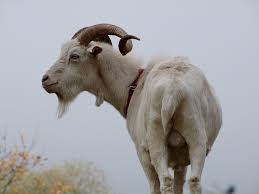
The Maori word for billy goat – koati toa – shares a k-t-t- pattern with the English word ‘quartet’

Mouse – kiore iti

[Literally means “small rat”] A mouse is busy eating an apple core. The mouse is the core eater.

Horse – hōiho

Eeyore the donkey from Winnie the Pooh series walks through a paddock, only instead of a donkey he is a horse.

Billy goat – koati toa

Four billy goats sing in a barber’s shop. They are the Billy Goat Quartet.

Deer – tia

A deer emerges from the forest wearing a scintillating tiara.

Cow – kau

A cow in a skirt hits a golfball off a tea. She is the famous bovine golfer Lydia Kau.

Fish – ika

A boy runs up behind a girl and places a fish on the back of her neck. The girl shrieks: “EEEK!”

*

The above is an excerpt from the upcoming Learn Maori Vocabulary With Mnemonics, by Jeff Ngatai, due to be published by VJM Publishing in the summer of 2017/18.

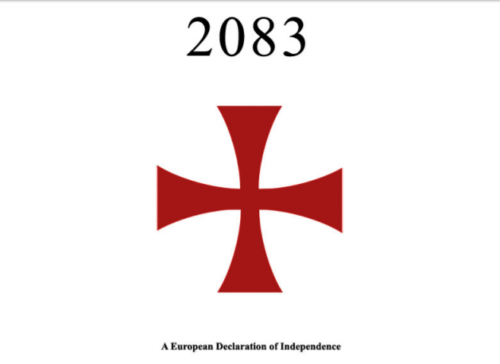
VJMP Reads: Anders Breivik’s Manifesto II

This reading carries on from here.

The first part of the document proper is devoted to the “falsified history” of the West and “other Marxist propaganda”. It begins with a review of the history of Islam, in which Islam is declared responsible for the murder of over 300,000,000 non-Muslims throughout history.

It also lists, at length, the historical crimes of Islam. This exhaustive list of genocides, coupled with lines like “more than 95% of today’s Journalists, editors, publishers are pro-Eurabians” makes it easy to get the impression that Breivik has a particularly paranoid Weltanschauung.

He catalogues in detail the strategies that he considers the Islamic “theofascists” and Marxists to be using to manipulate the popular opinion of the religion in the West. Most of these strategies boil down to either lying or intimidation.

Curiously, despite that he describes himself as a Christian, he nonetheless is able to correctly point out that the vast historical crimes of Christianity are mostly inspired by religious features that are shared by all the Abrahamisms.

Without irony, Breivik describes a supposed rule of the Islamic theofascist propagandists: “If people ignore or refute your distorted version of history, accuse them of distortion and political abuse of history.”

It is taken for granted that his own understanding of history is complete and accurate.

Breivik doesn’t seem to have much time for the idea that there could be many different reasons to believe in different accounts of history. The history of Islam is one of evil, and any attempt to paint a more positive picture can only be part of a campaign of deliberate misinformation.

A noticeable pattern is that Breivik is very selective in what he cites as evidence. At one point he cites a Danish literature student who “concludes that Islamic texts encourage terror and fighting to a far greater degree than the original texts of other religions.”

There is nothing objectionable about this in isolation, but in the context of a determined attack on the legitimacy of the university system – with the attack itself centering on the degenerative effect that subjective textual analysis has had on the truth – it seems a bit contradictory.

However, the criticisms made of the content of the Koran and the Hadith cannot simply be dismissed. The plain facts are that the document calls for the killing and/or subjugation of non-believers at dozens of different points.

In fact, Breivik’s criticism of Islam raises some questions that, although deeply uncomfortable, are also unavoidable if one wishes to honestly evaluate the likely outcomes of Muslim culture expanding into the West.

If Muhammad was the perfect man who all Muslims should emulate, what do we make of the hadith that describes him as consummating his marriage to a nine-year old? Likewise, what do we make of his admonitions to kill adulterers and apostates? Or his decree to have a poet killed for mocking Islam?

“The entire Islamic moral universe devolves solely from the life and teachings of Muhammad,” Breivik contends.

So what do we do about the fact that some of these actions, believed by Muslims to have been undertaken by the perfect man in total accordance with the Will of God, are grossly incompatible with what Western culture considers to be good order?

Surrounding these very pertinent questions are long, paranoid expositions about the supposed Islamic sanctioning of lying and deceit, especially when speaking to unbelievers. Breivik certainly appears to believe that lying to non-believers is an inherent part of the Islamic religion and culture.

In some ways, the general criticisms of the unwillingness of Muslims to peacefully coexist sound entirely plausible, because we know of the history of the previous waves of Abrahamism to Europe. Christians also came to Europe professing a desire to live in peace, and they nevertheless found plenty of scriptural support for their efforts to terrorise the locals for centuries.

In other ways, things are less clear. It’s obvious that the other Abrahamisms – in particular Judaism and Christianity – are no longer as mindlessly bound in ancient tradition as they once were, but is this true of Islam? And if so, to what extent?

Breivik would evidently answer in the negative. He would have it that Islam has not changed at all since those early days of caravan raiding, and that even if it has, it’s liable to regress back into violence on account of the precedent set by Muhammad himself.

It’s certainly a very dark and dire perspective – but is it wrong?

*

The VJMP Reads column will continue with Part III of Anders Breivik’s manifesto.