
To Deny That Cannabis Is Medicinal Is To Deny The Humanity of Medicinal Cannabis Users

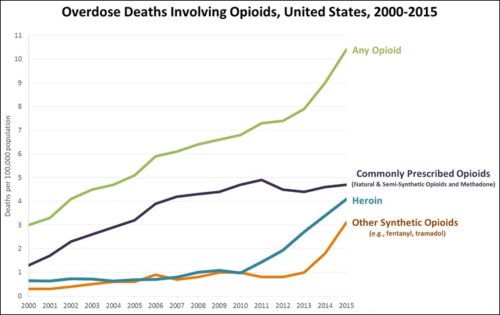
Opioids kill 1 in every 10,000 Americans every year, but they’re fully legal

One of the most awful aspects of being a medicinal cannabis user is getting lied to by doctors and mental healthcare workers who deny the emotional and spiritual benefits of cannabis use. The problem isn’t that they won’t help you get hold of cannabis medicine (because there are plenty of people who will) – it’s that they refuse to have an honest conversation with you about the benefits and side-effects of using it.

It’s impossible, in most places, for a sick person who uses medicinal cannabis to expect that their doctor will listen honestly to what they have to say. If the patient mentions the benefits of their cannabis use, the doctor will insist that the patient must be mistaken when they believe that cannabis helped them. Even if the doctor goes as far as conceding that cannabis has some medicinal value, they will almost always attribute all manner of ghastly side-effects to using it.

Worst of all, it’s impossible to change the mind of your doctor by presenting evidence from jurisdictions that have legalised medicinal cannabis. It doesn’t matter that medicinal cannabis was made legal in California in 1996 after the doctors there looked at the evidence – those doctors are simply presumed to be wrong, and recklessly so. End of story.

This refusal to speak honestly with patients is, from the patient’s perspective, a dehumanising experience. It’s a way of saying that your experience can be discounted, because you are worth less than a normal human being. With almost every other medicine it’s possible to tell a doctor that it alleviates your suffering and have it considered enough to get a prescription.

This is even true of opioids, which kill 1 in every 10,000 Americans every year, and which have been so recklessly overprescribed that the opioid crisis now has its own Wikipedia page.

Not so with cannabis. Somehow cannabis has the mysterious property of causing suffering that only doctors, politicians and pharmaceutical company lobbyists are able to see. A patient might feel that their suffering is reduced from using medicinal cannabis, but unfortunately for them, they are not considered full human beings on account of the claim that cannabis causes psychosis. Therefore, their belief that cannabis alleviates suffering can be dismissed on account of it being a belief held by a psychotic person.

It’s a vicious Catch-22: you might feel that the cannabis takes your suffering away, but this can be trumped by the declaring that using cannabis robs you of your ability to reason, and then anything you say can be dismissed as the ravings of a lunatic.

If a person is suffering psychologically, and they take a substance that they believe to be medicinal, and their experience of using this substance is that it ameliorates psychological suffering, then how can anyone else possibly presume to judge otherwise?

It might be that the side-effects of using some particular medicines are so great that, on balance, it’s better to look for an alternative than to prescribe them, but significant side-effects from cannabis use are non-existent.

The feeling from the patient’s perspective is that doctors are saying that ameliorating your suffering, in particular, is not worth pursuing because you are not valuable. Elderly Baby Boomers are getting stuffed full of opioids at the first murmur of complaint, but if anyone else wants to use some cannabis they have to risk several years in prison.

*

If you enjoyed reading this essay, you can get a compilation of the Best VJMP Essays and Articles of 2017 from Amazon for Kindle or Amazon for CreateSpace (for international readers), or TradeMe (for Kiwis).
Psychedelics Fill The Vacuum Left By The Destruction of Genuine Spirituality

In the West we have no common spiritual tradition. The closest we come is an empty imitation of the old myths and legends of a Middle Eastern tribe of genital mutilators. Where the Buddhists pray for an end to the suffering of all sentient beings and the Hindus know for certain that consciousness survives the death of the physical body, we Westerners are still mutilating the genitals of our baby boys and living in utter terror of the day our vital organs shut down. Luckily, there is historical precedent for solving these problems.

The natural spiritual traditions of Westerners were destroyed by successive waves of Abrahamic invasions, beginning when the Romans made the terrible mistake of taking in Abrahamic refugees. Allowing this evil supremacist tradition into the West had the effect of corrupting those tasked with maintaining these natural spiritual traditions, ending with their replacement by hollow lies.

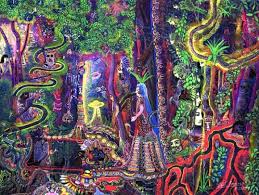
Before the Abrahamists invaded, Europe was rich in folk spiritual practices, with use of the amanita muscaria mushroom in the North and psilocybin mushrooms in the South allowing our forebears to reconnect with God. Not only did the ancients use psychedelics, but they did so frequently and with reverence, like any skilled practitioner would use them today.

The amanita muscaria folklore lives on in our stories about Santa Claus and his reindeer (Santa’s red and white costume represents the mushroom, his rotund build represents its roundness. The reindeer are there because Nordic shamans would potentiate the psychedelic effect of the mushroom by inducing reindeer to eat it and then drinking the animals’ urine).

The ancient Greeks partook in the ceremony at Eleusis once every mushroom season, and they did so with such reverence that to this day no-one is quite sure of precisely what the recipe of the kykeon was. This enabled them to see the world beyond in a way that had up until then been the province of exceptionally gifted shamans.

The Abrahamists destroyed as many of these traditions as they could, as Abrahamists have done everywhere in the world they have set foot, on account of the unique viciousness of that religious tradition. But they could not destroy the mushrooms themselves, no matter how severely they punished their use. And so it was only a matter of time until they lost their grip and the folk spiritual traditions reasserted themselves.

This causes problems, although we don’t realise it because you need a little bit of spirituality to realise it, and we have none left. If one of us does become a little bit spiritual, they tend to realise all of these problems, and this often leads directly to the state of psychological collapse known as psychosis.

Because our culture is rotten with materialism, we have no commonly understood way of recognising when one of us has achieved a state of spiritual insight. Indeed, the usual response appears to mock them for being a “loony”, as if the eternal truth of materialism was so self-evident that only a mentally ill person would even pause to question it.

This is why Westerners who achieve a spiritual breakthrough usually end up with a psychiatric diagnosis in short order. Our culture is so spiritually dead that we cannot recognise spiritual gnosis even when it’s right in front of us. We sneer and jeer at any hint of it.

But knowledge of magic mushroom use (alongside that of LSD) has slowly seeped into the Western consciousness since the 1950s. Thanks to the Internet and what’s left of our culture of intellectual free inquiry, it has been possible for those who have heard the call of the shaman to share their experiences with others, and after much discussion it has become clear that the psychedelic experience and the spiritual experiences of the ancients are much the same thing.

The Church did such a good job of destroying natural spirituality, and they did it for so long, that they are unable to act when it starts to arise again (as it is doing now), because they have forgotten what their enemy even is. This means that knowledge of how to use psychedelics will once again become widespread, and this will once again lead to a spiritual golden age.

*

If you enjoyed reading this essay, you can get a compilation of the Best VJMP Essays and Articles of 2017 from Amazon for Kindle or Amazon for CreateSpace (for international readers), or TradeMe (for Kiwis).
Does Cannabis Prohibition Cause Schizophrenia?

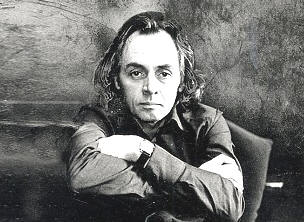
R. D. Laing

In The Politics of Experience, the great Scottish psychiatrist R. D. Laing presents his own understanding on the ultimate causes of schizophrenia. He concludes that schizophrenia is not mainly caused by either genetic or environmental factors but rather “the experience and behaviour that gets labelled schizophrenic is a special strategy that a person invents in order to live in an unlivable situation.”

This is a position that many schizophrenics could themselves agree with. Common to the schizophrenic experience is a sense of having been “skewered” by the world, in that one is doomed if one chooses a certain option but also doomed if one does not choose it. This kind of Catch-22 situation is regularly accompanied by a level of anxiety that is impossible to live with, followed by the mind starting to disintegrate as a way of relieving unendurable levels of stress.

It’s not a position that receives much sympathy from the psychiatric establishment, who are almost all hard-core worshippers of the cult of materialism. Most Western psychiatrists cannot conceive of mental health in any other terms than brain chemistry, and they cannot conceive of treatment in any other fashion than dishing out pills. That someone has been driven insane by society is an unpalatable possibility.

Cannabis use is believed by many to be the cause of schizophrenia, because the association between cannabis use and getting such a mental health diagnosis has long been noted. In the mainstream Western model, it is assumed that the causal relationship of these two variables goes in the direction of cannabis use causing people to develop psychosis and schizophrenia.

This has led to many psychiatrists telling their patients that not only are the patients themselves to blame for their own mental illness (which leads to terrible feelings of guilt and self-recrimination) but that only by avoiding cannabis can they hope to make a recovery.

The problem with this approach is, obviously, that cannabis is medicinal, and the vast majority of cannabis users know this, and so being told such things by a mental health “professional” is confusing, frustrating and enraging.

Getting lectured about what one needs to do to stay mentally healthy by a person who has never had schizophrenia, who has never had any experience with psychosis and who has almost certainly never used cannabis, much less a major psychedelic, is a difficult thing for any person to put up with, let alone an experienced psychonaut. When that person doing the lecturing is actually ignoring one’s own lived experiences with the medicinal qualities of the substance, it’s mind-boggling.

Because of cannabis prohibition, mental health care workers are extremely reluctant to tell the truth about the medicinal qualities of the substance (if they’re even aware of them). After all, if they recommend medicinal cannabis to a patient in a place where it’s illegal, they’re effectively recommending that the patient commit a crime, which comes with various ethical issues.

The problem is that the patient is frequently aware that the mental health care workers are lying by omission, which puts them in an impossible situation – exactly the kind of situation described by Laing as schizophrenogenic. If you have problems knowing what’s real and what isn’t, talking to someone who you know is lying to you while that person is also claiming to be helping you is just too much for the human mind to cope with.

If doctors and psychiatrists are there to help us, why don’t they tell us the truth about the medicine that does so much to relieve abominable suffering? The fact that they refuse to do so only feeds into the perception often held by paranoid schizophrenics – that they really are out to get you. It also makes people wonder if they’ve fallen into a time warp of some kind.

Prohibition of cannabis medicine is so absurd, so ludicrous, that it actually causes mental illness in the people whose lives are affected by it.

*

If you enjoyed reading this essay, you can get a compilation of the Best VJMP Essays and Articles of 2017 from Amazon for Kindle or Amazon for CreateSpace (for international readers), or TradeMe (for Kiwis).

What Was Done To The Colonies Is Still Being Done – To Us

Nothing has really changed from 1860, except that the propagandising of the slave system has become more sophisticated

The herds of the West have been conditioned to react to the word “colonisation” with horror and guilt. From the late 1400s until the European empires were wound down after World War II, ghastly crimes were indeed committed by colonial invaders against the native peoples, all over the world. But what this focus on historical crimes overlooks is that these same crimes are still being committed, by the ruling classes against the middle and working ones, to this very day.

In 1860, shortly before the American Civil War, the total slave population in the United States stood at 3,953,761, or 12.6% of the total population. In the Gulag system at its height under Stalin, there were believed to have been up to 6 million people incarcerated.

Most people agree that slavery and Communism were two of history’s greatest evils. But in 2013, there were 6,899,000 Americans under correctional supervision (probation, parole, jail, or prison) – about 2.8% of the total population. Although smaller as a percentage of the national population, in absolute terms it still represents a greater number of unfree people than under either slavery or Communism.

In fact, it amounts to about 25% of the world’s population of prisoners, and not all of them are in there because of murders, rapes and armed robberies. Far from it. Because of the War on Drugs, the population of non-violent drug offenders in American state or federal prisons has increased twelvefold since 1980.

The same strategies that the colonial powers used to subjugate their client populations are being used today to subjugate the peoples who are still their client populations – only instead of being done to dark-skinned races by lighter-skinned ones, it’s done to the working and middle classes by the ruling ones.

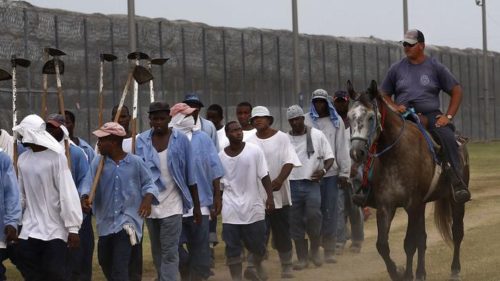
Today’s system of convict labour achieves almost everything that was seen as desirable in a slavery system anyway. Some refer to this as the ‘prison-industrial complex‘, because the profit incentive seems to have led to people being imprisoned for the benefit of shareholders in private prisons. These prisoners are often paid less than 20c an hour for their labour, despite that their productivity is dozens of times higher.

So the mentality behind the great colonial enterprises of enslaving millions and extracting resources from them in the form of labour not only still exists but it still manages to enforce its will in the 21st century West. The only difference is that, this time, the people are enslaved through the prison-industrial complex, and mostly for arbitrary drug offences.

Some groups are hit harder than others by this approach. Black people are imprisoned at the rate of 2,306 per 100,000 people, which means almost 1 in every 40 American blacks are in prison at any one point in time, and for black males the rate is an incredible 4,347 per 100,000 people, about 1 in 21.

The mentally ill also suffer atrociously in American prisons, regularly being subjected to corporal punishment for reasons related to their condition, such as becoming confused or anxious or having difficulty following instructions.

The truth is this: the ruling classes only recognise each other as true human beings, and all lower classes are considered some kind of animal to be exploited. Emphasising the racial aspect of the crimes of colonialism, as is common today, only serves to shift the blame from the ruling classes who planned and designed it to the middle and working classes who were forced to help carry it out lest they become the next group of victims.

Colonisation was never a matter of race, and it didn’t stop happening after the European empires fell. It was always a matter of class, and it simply shifted from being done to them over there to being done to us over here.