
Is Social Media About to Split Into A Right-Wing Sphere And A Left-Wing Sphere?

Left-wingers rejoiced when a group of major tech companies colluded to ban conspiracy theorist Alex Jones from their sites last week. Right-wingers were horrified, seeing the spectre of Communist-style mass censorship. This essay discusses the possibility that these targeted right-wingers will switch to alt-media, finally following Styxhexenhammer’s repeated admonitions to do so, dividing social media into a right-wing and a left-wing sphere.

The Left is now the Establishment.

If that wasn’t obvious from Brexit, where the Left stood side-by-side with the bankers, big business and the Conservative Party to oppose the working class, or from the American Presidental Election, where the Left threw its weight behind neoliberal warmongering psychopath Hillary Clinton instead of the Bernie Sanders that America needed, it’s obvious by now, after the Free Speech Purges of 2018.

The Left is now the Establishment, and the Right is now the counter-culture.

Neoliberalism is the dominant global political ideology, and has been ever since Ronald Reagan and Margaret Thatcher dumped it on an unsuspecting Anglosphere in the early 1980s. The core belief of neoliberalism is that deregulation brings wealth, therefore we ought to repeal all laws that restrict the movement of both labour and money. Laws restricting the movement of labour are bad for business because they drive up wages, and laws restricting the movement of money restrict the investment freedoms of the wealthy.

Being the Establishment, the Left promotes neoliberalism. This has mostly been achieved through leftist support for mass immigration, which had the benefits of destroying solidarity among the locals who received the immigrants, which in turn helped to destroy unions and to drive down wages. The more immigrants, the lower the wages, and therefore the greater the profits. For over three decades, the Left has been involved in laying guilt trips on anyone who didn’t support this.

Unfortunately for the Establishment – and for us – this mass immigration didn’t go as smoothly as most people had expected. Instead of a multicultural paradise, things turned out a lot more like what mass movements of people historically turned out like – an invasion. Despite 24/7 propaganda intended to convince people that this forced integration of different cultures was a good thing, and has had good results, people have become aware of what they have lost.

Like control freaks everywhere, the Establishment cannot admit that it made a mistake. Once an individual becomes part of the Establishment, they consider themselves second only to God, and so far above the plebs that they simply do not ever have to say sorry. Consequently, the Establishment cannot and will not admit that neoliberalism has been a mistake, that it has actually lowered people’s standards of living, instead of raising them.

As before, so after. We can predict from what happened elsewhere what will happen next. The Establishment will crack down on dissent harder and harder as the failures of neoliberalism become ever more obvious. As the realisation grows that neoliberalism has failed and was only beneficial to a small financial elite, people will get angry. The Establishment will respond with ever more aggressive anti-free speech laws.

These can already be seen on major tech platforms like Reddit, where free speech is limited to a small number of subreddits such as The_Donald, on Twitter where calls for the genocide of white people go unpunished but remarks about Jews or blacks result in instant bannings, and on FaceBook where right-wing jokes result in 30-day bans while left-wing calls to violate the human rights of right-wingers get no sanction.

For alt-centrists such as us here at VJM Publishing, this division of social media is not welcomed, because it is another sign that the political centre is dying and the extremes are growing, which is a sign of impending war. War means waste of blood and treasure, which means that fewer people are willing and able to buy our books.

However, we have to admit that our prediction is for the crackdowns against freethinkers to continue, until those on the Right decide they have had enough. At that point, social media to split into a left-wing sphere where discourse is dominated by Establishment tech firms, and a right-wing sphere where discourse is free. Evidence of this comes in the form of massive recent growth in alt-tech platforms such as Minds and BitChute.

Anyone who thinks that this sounds like a revolution – it is. The revolution against neoliberalism is underway. The political world is about to split into a globalist, authoritarian Left and a nationalist, libertarian Right. This authoritarian Left will be the major apologists for neoliberalism, while the Right will look to the future.

*

If you enjoyed reading this essay, you can get a compilation of the Best VJMP Essays and Articles of 2017 from Amazon for Kindle or Amazon for CreateSpace (for international readers), or TradeMe (for Kiwis).
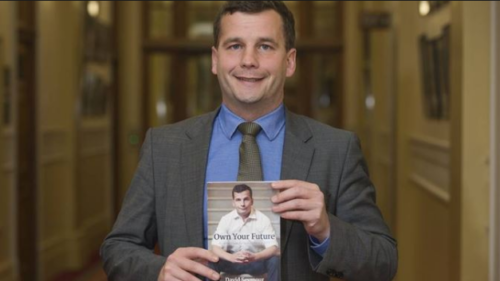

VJMP Reads: David Seymour’s Own Your Future IX

A Liberal Vision for New Zealand in 2017

This reading carries on from here.

The eighth chapter in Own Your Future is ‘Transport’. Again Seymour opens with another Auckland-based anecdote. One wonders if he’s ever been outside of Auckland except for flights to Wellington. His story is about sitting stuck in traffic, not moving, and realising that Auckland had a traffic problem (the focus on stories like this makes it easy to understand why ACT gets so few votes from outside of Auckland).

Auckland’s traffic woes and the effect that congestion has on economic efficiency is discussed at length. Seymour quips that “Auckland gridlock is the same phenomenon as Russians queuing for bread in the Soviet Union.” Again the obsessional Auckland focus seems strange – why devote so much space to a subject that has no relevance to 60% of the New Zealand population?

The Auckland Council needs another $12 billion, Seymour tells us. Light rail is mentioned in the context of Auckland’s pipe dream to be a world-class city, but his first proposal is for the Government to get out of the way of ride-sharing. Keeping with the ACT them of reducing regulation wherever possible, he suggests that Uber drivers shouldn’t have to get licenced as if they were taxis before they begin operating.

Seymour’s best point here is not so much about Auckland transport but about the fact that Baby Boomer Members of Parliament are not qualified or even suited to understand new technology, such as Uber. Most of them get ferried around by a Parliamentary limousine service, and ride-sharing technology is simply something from another world. ACT’s proposal to streamline the approval of ride-sharing applications seems like a good one here.

Hilariously, Seymour complains about a “prejudice against market forces” in New Zealand, as if we weren’t already such die-hard fans of neoliberalism that we raise the refugee quota in the midst of our worst ever housing crisis, one that has working families living in cars. This is written in the context of the Government getting out of the way of people trying to use ride-sharing services.

Another solution to congestion is electronic tolls in areas that are known to be congested. Seymour doesn’t debate the obvious criticism that such tolls are effectively another tax on road users, preferring to use the example of Singapore. It seems very odd that the supposed proponent of small government wants a system where every road user is tracked by GPS and charged a fee for going into a government-designated congestion zone.

True to his neoliberal roots, Seymour completely omits any mention of how the recent flood of immigrants might have led to increased congestion in Auckland. The New Zealand population increased from 4.2 million to 4.8 million during the term of the Fifth National Government, and most of those moved to Auckland, but Seymour will not mention this because mass immigration serves not only the major money interests to which he is beholden but also pumped up the house prices of his Epsom electorate.

*

If you enjoyed reading this essay, you can get a compilation of the Best VJMP Essays and Articles of 2017 from Amazon for Kindle or Amazon for CreateSpace (for international readers), or TradeMe (for Kiwis).

Writing Bulimia Nervosa

Bulimia nervosa (usually known as bulimia) is a psychiatric condition characterised by intense bouts of over-eating, followed by a “purge” of some kind. The condition is about nine times more common in women than in men, and is believed to affect 1% of young women at any given time. This article looks at how to write engaging and believable characters with bulimia.

The classic example of bulimic behaviour is to consume an abnormally large amount of food, and then go to the toilet to vomit it all up. It’s worth noting that simply throwing up a lot, even after eating, is not sufficient for a bulimia diagnosis. The throwing up is not the main factor, as the condition is psychological and not physical.

It’s also worth noting that bulimia is very different to anorexia, despite that both conditions are eating disorders caused by a nervous complaint. Bulimics and anorexics share many symptoms, in particular the obsession with food and body image, but there are major differences. Bulimics are often at or near a healthy weight (despite the unhealthiness of much of their activity), and anorexics do not binge eat as a general rule.

If the protagonist of your story encounters another character with bulimia, it might be a matter of slowly coming to the realisation. The character with bulimia might show signs of having thrown up a lot or recently, such as bloodshot, puffy eyes or burst blood vessels in the face. Other physical tell-tale signs are low energy and evidence of self-harm.

Another character might give away signs that they are falling into a pattern of bulimia. An obsession with dietary rules is a common early sign. A character developing bulimia might also develop a set of strict dietary rules that they expect themselves to abide by. These rules might seem obsessional to a second character, but the bulimic character is unlikely to appreciate this sentiment.

These rules are key to understanding the condition. Because consuming fewer calories than one needs to survive is not sustainable in the long-term, the strict dietary rules will inevitably be broken. This doesn’t come with a sense of relief but a sense of horror and shame – feelings so intense that they have to be purged. In this state, vomiting often brings the desired relief.

If the protagonist of your story has bulimia, they are likely to live a very difficult life with a considerable amount of confusion. Thoughts of suicide are common, a symptom of both the condition itself and the difficult life circumstances caused by the condition. Also common are depressive and obsessive-compulsive thoughts, especially self-recrimination and rituals relating to food.

A protagonist with bulimia will probably experience a great deal of anxiety in their everyday life. This is not just because of the condition itself, with the neverending worry and guilt relating to food and body shape. It is also because of the social anxiety that comes with trying to keep their condition a secret. Your protagonist might find themselves telling lies to keep other characters from realising they are bulimic.

A character who develops bulimia may do so on account of exposure to media images that create an idea about what a human body ought to look like. It’s common for teenage girls – especially those who have never previously thought about their bodies as things that sexually attract men – to develop an obsession with what their bodies ought to look like. Bodily self-hate is an inevitable consequence of this for some people.

Some societies that have not yet been exposed to sophisticated and manipulative Western advertising culture find it a shock when they finally are. Many people have been unaware of the possibility of hating their own body on account of it being the “wrong shape”. Some cultures are naive when it comes to lies and lying, and are more easily affected by them. These cultures can see sudden spikes of bulimia rates when this advertising does come.

Like many other psychiatric conditions, bulimia carries an increased risk of depression, anxiety and self-harm. Thoughts like this form an unpleasant positive feedback loop, where the low self-regard puts a person at risk for bulimia and the bulimia causes low self-regard. A character with the condition may not realise that their thoughts are circular. On the other hand, they might be all too aware, and start losing sanity.

Also like other psychiatric conditions, there is a body of literature that suggests a strong correlation between having bulimia and early childhood abuse, in this case sexual. It’s possible that the trauma of sexual abuse leads to some difficulty in handling thoughts and feelings related to one’s own sexual attractiveness.

Bulimia is, along with anorexia and schizophrenia, one of the psychiatric conditions most likely to end in suicide. It is easily possible that such a fate will await a bulimic character in your story – after all, the average woman can no easier look like a photomodel than the average man can look like Schwarzenegger. However, like most mental illnesses, the majority of people with bulimia find some way to accommodate it in their lives.

*

This article is an excerpt from Writing With The DSM-V (Writing With Psychology Book 5), edited by Vince McLeod and due for release by VJM Publishing in the summer of 2018/19.