
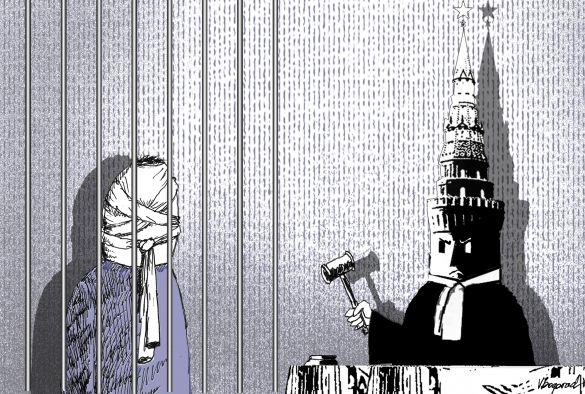
Mental Illness is a Political Concept, Not a Medical One

Many people live under the glib assumption that mental illness is a subject that the experts have got a good handle on. These experts, through the wisdom gleaned from decades of studying human behaviour in a myriad of contexts, have made a clear distinction between mentally ill and mentally healthy behaviours and thoughts, and can apply this accurately in a clinical setting. We are told that this distinction is objective and scientific, but the reality is that who is crazy and who isn’t depends more on fashion – and who is in power – than on science.

Take the example of homosexuality. Sexual attraction to people of the same gender was considered a mental illness as recently as the second edition of the Diagnostic and Statistical Manual of Mental Disorders. By this, it was meant that same-sex attraction was a mental defect that could be diagnosed and, if need be, treated. Some would say that we’ve evolved past such a mentality, and this author would not disagree, but with a caveat: we could easily make homosexuality illegal again.

All it would take would be a strong cultural shift towards a family-oriented kind of folk conservatism, and for it once again to be fashionable to be against homosexuals, and the herd could easily come to take it for granted once again that homosexuality should be illegal. If a popular celebrity made arguments against homosexuality on national television, the masses would soon be turned against it. Some arguments against homosexuality are perennial, and will inevitably become fashionable again, like the appeal to naturalism.

The appeal to naturalism is a common argument against homosexuality. It contends that, because both a male and a female are necessary for an act of sexual intercourse to have any chance of resulting in reproduction, only this arrangement of sexes is natural. Two people of the same sex engaging in sexual intercourse cannot produce a child and is therefore unnatural, and this is therefore immoral, in the same way that having sex with animals or the pre-pubescent cannot produce children and is therefore immoral.

One could fairly argue that there are a number of fallacies in this line of reasoning, but that’s not the point. The point is that, as long as the appeal to naturalism holds some sway among people, there is a chance that it could become fashionable again such that the masses came to accept it as obvious. If one looks at the world, and at the history of it, it’s apparent that homosexuality, like feminism and the use of certain drugs, is a fashion that waxes and wanes according to historical cycles.

The same thing is true of other conditions now considered to be mental illnesses. The case of schizophrenia is another example of where politics trumps medicine. No-one knows what schizophrenia and psychosis really are: psychosis is said to be the loss of touch with reality, but there is no universal, objective way of knowing what reality is. What is commonly accepted as reality is something that varies greatly from place to place and from time to time, even among people who are all committed to the scientific method.

No-one really understands why some people are crazy, but if a person doesn’t work, they need a doctor to declare them mentally unhealthy if they want to go on welfare. Sounds straightforward, but if an incoming conservative government wants to trim the number of people on welfare for psychiatric reasons by 10%, then the psychiatrists will select the 10% of their current patients that they feel have the best chance of making it and declare them to be mentally healthy. That they are the same as before doesn’t matter – the important thing is that the politics have changed.

For political reasons, all responsibility and blame for a person suffering a mental illness has to be shifted back onto either genetics or the person themselves. The environment is seldom to blame, but if it ever is, it is the fault of the parents and the home environment, never the fault of the rulers and the social environment. Depression is never caused by society being depressing. Anxiety is never caused by society being anxiogenic. What causes mental illness is bad genes, doing drugs or some kind of quasi-mystical spiritual failure, but never the misarrangement of society.

Some will say that mental illness demonstrates a failure to adapt to society. Fair enough, but the problem with this is that society is grossly unhealthy. For many tens of millions of people, the pressure of trying to fit into a society as fucked up as this one has pushed them beyond the limits of their psychological endurance. Their major problem is that society does not, and never will, recognise the part that it has played in making people mentally ill, because this would be a political error. This obstinance only serves to drive more people insane.

At the end of the day, it’s politicians that that people take orders from, and not research psychologists, and so doctors who have to deal with mental illness have to use the framework laid down for them by politicians. These politicians have not been able to resist the temptation to play around with the definitions of mental illness for the sake of achieving their political goals. Unfortunately, this meddling has become so severe that the concept of mental illness is now more political than it is medical.

*

If you enjoyed reading this essay, you can get a compilation of the Best VJMP Essays and Articles of 2017 from Amazon for Kindle or Amazon for CreateSpace (for international readers), or TradeMe (for Kiwis).

One Year of Rule by the Left Wing of the Capitalist Party: A Retrospective

The Labour faction of the Capitalist Party came to power at the end of 2017, taking over from the National faction of the Capitalist Party after that year’s general election. Even though everyone knew that the Capitalist Party would still be in charge, many believed that the ascendancy of the Labour faction would mean a new deal for the beleaguered Kiwi population. As this essay will recount, they proceeded to piss in the faces of the New Zealand working class in at least four major ways.

Despite a promise to not sign the Trans Pacific Partnership Agreement, the Labour Government did so to much fanfare on the 9th March. Thousands of people marched against the TPPA in 2016, in New Zealand’s largest protests in recent years. Then Labour Leader Andrew Little was quoted at the time as saying that “Labour was opposed to the TPPA because compromises to New Zealand’s sovereignty were not justified by the ‘meagre economic gains’.”

Most people in the New Zealand working class oppose such trade agreements because neoliberalism makes it easier for capital to bid down their wages. The Capitalist Party, on the other hand, represents major moneyed interests, and they welcome such trade agreements because they shift the power equation even further away from labour and even further towards capital. Therefore, the Labour wing of the Capitalist Party is happy to see the wages of New Zealand workers fall, and they happily pissed in the faces of Kiwi workers by signing the TPPA.

Related to this betrayal was a second face-pissing, when the Labour Government raised the refugee quota to 1,500. It’s well known that these people won’t be dumped in neighbourhoods where the rich live. The sex, violence and property crimes that they bring in their wake will not affect the wealthy, who live far away from the ghettos. It is the working-class suburbs that will be forced to absorb these human crime waves, not the rich suburbs in which Labour and Green Party MPs live.

Those wealthy will, however, benefit from the downward pressure that refugees have on wages. The greater the national pool of cheap labour, the lower wages will fall, therefore the more profitable local capitalist enterprises become. If the Labour Party represented the working class, they would not have raised the refugee quota – this would have had the effect of restricting the inflow of cheap labour and thereby creating upward pressure on wages.

The lying about legalising medicinal cannabis comprises the third major display of disrespect on the part of the Labour Party towards the New Zealand working class over the past year. Poor people in New Zealand are desperate for a substance that can help ease the pain of living in this failed society, but which doesn’t have the terrible side-effects of alcohol or opiates. The Labour Party have refused to budge so much as an inch on this issue, acceding only to allowing people who are dying an extra defence in court against a cannabis possession charge.

Although a clear majority of New Zealanders want some kind of cannabis law reform, and although outlets like VJM Publishing have been arguing in favour of cannabis law reform for years (most seriously from 2012, with the publication of our Cannabis Activist’s Handbook), the Labour Party had eight MPs that voted against Chloe Swarbrick’s medicinal cannabis bill, which would have allowed sick Kiwis to grow a medicine at home.

A fourth face-pissing, delivered today, was Labour’s plan to ban vaping. Predictably, the person pushing it – Manukau East MP Jenny Salesa – was one of the eight backstabbing scum in the Labour caucus who voted against Swarbrick’s bill. It seems that authoritarianism against working class practices are entirely acceptable for the Labour Party.

The reason for the vaping ban is not because of health reasons – vaping has led to many people, particularly working-class people, quitting tobacco smoking. The reason for it is that there is no national vape juice producers’ or vape manufacturers’ association to bribe the Capitalist Party, therefore the interests of the tobacco manufacturers come foremost. Unless you are in control of a large amount of money, the New Zealand Capitalist Party will not pass laws in your favour, and will be more than happy to pass laws to your disfavour if a large moneyed interest tells them to.

All this amounts to a lot of disrespect shown by the Labour Party towards New Zealand’s working class. The way that one can tell that the Labour Party is nothing more than the major left-wing faction of the Capitalist Party is because they have not acted in the favour of the New Zealand working class over their one year in charge. New Zealand’s capitalist class, on the other hand, have benefit greatly from the TPPA, from the cheap labour of “refugees”, and from retarding cannabis law reform and prohibiting vaping for the sake of of their investments in alcohol producers and pharmaceutical companies.

In summary, the past year of rule by the left wing of the Capitalist Party has gone much like the preceding nine years of rule by the right wing of the Capitalist Party. The Labour Party has, in the vast bulk of instances, taken measures that benefit wealthy capitalist interests at the expense of the New Zealand population, in particular the local working class.

*

If you enjoyed reading this essay, you can get a compilation of the Best VJMP Essays and Articles of 2017 from Amazon for Kindle or Amazon for CreateSpace (for international readers), or TradeMe (for Kiwis).
Why Slave Morality is the Future of the World

Master and slave morality is not much more than the alpha/beta positioning of primates on a dominance hierarchy. Master morality comes naturally to primates at the top of a dominance hierarchy, and slave morality comes naturally to those at the bottom. This essay makes an argument for the inevitability of a horrific future world, in which slave morality has come to dominate.

The relentless growth of our societies has led to a problem, and it’s getting worse. Increasing medicinal technology means more people survive to reproductive age, and the world population has swollen. The larger the dominance hierarchy becomes, the greater the number of subordinate positions – but the number of dominant positions doesn’t really increase, because ultimately there is only one of those. This means that, as a dominance hierarchy grows in number, it gets extended past the bottom.

If you are in a war party of 15 men, you have a small but real chance of being the ultimate authority yourself, and if you are not then you could easily become such by displaying greater competence or courage than the other 14. If you are in a tribe of 150 people, you have less than a 1% chance of being the ultimate authority, and now it’s probably not just a matter of fighting ability but also of intelligence, which you may or may not possess. If you are in a clan of, say, 1,500 people, you have essentially no chance. The clan will have a chieftain, and that position is probably hereditary.

Groups of 1,500 people were extremely rare before agriculture enabled large populations to settle down. When this happened, however, it became possible for there to be people who had essentially no chance of ever being at the top of the dominance hierarchy – no matter their personal qualities. Once there were city-states of 15,000 people or more, contesting the dominance hierarchy became so complicated and so sophisticated that it became its own specialised endeavour, and we called this politics, and the people who practiced it politicians.

Slave morality, as Nietzsche recounted in The Genealogy of Morals, came about when some of the people who had no hope of getting off the bottom of the dominance hierarchy became so resentful that they started to extol the personal qualities that had landed them there. There is no slave morality in a war band of 15 men, because anyone sufficiently strong can get to the top. In a city of 1,000,000 – especially when many are literal slaves captured in war – slave morality is commonplace, and this is why degeneracy inevitably follows.

One problem with the modern world is that this basic dominance hierarchy is now so extensive, being global and comprised of billions, that it’s no longer contestable.

If I, as a New Zealander, wanted to overturn my local dominance hierarchy, I would be presented with a number of great problems. First of all, I would have to overcome the power of the local Police forces to keep the peace and to maintain their version of order. This would require at least a dozen men armed with automatic rifles who were willing to use them in defence of whatever ideology I was offering. Finding a sufficiently persuasive ideology would be extremely difficult.

Even if one succeeded here, another task would arise. The problem with overwhelming the local Police is that the New Zealand Government, upon recognising that the Police were insufficient, would send in the Army. This would involve, potentially, a regiment of riflemen with machineguns and close air cover. Defeating a force like this would require a vast amount of territory and population. An area at least the size of Canterbury would be necessary.

Even if one succeeded here, i.e. even if the New Zealand Army was unable to bring you to submission, your actions in fending them off would be considered a civil war. It turns out that the British armed forces are constitutionally obliged to intervene in the case of a civil war in New Zealand – New Zealand is, after all, ultimately a possession of the Crown (like Britain itself).

So getting that far up the dominance hierarchy would mean that you have to come to terms with a naval power that has submarines that carry over a dozen intercontinental ballistic missiles each. Outside of a fantasy novel, this has no chance of happening.

Therefore, more people inevitably means more resentment, as it means more people who can never get to the top. In a system the size of ours, the prospect of any self-direction is minimal, and therefore resentment has become the natural state of affairs. Some moral values, in particularly the value of inclusiveness and diversity, have become normalised on account of this shift to slave morality.

What this has meant is the rise and rise of slave morality. Where there used to be a small and resentful underclass, the proportion of people who effectively have no chance of rising to the top of the dominance hierarchy now comprises the vast bulk of our society. The actual rulers are selected from a minuscule sliver of the population, and the number of people that these rulers actually listen to is also tiny. Encompassing this tiny number are heaving masses who essentially have no say at all in the destinies of their group.

As the populations of cities continue to surge, this wave of increasing slave morality will only grow in fervour. Already we have seen the socially corrosive effects of mass resentment on our culture. Current trends suggest that the human population will continue to expand, and cities will continue to absorb the excess, which means that slave morality will become ever more the default way of dealing with things.

*

If you enjoyed reading this essay, you can get a compilation of the Best VJMP Essays and Articles of 2017 from Amazon for Kindle or Amazon for CreateSpace (for international readers), or TradeMe (for Kiwis).

Bob McCoskrie Is An Absolute Fuckwit

Giving Bob McCoskrie a national platform to rant about “dope” and “Big Marijuana” is like giving your granddad a national platform to rant about Islanders after he’s had a few sherries on Boxing Day. Stuff did it anyway. This column will have a look at McCoskrie’s screed of fuckwittery, with the intent of responding to his shamelessly dishonest rhetoric with some facts.

One can guess from the title of the article (“Legalised dope is a licence for Big Marijuana to exploit young people”) that it is going to be crudely dismissive of the wishes of the New Zealand cannabis community. To have an article with the word “dope” in the headline is like publishing an anti-immigration opinion piece that had the word “niggers” in the headline. He has blatantly chosen the most inflammatory possible term to describe cannabis, one that associates cannabis use with brain damage.

In this piece, McCoskrie recounts his observations from a recent trip to Colorado, one that he undertook to “see first-hand the effects of legalising marijuana”.

His second paragraph mentions “a money-making industry of lobbyists and special interest groups putting profits over evidence-based policy protecting public health and safety, and ready to flout and challenge any regulations,” with the implication that this describes the industrial cannabis lobby, but this description more aptly fits the alcohol and timber industry lobbyists who agitated to make cannabis illegal in the first place.

McCoskrie gets hysterical about the high THC content of the cannabis products he spies in the Colorado “dope shops”, but the facts are that a high THC product actually makes the product safer. Like the fuckwit he is, McCoskrie is thinking about THC as if it was alcohol, so that a high-THC cannabis edible is somehow functionally equivalent to an absinthe or similar.

No-one has ever died of a THC overdose, so comparing it to high-proof alcohol is nonsense. Unlike alcohol, which kills people in New Zealand every weekend, cannabis doesn’t kill anyone. The most dangerous thing about cannabis is probably the long-term effects of regularly smoking it – and these are completely avoided by the edibles and vaporises that McCoskrie rants about. In other words, what he is railing against are the signs of people using cannabis more safely and responsibly to minimise harm.

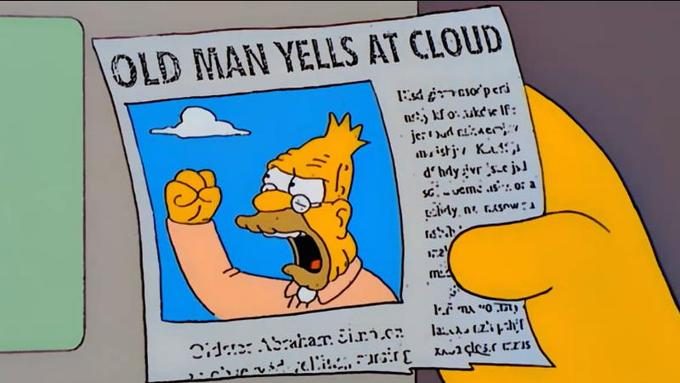
Some of the paragraphs in this article are “Old man yells at cloud” level, and the reader can’t help but to wonder if McCoskrie has some kind of senile dementia that has caused him to see things that aren’t there. He decries people in Colorado “popping a handful of Gummi Bears containing 10 times the legal limit of THC per serving,” but there is no legal limit of THC per serving, any more than there is a legal limit of caffeine per serving. The sentence is simply nonsense.

McCoskrie is so hysterical that at some points in his screed he becomes completely detached from reality. The worst example is when he cites the existence of cannabis suppositories as proof that cannabis producers are deliberately targeting their product at the young. In fact, the vast majority of people who use cannabis suppositories are elderly ones who cannot use other route of administration because of the complications of old age. Perhaps McCoskrie should have tried a few while he was over there?

It’s noteworthy that at no point in his travels through Colorado did McCoskrie see anything untoward happen on account of cannabis legalisation. He talks about the terrible panoply of cannabis-related products as if it were Weimar Republic pimps selling children on a Berlin street, but can’t recall seeing any notable level of crime in Colorado or any homelessness in the streets, or any sign of social decay. This is striking, considering that the state legalised cannabis four years ago, which is easily enough time for anything of that nature to have occurred. McCoskrie is just a wowser.

No anti-cannabis rant would be complete without employing the slippery slope fallacy, and McCoskrie duly gives us the line “they will want legalisation not just of this drug but all drugs – cocaine, heroin, P”. By this he somehow draws a connection between people who want access to medicinal cannabis and people who go on methamphetamine benders, when the two people could hardly be more different.

It’s exactly this kind of rhetoric conflating people who need medicinal cannabis with reckless criminals that fuels the War on Drugs, which means that McCoskrie must share some blame for the suffering caused by cannabis prohibition. It’s because of people like him that people like Helen Kelly have to suffer needlessly as they die.

Predictably, McCoskrie gets savaged in the comments below the article. What he is writing might have been considered mainstream conservatism 40 years ago, but now it goes down about as well as other conservative ideas from 40 years ago, like whipping up hysteria about white people and Maoris sleeping with each other. It’s apparent from reading this article that McCoskrie doesn’t have the faintest idea what he’s talking about, and is panicking for no good reason.

The only thing this piece can be compared to is a sermon by a Third World religious fundamentalist, who has travelled to the West and seen dancing and intermingling between unmarried youths and shit their pants. McCoskrie is a religious fundamentalist – his Family First lobby group want to recriminalise prostitution and further restrict alcohol. Essentially, they are theocrats, and McCoskrie wants to prohibit cannabis for the same reason that the rulers of places like Iran and Saudi Arabia do.

*

If you enjoyed reading this essay, you can get a compilation of the Best VJMP Essays and Articles of 2017 from Amazon for Kindle or Amazon for CreateSpace (for international readers), or TradeMe (for Kiwis).