
Can We Euthanise Parliament, And Start Again?

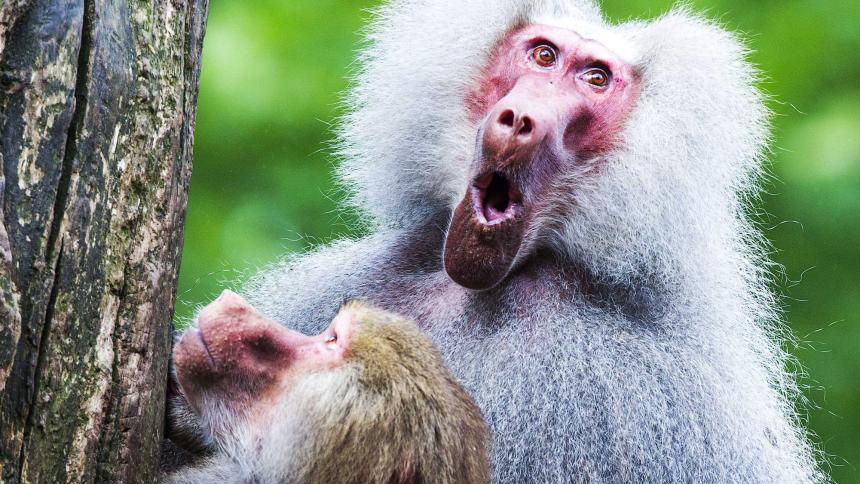
Animal lovers and ethologists in New Zealand were dealt a blow yesterday by the news that four baboons at Wellington Zoo had to be put down, on account of that their social structure had collapsed. This social collapse had led to increased interpersonal aggression, and it was decided that it would be cruel to allow it to continue. As this essay will examine, the baboons were not the only group of primates in Wellington whose social structure has broken down.

Not all animals take well to captivity, and so the type of fighting that the Wellington baboons fell into is far from unique. It’s common for zoo animals to feel depression, anxiety and elevated levels of aggression. The reason why is described in the linked article, by the CEO of animal rights group SAFE, Debra Ashton:

“Social structures suffer in enclosed environments and could be attributed to fighting and anxiety for animals. When these social systems break down and there is fighting, vulnerable animals are not in a position to be able to escape as they would in the wild.”

People find this easy to accept in the case of baboons, but all of these facts are equally true of the human species. Individual human animals can fail to adapt to captivity in much the same way that the baboons in the story above did. Our society is equally as much a closed, prison-like space with no opportunity of escape – in fact, we arguably have even less opportunity to escape, with the advent of our 24/7 social media culture.

Nowhere is this more true than Parliament.

It’s clear from what happened between Jami-Lee Ross and the rest of the National Party, in particular Simon Bridges and Sarah Dowie, that the social structure there has broken down, leading to elevated levels of interpersonal aggression. These people are supposed to be colleagues, and yet they psychologically abuse each other to the point of openly wishing that the other would commit suicide. They are causing each other horrific amounts of harm, and it might be humane to intervene.

The problem is that many Parliamentarians have become demented. It’s apparent from observing individuals like Jacinda Ardern and Judith Collins that all the humanity has long since been lost from these people. They are twisted creatures of hate, willing to cause any amount of suffering to their own people if it furthers their ambitions. Any amount of suffering caused is acceptable if it makes you wealthier, or increases your standing in the eyes of the United Nations.

All of this raises a question: would it be more humane of us to accept that the social environment of Parliament has disintegrated, that this is causing great pain, and to euthanise all our MPs to prevent further suffering to them?

We don’t have to do it in a bloody manner. It can be done dispassionately and without prejudice. We just have to line our MPs up and march them into a veterinary office, where they are held down and given a lethal injection, one by one, and the bodies disposed of. We could even model our approach on that taken towards the four baboons at Wellington Zoo.

Once the humane thing has been done, Parliament would be empty. The New Zealand people would then be free to fill it with individuals who represented them, and who could co-operate in order to solve the challenges facing us as a people. Euthanising all of our current MPs would allow us to dissolve the rotten culture of abuse and hatred that defines our current Parliamentary system, and to replace it with something that worked for the people it’s supposed to represent.

Some might say that this proposal sounds cruel. The reality is that it would be cruel to continue to allow our Parliamentarians to suffer inside a completely failed social system. The individuals inside the Beehive are in deep emotional pain, and nothing will be able to prevent this, apart from starting again. This is apparent from the months off work that Jami-Lee Ross had taken in order to deal with the stress-related damage of the constant abuse he received from the others.

Therefore, euthanising them all is the most humane option.

One popular proposal is for the New Zealand people to come together and to agree on a list of inalienable rights that any future Parliament would be forced to accept, else run the risk of being euthanised again. This would start with the creation of a mission statement, which would declare that the objective of the New Zealand Parliament was to eliminate the suffering of the New Zealand people.

This means that the euthanisation of Parliament would not have to lead to chaos and disarray. If the correct approach was taken, and sufficient preparations made beforehand, it could lead to a drastic decrease in suffering among the New Zealand people.

*

If you enjoyed reading this essay, you can get a compilation of the Best VJMP Essays and Articles of 2018 from Amazon for Kindle or Amazon for CreateSpace (for international readers), or TradeMe (for Kiwis). A compilation of the Best VJMP Essays and Articles of 2017 is also available.

Almost All Cases of Growing Cannabis Are Altruistic

New Zealand cannabis law reform supporters were overjoyed on Monday by the news that Rose Renton was discharged without conviction in her case at the Nelson District Court. Charged with the cultivation of 58 plants, she could have been facing seven years’ imprisonment. As this essay will examine, the logic used to exonerate her could be used to exonerate almost any other cannabis grower, and should lead to a change in the cannabis law.

Renton was discharged without conviction on the grounds that her offending was “altrustic” in nature, according to Judge David Ruth, who was quoted as saying: “This was effectively an altruistic endeavour on your behalf to help those for whom that help wasn’t otherwise possible.” This is an entirely fair point, and it’s about time a judge said so, but it goes further than this.

She had been growing cannabis to supply medicine to a variety of people, a job that has been given the title “green fairy”. The ‘green’ refers to cannabis medicine and the ‘fairy’ refers to the fact that this medicine doesn’t come regularly but simply shows up whenever the fairy can make it happen. Renton was supplying clones of a CBD-rich strain to people who then grew the medicine themselves.

A Police officer who came to Renton’s home noticed a cannabis plant there. Instead of ignoring it, the officer made the decision to enforce Parliament’s law against cannabis by arresting her. This decision led to 18 months of suffering on Renton’s part, until discharged without conviction on Monday, for the reasons mentioned above.

Cannabis is a medicine. The main reason why people use it is to escape the suffering caused by either physical or psychological pain. There are several effective substitutes for the effect that cannabis has on physical pain, but there is little that can stop psychological suffering as quickly and efficiently. Countless people have found that a bout of rage, depression or despair can be stopped cold by a dose of cannabis.

It’s rarely admitted to, but there is a lot of suffering in our society. Not just the tedium of the drudge-work that we endure, and the anxiety over our uncertain futures, but the stress of encountering new strangers all the time and the alienation of having no community or political representation all combine to create an existence that is wretched for many. This can be measured by our increasing suicide rate, which hit a record level last year.

Almost all the cannabis that is grown, by anyone, ever, is grown with the intent of reducing some of this suffering. There’s no point to it otherwise. No-one grows cannabis with the intent to cause suffering. Anyone who believes this is simply not in touch with the reality of cannabis use. Everyone who grows it does so with the intent that using the end product will alleviate suffering in some way.

So the concept of non-altruistic cannabis growing makes as much sense as the idea of non-altruistic insulin production.

People who aren’t interested in the medicinal effects of cannabis might still be using it for that reason, even if they smoke it in joints. Even casual joint smokers are often motivated by the decrease in anxiety, stress, nausea or insomnia that comes with using it. This means that the vast majority of cannabis that anyone is growing, anywhere, is for altruistic reasons, much the same as with Rose Renton.

Many people are unwilling to accept this, for the reason that this makes the current law seem extremely cruel. The hard facts are, however, that the current law is extremely cruel. It’s possible that the law prevented Alex from getting hold of a medicine that would have saved his life. We’ll never know.

It’s possible that Rose Renton had to watch her son die for no other reason than that New Zealand politicians were too stupid and cowardly to address the need to repeal cannabis prohibition in time. That might seem unreasonably cruel, perhaps even so cruel that it’s hard to admit to, but that’s what we did. We’ve been doing it for decades, to Kiwi families up and down the country.

We have to face up to the fact that cannabis is a medicine, and that the law withholding it from people is killing those who need its medicinal qualities. It’s time for us to accept that the vast majority of people who are growing cannabis are doing so with the ultimate intent of alleviating human suffering, so we should repeal cannabis prohibition and make it legal.

*

If you enjoyed reading this essay, you can get a compilation of the Best VJMP Essays and Articles of 2018 from Amazon for Kindle or Amazon for CreateSpace (for international readers), or TradeMe (for Kiwis). A compilation of the Best VJMP Essays and Articles of 2017 is also available.
How The People Are Divided and Conquered

The ruling classes, faced with the fact that they are outnumbered by thousands to one, have refined an array of techniques to divide the people into groups and set them at each other’s throats. This array covers all of the different aspects of human life, so that individuals are made enemies of each other at every turn. This essay describes how the people are divided and conquered across the entire spectrum of life.

Human life covers the complete spectrum from purely physical concerns to purely spiritual concerns. Physical concerns such as blood and soil are different to matters of class and education, and these are in their turn different to religious and spiritual matters. By means of propaganda, people are divided at each part of the spectrum, and made to believe that someone else has stolen from them.

This stealing is how the other side of the spectrum (any spectrum) is characterised as the bad guys, the stealers, the takers. The mouthpieces of the ruling class will tell their listeners that all of the suffering those listeners feel is because those at the other end of the spectrum have stolen from them. The natural result is that the listeners come to hate those others, and in doing so become divided and conquered.

At the physical end, people belonging to any racial group have been led, by way of propaganda, to feel that other races have collectively worked to steal from them. In America, blacks are made to feel that whites have stolen from them through slavery, and owe them compensation; whites are made to feel that blacks have stolen from them through taxation to fund welfare.

The story is the same all over the West. There was a time when New Zealanders considered themselves Kiwis first and their particular ethnic makeup was a secondary thing. But after decades of rhetoric, many Maoris have come to be convinced that colonisation was an act of evil for which they are owed compensation. White people were convinced, at the same time, that Maoris had stolen from them through taxation-funded welfare and crime, and the end result was to split the Kiwi people down the centre.

Less physical issues do not make people less vulnerable to being divided and conquered. Even if everyone was the same race, it is still possible to divide people along class or religious differences.

The most obvious example is of Communist agitation in a factory. The Communist begins by persuading the workers that they are being stolen from because their wages are not equal to the value of their production. If the worker is not intelligent enough to understand the basics of how a business is run, and does not understand that operating a business requires competencies that he does not necessarily have, he may be persuaded that his boss is stealing from him, and that restitution is owed.

Communist agitation in Rhodesia is an example that combines both race and class. Local blacks were convinced that white settlers had stolen land from them and were trying to enslave them. The blacks were told that everything the whites had was stolen from them, and this theft was why they didn’t have it. This led to rising resentment which eventually tore the entire country in two, a blueprint since repeated all across the world.

Education is another spectrum upon which people are divided. The poorly educated are led to believe that the well educated have arrived at their greater position of wealth through sneakery and trickery, not through study and applied competence. As with the other examples, the poorly educated are then made to become resentful, and so come to fight the well educated instead of co-operating with them as yin and yang.

All of this dividing and conquering works because of the state of spiritual ignorance that we have fallen into. People have forgotten that life is suffering, and that suffering is inherent to existence as a mortal being in this world. Because they have forgotten this, it is possible to convince them that their suffering is unnatural, and that someone else must be to blame. This is an example of chains of gold.

All that’s necessary to start it is to find a spectrum of wealth somewhere within society. It can be a spectrum of wealth along race lines, along class lines, along education lines – it doesn’t matter. As long as the people at both ends are told that the people at the other end have stolen from them or are looking to, both groups will dig themselves in and start hating the other.

From there, it’s a simple matter to point the finger at the other side of the national, racial, education or religious divide and say that all the suffering is because those people have stolen from us, and so individuals from that group are personally responsible for restitution. Once this has been achieved, it’s all but guaranteed that those so blamed will point the finger back, and at this point arguing and fighting begins.

Our ruling Establishment encourages divide and conquer logic, because the more effectively the people can be divided, the less able they are to mount a co-ordinated challenge against the will of that Establishment. This is why the media is daily full of propaganda about “injustice”. They don’t care about preventing injustice – they just want to fan the flames of it so that people are angry and blame each other, instead of the rulers.

Certain incompetent individuals also encourage divide and conquer logic, because they know that if the people were united and competent people promoted, those individuals would be left behind. Incompetent individuals, therefore, have an interest in dividing and conquering so that they can slice off their own little piece of turf and rule the smaller group present in it. They want to keep the group small so as to discourage more competent competition for places in the ruling hierarchy of that group.

In summary, people are divided and conquered because their own spiritual ignorance makes it possible for unscrupulous propagandists to blame the natural suffering of life on acts of theft committed by “others”. Blaming all the suffering inherent to life on others ensures that revenge will be sought, that grievances and vendettas will grow, that the cracks diving society will deepen and therefore that the suffering will never be overcome.

Anyone who denies that life is naturally suffering, and who insists that any suffering that exists is the fault of a particular group of people, is working to divide and conquer society. These people must be considered suspect, and their motives potentially malicious. This is true no matter how powerful, rich, numerous or oppressive the so-called bad guys might be.

*

If you enjoyed reading this essay, you can get a compilation of the Best VJMP Essays and Articles of 2018 from Amazon for Kindle or Amazon for CreateSpace (for international readers), or TradeMe (for Kiwis). A compilation of the Best VJMP Essays and Articles of 2017 is also available.

Electoral Consequences of the Rise of a New Blue-Green Party in New Zealand

Much recent attention has been given to the possibility that a new blue-green party might arise to contest the 2020 General Election. A man named Vernon Tava has been interviewed outlining his vision for the putative movement, which is said to have some support. In this article, demographer Dan McGlashan, author of Understanding New Zealand, explains the electoral ramifications.

First, we need to determine who might vote for such a blue-green party. Secondly, we will speculate on what might happen if a large number of people do.

Crudely speaking, and this is very crude, we can say that New Zealand divides into four groups: the urban poor, who vote Labour, the urban rich, who vote Green, the rural poor, who vote New Zealand First, and the rural rich, who vote National.

The borderline between the Green and the National parties, therefore, is between the city and the country, and the unifying feature of these two parties is that their constituents are wealthy. So any new blue-green party would primarily target people who were doing better than average, regardless of whether they lived in the city or the country. But to distinguish them from the conservatives, they would need either an environmental or a social justice aspect from the green side.

Green and National voters are also characterised by being better educated than average (indeed, this is the basis of their greater wealth). So a green-blue party might target students, especially those who study at suburban universities. What unifies them, in particular, is that they tend to have globalist sympathies, and they tend to oppose the nationalist sentiments that they observe in Labour and New Zealand First.

This column has previously discussed the fact that the National and Green parties could ally on the basis of both being strong supporters of globalism. A new blue-green party might combine the green commitment to environmental causes with the desire to liberalise free trade and the movement of cheap labour (ignore the contradictions in that for a moment). They would then effectively be a neoliberal party.

The most obvious point is that such a party would compete directly with The Opportunities Party. As I showed shortly after the previous election in 2017, the bulk of TOP voters were disaffected Green voters. They were mostly young and well-educated, of either gender and any ethnicity, and were the ones most easily reached by the heavy investment made by TOP in FaceBook advertising. They have also had the most anti-nationalist conditioning.

Green Party voters would also be tempted towards a new party. The reason for this is many Green voters are well-educated, and so they often find themselves becoming wealthy by the end of their 30s, which means that they start to have an interest in protecting that wealth, and thereby paying less taxes. This pulls them towards the National Party, but they tend to be repelled by National’s indifferent attitude to human suffering.

National voters, for their part, will be hard to tempt to any blue-green party. For one thing, National voters are particularly loyal: the correlation between voting National in 2014 and voting National in 2017 was 0.99, an exceptionally strong correlation and higher than the equivalent figure for any other party. The other reason will be the electoral ramifications, as discussed below.

Second, the other major area of interest is the electoral ramifications of such a party if it would form and seriously contest the 2020 General Election.

One obvious point here is that the rise of a blue-green party would make things exceptionally difficult for The Opportunities Party. Although TOP does not describe itself as a blue-green party, they are competing for almost exactly the same demographic as any such new endeavour would also be competing for. Getting 5% of the electorate vote is hard enough as it is, and having two fledgling parties contesting that vote will make things extremely hard for both.

The obvious major point here relates to the overlap with Green Party voters. The Green Party only just made it over the threshold at the 2017 General Election, winning a mere 6.27% of the total votes. This means that they would only have to lose 30,000 or so votes in 2020 to a new blue-green party to run the risk of falling under the 5% threshold and so dropping out of Parliament entirely.

Ironically, game theory suggests that this is one of the most plausible ways for National to win the election. If a blue-green party did win enough of the Green Party vote that both parties failed to make the 5% threshold, the left bloc would lose all those Green party votes as well as some of the blue-green party ones, whereas the right bloc would only lose some of the blue-green party ones. This would leave National and ACT against Labour, competing for New Zealand First support.

Of course, these options are moot if the proposed party does win 5% of the electorate vote. As explained above, this would almost certainly lead to the obliteration of both the Greens and TOP, who are chasing similar voters. Assuming New Zealand First also won 5%, then there could be another head-to-head fight between Labour and National for the loyalty of the centrist parties, who would then in all probability hold the balance of power.

Because getting 5% of the vote is so difficult, and because the competition for the blue-green niche already so fierce, the future chances of Vernon Tava’s movement look extremely slim. They might have a greater impact as a spoiler that helps to wipe out the Green and Opportunities Parties, for the sake of ensuring that National holds the balance of power after 2020.

*

Understanding New Zealand, by Dan McGlashan and published by VJM Publishing, is the comprehensive guide to the demographics and voting patterns of the New Zealand people. It is available on TradeMe (for Kiwis) and on Amazon (for international readers).