
Clown World Chronicles: What Is ‘Munchausen Syndrome by Proxy’?

Some psychiatric conditions are inherited, despite not being genetic

Of all the weird and rare psychiatric conditions, one of the strangest is Munchausen Syndrome by Proxy. This is a particularly malicious kind of disorder that involves a parent or guardian deliberately abusing their child for the sake of getting attention for themselves. As this article will examine, Munchausen by Proxy may be making a comeback today.

Regular Munchausen Syndrome is fairly common. It’s the act of feigning an illness or infirmity for the sake of drawing sympathetic attention to oneself. Every schoolchild has done it at least once, usually to get off school when a particularly unfavoured event was on the day’s schedule. The trick is also often pulled when visiting the grandparents, in hope of some sweets or some money.

When adults do it, it’s considered a psychiatric disorder. Part of the reason for this is that Munchausen Syndrome can cause many thousands of dollars of money to be wasted in endless medical tests, as well as being a fraudulent attempt to manipulate.

Munchausen Syndrome by Proxy is less common. This involves abuse of another, usually a dependent such as a child. Part of this involves a drive to create symptoms in the child, such that outside observers believe that the child is sick. The child itself may also believe it is sick, or may even genuinely be sick – the linked article above refers to a phenomenon where “a disease may actually be initiated in the child by the parent or guardian.”

All this raises a question. Given that many of the children who are supposedly realising themselves to be transgender are themselves the children of people who are transgender, it is possible that some of these cases of “trans kids” are really cases of Munchausen Syndrome by Proxy?

Articles such as these create the impression that the parents of trans kids are brave warriors fighting the prejudice and bigotry of hordes of poorly educated morons. “Transphobia” is a new term that is designed to shame people into accepting the existence of trans kids, and to shame people away from asking questions about whether or not the child is being abused. Being the parent of a trans kid brings a lot of attention.

It’s very possible that many of the parents who find themselves looking after a “trans kid” are, in fact, child abusers who are initiating the idea of the child being trans. After all, there were very, very few such children back in the day before the idea became normalised, but now that the idea engenders sympathy (for both child and parent) there are many.

It’s certainly true that the parents who end up taking care of a “trans kid” end up getting a large amount of attention. Some of the individuals who have been featured in Internet articles for having trans kids have had their faces put in front of millions of people all around the world. Others have lengthy, sympathetic feature articles written about the struggles they faced with a transgender child.

Most people would dismiss all this sudden interest in being transgender as slightly narcissistic attention whoremongering, but the issue shows no sign of stopping there. It has now perhaps reached a decisive juncture thanks to the James/Luna Younger saga, in which the parents of a Texan 7-year old do not agree on whether the child is a boy or a girl.

The problem with this disagreement is that the mother wants the child, who is biologically male, to undergo hormone therapy treatment in order to “transition” into a female. This will effectively sterilise them and render them incapable of later functioning as an biological adult male. Naturally, this transitioning process is not reversible.

The father in this case is putting a lot of resources into preventing the child from undergoing this therapy. This means that a courtroom may soon have to make a ruling on whether the whole trans idea is legitimate or a mass psychosis. The father has done this under the belief that “detransitioning” is a nightmare, and an experience that any loving parent would rightly wish to guard their child from.

Is it possible that the modern media environment, with its unprecedented ability to reach new audiences faster than ever before, has also provided an unprecedented level of incentive for parents to publicly abuse their kids for the sake of seeking attention? Could this have incentivised some parents to manipulate their children into thinking they were transgender for the sake of gaining sympathy for that parent?

Some of these supposed “trans kids” may be children who have been manipulated into questioning their gender identity by a parent who is effectively subjecting them to medical abuse for the sake of attention. Munchausen Syndrome by Proxy may be be making a comeback in the social media age.

It might to time to commission a study that looks into the phenomenon of transgender children in order to investigate whether it is what it claims to be. If some of these children are not genuinely transgender but are merely reflecting the ideas that one or both of their parents have pushed on them, then they might be child abuse cases rather than actual transgender cases. This might necessitate that some parents are prosecuted to stop the trend.

*

If you enjoyed reading this essay, you can get a compilation of the Best VJMP Essays and Articles of 2018 from Amazon for Kindle or Amazon for CreateSpace (for international readers), or TradeMe (for Kiwis). A compilation of the Best VJMP Essays and Articles of 2017 is also available.

If you would like to support our work in other ways, please consider subscribing to our SubscribeStar fund.

The Implications Of Having Two Referendums At The Same Time As The General Election

At time of writing, there are two referendums scheduled to take place on the same day as the 2020 General Election. The referendum about cannabis law reform was scheduled long ago, but this week saw the news that there would also be a referendum about euthanasia at the same time. What will this mean for the election? Numbers man Dan McGlashan, author of Understanding New Zealand, looks at the statistics.

What these two referendums mean, in short, is that a number of people who wouldn’t otherwise have gone to the polling booths on Election Day will do so. While there, they are very likely to cast a vote for a party in the General Election. Those parties, therefore, will get boosted by the extra turnout caused by the referendums. This article looks at which parties are likely to be the beneficiaries of the fact there are two referendums at the same time as the Election.

Let’s deal with the cannabis referendum first.

The cannabis referendum will predictably bring out the sort of voter who votes for the Aotearoa Legalise Cannabis Party. Some people will make the lazy assumption that, because the Green Party has been the one most visibly championing the cannabis law reform issue, many of the people brought to the polls on Election Day will vote for the Greens. This assumption is likely false for at least one major reason.

The foremost reason is that the people who vote Green already vote in large numbers. There are strong correlations between both having a university degree and earning six figures and being a Green voter. There are also strong correlations between all of these things and turnout rate. Therefore, the sort of person who was likely to vote Green probably already did so in the previous election as well, and so a cannabis referendum won’t change much for them.

I refer to this principle as the General Disenfranchisement Rule. This states that the more a person is disenfranchised (by major measures of social status), the less likely they are to vote. Therefore, moves that enfranchise previously disenfranchised people (such as referendums) tend to bring out people from the lower social echelons. They don’t tend to bring out new National, ACT and Greens voters.

These people from lower social echelons are the sort of person who, as mentioned above, tend to support the Aotearoa Legalise Cannabis Party. In Understanding New Zealand I showed who these people are. As a general rule, ALCP voters are heavily Maori and are much more likely to be on the invalid’s benefit. They are doing it worse than supporters of any other party.

In other words, they are from categories that are hitherto heavily disenfranchised. For many of these people, deep resentment has built up regarding the cannabis issue, and if the referendum brings them to the polls they will not vote for Establishment movements. It follows, then, that there will be a considerable boost to the sort of party who already champions the underdog.

The ALCP, Labour, New Zealand First, TOP and the Greens will all split this vote (with the foremost named taking the most).

Regarding the euthanasia referendum, overseas research has shown that supporters of euthanasia tend to be young, left-wing and atheist. This means that this referendum will bring fewer otherwise disenfranchised people to the polling booths than the cannabis one.

The euthanasia idea deeply upsets elderly Christians, who, for whatever reason, feel that the terminally ill ought be forced to suffer as long as possible. However, the vast majority of these people would have come out to vote National or Conservative anyway. Therefore, holding a euthanasia referendum will not bring many extra voters to the ballot boxes on the conservative side.

On the other hand, many of the people who support a euthanasia referendum will be the sort of person who is appalled by Christian morality. These people tend to be young and educated, which means that they are on the margins of voting or not voting. They are less likely to vote Labour and ALCP, but will be more likely to vote Greens and for The Opportunities Party.

Many of these young people will be educated and, therefore, not as severely disenfranchised as the less educated voters who will come out for the cannabis referendum. This suggests that the overall electoral effect of the euthanasia referendum ought to be smaller than for the cannabis referendum.

The combined effect of these two referendums will be to bring a number of young, atheistic people in particular to the ballot boxes.

If the cannabis referendum induces young Maoris to vote and the euthanasia referendum induces young white people to vote, we can predict that this combined youth effect will see increased support for the Labour Party and the ALCP, with minor boosts to the Greens, The Opportunities Party and New Zealand First (who are falsely characterised as an old person’s party).

How large will this number be?

The correlation between turnout rate in the 2017 General Election and voting ALCP in 2017 was -0.63, which speaks to heavy disenfranchisement among cannabis users. Many of these people would not vote under ordinary circumstances. Because the cannabis referendum appeals directly to these heavily disenfranchised people, it could have a noticeable effect on turnout.

This suggests that the combined effect of the two referendums on otherwise disenfranchised voters will be enough to shift the electoral balance towards the centre-left by one to two percent, perhaps accounting for a couple of extra seats for the centre-left bloc. It’s not likely to be enough to decide the balance of power, but if the margins were otherwise thin enough it could be.

*

Understanding New Zealand, by Dan McGlashan and published by VJM Publishing, is the comprehensive guide to the demographics and voting patterns of the New Zealand people. It is available on TradeMe (for Kiwis) and on Amazon (for international readers).

If you would like to support our work in other ways, please consider subscribing to our SubscribeStar fund.
Is Being A Worker in 2019 Preferable To Chattel Slavery?

The school system and the mainstream media put a lot of effort into convincing us to be grateful for our lot. An entire apparatus of propaganda is devoted to pre-emptively quell rebellious impulses, so that our ruling classes can go about their business unaffected. As this essay will discuss, the overall quality of the lives of many of us today may be lower than that of chattel slaves in times past.

Although it is not acknowledged today, there are many advantages to being a chattel slave that are not enjoyed by modern workers.

The physical body of the slave is an expensive asset. The joke is that slaves are antique farm equipment, but there’s truth to it. In relative terms, spending on maintenance to keep the bodies of the slaves healthy is one of the largest expenses borne by a plantation owner.

One thing about the modern system of employment is that responsibility for the maintenance of the body of the worker is placed back on the worker. The worker is paid when the slave is not, and this single fact alone is supposed to entail perfect freedom. But this means that the worker themselves have to bear the cost of maintaining their body so that they can continue to work.

In today’s economy, there are many workers who are also homeless. This doesn’t happen under a system of chattel slavery, because under such a system the slaveowner is obliged to provide shelter to his valuable assets, lest they become sick and unproductive. This incentivises the slaveowner to build and provide adequate housing.

The modern employer has no such concerns. The worker themselves is responsible for their housing, and if they have to go homeless then tough shit. The employer doesn’t need to care because, if the homeless worker becomes sick or dies, they can just import some more cheap labour from overseas.

The modern worker is also responsible for their own food and medicine. One might argue that the range of food choices available to the modern worker greatly exceed that available to the slave. Against this, it has to be pointed out that the slave ended up eating more nutritious food on average – as evidenced by lower rates of obesity and diabetes. The slave may not have had a banquet every night, but their owner did have an interest in maintaining their body.

This interest in maintaining the body of the slave, on account of that it was a valuable asset, is why slaves were not beaten and whipped as much as is often supposed. The degree to which this happened would seldom have exceeded the point at which it cost the slaveowner money. A slaveowner isn’t going to beat a slave to death any more than a farmer is to set his own combine harvester on fire. It would just cost too much.

This disinclination to abuse underlings does not apply to the modern working environment. Although corporal punishment is illegal, in practice any amount of psychological abuse is legal. Bullying and threats are considered normal and acceptable ways to establish compliance.

So those who say that a slaveowner wasn’t punished for working a slave to death have to balance that with the fact that a modern employer isn’t punished for working an employee to suicide.

Some might make the argument that the modern worker is free to choose another workplace if they don’t like their arrangement at the current one. At least the modern worker is not bound to one physical area like the slave is.

The reality, however, is that all employers within a country collude to make sure that labour costs never rise above a certain point. This they primarily achieve by lobbying the government to allow, and by propagandising the population to accept, the mass importation of cheap labour. This has the effect of driving labour costs to the floor. Therefore, it doesn’t matter where the worker goes – he can only earn a pittance.

If the worker wants more than a pittance, then fuck him out the door and replace him with an immigrant who lives thirty to a house and who is (ironically) supporting a family in their homeland with their remittances. They will be happy to be earning minimum wage because they’re not trying to raise a family here.

Others might make the argument that the modern worker is free to upskill if they don’t want to take a position where they are treated poorly.

For one thing, this ignores the fact that many people are not capable of upskilling to the middle class on account of that middle-class jobs almost invariably require an IQ of 100 or higher – and only 50% of the population has that.

For another, it ignores the fact that mass immigration has been so intense in recent decades that even wages for skilled labour have been driven to the floor. Realistically, in our modern society, there are owners and the owned – and the owners feel they have the right to staff their properties with whoever they see fit.

A further advantage to being a chattel slave on a plantation is that it was possible for your work to get done. A cotton plantation only has a certain acreage, and the harvest only occurs at certain times. Outside of these times, if there’s no work to do then no work gets done. When it was time to work the days would have been long and arduous, but the shifts wouldn’t have been longer than those worked by oilmen or hospital staff today.

This contrasts with the modern workplace. In the modern workplace, the employer has their systems optimised to squeeze every last second of productivity out of their worker, who works to an industrial schedule. The average workplace is no longer supporting a local industry, but is now part of a globalised network of industries that pillages the local area for the profit of someone who lives on another continent.

Perhaps the foremost advantage to being a chattel slave, however, is that it was possible to have someone to hate. The slaveowner might expect that you will work a certain number of hours for no pay, but at least you could hate him and talk to the other slaves about how terrible and evil he was, and you could expect them to agree.

The modern workplace offers no such simple pleasure. Hating your employer will see you fired nine times out of ten, and even confessing such a hatred to a workmate is liable to see you sacked. You’re expected to absorb psychological abuse and remain grateful for the fact that you’r able to eat.

All in all, the modern industrial worker might have many reasons to feel envious of a chattel slave from bygone times. That kind of life would not have been easy, but at least the suffering inherent to it would be limited by what was technologically possible for the time. The advanced and sophisticated psychological cruelty of the industrial system would not have been a factor.

*

If you enjoyed reading this essay, you can get a compilation of the Best VJMP Essays and Articles of 2018 from Amazon for Kindle or Amazon for CreateSpace (for international readers), or TradeMe (for Kiwis). A compilation of the Best VJMP Essays and Articles of 2017 is also available.

If you would like to support our work in other ways, please consider subscribing to our SubscribeStar fund.

Clown World Chronicles: The Great Awokening

For thousands of years, intellectual and spiritual humans have dreamed of an age where people would come to cherish truth and wisdom – a Great Awakening. Such a golden age would bring peace and harmony to the entire world. Unfortunately for us, we’re not getting such a thing. Even worse – we’re getting a sickly, plastic, pallid imitation of it – The Great Awokening.

“Wokeness” is one of the foremost sociological trends of our time. This refers to a particularly shameless form of virtue signalling that has become extremely common today. The point of it is to present oneself as morally superior to ones fellows – more sensitive, more refined, more enlightened.

There is little more to wokeness than the usual ego-driven posturing and oneupmanship that has depressed honest people since before civilisation. At its core, it’s a desire for the little dopamine hit that comes with triumphantly rubbing another person’s face in the shit. The sort of person who participates in the Great Awokening is generally incapable of doing this to a person physically, so they do it metaphorically.

One notable thing about wokeness is that it is equally as hateful and discriminatory a philosophy as anything that has come before. Wokeness has its ingroup and its outgroup, and the ingroup is fully encouraged to shun, bully and abuse the outgroup. In this sense, it can be said that wokeness, and SJW culture more generally, is like a sort of cult. As with other cults, abusing outgroup members can strengthen solidarity among ingroup members.

The outgroup of the Great Awokening are the unwoke. In theory, the unwoke are those without the moral strength to act with compassion. The woke believe that the moral values held by the unwoke are primitive, backwards and animalistic. The unwoke have failed to undergo the necessary self-reflection to achieve wokeness, and therefore any abuse one feels to give them is justified. The unwoke are the untermensch, the infidel, the goyim, the heathen.

In reality, wokeness is not based on any transcendental truth but is rather based on whatever is fashionable in the moment. It was once woke to oppose Islam on the grounds that it was cruel to women and homosexuals – now it’s woke to support Islam on the grounds that Muslims are non-white. The same people who were praised for an enlightened attitude to Islam are now excoriated for being Nazis – without changing a thing.

Likewise, the unwoke are bullied for little more than being unfashionable. This is one reason why people from the working class are seldom considered woke – it takes a lot of leisure time and a lot of socialising with the right people to learn the right values. Because these values can change on a whim, knowledge of them has to be maintained via continual access to the high priests. Poor people don’t have this access.

The Great Awokening could be described as the grand climax of the worldwide epidemic of virtue signalling that has now run for some years. Never before has the world been this pretentious. Never before have people at large made such a strenuous effort to create a false image of themselves for the sake of preening their egos. Never before have the social stakes been so high, and the error margins so thin.

The problem is that we’ve started to believe our own lies.

For decades now, we’ve been blaming everything on white men because it was the woke option. White men had most of the power, therefore it stood to reason that they took most of the blame. No-one woke could oppose this because the woke attitude is that all wealth was earned by theft, and all privilege stolen from someone else. Opposing this meant to believe that non-whites and women deserved their relative poverty – a horribly unwoke position.

This has led to a situation where if you don’t openly hate white people now, you’re unwoke. The paradox of claiming to be the least racist person while at the same time hating white people is an example of the doublethink that is now everywhere. The Great Awokening doesn’t worry about contradictions like this because the most important thing is the intention. Hating white people isn’t racist if you do it for the right reasons.

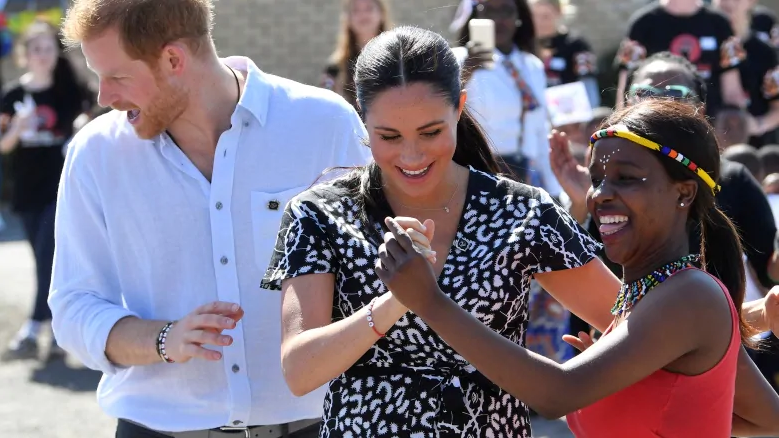
The hypocrisy is how the highest echelons of woke can get away with jetsetting around the world to browbeat us into reducing our carbon footprint. Prince Harry and Meghan Markle represent the most vomit-inducing excess of unearned wealth. They are triple distilled privilege. But for them, the Great Awokening is an opportunity to market themselves as enlightened world leaders.

The Great Awokening is why comedy is essentially dead today. In order for humour to exist, someone has to be willing to tell the truth. Humour is when needles of truth prick the balloons of falsehood, and laughter is released as a form of catharsis. It has been a fundamental part of civilisation forever, but today people are so afraid of getting a moral browbeating that they’re less willing to crack jokes.

The Great Awokening is essentially the final victory of slave morality over life on this planet. Resentment now has free rein, and the slaves are trying to rip down everyone and everything in the world. The total victory of slave morality means that everything of value in the world is to be destroyed, and the weakest and most execrable aspects of humanity are to be held up as exemplars.

As there is always a seed of yang even when yin appears to be triumphant, so is there a seed of truth within the bullshit of The Great Awokening. That seed is the small number of truth-tellers who are not tempted into telling lies, despite the social pressure of the woke hordes. The longer the Great Awokening goes for, the more ridiculous it will become, and eventually it will become so ridiculous that the merest whisper of truth will cause the music to stop.

*

If you enjoyed reading this essay, you can get a compilation of the Best VJMP Essays and Articles of 2018 from Amazon for Kindle or Amazon for CreateSpace (for international readers), or TradeMe (for Kiwis). A compilation of the Best VJMP Essays and Articles of 2017 is also available.

If you would like to support our work in other ways, please consider subscribing to our SubscribeStar fund.