
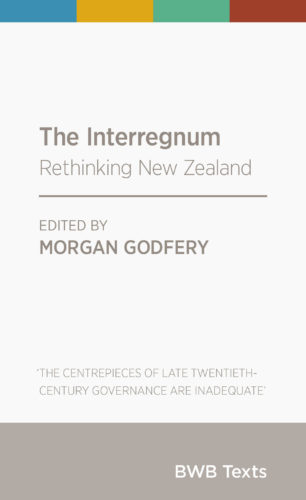
VJMP Reads: The Interregnum: Rethinking New Zealand VIII

This reading carries on from here.

The eighth essay in The Interregnum is ‘Feminism and Silence’, by Holly Walker. Feminism belongs, to most people’s minds, to the sort of thing the left was occupied with before it went crazy. So I’m almost expecting this essay to be relatively conservative compared to the Marxist insanity in much of the rest of the book.

Happily, the basis of this essay is the real-life challenges of a Green MP who found it difficult to combine the demands of her job with the demands of raising a child. This makes a refreshing turn back towards the real world, and the hardships Walker faced in her short time in Parliament are relatable.

Unusually for the essays in this book, Walker’s effort here is honest and disarmingly humble. She writes that “most MPs knew very little about the bills they were speaking on,” and laments that the further she got sucked into the party Parliamentary system, “my ability to share my true thoughts diminished.”

Unfortunately, from there the essay degenerates into the same Marxist politics of antagonism as most of the rest of the book. Walker complains about the proportion of female MPs being too low at 29 percent, not stopping for even a second to question whether it needs to be any higher. The equality dogma has choked all other lines of thought out of Walker’s mind.

Indeed, she even goes as far as asking why Parliament can’t just shut down sooner for the sake of making it easier to combine being an MP with being a mother, as if having mothers in Parliament was so important that it was worth sacrificing a major part of the Government’s efficiency and effectiveness for. The cynic will note that MPs taking a pay cut to reflect the drastic reduction in work hours is not proposed here.

Walker hits the right note when she writes “Let’s unstitch the neoliberal, individualistic mindset we’ve all internalised,” but it’s not easy to see how this essay, or this book, ultimately contributes to that. Neoliberalism and Cultural Marxism work hand-in-hand in that they both serve to divide and conquer the people and to set them against each other to be more readily exploited by an international ruling class, so it’s not credible to argue against neoliberalism from a Marxist perspective.

The essay ends with the author declaring that she spent an entire year reading only words written by women. From the perspective of the eternal victimhood of the female this is no doubt a victory; from the perspective of a working-class man watching his university opportunities dwindle ever-further, as women are assisted to take his place despite already being a clear majority of university students, it seems obscene.

In summary, this piece is very similar to most of the other efforts in the book. It’s clearly written from a privileged, middle-class perspective, despite claiming to speak for the disadvantaged, and it furthers the divide-and-conquer narrative of globalism while claiming to oppose it.

Fixing Toxic Masculinity Is A Two-Way Street

It’s not accurate to dump all the responsibility for toxic masculinity on males

The mainstream media has been full of stories about toxic masculinity recently, especially the hand-wringing, moralising, finger-pointing style, such as this effort by Lee Suckling in the New Zealand Herald. Leaving aside that the whole issue of toxic masculinity is mostly overblown, there are some things that men really ought to do better for the sake of universally reducing suffering in the world.

Also leaving aside the fact that the media never mentions toxic femininity, which is an equally large problem, the solution presented to fixing this problem of toxic masculinity is to dump responsibility for it entirely on men. Suckling laments that “We are forced to like blue not pink; trucks not Barbies; rugby not netball; muscles, strength, and brute force not intellectualism, thoughts, and feelings,” but blames men exclusively for all of this.

The human species is not a machine, but in many psychological ways it behaves exactly like a machine, especially in regards to conditioning. Behaviour is more or less likely to happen in the future if it was rewarded or punished, respectively, in the present. This has been known for a century and has been codified into what’s known as the Law of Effect.

In other words, changing the behaviour of men requires that they are rewarded sufficiently for the desired new behaviour. This means that they have to be treated correctly for it – and not just by other men.

One crucial detail that Suckling completely overlooks in blaming Kiwi men for everything is that women are equally as complicit as men, if not more so, when it comes to enforcing the standards of toxic masculinity. Proving this is a simple matter of observing which male behaviour gets rewarded with access to sexual resources.

It isn’t the men who are into “intellectualism, thoughts, and feelings” that get the chicks. Although it might be true that high-class women are attracted to those things, and although it might be true that men who are into these things get the cream of the women, there are so few of these women that the behaviour of males is not significantly altered.

For every woman turned on by intellectualism, thoughts, and feelings, there are fifty who are turned on by crass, vulgar displays of wealth and physical power. Driving a big, loud car, verbally abusing or bullying someone or punching another man in the face are the sort of behaviours that make the majority of women see a man as alpha, dominant and worth breeding with.

The Law of Effect explains another oft-observed phenomenon: that men tend to repeat the behaviours that first got them laid for the rest of their lives. So if they lose their virginity at age 17 by getting drunk and acting boorishly around some girl who has nothing but crude primate instincts to guide her mating decisions, then they will often act the boor while trying to get laid for the rest of their lives.

If this is to change, more women have to realise that intellectualism, thoughts and feelings are better predictors of long-term happiness and start rewarding men on that basis. This is necessary because men will respond to this a million times more strongly than they will to getting lectured by homosexuals in the mainstream media.

Cynics might say that it’s not destined to happen. It may be that powers beyond our influence have decided that New Zealand is to be a military outpost of a certain world order, and so our population must be encouraged to be aggressive and abusive in case such qualities are needed to win some future war.

That might not even be a bad thing. Suckling uses the European male as an example of how to be correctly masculine, but neglects to point out that the femininity of the European male has led directly to that continent’s streets and inner cities being conquered by males of foreign cultures.

As ever, the correct approach lies in finding the correct balance between masculine and feminine, but if young Kiwi men are to stop killing themselves at the highest rate in the world, Kiwi women are going to have to help make the change.

VJMP Reads: The Interregnum: Rethinking New Zealand VII

This reading carries on from here.

The seventh essay in The Interregnum is ‘Contributing to Public Life From Afar’, by Lamia Imam. If the essays so far had mostly managed to be worryingly Marxist without being alarmingly so, this essay leaps right into the deep end with no restraints at all.

In an effort that stretches credibility beyond breaking point, Imam complains about the difficulty she has found being accepted by New Zealanders as one of our own, despite literally being an anchor baby who spent almost all of her formative years overseas.

Echoing the complaints of Golriz Ghahraman, who also spent most of her formative years overseas being raised by non-Kiwis, Imam describes being born in New Zealand only to move away with her parents while still a toddler, only to wonder why she isn’t welcomed with open arms when she decides that she is a New Zealander many years later when she briefly returns to study (before shifting off again).

The question she does not confront is: why should Kiwis form close social bonds with people who are liable to up and leave the country forever, rendering that social investment worthless? If a person has all of their family overseas, and are themselves getting educated overseas, the likelihood of them still being here in 25 years is very low, at least in comparison to anyone else.

Really this essay should be seen for what it is, which is an effort to destroy the social bonds between New Zealanders for the sake of making us more easily exploitable by the international globalist class of which Imam is a member. To this end, it uses a number of globalist rhetorical devices that have previously been successfully employed towards the destruction of the Western working class.

One of the most obvious of these is crying about the “racism” she has faced on account of being Muslim (which is, of course, not a race). Another is the astonishing claim that people who don’t consider her to sound like a Kiwi on account of her admitted lack of a Kiwi accent are “ignorant”.

Claiming to be “hyper-aware of her privilege”, Imam appears to make no effort whatsoever to understand the thinking of the New Zealanders she claims to be her countryfolk. Relating an incident where a highly distressed man at a Community Law Centre “started screaming at me about immigrants, and specifically Muslims… ruining his job prospects,” absolutely zero effort is made to commiserate with one of the many Kiwis who have lost out from globalism.

Instead she complains that “acceptance was hard to come by,” as if the rest of us ought to have been grateful for the presence of a Muslim immigrant – a sight that has heralded the impending destruction of communities and nations all around the world for 1,300 years.

It seems that, according to Imam, Kiwis no longer have the right to decide for themselves what a Kiwi is. That can apparently now be decided by people who have lived three years of their life in New Zealand and who do not have Kiwi ancestors. Now you can just step off a plane and say you’re a Kiwi and that’s as good as anyone else can do.

As a reader I wondered how welcoming Imam would be if I turned up at the funeral of a wealthy family member, declared myself to be one of their tribe and demanded a share of the family fortune? Would I also find that “acceptance was hard to come by”?

In the end, I gave up when I read “Ordinary Kiwis supposedly do not care about identity politics, which suggests to me that they don’t have an identity.” No-one who, while claiming to be a Kiwi, writes something that stupid is worth reading.

In summary, this poorly-written effort rambles, does not employ logic and frequently contradicts itself, but the essay does raise many questions that are yet to be meaningfully discussed in the West, such as: who are we allowed to exclude?

Answering those question is not for The Interregnum. This book that preaches inclusivity as the highest of virtues has expressly excluded right-wing and working-class voices.

Fair enough on excluding the right-wing, if one wants to restrict the dialogue to the voices of the young, but why provide a platform for a jetsetting middle-class professional woman while denying a platform to working-class white people? It seems very strange that a book can claim to be speaking for the underdog but deny that underdog the right to speak about the issues that are causing them to suffer.

New Zealand Can Top The 2020 Olympics Medal Table With a Team Full of Transgenders

It’s now possible for men to compete in women’s sports if their feelings would be hurt by being excluded. New Zealanders can use this to our sporting advantage

The fashion of the zeitgeist is to ignore biology and to deny that it has any effect whatsoever on the patterns of conduct of human affairs. This has had a number of unforeseen consequences, all of which are taboo to speak about on account of going against that fashion. However, there are ways that astute observers can use these fashions to their advantage, and New Zealand could use it to beat both America and China in the next Olympics.

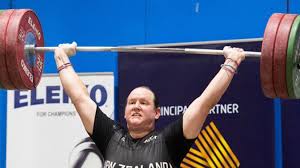
New Zealand had never won a weightlifting world championship medal until transgender athlete Laurel Hubbard did so on Wednesday. Born a male named Gavin, and doing a lot of weightlifting training as an adult male, Gavin decided that he was Laurel and is now a she. Because the fashion of the zeitgeist is to ignore biology, no-one dared say anything about the colossal advantage Laurel was inevitably going to have in a strength-based sport on account of being a man, and he duly achieved something never before achieved by a Kiwi athlete.

No New Zealander had ever won a world championship medal in weightlifting before, unsurprising for such a small country in such a popular event. But no New Zealander had ever had the advantage of a man’s wrists, forearms, biceps, triceps, quadriceps, shoulders, abdominals and calves in the women’s division before either.

Comically, if Hubbard had lifted his personal best in the snatch event at these world championships, he would have won the gold medal, smashing his next opponent by 5kg.

Some might think it astonishing that this kind of thing is even allowed, because it clearly goes against the Corinthian ideal of fair play in sport. But in any case, it isn’t for us to set the direction of the social narrative. That is done by the major media enterprises, who spend millions where we spend hundreds; we can only watch, question, and share observations in the hope that those wise enough to listen will survive the coming catastrophe.

It’s enough to say this: New Zealand needs to invest some serious money into recruiting a contingent of transgender athletes to dominate the women’s events at the 2020 Olympics. We may never get a chance like this again.

If we invested in about 150 transgender athletes to compete in female Olympic events, New Zealand could realistically have a chance of topping the world medal count at the next Olympics if the example of Laurel Hubbard is anything to go by. America won 46 gold medals in Rio de Janeiro in 2016, and New Zealand won four, meaning that we need at least 43 men to compete as transgenders in women’s events and to win for us to top the Olympic rankings.

The obvious events to target are the ones where men have massive physiological advantages on account of the different selective pressures facing men and women in the evolutionary history of primates. Men have not been rewarded by nature for our nurturing abilities, but for our abilities to smash skulls and rip out throats and crush scrotums. So the Olympic events that share similarities with these things should be at the top of the hit list.

If Laurel Hubbard can win silver in this world championships, we can count on transgenders being able to smash foreign women in all events involving upper body strength. Probably we could get a transgender to win every weight division in the weightlifting, as well as all throwing events such as shotput, discus, hammer and javelin, and perhaps we could also dominate the swimming events. All of the fighting events should be easy wins for Kiwi men competing in international women’s divisions: certainly wrestling and boxing can be targeted.

Winning all of these events and divisions would give us 50 gold medals and an almost certain top spot on the next Olympic medal table. No doubt the rules on this will be tightened up after Hubbard’s win, so we ought to act now to seize this unprecedented opportunity to win an absolute swag of medals.