

Category: new zealand
Could New Zealand Ever Imagine Banning Rugby?
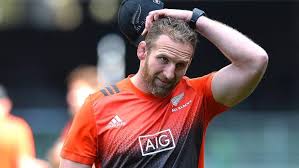
For decades, Kiwis have got used to the idea that wintertime means rugby. Well, we better start getting used to the idea of wintertime meaning soccer, because soon we’re going to have a lot more awareness about the effects of repetitive head injury than we do now, and when we do, there are going to be a lot of shrieking violets trying to get the game they play in heaven banned.
Rugby is popular in New Zealand for two major reasons. The first is that it’s fun as all hell both to play and to watch, the second is that rugby has been an important part of the masonry that cemented white people and Maoris together into a functioning modern culture. For over a century, rugby fields have been the places where Kiwis learned to set aside their racial and class differences and unite of their own free will towards a common goal.
There has always been an undercurrent of concerned mothers, however, who didn’t let their kids play rugby out of fear of head or brain injury. It’s an entirely legitimate concern – rugby is a collision sport, after all, and it’s evident from watching ten minutes of an All Blacks match that not even the best tackling technique in the world is a guarantee that one can avoid head injury entirely.
Perhaps most worryingly of all, even the best of the best rugby players in New Zealand are aware of the risks they are taking. Kieran Read has said that he intends to encourage his children into cricket on the grounds that rugby is too dangerous, and Richie McCaw said, post-retirement, that “I don’t miss getting smashed.”
The question is this: what risk of permanent brain injury is considered too much, given the positive physical and social benefits that come from the game? Because if that limit is exceeded, it may be that the responsible thing to do, from the Government’s perspective, is to ban it. After all, New Zealand schools banned Bull Rush with very little sentiment because of head injury concerns, so why couldn’t they do the same for rugby?
Recent studies on NFL players suggest that the incidence rate of brain damage in adult professional collision sports is many times higher than was previously suspected. It seems that, as brain scanning technology continues to improve, we are gathering a more refined appreciation of how vulnerable the brain really is to repeated blunt force trauma.
Rugby is different to American football, of course, because in rugby the tackle is made with the shoulder, whereas in American football tackles are often made with the head in a manner akin to a charging rhinoceros. But that’s merely a difference in degree, not in category. Rugby is still a sport based around putting the ball carrier on the ground through physical force, and this means the risk of head injury can only be minimised, never eliminated.
Already we’ve been able to observe a change in the culture of the sport in recent years. Avoiding head injuries is sometimes prioritised to an absurd degree, highlighted by the incident in the recent Lions tour when a Lions player leapt into the air to catch a loopy pass from halfback Conor Murray, was tackled before he hit the ground, and then was awarded a crucial penalty for having been taken out in the air.
This looks set to get even more extreme. It won’t be long until a professional match has to be stopped part way through because (for example) two tighthead props on one team have both failed head injury assessments.
This column has previously pointed out that the Government never gives rights back to the peasantry; they always take one new right away for every one they give back. Recent discussions about whether to change the cycle helmet laws have been centred around the idea that forcing people to wear a helmet discourages them from cycling. One can be certain that if we get our rights to cycle without a helmet back, pressure will begin to build to have them taken away somewhere else.
We would never argue for the game of rugby union to be banned, at any level. We don’t even support the softening of the game with the repeated TMO checks for suspected head-high tackles. But there are some wowsers and control freaks out there, and we can confidently state that they would happily ban rugby if they thought of the children long enough. It pays to stay one step ahead of them.
*
If you enjoyed reading this essay, you can get a compilation of the Best VJMP Essays and Articles of 2017 from Amazon for Kindle or Amazon for CreateSpace (for international readers), or TradeMe (for Kiwis).
How Do We Know They’re Not Lying Again?

In 2003, Britain teamed up with America to attack Saddam Hussein’s Iraq on false pretenses, an action that would eventually lead to over 1,000,000 preventable deaths – a war crime by any standard. 15 years later, Britain is again beating the war drums over a supposed Russian assassination of a former Russian intelligence agent on British soil. The question the rest of us have to ask is obvious: how do we know they’re not lying again?
The British Prime Minister in 2003, Tony Blair, solemnly presented to the world a “dossier of death” that supposedly detailed Hussein’s arsenal of chemical and biological weapons, ready to attack Britain within 45 minutes of the Iraqi strongman giving the orders. Even worse, the dossier claimed, Hussein had procured significant amounts of uranium from African sources, enough to build 200 nuclear bombs.
We were told all this, and then told that the international community “had no choice but to act”. It was a casus belli of such strength that it was apparent there would be no talking the Anglo-Americans out of their impending action. Iraq was, in Blair’s words, “a current and serious threat to the UK national interest”.
The trouble is, all of those claims were lies.
Hussein’s Government disintegrated at the first sight of the iron wave coming their way, and the victorious Anglo-American forces scoured every square metre of the country for the chemical and biological weapons that would have been triumphantly paraded before the world’s media. Had they been found. There were no chemical and biological weapons in Iraq.
Usually when someone lies to you, and you find out about it, you don’t trust them again until you are satisfied that they have learned the value in honesty. But no contrition has been shown, ever, by any of the leaders who worked to bring about the slaughter in Iraq. Neither George W Bush nor Tony Blair have ever shown genuine regret for the invasion, or even the barest awareness that the invasion was the wrong thing to do.
Both George W Bush and Tony Blair are free men, not wanted by any Western war crimes tribunal. No Western leader openly calls for their arrest or imprisonment, despite that they murdered as many people as Pol Pot. No-one in British politics appears to be willing to commit Blair to trial for war crimes, the minimum acknowledgement necessary that the lost Iraqi lives had some value.
So why should we trust the claims of the British Government this week that the Russian state killed someone on British soil? Nothing appears to have changed since the last time they lied.
Most worryingly for New Zealand, our current Prime Minister Jacinda Ardern volunteered to work for the unapologetic war criminal for two and a half years, and after the scale of the destruction wrought in Iraq was widely known, and even after the fact that the invasion was launched on false pretenses was known. This suggests that not even our Prime Minister has the moral fibre to understand that killing a million people with lies is a bad thing and that people who do it should not be supported.
The prospect for world peace is looking grimmer, but, as this newspaper has previously written about, there’s no need to worry until the television starts telling us that Russians are mistreating babies somewhere. Then it’s time to hit the bunkers.
*
If you enjoyed reading this essay, you can get a compilation of the Best VJMP Essays and Articles of 2017 from Amazon for Kindle or Amazon for CreateSpace (for international readers), or TradeMe (for Kiwis).
Tim Southee, Mike Hesson and the Sunk Cost Fallacy
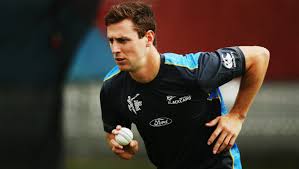
A sunk cost is an economic concept that refers to an expense that has been already paid for, so that this expense is irrecoverable. It sounds unremarkable, but sunk costs do funny things to the human brain. The Sunk Cost Fallacy, and a little game theory, may help explain why Mike Hesson refuses to make the hard call and drop Tim Southee for Matt Henry in the Black Caps ODI playing XI.
The Sunk Cost Fallacy is an example of a reasoning error that is commonly made when sunk costs are involved. It refers to when people do something irrational because they have sunk costs (in the form of money, time or energy) into a line of reasoning already.
The common example given is the Concorde project, during which the French and British governments realised that the project would never make economic sense, but which they continued with anyway on the grounds that they didn’t want to waste their sunk cost.
This is a well-known phenomenon in economics because it often leads to horrific waste, particularly when people throw good money after bad in the hope that their initial investment will be recouped (it’s also a well-known phenomenon in poker when players go broke). As far as Mike Hesson is concerned, the same psychological process may be occurring with his obstinate refusal to elevate Matt Henry to the opening bowler’s position alongside Trent Boult.
Southee is only 29 years old, but he has been playing for ages. He debuted as a teenager, and looked incredibly promising with a five-wicket haul and a run-a-ball 77 in a Test against England. Since then, New Zealand Cricket have invested substantial resources in him, giving him every opportunity to take the new ball against all comers. No less an authority than Allen Donald touted Southee as potentially a great swing bowler, but it’s hard to deny the raw numbers.
The numbers argue confidently that Southee is not as good as Henry (in ODIs at least), and probably never has been.
Since the loss to Australia in the final of the 2015 Cricket World Cup, Southee has averaged 42.77 with the ball. He has taken 45 wickets in this time frame at an economy rate of 5.72. Henry has taken 44 wickets at an economy rate of 5.81, which is similar, but has an average of 28.13 thanks to a strike rate of 29.
This is, amazingly, a better strike rate than Shane Bond managed over his career (29.2), and means that Henry has been 50% more likely to take a wicket on any given ball than Southee during this time.
Southee is striking at 44.8 since the last Cricket World Cup, and has not taken four wickets in an innings since then, despite playing in 38 games. Henry has only played in 25 matches since the final loss but has already managed three four-wicket bags and one five-wicket bag in that time – only one of each fewer than Southee has managed in a 132-match career.
In fact, Southee has not managed to get four wickets in an innings one time in the last three years, whereas Henry took four wickets in his last match.
Mike Hesson might be thinking here in terms of potential, in that, theoretically, Southee has the potential to be another Jimmy Anderson. Like Southee, Anderson is also tall, bowls with an open stance and relies on swinging the ball to nick batsmen out. Also like Southee, the Englishman didn’t achieve anything particularly special in his first 132 ODIs, returning an average of 30.18 for his 179 wickets.
But in 43 matches since the start of 2012, Anderson has taken 65 wickets at an average of 23.97. Hesson might be expecting a similar transformation to come over Southee, but it’s also very possible that he has invested so much time and energy in Southee that he sees this investment as a sunk cost that he is compelled to recoup.
A solution that would save everyone’s face would be to demote Southee to third seamer. This would be the best of all worlds for everyone except for Lockie Ferguson, who would then struggle for a starting berth.
The positives are that it would allow Boult and Henry, with the best strike rates, to bowl with the new ball when they are the most effective, and it would allow Southee to utilise his skill set of varied deliveries at the death while minimising his weaknesses of being slow and inaccurate. Southee also has 33 wickets as third seamer, averaging an entirely acceptable 28.18 (compared to over 35 while opening). It seems like a solution whose time has come.
*
If you enjoyed reading this essay, you can get a compilation of the Best VJMP Essays and Articles of 2017 from Amazon for Kindle or Amazon for CreateSpace (for international readers), or TradeMe (for Kiwis).