
One Year of Rule by the Left Wing of the Capitalist Party: A Retrospective

The Labour faction of the Capitalist Party came to power at the end of 2017, taking over from the National faction of the Capitalist Party after that year’s general election. Even though everyone knew that the Capitalist Party would still be in charge, many believed that the ascendancy of the Labour faction would mean a new deal for the beleaguered Kiwi population. As this essay will recount, they proceeded to piss in the faces of the New Zealand working class in at least four major ways.

Despite a promise to not sign the Trans Pacific Partnership Agreement, the Labour Government did so to much fanfare on the 9th March. Thousands of people marched against the TPPA in 2016, in New Zealand’s largest protests in recent years. Then Labour Leader Andrew Little was quoted at the time as saying that “Labour was opposed to the TPPA because compromises to New Zealand’s sovereignty were not justified by the ‘meagre economic gains’.”

Most people in the New Zealand working class oppose such trade agreements because neoliberalism makes it easier for capital to bid down their wages. The Capitalist Party, on the other hand, represents major moneyed interests, and they welcome such trade agreements because they shift the power equation even further away from labour and even further towards capital. Therefore, the Labour wing of the Capitalist Party is happy to see the wages of New Zealand workers fall, and they happily pissed in the faces of Kiwi workers by signing the TPPA.

Related to this betrayal was a second face-pissing, when the Labour Government raised the refugee quota to 1,500. It’s well known that these people won’t be dumped in neighbourhoods where the rich live. The sex, violence and property crimes that they bring in their wake will not affect the wealthy, who live far away from the ghettos. It is the working-class suburbs that will be forced to absorb these human crime waves, not the rich suburbs in which Labour and Green Party MPs live.

Those wealthy will, however, benefit from the downward pressure that refugees have on wages. The greater the national pool of cheap labour, the lower wages will fall, therefore the more profitable local capitalist enterprises become. If the Labour Party represented the working class, they would not have raised the refugee quota – this would have had the effect of restricting the inflow of cheap labour and thereby creating upward pressure on wages.

The lying about legalising medicinal cannabis comprises the third major display of disrespect on the part of the Labour Party towards the New Zealand working class over the past year. Poor people in New Zealand are desperate for a substance that can help ease the pain of living in this failed society, but which doesn’t have the terrible side-effects of alcohol or opiates. The Labour Party have refused to budge so much as an inch on this issue, acceding only to allowing people who are dying an extra defence in court against a cannabis possession charge.

Although a clear majority of New Zealanders want some kind of cannabis law reform, and although outlets like VJM Publishing have been arguing in favour of cannabis law reform for years (most seriously from 2012, with the publication of our Cannabis Activist’s Handbook), the Labour Party had eight MPs that voted against Chloe Swarbrick’s medicinal cannabis bill, which would have allowed sick Kiwis to grow a medicine at home.

A fourth face-pissing, delivered today, was Labour’s plan to ban vaping. Predictably, the person pushing it – Manukau East MP Jenny Salesa – was one of the eight backstabbing scum in the Labour caucus who voted against Swarbrick’s bill. It seems that authoritarianism against working class practices are entirely acceptable for the Labour Party.

The reason for the vaping ban is not because of health reasons – vaping has led to many people, particularly working-class people, quitting tobacco smoking. The reason for it is that there is no national vape juice producers’ or vape manufacturers’ association to bribe the Capitalist Party, therefore the interests of the tobacco manufacturers come foremost. Unless you are in control of a large amount of money, the New Zealand Capitalist Party will not pass laws in your favour, and will be more than happy to pass laws to your disfavour if a large moneyed interest tells them to.

All this amounts to a lot of disrespect shown by the Labour Party towards New Zealand’s working class. The way that one can tell that the Labour Party is nothing more than the major left-wing faction of the Capitalist Party is because they have not acted in the favour of the New Zealand working class over their one year in charge. New Zealand’s capitalist class, on the other hand, have benefit greatly from the TPPA, from the cheap labour of “refugees”, and from retarding cannabis law reform and prohibiting vaping for the sake of of their investments in alcohol producers and pharmaceutical companies.

In summary, the past year of rule by the left wing of the Capitalist Party has gone much like the preceding nine years of rule by the right wing of the Capitalist Party. The Labour Party has, in the vast bulk of instances, taken measures that benefit wealthy capitalist interests at the expense of the New Zealand population, in particular the local working class.

*

If you enjoyed reading this essay, you can get a compilation of the Best VJMP Essays and Articles of 2017 from Amazon for Kindle or Amazon for CreateSpace (for international readers), or TradeMe (for Kiwis).

Bob McCoskrie Is An Absolute Fuckwit

Giving Bob McCoskrie a national platform to rant about “dope” and “Big Marijuana” is like giving your granddad a national platform to rant about Islanders after he’s had a few sherries on Boxing Day. Stuff did it anyway. This column will have a look at McCoskrie’s screed of fuckwittery, with the intent of responding to his shamelessly dishonest rhetoric with some facts.

One can guess from the title of the article (“Legalised dope is a licence for Big Marijuana to exploit young people”) that it is going to be crudely dismissive of the wishes of the New Zealand cannabis community. To have an article with the word “dope” in the headline is like publishing an anti-immigration opinion piece that had the word “niggers” in the headline. He has blatantly chosen the most inflammatory possible term to describe cannabis, one that associates cannabis use with brain damage.

In this piece, McCoskrie recounts his observations from a recent trip to Colorado, one that he undertook to “see first-hand the effects of legalising marijuana”.

His second paragraph mentions “a money-making industry of lobbyists and special interest groups putting profits over evidence-based policy protecting public health and safety, and ready to flout and challenge any regulations,” with the implication that this describes the industrial cannabis lobby, but this description more aptly fits the alcohol and timber industry lobbyists who agitated to make cannabis illegal in the first place.

McCoskrie gets hysterical about the high THC content of the cannabis products he spies in the Colorado “dope shops”, but the facts are that a high THC product actually makes the product safer. Like the fuckwit he is, McCoskrie is thinking about THC as if it was alcohol, so that a high-THC cannabis edible is somehow functionally equivalent to an absinthe or similar.

No-one has ever died of a THC overdose, so comparing it to high-proof alcohol is nonsense. Unlike alcohol, which kills people in New Zealand every weekend, cannabis doesn’t kill anyone. The most dangerous thing about cannabis is probably the long-term effects of regularly smoking it – and these are completely avoided by the edibles and vaporises that McCoskrie rants about. In other words, what he is railing against are the signs of people using cannabis more safely and responsibly to minimise harm.

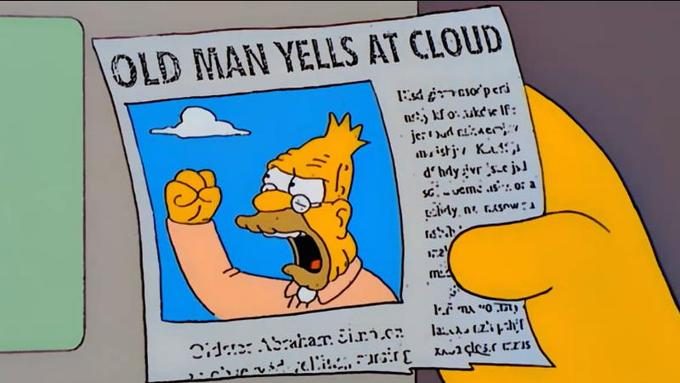
Some of the paragraphs in this article are “Old man yells at cloud” level, and the reader can’t help but to wonder if McCoskrie has some kind of senile dementia that has caused him to see things that aren’t there. He decries people in Colorado “popping a handful of Gummi Bears containing 10 times the legal limit of THC per serving,” but there is no legal limit of THC per serving, any more than there is a legal limit of caffeine per serving. The sentence is simply nonsense.

McCoskrie is so hysterical that at some points in his screed he becomes completely detached from reality. The worst example is when he cites the existence of cannabis suppositories as proof that cannabis producers are deliberately targeting their product at the young. In fact, the vast majority of people who use cannabis suppositories are elderly ones who cannot use other route of administration because of the complications of old age. Perhaps McCoskrie should have tried a few while he was over there?

It’s noteworthy that at no point in his travels through Colorado did McCoskrie see anything untoward happen on account of cannabis legalisation. He talks about the terrible panoply of cannabis-related products as if it were Weimar Republic pimps selling children on a Berlin street, but can’t recall seeing any notable level of crime in Colorado or any homelessness in the streets, or any sign of social decay. This is striking, considering that the state legalised cannabis four years ago, which is easily enough time for anything of that nature to have occurred. McCoskrie is just a wowser.

No anti-cannabis rant would be complete without employing the slippery slope fallacy, and McCoskrie duly gives us the line “they will want legalisation not just of this drug but all drugs – cocaine, heroin, P”. By this he somehow draws a connection between people who want access to medicinal cannabis and people who go on methamphetamine benders, when the two people could hardly be more different.

It’s exactly this kind of rhetoric conflating people who need medicinal cannabis with reckless criminals that fuels the War on Drugs, which means that McCoskrie must share some blame for the suffering caused by cannabis prohibition. It’s because of people like him that people like Helen Kelly have to suffer needlessly as they die.

Predictably, McCoskrie gets savaged in the comments below the article. What he is writing might have been considered mainstream conservatism 40 years ago, but now it goes down about as well as other conservative ideas from 40 years ago, like whipping up hysteria about white people and Maoris sleeping with each other. It’s apparent from reading this article that McCoskrie doesn’t have the faintest idea what he’s talking about, and is panicking for no good reason.

The only thing this piece can be compared to is a sermon by a Third World religious fundamentalist, who has travelled to the West and seen dancing and intermingling between unmarried youths and shit their pants. McCoskrie is a religious fundamentalist – his Family First lobby group want to recriminalise prostitution and further restrict alcohol. Essentially, they are theocrats, and McCoskrie wants to prohibit cannabis for the same reason that the rulers of places like Iran and Saudi Arabia do.

*

If you enjoyed reading this essay, you can get a compilation of the Best VJMP Essays and Articles of 2017 from Amazon for Kindle or Amazon for CreateSpace (for international readers), or TradeMe (for Kiwis).
The New Zealand Student Media is Just as Gutless as the Mainstream Media

It’s rare for a Kiwi to look towards the New Zealand media establishment with reverence or even anything approaching respect, on account of that the profession is little more than a bunch of corporate whores cheerleading for neoliberalism. Even so, it is sometimes astonishing to learn quite how gutless the New Zealand media is, as local anarchist Rick Giles found out earlier this week.

The depths to which the New Zealand yellow press is willing to sink can be observed by the treatment of Giles by Auckland radio station bFm. bFM had Giles on their live show, where he was interviewed by Laura Kvigstad. The segment was called “Anarchy in Aotearoa” and featured Kvigstad and Giles talking about Giles’s interest in anarchy and some of the realisations that had led him to anarchism, and some of the things that anarchism had led him to believe.

This was a part of a wider series called “Wire Worry Week”, which was a week at bFM dedicated to “focusing on the concept of anti government; expanding upon how movements that have worked against governmental systems have influence on the current state of the world.” Giles, as the man behind AnarKiwi, was invited onto the show to speak freely about his political opinions. Readers can listen for themselves to decide whether Giles said anything genuinely worthy of specific repudiation.

In response to – presumably – the shrieking of upper-middle-class Social Justice Warriors all over Auckland, bFM made the following statement:

NB: Following the broadcast of this interview it has come to 95bFM’s attention that the subject of this interview, Rick Giles, espouses political and historical views that the station finds particularly unsavoury. We will not be removing or editing the interview, but wish to make it clear to all listeners that 95bFM does not support or align itself with the personal politics of the interviewee. Our decision to provide Mr. Giles a platform during a week-long discussion on anti-government movements was one that, with hindsight, would not have survived greater scrutiny and vetting process. The station, its volunteers and wider associates do not wish to endorse Mr. Giles’ particular brand of historical revisionism in any way, shape or form and we sincerely apologise for any concern or aggravation caused via our negligence in this case.

It is an incredibly pathetic measure for a radio station to go to these lengths to repudiate a New Zealand intellectual who is guilty only of wrongthink. So gutless are bFM that even when they decide to specifically give a platform to the counterculture they can’t bring themselves to allow alternative points of view to pass without condemnation. Even worse, they are not even decent enough to say exactly which of Giles’s political opinions were so heinous as to be worthy of deplatforming.

What’s hilarious is that you know if Hillary Clinton wanted to appear on bFM to speak to the students of Auckland, they would fall over themselves to provide her a platform, despite that she has killed at least 2,500 more people than Giles, and that’s only counting one of her many crimes. After all, they’re happy to happy to give Peter Dunne a platform, despite the fact that the lies he told about cannabis and about synthetic drugs are responsible for the deaths of hundreds of young Kiwis.

The really terrible part about all of this is that bFM, and by extension the University of Auckland, have failed in their primary purpose of being a university. The primary purpose of a university is to provide a safe space for free-thinkers to discuss ideas that might otherwise be too controversial to discuss in public, on account of that the public would chimp out upon being asked to consider (not accept, just consider) some of the assertions that are necessary to discuss such things.

Apparently the fashionable trend in mainstream media circles right now is to take the exact opposite approach to VJM Publishing; we believe that dialogue is the way to destroy ignorance. The mainstream media don’t care about ignorance; they believe that destroying dialogue and virtue signalling is the way to greater profits. bFM, by making a statement repudiating Giles, are simply learning how to be good, obedient corporate whores. This is, after all, what they will be after graduation.

Part of being a corporate media whore is deplatforming anyone not part of the Establishment (such as Giles) while happily platforming anyone who is part of the Establishment, no matter how many people have died as a result of their negligence or dishonesty (such as Dunne). bFM are willing to give a platform to a Government agent whose ham-fisted cruelty caused New Zealanders to die, but Giles is “particularly unsavoury”.

What bFM did to Rick Giles is a microscopic example of what the mainstream media does to New Zealand all day, every single day. They take uncontroversial ideas, and they sell them as rebellious and controversial so that the desire of some individuals to portray themselves as free-thinkers can be satisfied. In every case, genuinely controversial ideas are ignored as “loony” and their purveyors deplatformed, as happened to Giles. They are a pack of absolute fucking whores, and the alt-media will continue to be a thorn in their side.

*

If you enjoyed reading this essay, you can get a compilation of the Best VJMP Essays and Articles of 2017 from Amazon for Kindle or Amazon for CreateSpace (for international readers), or TradeMe (for Kiwis).

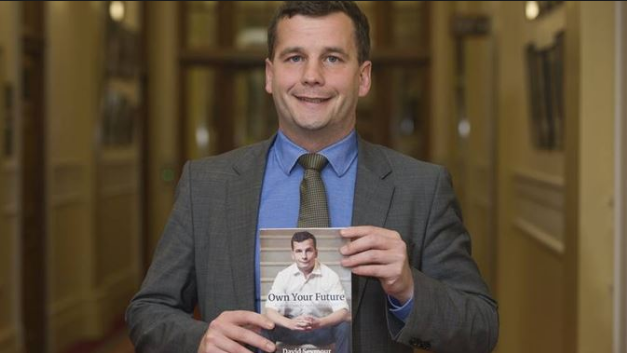
VJMP Reads: David Seymour’s Own Your Future XII (incl. Summary)

This reading carries on from here.

The eleventh, and final, chapter in Own Your Future is ‘Treaty of Waitangi’. Given eight pages at the back of the book, it’s hard to imagine that Seymour takes this issue very seriously. One gets the feeling that it will be a quick virtue signal with one quiet mention of the Resource Management Act and that would be it.

He starts with a story about how the elders at the Te Tii Marae preferred him to the Green Party MPs at a Waitangi gathering on account of that he knew his Ngapuhi genealogy. Dismissing the Green MPs as “up themselves”, he is very much the hero of this story.

True to form, he then launches into the virtue signalling, being careful to place a macron over the a in ‘Maori’ and pushing a warm, fuzzy, globohomo vibe about how much he loves Maori culture. Seymour comes across as revoltingly dishonest and shallow here, considering that his ACT Party supported the Fifth National Government in its destruction of the Maori people. Politicians demand to be judged on their words, not their actions, like all hypocrites.

What Seymour writes here isn’t unreasonable on the face of it. It’s certainly true that many of the land confiscations made by the New Zealand Government were done so on spurious grounds, often outright false, and it is not reasonable for the beneficiaries of this process to get away with it scot free.

The problem is that the same logic can justify a great many other things. What Seymour and his kind like to call “profit”, others like to call “wage theft”. So if it’s true that “if you take something that is not yours, you should give it back” – which is apparently an ACT Party principle – then are the New Zealand working class owed some of their past production that was taken off them in the form of company profits? Why are wages dwindling relative to the cost of living? Seymour doesn’t seems to care about that side of things.

Indeed, the first mention of the RMA comes four pages in. Here, Seymour objects to the idea that local iwis might be allowed to object to land developments under the RMA. This, he cautions, leads to the possibility of Maoris being given a special class of citizenship. So Seymour is happy to virtue signal about how important Maoris and Maori culture are, he just doesn’t want to pay anything extra for it.

Laying down his neoliberal credentials harder than anywhere else in the book, Seymour declares that “New Zealand at its best” can be found at a citizenship swearing-in ceremony, where a bunch of people from other nationalities can be found “uniting as true Kiwis”. Not for Seymour the argument that a true Kiwi is someone who has roots in the country, or someone who can tell stories about his ancestors and their childhoods in the country. Kiwiness is merely another commodity to be bought and sold.

We could bet money that Seymour would profoundly disagree with this article about how being a Kiwi is a matter of the depth of one’s roots in the country.

He is, however, correct when he points that that Maoris have not actually benefit from all the special treatment of the last decades, and in some major measures (such as home ownership) have actually lost ground. He further makes a good point when he mentions that the problems faced by Maoris are the same problems as faced by all New Zealanders to a greater or lesser extent.

In summary, Own Your Future is a terrifying vision of how money and virtue signalling can matter more than heritage, blood links or any other basis for solidarity. David Seymour is the High Priest of New Zealand Neoliberalism, proudly carrying on the ACT tradition of valuing money more than people. He follows Rodney Hide, Richard Prebble and Roger Douglas in the ideology that everything in the nation can be packaged up and bought and sold for cash, people just as well as timber and lamb chops.

In this sense, he is unrepentant: he believes that New Zealand has a moral obligation to take care of foreign refugees out of general taxation money, but has no such moral obligation to take care of its own poor, even though many of them were created by the horrors of neoliberalism, the very same political philosophy he espouses in this book. Own Your Future stands out, even by the standards of political treatises, as an example of absolutely shameless virtue signalling.

Despite this, he makes several very good points about government overreach, especially with regards to its failed War on Drugs. He isn’t wrong when he points out that unnecessary taxation sucks energy unnecessarily from people, and although Seymour could never be a Georgist, he is correct when he labours the link between capitalism, innovation and prosperity. Perhaps, for that reason, there is merit in having an ACT Party seat in Parliament.

*

If you enjoyed reading this essay, you can get a compilation of the Best VJMP Essays and Articles of 2017 from Amazon for Kindle or Amazon for CreateSpace (for international readers), or TradeMe (for Kiwis).