
Category: new zealand
Should New Zealand Adopt Saudi Arabia-Style Imported Slave Labour?
Today’s most shameless example of corporate propaganda masquerading as journalism comes, as it often does, from Stuff. The article discusses the subject of whether New Zealand’s welfare system is too generous and whether this is responsible for the difficulty that employers are currently having retaining staff.
What distinguishes the corporate whores like Susan Edmunds – who write pieces like this – from people who used to practice what was known as journalism is that, here, no effort is made to provide any kind of balance to the piece.
The only people quoted in the piece are business owners and right-wing thinkers, such as the Chief Executive of the Employers and Manufacturers Association. Nowhere are any worker’s representatives or even any workers given a voice.
The obvious rebuttal to the slant of this piece is to point out that the free market dictates that if you can’t get workers then you have to pay better wages, so that employers are themselves to blame if no-one wants to work for them.
In 2001, I worked at a variety of bars and cafes in Christchurch to save money for a move to Northern Europe. At the time I was generally paid $8 an hour, as that was the minimum wage at the time.
Later that year I was working in Sweden, where they paid me $22 an hour for equally unskilled work and apologised for it being such a low wage.
When I was in Northern Europe, I was surprised to learn that they do not have minimum wage legislation. They were surprised to hear me tell that such an implicit deal is not universal.
My stories about being paid barely enough after tax to buy a Big Mac after an hour’s work were met with surprise – after all, isn’t New Zealand supposed to be a wealthy country?
The reason for this is cultural: it’s not culturally permissible in Northern Europe to employ a person to work full-time for you and then to not pay them enough money to live on.
Kiwis don’t afford each other the same degree of respect. Ultimately, the reason why there has to be minimum wage laws in New Zealand is that in our culture it’s not considered immoral to pay someone less than they can live on for their full-time labour.
This is even though such an arrangement is the norm in societies where the interactions between employer and employee are between free men. New Zealand has been influenced by the master-slave employment relationship that characterises the New World of which we are a part. We have been influenced by America, Australia and Brazil.
The reason why Bill English lies about how all Kiwis are on drugs is so that his owners in the National Party membership can import third world workers on temporary visas to work for wages that Kiwis know too well are unfair.
In terms of profitability, there’s not that much of a difference between a slave who can be beaten at a whim without consequence and a worker on a temporary visa who can also be abused without consequence because if they complain about it they will get sent home. Because the former is illegal in New Zealand our employer class has to settle for the latter.
All of this raises a question.
In Saudi Arabia they have solved this problem by importing a slave class (that now outnumber the native Saudis by over two to one, just like in ancient Rome). It’s easy to get into Saudi Arabia as a worker from Pakistan, Bangladesh or the Philippines – it’s just that you have no rights and can be disposed of at any time.
A similar arrangement would suit the mentality of New Zealand employers down to the ground. After all, if you don’t want to pay your workers enough so that they can eat and send their kids to school with shoes on, why not just import slaves?
Perhaps all Kiwis can agree that, if our economy won’t work without a steady supply of fuel in the form of cheap temporary workers who get disposed of as soon as they get sick or complain, it’s best that we use foreigners for the purpose?
Making slavery legal again in New Zealand would also make it possible for the New Zealand middle class to have domestic servants, which is, after all, the fantasy of every National voter.
New Zealand is Now More Backwards Than South Africa

A New Zealand family is torn in half because draconian laws prevent them from accessing the natural medicine their daughter needs to prevents seizures. Corporate interests have made all alternatives to pharmaceuticals illegal, so the family is forced to flee to South Africa to get healthcare.
It sounds like a dystopian cyberpunk novel along the lines of The Verity Key, but this is actually the reality of New Zealand today.
Kiwis like to smugly think that their country is more socially advanced than the others: after all, we gave women the right to vote in 1893. Surely we’re more advanced than South Africa, in any case. But on the major moral issues of the day, New Zealand is already more backwards than South Africa.
A court in the Western Cape just ruled that cannabis can be used in the home without fear of prosecution. This means that South Africa has a more enlightened, compassionate and mature approach to the War on Drugs than New Zealand.
Does any court in New Zealand have the courage to do that? Not a chance in hell. Our judges and justice system representatives happily lick the arses of the politicians who command them to put Kiwis in cages for their use of a medicinal plant.
This comes after Uruguay fully legalised cannabis in 2013.
It might come as a blow to the pride of Kiwi readers to hear that their country, long considered forwards-thinking, is now more culturally backwards than South Africa and parts of South America. But it’s true, and we’re going to have to get used to it. They have surpassed us in cultural advancement, because we have stagnated so badly.
The total failure of the New Zealand Baby Boomers to hold the political class to account has meant that New Zealanders actually lack rights than people in certain parts of Africa enjoy.
When South Africa legalised gay marriage in 2006, Kiwis who knew about it mostly wrote it off as a fluke, one that went against the run of play. But now that a South African court has ruled cannabis legal – again, well in advance of any New Zealand court doing so – we Kiwis have to accept that we are now the socially and culturally retarded cousin in the relationship. They have surpassed us.
Even prisoners in Uruguayan jails have access to medicinal cannabis.
Considering that one of the major psychiatric uses for medicinal cannabis is Post-Traumatic Stress Disorder (PTSD), and considering that misbehaving on account of having complications from PTSD is one of the major reasons why people end up in prison, withholding it from prisoners in New Zealand seems inhumanely cruel.
Cruel, but reflective of who we really are, not who we pretend to be. Our reputation as a world leader on social issues is gone, gone, gone. We pissed it down the toilet for tax cuts and a lift in the value of our property portfolios.
The third world country at the bottom of Africa that had apartheid based on race until 1994 is now more socially advanced than New Zealand. That’s how far behind we have fallen. That’s how badly the Baby Boomer intellectuals have failed us.
Kiwis, we are now more backwards than South Africa, and this is not a new idea that has fluttered into the consciousness but a grim reality that has been bitterly chewed over for a decade. Is there anyone left with the will to challenge this?
Understanding New Zealand: Voting Patterns of Maoris
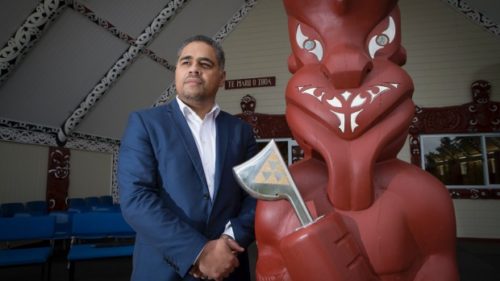
One of the least surprising statistics in this entire study is that there is an extremely strong positive correlation between being Maori and voting for the Maori Party – this was 0.91. What might surprise some people, though, is the strength of the correlation with other parties.
The correlation between being Maori and voting for the Aotearoa Legalise Cannabis Party was 0.89, almost as strong as for voting for the Maori Party. This is because Maoris are greatly adversely affected by the cannabis laws, which are a major contributor to their disadvantaged position.
Because Maoris are more likely than non-Maoris to be arrested for cannabis offences, less likely to be offered diversion for those offences, more likely to stand trial for them, more likely to be given a custodial sentence for them and because they get longer average custodial sentences upon conviction for cannabis offences, there are plenty of reasons for Maoris to vote for the ALCP.
The correlation between being Maori and voting Internet MANA was 0.84, also very strong, but not quite as strong as the above two, perhaps because Internet MANA, despite mostly targeting its rhetoric to disadvantaged Maoris and Pacific Islanders, also appealed to a high-tech young Pakeha and Asian demographic.
Between being Maori and voting New Zealand First the correlation was 0.66, which is a reflection mostly of how well this party does in the Maori electorates, where they regularly score more than 10% of the party vote. It also reflects the degree – surprising to many – that nationalist sentiments exist among Maoris.
Another unsurprising statistic is the strength of the relationship between being Maori and voting for the National Party in 2014 – this was -0.75. Curiously, this figure of -0.75 was also the degree of correlation between being Maori and turnout rate in 2014. Perhaps it reflects the degree of Maori disenfranchisement from the political system.
Neither it is surprising that Maoris do not like to vote for far-right parties. The correlation between being Maori and voting Conservative in 2014 was -0.53, and with voting ACT in 2014 it was -0.42. This is probably a function of culture, in that Maoris are very unlikely to vote for parties that put money above people.
Interestingly, the correlation between being Maori and voting for the Green Party in 2014 was not significant (-0.09), despite the fact that Green voters are significantly wealthier than average and Maoris considerably poorer. This was the only party to have no significant correlation in either direction between voting for them in 2014 and being Maori.
This reflects the fact that Maoris with middle class pretensions vote Green well before they vote National, and that many Maoris are young and so in the student demographic that heavily votes Green.
*
This article is an excerpt from Understanding New Zealand, by Dan McGlashan, published by VJM Publishing in the winter of 2017.