Tall Poppy Syndrome Is A Slave Morality

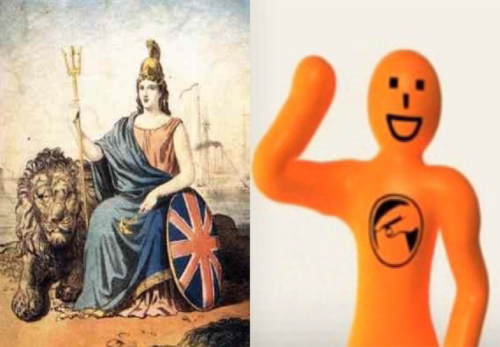
Artistic representations of nationhood in a country with healthy self-confidence (left) are very different to what we get in New Zealand (right)

The Scandinavians call it Jantelagen, Nietzsche called it slave morality, we call it the Tall Poppy Syndrome, but it all amounts to the same thing – a horizontalisation of social attitude that bitterly refuses to give credit where it’s due; a sneering, snivelling resentment that seeks to rip down anyone who distinguishes themselves for any reason.

Unlike us, the Scandinavians and the Continental Europeans are sophisticated enough to appreciate that this is a phenomenon of their culture and are able to consciously work against it. So too do the British recognise that their tolerance of eccentricity has enabled them to produce the geniuses necessary to remain a world power.

The gormless peasants that make up the bulk of the New Zealand populace are yet to comprehend such a thing, however, and so the lawnmower mows on.

So neglected are we down here in the world’s arsehole, so starved of genuine regard from those of other nations that we have gone blind in the darkness and turned on each other.

We should be ashamed for our Tall Poppy Syndrome. It really makes us look like a nation of cucks.

After all, it’s a classic expression of slave morality. Tall Poppy logic is even more resentful than Christianity.

Resentful Christians tell themselves that “the meek shall inherit the Earth” to make themselves feel better about how easily their massively egotistical selves can be made to feel fear and consequently how easily they can be intimidated away from conflict.

The modern Kiwi tells himself something very similar. His byword is “the mediocre shall inherit the Earth.”

In this environment, the worst insult of all is to be a “try-hard”. This is to commit the sin of putting an effort into something, as opposed to the socially approved method of doing a half-arsed job that soon has to be fixed.

The logic appears to be that if anyone did anything properly, then overall standards would soon rise and soon people would be demanding that we did everything properly. And that’s just a hassle.

Therefore it’s better to half-arse everything so that no-one has to feel bad for being incompetent.

This is how we arrived at the Orange Man animation that the television shows us to try and entice us into giving our consent to be ruled by the political class.

Whichever creative agency that invented the Orange Abortion no doubt would have paid due caution to ensuring that the image intended to represent the New Zealand voter didn’t exclude anyone.

Because if it did, they would have resented the shit out of it. We know this because that’s our culture.

Therefore, the New Zealand voter ends up being represented by an amorphous orange blob – one that stirs precisely zero national sentiment in the viewer.

This feeble absence of passion is the inevitable result of a national morality based on resentment. Nobody gets to have anything interesting or do anything interesting.

We have created a culture so boring that our young people would rather cheat death by smoking random chemicals sprayed on dried plant matter purchased from known criminal gangs than partake in society.

A nation so petty that the Government pissing $400,000,000 up the wall every year on the War on Cannabis goes without censure, but a future Green MP defrauding the same Government out of a few hundred dollars to feed a dependent child twenty years ago sparks a national outrage.

It’s time for a radical revaluation of values in New Zealand.
Te Reo With Mnemonics: Animal Words

Dog – kurī

A dog and a man are walking along a path. The dog turns to the man and says “Can you carry me for a bit?”

Cat – tori

A cat dressed in a three piece suit with an expensive hat walks down the street with Margaret Thatcher, David Cameron and some other Tory Party politicians (use the closest to a Tory politician you can think of).

Bird – manu

A bird flies through the forest, and as it lands it takes the form of a man (if you know a man named Manu, imagine it taking his form).

Pig – poaka

Two pigs walk up to a sleeping woman. “Is she awake?” one asks. “I don’t know – poke her.” The first one then pokes the sleeping woman with a trotter.

Rat – kiore

A rat runs through a restaurant with an apple core in its mouth.

Chicken – pī

A chicken struts along the ground pecking at peas.

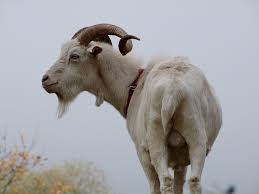
The Maori word for billy goat – koati toa – shares a k-t-t- pattern with the English word ‘quartet’

Mouse – kiore iti

[Literally means “small rat”] A mouse is busy eating an apple core. The mouse is the core eater.

Horse – hōiho

Eeyore the donkey from Winnie the Pooh series walks through a paddock, only instead of a donkey he is a horse.

Billy goat – koati toa

Four billy goats sing in a barber’s shop. They are the Billy Goat Quartet.

Deer – tia

A deer emerges from the forest wearing a scintillating tiara.

Cow – kau

A cow in a skirt hits a golfball off a tea. She is the famous bovine golfer Lydia Kau.

Fish – ika

A boy runs up behind a girl and places a fish on the back of her neck. The girl shrieks: “EEEK!”

*

The above is an excerpt from the upcoming Learn Maori Vocabulary With Mnemonics, by Jeff Ngatai, due to be published by VJM Publishing in the summer of 2017/18.

Cannabis Prohibition is a Pakeha Law With No Place in Aotearoa

The Maoris’ lack of historical exposure to alcohol meant that, for British settlers, the drug had a similar effect to a targeted bioweapon

Maoris are severely disadvantaged by the laws around recreational drugs for biological reasons. The Pakeha that introduced these laws knew about these biological reasons, and so they created a set of drug laws specifically designed to keep Maoris down. This essay looks at how.

Human use of alcohol dates back into prehistory. It is believed that civilisations in the Fertile Crescent were brewing a simple form of mead as far back as 8,000 B.C., and we’ve never stopped brewing it. After all, the effects of alcohol make some of the unpleasant aspects of life much easier to deal with.

Not every culture adopted alcohol at the same time, however. Use of it spread from the Fertile Crescent to nearby cultures, and then further afield, until it was introduced to Maoris in the late 18th century.

Alcohol is everywhere now, but, as any cosmopolitan worthy of the name could tell you, the various people of the world behave in different ways to the drug.

The basic rule is this: the greater the length of time that an individual’s ancestors have been exposed to alcohol, the greater the opportunity there has been for genes that lead to poor outcomes from alcohol use (in particular, violence and/or physically reckless behaviour, and alcoholism) to have been eliminated from that individual’s gene pool.

Middle Easterners tend to behave the best on alcohol, for the reason that they have been exposed to it for maybe 10,000 years. This means that, for a hundred centuries, anyone carrying genes that led them to go crazy on alcohol would have died at a significantly higher rate than their fellows.

Southern Europeans and Northern Africans are the next best behaved, because they were next to be introduced to the drug, and Northern Europeans, especially the British from which the majority of Kiwis descend, have themselves had between 2,500 and 5,000 years of exposure.

The Maoris, by contrast, have had 200 years of exposure to alcohol. Although trading rum for various goods and services was basically how interracial relations began in New Zealand, two centuries is not very long in evolutionary terms.

What that means, in practice, is that Maoris carrying genes that lead them to go crazy on alcohol, although they certainly die at a significantly higher rate than their fellows, have not done so for long enough for Maoris as a whole to have built up the genetic resistance to the drug that Kiwis of British ancestry have.

This explains why, if you put half a dozen standard drinks into 100 Maoris and 100 Pakeha, the Maoris would have significantly worse outcomes. It’s not a question of willpower or lack of mental discipline or fortitude, any more than the higher rate of skin cancer among Pakeha is a question of those things. Both are matters of explicable biology.

The fact is that alcohol has literally been used as a bioweapon against Maoris.

The logic about genetic resistance was understood by British colonialists well before anyone was aware of such things as genes. By the time the Empire had made it as far as New Zealand, it had had two hundred years of observing the effects of the drug on the natives of Africa, the Americas and Australia, and it had noted that in almost every case the social structure of those natives was obliterated by exposure to it.

They therefore knew full well what was going to happen when they introduced the Maoris to rum, and outcomes like Kororareka – “The Hellhole of the South Pacific” – were inevitable.

It was known that exposure to alcohol was going to cause the Maoris to fight each other and kill themselves, because there had been ample opportunity to see that happen elsewhere.

This genetic vulnerability to alcohol explains why Maori culture has taken so eagerly to cannabis. The majority of Maoris have tried cannabis at some point in their lives, and many of those prefer it to alcohol, for the straightforward biological reasons explained above.

For many Maoris, smoking cannabis is a way of getting the benefits of easy sociability and euphoria that one would get from alcohol, but without the drastically negative consequences that naturally befall anyone without an ancestral exposure to the drug. So cannabis prohibition has a massively disproportionate effect on Maoris.

Understood like this, it appears almost sadistic that a Parliament full of people of European descent would forbid, on pain of time spent locked in a prison cage, a recreational alternative to a drug that only they can safely use.

This could fairly said to be terrorism in the form of bioweapons.

*

If you enjoyed reading this essay, you can get a compilation of the Best VJMP Essays and Articles of 2017 from Amazon for Kindle or Amazon for CreateSpace (for international readers), or TradeMe (for Kiwis).