For Those Ignored By The Political Class, The Only Real Protest Is Not Voting

Several opinion pieces have appeared in the mainstream media in recent days exhorting Kiwis to vote in next month’s election. With choice phrases like “not voting won’t solve anything”, “the 2014 result was determined by the people who turned up” and “Voting builds our political power”, all mainstream propaganda organs are doing their best to get you to consent to the status quo.

Because that is all that voting is – you giving your consent for things to carry on pretty much exactly as they already are. The political class will interpret the fact that you voted as a sign that you are content with the overall system – and therefore as a sign that nothing need be changed.

And so, your vote has a zero percent chance of changing anything. You might as well dance naked in a thunderstorm praying for the lightning gods to strike down the enemies of the nation.

How the country will be run for the next three years has already been decided by the mutual agreement of the sort of person who politicians really do listen to – rich old people, who have got together long ago with those politicians and hashed out the precise details of how things are going to be, whether the masses like it or not.

If you’re not a wealthy Baby Boomer, the politicians couldn’t give a fuck what you think. But they do want your consent for what they’re going to do to you.

If they don’t have that then they run the risk of provoking the rise of some kind of revolutionary movement that might actually make a difference to how society is run. Such as: a movement that campaigned on an expensive universal basic income, or on an equally expensive capital gains tax, or on an immigration policy that reflected the will of all Kiwis instead of just multiple property owners and those looking for cheap labour.

And this is the reason why there is all the propaganda right now to get people to vote. Voting in a democratic system is the same as you giving your consent to how the country is governed – and to the people who own both sides of the political system, the consent of the population they’re exploiting is the only thing left that they don’t already have.

If you do vote, then politicians of both the left and right wings of the ruling party tend to naturally assume that you’re more or less happy with the direction of things.

Knowing in advance that the winner of the election is going to ignore your will in favour of those who have money, your only means of protest is to not vote at all. Past a certain level of disenfranchisement, the only action one can take to affect the system is to not vote. A refusal to vote is the only way your voice can really be heard.

If the turnout rate in next month’s General Election was less than 50%, the measured degree of public discontent would be too great to just shrug off, it would then become possible for some hard questions to be asked about the direction the country was going. The mainstream media would be forced to ask whether or not the political system was really a democracy or just an oligarchy masquerading as one.

The higher it is, the more likely it becomes that political discourse is replaced with photos of spaghetti on pizzas, videos of dropping in to London for a sister’s wedding, and witch-hunts against outsider candidates.

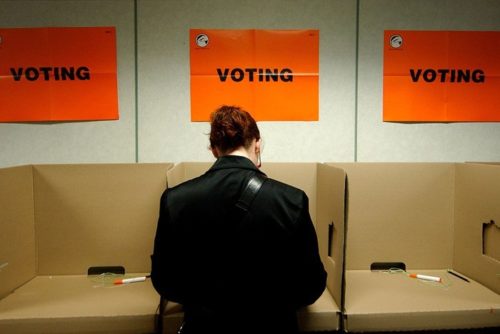
You can help force New Zealand politicians to take the will of New Zealanders seriously by withholding your vote this September 23rd.
How Well Did The Economy Do Under John Key?

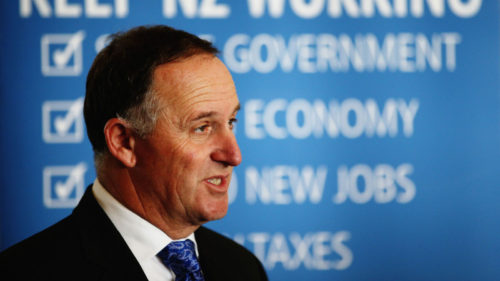
John Key: made New Zealand wealthier compared to other nations, but not by as much as Helen Clark did

This article starts with a very straightforward proposition: that the prosperity of an economy and of the people in that economy is primarily a question of GDP per capita. Given that, we can measure the increase in New Zealand prosperity (if any) under John Key’s tenure by looking at the change in GDP per capita during that time.

The figures that this article uses are taken from the International Monetary Database. Here we calculate GDP on a price purchasing parity basis because we are ultimately trying to measure the change in standard of living.

In 2009, the GDP per capita of New Zealand was USD30,572. This placed us 37th in the world, just behind Italy, Japan and Spain, and just ahead of Greece, South Korea and Israel.

In 2016, the GDP per capita of New Zealand was USD37,294. This placed us 35th in the world, just behind South Korea (who leapfrogged us), Japan and Finland, and just ahead of Italy and Spain (who we leapfrogged) and Israel.

This makes for an increase of 22% over 7 years, which is about 2.9% per year if calculated on a compounding basis.

2.9% over a seven-year period can rightly be considered a decent effort of national economic stewardship from Mr. Key. That level of growth is far from remarkable, but it was enough to move us past a Southern European level of wealth and close to a Far East Asian level.

By way of comparison, the GDP per capita of New Zealand in 2000 was USD21,807, which makes for a 40% increase over the nine years of Helen Clark and Michael Cullen. This works out to just over 3.7% per annum.

Measured that way, the performance of the John Key economy was markedly poorer than the Clark/Cullen economy. However, one has to take into account that Key inherited a global financial crisis, and so it’s worthwhile comparing New Zealand to other nations instead of looking at absolute growth.

In the year 2000, New Zealand was considerably less wealthy than Italy (which had a GDP per capita of USD28,602), Japan (USD26,850) and Spain (USD24,053). It was also less wealthy than Australia (USD28,801), Britain (USD26,425) and America (USD36,433).

By 2009, the GDP per capita of New Zealand had increased from 76% of that of Italy to 89%; from 81% of that of Japan to 92%; and from 91% of that of Spain to 96%. Against other Anglo nations, the GDP per capita of New Zealand had decreased from 76% of that of Australia to 75%; had increased from 83% to 87% of that of Britain; and increased from 60% to 65% of that of America.

This means that under the Fifth Labour Government, New Zealand improved its position strongly against comparable countries, with the exception of the booming Australia.

By 2016, the GDP per capita of New Zealand had increased from 89% to 101% of that of Italy; had decreased from 92% to 90% of that of Japan; and had increased from 96% to 102% of that of Spain. Against other Anglo nations, the GDP per capita of New Zealand had increased from 75% of that of Australia back up to 76%; had increased from 87% to 88% of that of Britain; and remained at 65% of that of America.

This tells us that under the Fifth National Government, New Zealand improved its position against the Southern European countries but stayed the same compared to other Anglo ones.

Ultimately, therefore, we can see that New Zealand’s economic standing in the world is marginally better, in relative terms, after the Key Administration. Apart from the decline of Italy, New Zealand didn’t really improve in relative wealth. This contrasts sharply with the years under Helen Clark, during which time New Zealand improved strongly.

Te Reo With Mnemonics: Natural Cycles

Spring – kōanga

In the middle of a bunch of blossoming flowers is a raging bull. The spring has caused cow anger.

Summer – raumati

If you know anyone named Matthew (or Marty), imagine them rowing a boat really fast under the blazing summer sun while onlookers shout “Row Matty!”

Autumn – ngahuru

A line of prostitutes stand on a street under some falling leaves. The autumn leaves are falling near whores.

Winter – hōtoke

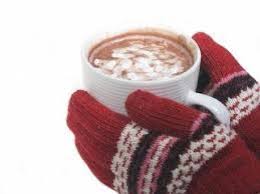
In the middle of a wintry snowstorm, a woman stands drinking a hot cocoa.

Morning – ata

A man wakes up in the morning and then devours a massive breakfast. He is the morning eater.

Afternoon/Evening – ahiahi

As the shadows begin to lengthen for the time period after noon, a crazy man watches the sun start to fall and laughs “Ah he he…”

The Maori word for winter – hōtoke – sounds like the English phrase hot cocoa

Shadow – ātārangi

In the mountains, the Sun shines behind rocky outcropping and creates a lot of shadows. It is shadowy terrain.

Day – rā

The Sun shines on a sleeping lion in the middle of the day. The lion awakens, then roars.

Night – pō

A line of starving homeless people shambles through a city at night. One of them says “We are poor.”

Season – kaupeka

Through all four seasons of sunshine, wind, rain and snow, a giant chicken stands and pecks a cow. The cow never reacts, just watches the passing seasons with the cow pecker.

Dawn – ata hāpara

In the dim light of dawn, a man stuffs his face with food with one hand and plays a harp with the other. The dawn breaks on the eater harper.

Dusk – kākarauri

As the Sun is setting at dusk, a flock of crows lands on a parked car. The dusk wraps around the car crows.

*

The above is an excerpt from the upcoming Learn Maori Vocabulary With Mnemonics, by Jeff Ngatai, due to be published by VJM Publishing in the summer of 2017/18.

Te Reo With Mnemonics: Entertainment Words

Bar/Pub – tūpapa

An infant picks up a glass of beer at a pub and then drinks it. Looking at his father, the infant sees double – he sees two papas.

celebrate – whakanui(-a)

Through a pair of binoculars, a man watches a bunch of canoeists celebrating something far out at sea. They are the far canoeists.

dance – kanikani

A line of dancers dance the can-can. The crowd boos them and throws tin cans at them.

drunk – haurangi

A man tries to talk to another man but the other man can’t hear him. He says “Sorry, I’m too drunk to talk – it’s affected my hearing.”

entertain – manaaki

A tall man, who is part of an entertaining carnival sideshow, has to duck under an archway, and a woman laughs and says “mind the archway”.

Fun/Recreation – hākinakina

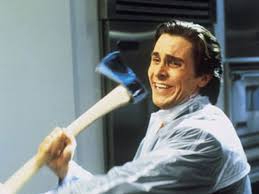
A serial killer attacks a cleaning woman with an axe and laughs maniacally. For recreation he is hacking a cleaner.

The Maori word for recreation – hākinakina – sounds like the English phrase ‘hacking a cleaner’

funny – hangarau

On a giant gallows, a line of corpses are hanging in a row. A person looks at this ghastly scene and starts cackling dementedly as if it is very funny.

laugh – katakata

A cat looks at itself in a mirror (it’s two cats or cat-cat) and starts laughing.

joke – whakakata

A cat drops a mouse in front of an old grandmother and the grandmother shoos the cat away, saying “Fucking cat!” The cat says “It was only a joke.”

party – ngahau

A teenager complains “How can we fix this stereo?” A man smiles and says “With my know-how.” He fixes the stereo, music plays and a party springs to life.

sober – taumauri

A drunk youth complains that he feels dizzy. A nearby friend says “Don’t worry, you’ll be sober tomorrow.”

Spectacle – tirohanga

A child gets offered some food from a hangi, and cries “I’m tired of hangis!” and then throws a tantrum. An onlooking old lady says “What a spectacle.”

*

The above is an excerpt from the upcoming Learn Maori Vocabulary With Mnemonics, by Jeff Ngatai, due to be published by VJM Publishing in the summer of 2017/18.