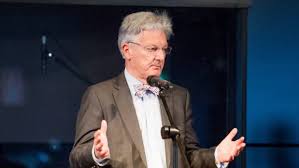
Is It Now Time To Charge Peter Dunne With Manslaughter?

Withholding medicine from a sick person who needs it, leading to that person’s death, is manslaughter – should Peter Dunne face charges for withholding medicinal cannabis from sick Kiwis who needed it?

Peter Dunne announced today that he will be stepping down at next month’s election and will not contest his current Parliamentary seat of Ohariu. It’s apparent that the National ship is sinking and, like a rat, he’s getting off while the getting’s good. However, that doesn’t mean he should get away with the suffering he caused to innocent Kiwis while in office.

The New Zealand Crimes Act sets out the definition for culpable homicide, one form of which is the crime of manslaughter. One example of culpable homicide is “causing that person by threats or fear of violence, or by deception, to do an act which causes his or her death”.

The threat of using the criminal justice system to put a person in a cage for using medicinal cannabis definitely qualifies here. Peter Dunne has acted to uphold cannabis prohibition ever since his agreement to support the Fifth Labour Government in exchange for no progress on cannabis law reform.

This has had the effect of causing people to avoid using cannabis medicine for fear of arrest and imprisonment.

Lying about the medicinal qualities of cannabis also qualifies here. Telling the people of New Zealand that cannabis is not a medicine, when its medicinal use is saving lives in dozens of overseas jurisdictions, is a form of deception that has caused a number of deaths.

If New Zealand was a fair society, if justice existed here for every person and not just for the wealthy, Dunne would be charged with causing those deaths.

Studies have shown that in American states with legal medicinal cannabis, deaths from opioid overdoses have decreased by 25%. This is because many suffering people would rather use cannabis than the highly addictive opioid-based painkillers that frequently lead to death by overdose.

Because Dunne blocked medicinal cannabis law reform for so many years, the use of prescription opioids in New Zealand has soared. A mainstream media article from a couple of months ago, titled Serious pain coming as NZ’s prescription opioid use soars, details some statistics that point towards the looming health disaster that Peter Dunne has dumped in our laps.

There’s no doubt that if a New Zealander went into someone else’s house and took away their insulin, and then that person died, then the person who took that medicine away could be charged with manslaughter. So why can’t Peter Dunne be tried for the people who died because he kept medicinal cannabis out of their hands?

If the case of sick Kiwis dying from having an effective medicine withheld from them is not enough to press charges, the ongoing spate of deaths from people using recreational alternatives to natural cannabis might be. Peter Dunne’s action in delaying the legalisation of recreational cannabis, at the same time as opening the floodgates for a variety of mystery drugs cooked up in Chinese labs and labelled “legal highs”, has been linked with nine deaths last month alone.

The fact is that these people are only dying because their first choice of recreational drug – natural cannabis – has been denied to them, incentivising them to use alternatives. Therefore, it can be argued that Peter Dunne, insofar as he blocked cannabis law reform for so long, is responsible for these deaths.

His disastrous Psychoactive Substances Act, one of the most overreaching and totalitarian laws ever passed in New Zealand, has had the effect of making a huge range of safe cannabis alternatives illegal, delivering this massive industry directly into the hands of the black market and the criminal gangs that exploit it. Because of the total absence of quality controls in the black market, recreational drug consumers have absolutely no idea what they’re getting when they buy a cannabis alternative.

As the Minister chiefly responsible for this shambles, Peter Dunne ought to face manslaughter charges for the innocent Kiwis who have died through having cannabis denied to them.
Te Reo With Mnemonics: Physical Dimensions

big – nui

A man presents a child with a gigantic egg. The man says “I just bought you this new egg.”

small – iti

A tiny mouse is busy eating a pile of biscuits much bigger than itself.

heavy – taimaha

Lying on the ground is a large stopwatch, or timer. The timer is so heavy that it takes four men to move it.

light – māmā

A jar of Marmite is so light that it beings to float up off the kitchen bench.

Height – ikeike

A woman is standing between two very tall, scary looking men. She turns to one and screams, then turns to the other and screams. Her reaction was “Eeek! Eeek!

narrow – kūiti

A woman pulls a coat through a very narrow ring.

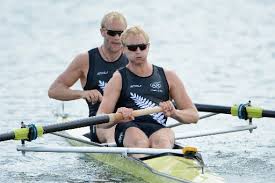
The Maori word for length – roa – sounds like the English word rower

Length – roa

A single rower sits and rows a ridiculously long canoe.

Size – rahi

A ray of sunlight shines from the clouds onto a plant, which then grows to an enormous size.

tall – teitei

On top of a really tall golf tee is a pot of tea. It is the tee tea.

short – poto

A very short man walks along with a pot belly and a pot on his head.

weigh – pauna(-tia)

On a large set of veterinary scales, a vet tries to weigh a pony.

wide – whānui

An extremely wide woman with an extremely wide paper fan sits in the heat fanning her face.

*

The above is an excerpt from the upcoming Learn Maori Vocabulary With Mnemonics, by Jeff Ngatai, due to be published by VJM Publishing in the summer of 2017/18.

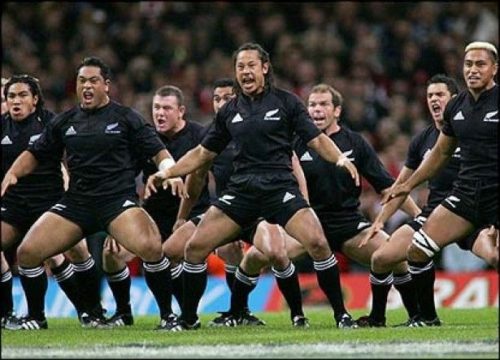
Whatever Happened to The Polynesian Takeover of New Zealand Rugby?

At the turn of the century, many commentators believed that a total Polynesian takeover of the All Blacks was inevitable – what happened?

The All Blacks team for this Saturday’s Bledisloe Cup clash against the Wallabies has been named. A curious aspect of the teamsheet is that it is one of the whitest All Blacks teams named in decades. This means that a lot of the race-panic rhetoric at the turn of the century turned out to be grossly misguided, and this article looks at why.

In the opening years of this century, the All Blacks back row was made up of the “Great Wall of Samoa” in Jerry Collins, Chris Masoe and Rodney So’oialo, with the Tongan-born Sione Lauaki playing a part-time role. All three of these players typified the “big hit” culture of Polynesian rugby, and they earned the “Great Wall” epithet from their uncompromising defensive style.

The back three was comprised of the “Flying Fijians” Joe Rokocoko and Sitiveni Sivivatu, with the rock-solid Mils Muliaina as the last line of defence. All three players were lightning-fast across the ground – a quality, we were told, deriving from the superior proportion of fast-twitch muscle fibers in the Polynesian genome. No white player was going to be able to compete, ever again.

The idea that the All Blacks front row would sooner or later be permanently Polynesian was taken for granted in many quarters. After all, the squat, solid build of the average Polynesian was considered the ideal build for a prop, and some considered it just a matter of time until the heavier build of the Polynesians won out.

The last bastion of white All Blacks was expected to be the second row, on account of that the Polynesian genome seldom produced men taller than 6’6″, which is realistically the minimum height necessary to succeed as an international lock. But even then, with players like Ross Filipo on the rise, it seemed as if the entire forward pack would follow the backs in becoming entirely Polynesian.

This piece from The Telegraph, penned in the year 2000 and titled ‘White players shying away from All Black future‘, is typical of the rhetoric of the turn of the century. John Morris, the headmaster of Auckland Grammar School, explained that white pupils at his school were abandoning rugby union and turning “to soccer, hockey or even rugby league where there is a better chance for the smaller lad.”

This seemed reasonable for white kids, who, going through puberty later than Polynesians, often found themselves as boys against men on the high school rugby fields. Many thought that white kids would all turn to cricket, essentially abandoning rugby to the Samoans, Fijians and Tongans.

John Matheson, editor of New Zealand Rugby magazine, even went as far as to state “It won’t be too long before there is not a white face in the All Black team.”

Fast forward 17 years, to this weekend’s Bledisloe Cup match, and those predictions could hardly have been more wrong.

The player with the most Polynesian blood in the All Blacks starting XV is the half-Samoan Reiko Ioane. Sonny Bill Williams, at centre, is next. He is at most half-Samoan, with a white mother and a father with a Welsh surname. All of the other All Blacks are white or Maori – and there is not a single Fijian or Tongan among them.

Two half-Samoans out of fifteen players means that less than 7% of the All Blacks are Polynesian by blood – a lower proportion than the amount of Polynesian blood in the New Zealand population as a whole, and barely greater than that of Black Caps. And even then, Ross Taylor is a far more established player in his team than either Ioane or Williams is in the All Blacks.

So what happened?

Explaining this outcome – and how the white ethnomasochists at the turn of the century got it so badly wrong – is not straightforward.

First, genetics plays a role, in ways that were understood by few 15 years ago. Polynesians may have a higher proportion of fast-twitch muscle fibers, and that may make them quick across the turf, but this simply means that white players have a higher proportion of slow-twitch muscle fibers. Because rugby union is fundamentally a game of possession, strength trumps speed in many cases, in particular when it comes to the contest for the ball.

Players of European descent have an advantage in the upper body over Polynesians, especially when it comes to grip strength and shoulder strength. When it comes to winning the ball, this advantage is decisive. This explains why the All Blacks forward pack this weekend will be entirely white, with the exception of the Maori hooker Codie Taylor (who nevertheless has plenty of European ancestry).

The second major explanation is geographical. If one looks at the birthplaces of the current All Blacks squad, one striking pattern leaps out: very few of them are born in the big cities.

The lifestyle of people in Kiwi big cities is following the trends established elsewhere in the West: big city people are rapidly getting fatter, lazier, more obese. This means that many more All Blacks are from the minor centres than before – and the population of the minor centres is almost exclusively white and Maori.

The third major factor is professionalism. At the turn of the century, rugby matches were often won by turns of individual brilliance, as they were in the amateur days.

The game has changed a lot since then. It is much more structured now, which means that there is less room for individual flair and more demand for highly-coached, error-free play, which shifts the advantage to the middle classes because they are far more able to pay for the necessary coaching. In doing so, the advantage also shifts away from the working-class Polynesians and back to the white people who occupy the vast bulk of the middle class.

In summary, the breathless predictions of total Polynesian dominance of the top levels of New Zealand rugby turned out to be wrong. Rugby union is a fundamental part of Islander culture, this is true – but it’s a fundamental part of white Kiwi culture as well, and the Pakeha are not going to give the game up simply because they get smashed a lot in teenage years.

Predicting the racial makeup of the All Blacks in another 17 years is impossible. What can be said for certain is – as Sir Apirana Ngata believed – rugby union will continue to serve as the best of all cultural solutions for bringing out inter-racial harmony and co-operation in New Zealand, as it has done for over 120 years.

Te Reo With Mnemonics: Sports Words

Rugby – whutupōro

(loan) A group of kids playing rugby ask another kid, who is wearing rags, if he’d like to play. The kid says “Fuu, too poor, yo.”

League – rīki

(loan) A rugby league team walks past an old woman. She looks horrified and holds her nose, as if they reek.

Cricket – kirikiti

(loan) A man walks through a field wearing cricket gear and carrying a cat.

Netball – poitarawhiti

A woman in netball uniform walks onto a court eating a pie. The umpire says to her “If you want to play netball you’ll have to pay the pie tariff.”

Ball – poi

A boy plays cricket, but instead of bowling a ball he bowls a pie.

bounce – tāwhana

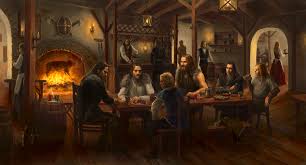
Inside a tavern, a crowd of drunken revellers bounce balls of all descriptions.

The Maori word for bounce – tāwhana – sounds like the English word tavern

catch – hopu(-kia)

A man hops along some grass and then dives to catch a ball.

coach – kaitohutohu

A man holding a kite talks to some skeptical schoolchildren. He says “I am the best in the world at coaching you on how to use this kite. Or who? Or who?”

Court/Field – papa tākaro

A middle-aged man meets some children on a sports field after a game and gives them some takeaway food. He is the papa takeaways.

tackle – rutu

Some trees are playing rugby. One of them tackles another by wrapping its roots around them.

kick – whana

A man tries to kick an electric fan into a goal.

pass – kuru

A doctor has a coughing patient on the other side of the room. The doctor says “This will cure him!” and passes a rugby ball into the patient’s chest.

*

The above is an excerpt from the upcoming Learn Maori Vocabulary With Mnemonics, by Jeff Ngatai, due to be published by VJM Publishing in the summer of 2017/18.