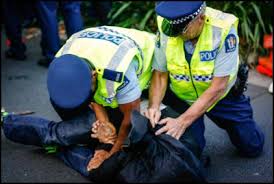
Defending Human Rights Begins At Home

There’s no point in Jacinda Ardern’s Government fighting for the rights of “refugees” in Australia when it is committing human rights abuses against the New Zealand people by denying us medicinal cannabis

Watching Jacinda Ardern virtue signal about the need for New Zealand to take in country-shopping refugees from Manus Island is disgusting when she is representing a Government that is currently committing human rights abuses against its own people. The fact is that if the Sixth Labour Government wants to get a reputation for being on the correct side of human rights issues, it needs to start at home with a repeal of cannabis prohibition.

Putting a sick person in a cage for growing the medicine they need to alleviate their suffering is a human rights abuse. No reasonable person doubts this anymore, despite the 80 years of propaganda seeking to demonise the plant. There is ample evidence that cannabis is medicinal and should never have been made illegal.

Plenty of unreasonable people once argued otherwise, and unfortunately our law still reflects the conclusions drawn by those unreasonable people in the form of the Misuse of Drugs Act. But much like prohibiting women from voting, or to putting gay men in cages like animals, reasonable people have kept the pressure on to get the law changed to something reflecting basic human compassion.

The majority of the New Zealand people now believe that the politicians who criminalised growing medicinal cannabis, and the Police officers, judges and bailiffs that enforce this illegal law are human rights abusers. This is because, if people do not have the right to a medicine that takes their suffering away when they get sick, then they don’t have any rights at all.

A law that forces sick people to endure unnecessary suffering when those sick people could themselves be growing a palliative medicine is obscene. It’s more obscene than anything else currently happening in New Zealand, and this is why Ardern needs to begin with a repeal of cannabis prohibition and not by meddling with Australian “refugee” policy.

It’s clear that it’s important to the Sixth Labour Government that they are seen to be doing the right thing. Much of the argument for voting for them in the first place is moral – that a greater redistribution of wealth would alleviate poverty and that we have a moral obligation to reduce poverty because it causes suffering. So they have an obligation to actually make moral decisions.

It’s also clear that the Fifth Labour Government fell, in part, because the public perception was that it was more interested in being seen to do the right thing than actually doing the right thing. They started to appear hollow and dishonest to a jaded electorate, and the public became cynical.

In order to avoid this, Ardern’s Government ought to deliver a meaningful win to the disenfranchised and dejected masses who voted them in, and quickly. It ought to introduce an immediate moratorium on cannabis arrests, effective today, by giving notice to Police Commissioner Mike Bush that it had intent to repeal cannabis prohibition.

If the intent was to look good from taking correct moral actions, this is one that the Fifth Labour Government should have taken 18 years ago, because there was enough evidence for California to make medicinal cannabis legal in 1996. Ardern would do well to make up for the tardy refusal of the New Zealand Government to stay informed; a pig-headedness that has caused so much suffering.

Of course, if Jacinda Ardern had any real integrity, and wasn’t just another of the virtue-signalling hypocrites that Western voters now expect leftist politicians to be, she would make a public Government apology to those impacted by cannabis prohibition, emphasise that the New Zealand Government never had the right to make The People’s Medicine illegal and open discussions about compensation for past criminal convictions. That would be the result of making an objective, honest appraisal about how to put things right.

This is too much to realistically hope for, but we can still call for an immediate moratorium on cannabis arrests on the basis that prohibition will not survive this term of Government.
The Boringest T20I Is Worse Than The Boringest ODI

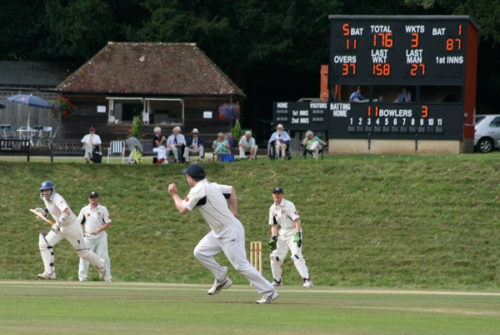
Scoreboard pressure in often so intense in T20s, especially at international level, that one misstep puts the chasing side in a hopeless position

In much the same way that cricket analysts were slow to catch on to the importance of strike rate in ODIs, so too have they been slow to catch on to the importance of strike rate in T20s. Everyone knows strike rate is important in limited overs; what few understand is how this can lead to extremely boring matches. This article looks at why efforts to contrive a more interesting game of cricket have only somewhat succeeded.

The advent of T20 came about when someone realised that, all other things being equal, fans liked seeing boundaries and wickets, and didn’t much care for dot balls or for contests that were over long before they technically finished because the chasing side lost early wickets. And so a form of the game was contrived to have as few dot balls as possible, and as many boundaries and wickets as possible.

But what this new fashion risks losing sight of is the fact that cricket is only interesting in the first place because it is a contest of skill, and sometimes the nature of the match situation in T20 is not conducive to playing the game skillfully.

For instance, it almost never occurs in ODIs that the chasing team, in the first five overs, falls so far behind the required strike rate that the match is effectively lost without resorting to slogging. The chasing team might lose early wickets, which makes the chase much harder, but as long as they can keep their wickets intact there are still plenty of overs in which to win through playing proper cricket and building an innings.

In T20s it’s common for the chasing team to build up enough scoreboard pressure in the first five overs that they effectively cannot win. In other words, it’s possible to lose the game with the bat in the first five overs because of scoreboard pressure – something that is near to impossible in ODIs.

This can happen if the team setting a total bats well enough that they’re close to the optimal possible run rate over the 20 overs (which is usually somewhere just above 10 an over, a rate that cannot realistically be maintained for an ODI). When the required run rate for the batting team climbs above this, it cannot be achieved without taking risks (i.e. slogging) and when this happens one is no longer playing cricket. It’s no longer a contest of skill but merely hit and hope.

This is an incredibly boring outcome from the spectator’s point of view, because the beauty of cricket is that it is a contest of skill where the batsman must find a balance between aggression and keeping his wicket intact. Removing the “keeping the wicket intact” part of the equation often reduces the game to slogging.

It has happened twice in the two matches of the T20I series between New Zealand and India so far.

In the first T20I in Delhi this week, Shikhar Dhawan and Rohit Sharma both scored 80 at strike rates of 145+ opening the India innings, which allowed them to finish on 202, more than 10 runs an over. This asking rate was so high that the slightest stumble in the chase would see the match over as a contest.

And it duly was effectively over, 22 balls into the chase after Munro and Guptill had both been dismissed. At this point the equation was 185 runs off 98 balls and Kane Williamson and Tom Latham, for all their undoubted skill as batsmen, couldn’t do much about it because neither could slog at the required rate.

Once a T20 match gets to this stage it gets ugly, because batsmen have no time to get used to the conditions so as to play big innings where they strike the ball skillfully and with timing into gaps in the field. So after Williamson and Latham were dismissed, Colin de Grandhomme had to come in and slog his first ball, which got him out.

In last night’s T20I at Rajkot, the contest was effectively over in the second over of the chase after Trent Boult had taken two wickets. Colin Munro clubbed his way to 109* (58) in the first innings, which meant that the slightest stumble would put the total out of reach.

And it duly was effectively over after Boult’s second, which meant they needed 10.5 an over for the remaining 18, or an individual strike rate of 175, with their two best hitters out. None of their batsman managed this, as few do.

The remaining batsmen were unable to score at the required strike rate without throwing their wickets away, and so limped to a loss, effectively throwing in the towel long before the innings concluded.

In ODIs strike rate is a major factor, but strike rate seldom destroys the chasing team’s hopes as quickly, as ruthlessly and as completely as in T20Is. Scoreboard pressure can destroy a chasing team’s chances so quickly that players can be forced into mindless slogging, and this is much less interesting to watch than a balanced contest between bat and ball.

The Black Caps T20 side already can’t find room for batsmen of the quality of Ross Taylor and Tom Latham, because they can’t (or don’t) slog enough. This means that the viewer is watching batting of a lower level of skill just because the way the T20 format is contrived promotes such. This is also not interesting from a viewer’s perspective.

The real horror scenario is this – what if it is decided that strike rate is so important in T20Is that there’s no room in the side for Kane Williamson? Because if this day ever comes, T20Is might start to be considered a joke format by cricket fans in the same way most rugby union fans consider sevens, or at least one only suited for levels below international.

If the joy of sport comes from watching skill on display then it can be argued that T20Is are objectively more boring than ODIs because they objectively give less opportunity for the batsman to display skill. The overwhelming importance of strike rate means that skillful cricketers are often pushed out of the side by sloggers, which are only fun in small amounts.

New Zealand Should Start Accepting White South Africans As Refugees

White South Africans may have become to the blacks what Jews once became to the Germans. Should New Zealand act now in the interests of preventing a genocide?

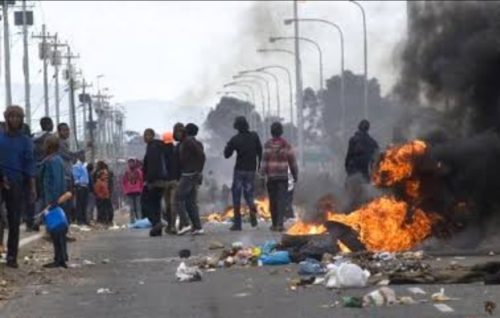
The race rhetoric in South Africa appears to have reached an unprecedented level of nastiness, and farm murders are increasing. Ever more prominent black South African voices are calling for the removal of white people. With a mind to possibly preventing a genocide, New Zealand ought to consider whether we should start accepting white South Africans as refugees.

There are several major advantages to the idea from a New Zealand perspective.

South Africans regularly find themselves at or near the top of the income tables for the various immigrant groups to New Zealand – in stark contrast to the sort of person who usually comes to the West as a refugee. This suggests that they broadly fall into the categories of immigrant that we’re trying to attract anyway.

The common Marxist argument that Third World refugees are generally beneficial to the nations that let them in has been proven to be a lie, but white South Africans have a similar level of academic achievement to white people in other Western cultures, and this has had a positive effect on employment rates and economic productivity. In this sense they could be considered a First World culture.

This also means that they’re much less likely to do the kind of welfare bludging and petty crime that people from other large refugee sources tend to do, which means that the New Zealand population is less likely to regret the decision to let them in. Many Europeans bitterly regret letting in so many immigrants whose net contributions are negative, and New Zealand has the right and duty to act to avoid the same fate.

Culturally speaking, white South Africans are more like us Kiwis than anyone else in the world is, with the exception of Australians. The first major wave of British colonisation was to the Americas, which is why the Americans and Canadians are similar, and the second major wave was to South Africa, Australia and New Zealand, which is why these cultures are similar.

White South Africans speak English, they play cricket and rugby, they have a much better idea of how to conduct themselves in a Parliamentary democracy than most other immigrants, they value education, they have extensive experience (however cynical) of other ethnicities, they have a Northern European Protestant work ethic like most other successful colonial cultures, and, at least for now, they are mostly free of the massive psychological trauma that makes the long-term integration of a foreign person into society truly difficult.

In other words, they’re every bit our cousins as much as the Aussies are.

If white South Africans are not much different to us than Aussies are, their integration will be straight-forward, which is something that cannot be said of most potential refugees. This means that we can accommodate more of them for a given amount of social upheaval.

After all, a given number of immigrants will cause a level of social disruption that is a function of how different those immigrants are to the host population, so if one of the limits to taking refugees is how willing the host population is to accept them, then taking refugees that are more like us will allow us to help more people.

This means that if we are to take refugees at all, and many are arguing that we should, then we should take white South Africans first.

One negative that people might argue is that South Africa, as a developing country, needs the brainpower of its most highly-educated demographic much more than New Zealand does, as we already have a large class of highly-educated professionals whereas South Africa is still fairly poor and educational standards are very low.

But against that it could be argued that these white South Africans are going to end up moving out of the country one way or the other, and in short order in either case. Because they are educated, white and English-speaking it’s also fairly easy for Australia, Canada, Britain or America to take them in, so we might as well grab them now.

Another potential negative to consider is that offering blanket asylum to white South Africans might jeopardise a potentially more orderly withdrawal process. Measured emigration might turn into a panic.

But against this it would be argued that if a Zimbabwe-style ethnic cleansing in South Africa appears probable – and it’s looking ever more likely – then moving as quickly as possible is the best move to minimise human suffering in the long term.

New Zealand should take measures to accommodate considerable numbers of white South African refugees because the safety of those cultures in the African continent can no longer be guaranteed, and letting them into New Zealand is both easier than them going anywhere else and better for New Zealand than letting any other group of refugees in.

*

If you enjoyed reading this essay, you can get a compilation of the Best VJMP Essays and Articles of 2017 from Amazon for Kindle or Amazon for CreateSpace (for international readers), or TradeMe (for Kiwis).

Why Kiwis Hate the Police II

Many forget that the warrant of a New Zealand Police officer is not to enforce the law but to keep the peace

Consider this thought experiment. You’re driving down a state highway at 100km/h, with some cannabis in your car. Going around a bend, you see a Police car upside-down in a river with no person in sight. Obviously the driver failed to take the corner, and is almost certainly in dire need of immediate medical help. The question is: do you stop and help, or do you just drive on past?

Most Kiwis would argue that the correct answer is clearly to stop and help. After all, it’s a medical emergency, and the Police couldn’t possibly be so unreasonable as to charge a person with a cannabis offence if someone’s life was on the line. Surely discretion would be used in such an instance.

These Kiwis would have more faith in the Police than Caleb Smith, of Greymouth. His story, which hit the news yesterday, has appalled New Zealanders. Smith made a suicide attempt, and part of the Police response was to search his house, discover some cannabis plants, and charge him with a criminal offense. He now has three criminal convictions.

This incident is very enlightening when considered in the context of broader relations between the public and the Police. The reaction of most New Zealand citizens when reading about the conduct of the officers in the Caleb Smith story is horror, disgust and outrage, but that isn’t the worst thing.

The worst thing is the effect stories like this have on public perceptions of New Zealand Police officers.

Stories like Caleb Smith’s tell the reader that the sort of person who becomes a New Zealand Police officer is the sort of person who is willing to go up to another Kiwi at their lowest point – in the midst of a suicide attempt – and kick him in the guts, making his life far more difficult for no benefit to the public good, and without the consent of the New Zealand people. It’s a person willing to be cruel simply for the sake of it, using their uniform as a shield to evade responsibility.

Like a dog, they just do what they’re told without consideration. At least, this is how the Police naturally start to appear in the eyes of the population they are supposed to be keeping safe when that population read about such incidents.

Cries of “They’re just doing their jobs!” don’t change the sentiments that stories like Smith’s make Kiwis start to have towards Police officers. In fact, mindlessly following orders is as contemptible as anything else – and people know this.

At the end of the day, every Police officer has the free will to refuse to enforce laws that are unjust, and if they choose not to exercise that free will they cannot complain of the consequences.

It is the duty of every sentient being to consider whether their actions cause suffering to leave the world, or whether their actions bring suffering into the world. That Police officers enforce a law on the Kiwi people that causes great suffering, and that they do so without the consent of those people – who do not approve of that law – is worthy of contempt.

If Police officers choose to enforce a law, even when doing so requires them to willfully add more suffering to the life of one of their fellows who is already suffering severely, then it’s only natural that the people come to hate them.