

Category: politics
The Case For Cannabis: Cannabis is a Tool For Personal Growth

The cannabis high can teach a person a lot about themselves that they didn’t already know. It brings up a range of different emotions, and some of those emotions provide the sort of challenges that lead to healthy personal growth. This article discusses the idea that cannabis ought to be legal for its benefits as a tool for personal growth.
Personal growth can occur in a number of areas. For those who have suffered previous life trauma, it’s common that personal and emotional development stalls at the stage where the trauma occurred. Heavy physical, sexual or emotional abuse can lead to impulsive, neglectful, destructive behaviour, and getting past such conditioned behaviours is not easy.
The main use of cannabis for psychotherapy might lie in its ability to induce a state of relaxation and fearlessness. In that state, it’s possible to revisit earlier traumas and to reinterpret them. Traumatic events tend to leave the impression that they were more important than they really were, which can lead to them making a change to behaviour that outweighs any learning value the experience may have had.
A person may have become conditioned to react angrily or violently when confronted with a certain emotion or stimulus, when they really shouldn’t. In order to correct this, psychotherapy seeks to revisit the traumatic event and recondition the patient to not react with anxiety when they recall it. This has the effect of settling the psychological tension that had existed ever since the trauma.
Cannabis is useful for its deconditioning effects – although this is also one of the reasons behind why it has been illegal. One man’s psychological damage is another man’s asset, and the brutal learned helplessness that people come to suffer as a result of early schooling tends to make them more amenable to instruction from their overlords in the workplace. Those overlords, therefore, do not want people to decondition themselves, especially if it also makes them free.
Probably the most effective use of cannabis, however, lies in its ability to cause the user to have original thoughts that could not have been generated by any other method. Cannabis has long been associated with creative industries and endeavours, especially music and writing. It does this by preventing repetitive thoughts from occurring, leaving mental space for ideas inspired by the environment.
There are several people whose minds are limited on account of the low range of stimuli they have encountered over the course of their lives. Many of these people, particularly, have been dumped in front of a screen by a parent early in their lives and know little of the outside world or of other people. They have essentially been programmed to accept Disneyland as their reality.
People like this can bring themselves a new lease on life by using cannabis, and allowing themselves to explore vistas of the mind that were previously shut off. As users will attest, entire realms of new thought can open up when one is under the influence of cannabis: all sorts of strange, wonderful and unsettling ideas seem to arise as if from a parallel dimension that one could not perceive until just now.
Related to this, and as mentioned in a previous section, cannabis is a religious and spiritual sacrament. This entails that many people have used it as a tool for spiritual growth.
There is a reason why hippies are associated with terrifying insights into the nature of death, consciousness and reality as well as cannabis – they have seen beyond. Cannabis use can lead to spiritual growth in the same way that meditation does. By way of breaking one’s usual patterns of paying mental attention to petty things, one frees up mental space for new and original thoughts to arise, perhaps from long-suppressed places.
On a darker level, the unpleasant and paranoid aspects of the cannabis experience can lead to personal growth in a grim, meathook sense. Many people have avoided ever really thinking about the fact that they’re going to die, thanks to all the conditioned patterns that come with living an everyday life. So when a person does, perhaps for the first time ever, it’s common for them to feel extremely challenged by it.
Cannabis law reform ought to happen so that cannabis can be used as a tool for personal growth. There are both therapeutic, recreational and spiritual benefits that cannot be explored under prohibition.
*
This article is an excerpt from The Case For Cannabis Law Reform, compiled by Vince McLeod and due for release by VJM Publishing in the summer of 2018/19.
Is The National Party Now New Zealand’s Natural Opposition Party?
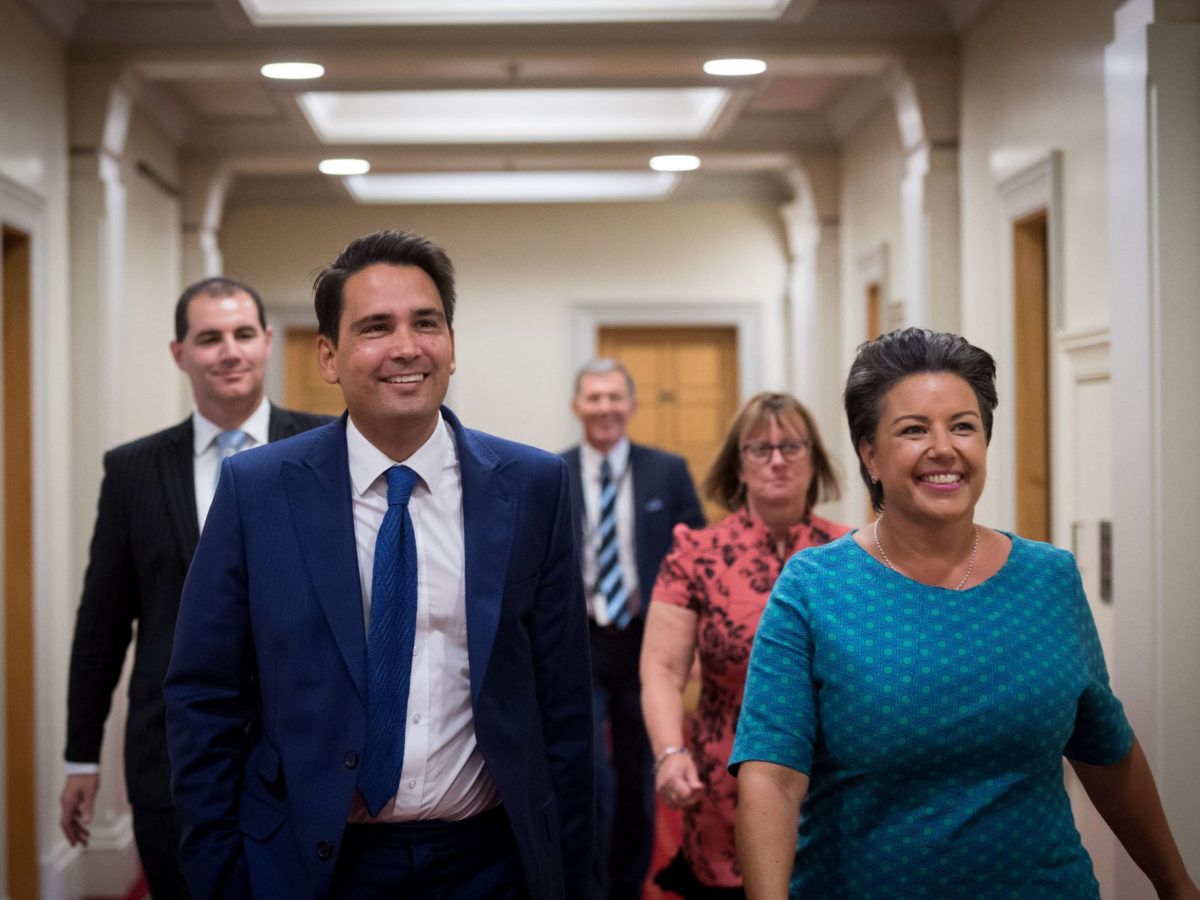
It may now have to be conceded that the Labour Party is a genuinely superior economic manager to the National Party. The Sixth Labour Government has just announced a $5,500,000,000 surplus for the last year, and there’s no sign that they intend to piss that money away on tax cuts. As this essay will examine, Labour’s established record of superior fiscal management suggests that the National Party no longer has any claim to be New Zealand’s natural government.
The New Zealand electoral cycle is based on a cosy truism: the National Party makes the money, and the Labour Party distributes it. Like Daddy and Mummy, the National Party is responsible for the wealth being generated by the system and the Labour Party is responsible for making sure that this wealth filters down to those who are too vulnerable to fight for it themselves.
However, if one casts an eye back over the last thirty years, there doesn’t seem to be any real evidence that National is better at generating wealth.
As anyone who has lived in Scandinavia can tell you, a nation’s wealth is primarily a function of the degree of investment that previous generations made in the current one. Scandinavia is wealthy because, for decades, their governments have made heavy investments in the human capital of their people in the form of education, health and welfare, and these investments have paid off handsomely in the form of an extremely productive workforce.
The National Party let our country rot for nine years: our hospitals decayed, our mental health system decayed, our housing crisis worsened with every year, and for all of this time John Key and Bill English just grinned and let their people suffer. After all, the suffering of Kiwis meant immense profits for someone else, especially wealthy property speculators and banking interests.
As a consequence, we now have the developed world’s worst youth suicide crisis, as the neglect shown to our people during the Key-English era shows its effects in a reduced will to live. The National Party failed to make any meaningful investment in the human capital of New Zealanders, and the true cost of this is now becoming apparent.
Over the past three decades, a pattern is clear. When National is in power, the rich become bloated and the people suffer; when Labour is in power, the rich hold their position while the people take some small steps out of desperate poverty. Anyone who has lived through these times has conclusive evidence that the idea of National being better economic managers is complete horseshit.
National Party economic management is like not going to the doctor or dentist for nine years, and then bragging about how much money you’ve saved while your skin is covered in lesions and your teeth are rotting out of your head. The National Party forgot the parasite’s maxim that some minimum care of the host body has to be taken otherwise it will die.
With Key and English now given knighthoods and put out to pasture, the National Party suddenly seems bereft of managerial talent. The hapless Simon Bridges looks every bit the Head Prefect auditioning for a role that is above his level of competence. Judith Collins waits in the wings like an overfed vulture, and the only other contenders are Paula Bennett – who needed surgery to prevent her eating herself to death – and a parade of faceless grey men.
Jacinda Ardern also looks every bit the Head Prefect above her level of competence, and so much so that the Opposition has an open goal in 2020 – but they’re too clumsy to kick it in. Meanwhile, Ardern has had the opportunity to build a cult of personality, John Key-style, by dragging her baby along everywhere and styling herself The Mother of the Nation. This strategy might prove effective on the pudding-headed virtue signallers among New Zealand voters, and given enough time it could make Ardern’s position unassailable.
With both their historical record and their potential record both looking extremely bad, it might have to be conceded that the National Party are effectively now New Zealand’s natural opposition party. The idea that Labour was the natural opposition party may have been true in the days of big agriculture and the need to be ready to fight war on behalf of Britain at any time. Nowadays, it’s looking ever more like it’s National who are fundamentally unsuited to meet the challenges facing the nation.
*
If you enjoyed reading this essay, you can get a compilation of the Best VJMP Essays and Articles of 2017 from Amazon for Kindle or Amazon for CreateSpace (for international readers), or TradeMe (for Kiwis).
Folksjälvmord
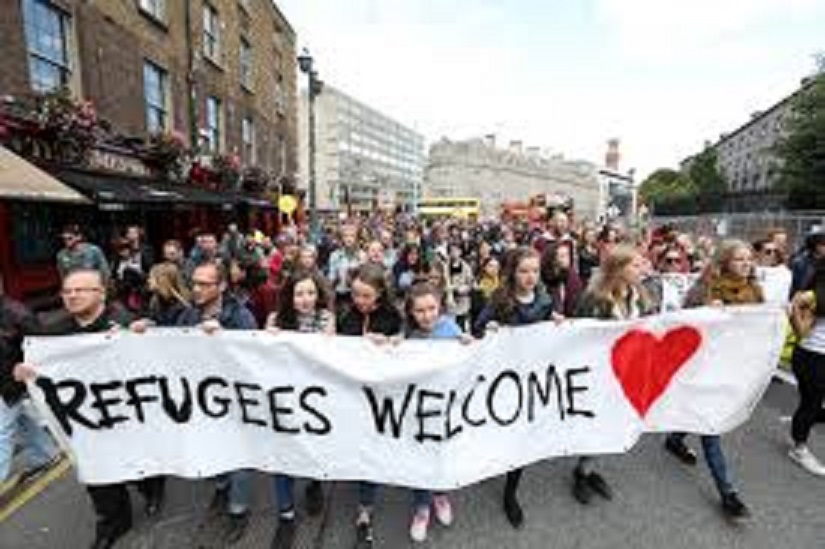
On my first visit to Sweden, from 2001 to 2003, I found occasion to coin a word in the Swedish language. They already had a word for genocide (‘folkmord’) and they already had a word for suicide (‘självmord’), but they didn’t have a word for the sociological phenomenon, widespread at the time, that combined both. This essay discusses ‘folksjälvmord’ and the reasons for it.
If you have 1,000 crowns in one bank account at 6% interest, and 100,000 crowns in another bank account at 2% interest, inevitably the first account will become larger than the second (assuming no withdrawals or changes to the rate). This is a matter of mathematical certainty, and can be proven true in every case where a smaller balance has a higher interest rate than a larger balance. No-one disputes this.
By similar reasoning, we can see that if the population of a minority group is increasing faster than their host population, then the minorities will eventually outnumber their hosts. Assuming no withdrawals (i.e. deportations or genocides), then a population that has a fertility rate of 3.0 plus 50,000 immigrants per year will eventually grow to overwhelm a population that starts out a hundreds times larger, but which only has a fertility rate of 2.0 or less (and no immigrants).
This process is known straightforwardly as “conquest” in any other context, but when the host population has an overwhelming military advantage compared to their invaders it isn’t so simple. If the hosts are willingly paying tax money to import these minorities, and then paying again to have those minorities breed while on welfare, then they’re effectively paying for their own ethnic cleansing.
This process can only be likened to a collective suicide, or suicide at the level of the population – folksjälvmord. After all, politics is little more than the expression of power, and the expression of power is mostly a numbers game, particularly in a democracy. If the host population stops being the majority then they give up power, and giving up power within your own country to a foreign entity that you imported can only be analogised as stabbing oneself in the leg or stomach, perhaps harakiri style.
Swedes didn’t think much of my witty neologism. The thought that it might happen to them seemed to be so unpleasant that it simply couldn’t be countenanced. It didn’t seem to matter to them that the same process of inevitable mathematical conquest was precisely what happened in the New World, where I came from. Better to simply blindly believe that all would be well than to ask how the Africans and Muslims would behave when they comprised 20%, 30%, 40%, 50%+ of the population.
This wilful, oblivious ignorance about the state of their situation might be likened to a delusion-based psychiatric illness, in the same way that someone who is obviously dying but who refuses to admit it.
A man addicted to heroin doesn’t want to hear that the drug will soon kill him; a nation addicted to virtue-signalling and self-righteousness doesn’t want to hear that the mass importation of foreigners with incompatible values will soon destroy them. In either case, a well-meaning observer might be well aware that the behaviour in question was effectively suicidal.
Sixteen years after this first visit of mine, it’s possible to observe the results of the practice of folksjälvmord. Although the decay of the country is yet to reach the elites – and therefore, yet to be officially acknowledged – the Swedish people are certainly aware of it. They responded by giving 18% of their votes to the far-right extremist Sweden Democrats in a General Election last month.
In Germany, which has also recently imported a large number of low-IQ immigrants, a similar phenomenon can be observed. Opinion polls for the next German Federal Election show that the far-right extremist Alternativ fuer Deutschland is now polling higher than the Establishment social democrats. This phenomenon is likely to spread to other nations that let in large numbers of “refugees” against the better judgment of the more sober of their citizens.
Folksjälvmord, then, doesn’t simply refer to a declining population, because populations (historically speaking) tend to resist conquest with as much violence as they can muster. It can also refer to the coming to power, within a nation, of groups of people who are patently unfit to rule, and who wreck the place. Folksjälvmord could, in that context, be considered a symptom of a dark age, or Kali Yuga. The destruction is as much internal, and spiritual, as external and physical.
The state of the world has notably changed since first coining the term ‘folksjälvmord’. The national suicides of the European nations are continuing apace – but now the Far East Asian ones have joined them. Indeed, the fertility rate in Far East Asia is now lower than Northern Europe (China 1.6, Japan 1.4, South Korea 1.2, c.f. Sweden 1.9, Netherlands, Denmark and Norway 1.7), and is continuing to fall there.
Perhaps the most frightening realisation is that folksjälvmord is far from a uniquely Swedish, European or even Western problem. It seems to be a natural part of the ebb and flow of empires and the golden ages of various peoples: as before, so after.
*
If you enjoyed reading this essay, you can get a compilation of the Best VJMP Essays and Articles of 2017 from Amazon for Kindle or Amazon for CreateSpace (for international readers), or TradeMe (for Kiwis).