
The Basics of VPN Use, And Why Every Kiwi Needs to Know Them

The aftermath of the Christchurch mosque shooting showed that the New Zealand Government is willing to give away all of our freedoms in its blind panic to clamp down on everything. We Kiwis are going to have to learn how to fight Internet censorship and how to share information despite a Government committed to banning free discussion. This article discusses the basics of VPN use.

‘VPN’ stands for Virtual Private Network. It serves to extend a private network across a public one, so that you virtually access a private network somewhere else in the world. Essentially, a computer somewhere else surfs the Internet on your behalf, and then sends the data directly to your computer. The point of this is primarily to circumvent government censorship and corporate geo-restrictions.

It’s like the diplomatic black bag of internet traffic – the Government can’t snoop in on it while its in transit and choose to block it.

VPNs are very popular in totalitarian countries such as China, because they allow their users to access websites that the government doesn’t wish them to access. As any reader of 1984 could tell you, the prime objective of any government is to stay in power, by whatever means necessary. One of the primary ways this can be achieved is by controlling information and discourse, so that rebellious ideas cannot flourish in the minds of the populace.

As Joseph Stalin put it: “Ideas are more dangerous than guns. We would not let our enemies have guns, why should we let them have ideas?”

In the wake of the Christchurch mosque shootings, the New Zealand Government has taken a sharply totalitarian turn. They seem to have decided, without securing the consent of the people or even making an announcement, that it’s okay for them to censor whatever website they see fit, for any reason (or even none). Although they will not admit it, this is a totalitarian action that breaches fundamental human rights. For this reason, we citizens are forced to take counter measures.

When a country such as New Zealand tries to block the free flow of information to its citizens, those citizens have to turn to grey- or black-market solutions such as VPNs. Using a VPN will allow a person to access almost any website that the New Zealand Government may have decreed verboten, for the reason that the Great Firewall of New Zealand will consider the web traffic to be something else.

The Opera browser comes with a built-in VPN, which is probably the easiest way to get started for anyone new to the idea. The simplest way to get started is to just download and install the Opera browser (the download page can be found with a simple web search). If you then open that browser, you can see the Opera symbol up in the top left corner. Clicking on this will open a drop-down menu, on which you can select ‘Settings’ near the bottom.

This will take you to a separate Settings page, where you have a number of options. By default, you will come to the Basic panel. Towards the top-left corner of the screen, underneath the word ‘Settings’ you should be able to see the words ‘Basic’ and ‘Advanced’. ‘Advanced’ is a drop-down menu, itself consisting of three options: ‘Privacy & security’, ‘Features’ and ‘Browser’.

If you click on ‘Features’, a number of options will appear in the centre panel. At the top of these is one called ‘VPN’. Underneath this is the option to ‘Enable VPN’. From here, enabling the browser VPN is a simple matter of hitting the radio switch to the right.

Note that this may make your browsing a bit slower, because the VPN is an extra step between you and your data. However, this is a minor inconvenience, and may be your only easy option if you want to access forbidden websites.

Some people might say at this point “But the Government, in its omnibeneficence, only banned the really evil sites where hate speech flourished and I didn’t want to go there anyway.” Fair enough – but the Government could ban anything else in the future, and so you might as well learn how to circumvent that now while you still can.

Ask yourself, do you really believe that the Government is going to stop with 8chan and Zero Hedge? The Government probably regrets that the Internet ever came to exist. They would gladly switch to having a North Korea-style government news service with all alternatives banned if they thought they could get away with it.

So what we can expect is more of what David Icke calls the “Totalitarian Tiptoe”, in which the Government bans an ever-increasing number of websites, taking advantage of moral panics to do so. Because the Government’s appetite for power and control is unlimited, Kiwis ought to get to know the basics of VPN use immediately.

*

If you enjoyed reading this essay, you can get a compilation of the Best VJMP Essays and Articles of 2018 from Amazon for Kindle or Amazon for CreateSpace (for international readers), or TradeMe (for Kiwis). A compilation of the Best VJMP Essays and Articles of 2017 is also available.

Why Victimhood Is Aggression

In a moral climate as degenerate as ours, weakness has become a virtue. We have come to believe that anyone who is weak must be innocent and the victim of misfortune or prejudice, and is therefore owed compensation. This has led to interest groups scrambling to position themselves as the biggest victim. This essay explains how victimhood is a form of aggression.

Justice is all about setting to rights what people are owed. If someone assaults another person, or steals from them, it’s important that the wider community steps in and sets things to rights. If they don’t, the original victim (or their friends and family) will seek vengeance, which historically has led to blood-feuding, which has frequently led to the destruction of entire areas.

Blood-feuding led to rulers and magistrates enforcing a code of laws – a codified, written set of laws and punishments for anyone who breaks those laws. The advantage of a code of laws is that aggrieved parties appeal to a magistrate for justice instead of taking revenge themselves, which means that grievances tend to settle down instead of festering into blood feuds.

The aggrieved party in any question of justice expects to be compensated. So the giver of justice, in order to keep the peace, tends to pass down rulings that favour the aggrieved. Because of the good nature of other people, it’s usually assumed that any party claiming a grievance must be deserving of compensation, and as a result, the majority of grievances are taken seriously.

The difficulty arises, as it has today, when some people start to realise that a sense of victimhood is highly profitable. A person, or group of people, with a deeply entrenched sense of victimhood can force the society around them to adapt to their wishes. This society does out of a fear of the implied threat of blood-feuding if those grievances are not settled. So artificially stoking a sense of victimhood can bring political power.

New Zealand anarchist philosopher Rick Giles has described this permanent victimhood as Victimhood Culture, one of the four major moral cultures of human history. Giles points out that, no matter how many concessions are given to people in victim mode, it’s never enough. This is because victimhood is an entire culture, a mindset into which people fall and into which they are often raised. It’s characterised by an absence of both honour and dignity.

There are genuine victims, but the proportion of them are ever fewer, and the proportion of grifters and chancers ever higher.

Making out like you’re owed, by exaggerating a sense of victimhood, is an act of aggression. The purpose is to intimidate good-natured people into giving up their wealth or freedom in order to compensate you for the supposed injustice. Because most people have trouble believing that anyone could be as shameless as to pretend to be a victim, most assertions of victimhood are taken at face value.

In reality, the world is an extremely complicated place. There are always a multitude of competing explanations for any political or historical event that might occur or have occurred, or for any sociological phenomenon that may have arisen. Therefore, it’s not always obvious to work out if you have been treated unfairly or not. So whether a person declares that they are a victim or not tells us much about them.

Take the example of the New Zealand Maori. The question of whether they benefitted from colonisation is one that draws a wide variety of responses. The competing explanations are that the British Empire showed up and rescued them from a life of intertribal warfare, slavery and cannibalism (on the one hand), or that they lived in perfect harmony with nature and with each other before the British turned up and corrupted them (on the other), or somewhere in between.

Therefore, it isn’t obvious for individual Maoris to know how much of a sense of victimhood they ought to feel. Inevitably, what ends up happening is that people feel a sense of victimhood that is proportionate to their own level of interpersonal aggression. This is why radicalism and violence go hand-in-hand.

This is true of people in any race, class or religion. If they are naturally aggressive, they will naturally want to take from others, and a sense of victimhood is the perfect justification. All that’s needed is some way of interpreting history so that you or the group you belong to were victimised by some other. Then, that other can be attacked until it pays compensation.

Unfortunately, this means that a sense of victimhood is worth money. If it can be stoked in other people, by suggesting to those people that they are victims and are owed compensation, then this victimhood can be parlayed into cash, jobs and other perks. A person claiming to represent a group of victims can easily siphon wealth into their own pockets. This makes it immensely tempting to stoke victimhood and to aggravate grievances.

The wise thing to do is to be exceptionally wary of anyone, whether an individual or a group, that claims to be a victim. Almost inevitably, this group will have managed to justify aggression against those who they see as oppressors. For this reason, a sense of victimhood, and perpetuating a sense of victimhood, can rightly be seen as a sign of aggression.

*

If you enjoyed reading this essay, you can get a compilation of the Best VJMP Essays and Articles of 2018 from Amazon for Kindle or Amazon for CreateSpace (for international readers), or TradeMe (for Kiwis). A compilation of the Best VJMP Essays and Articles of 2017 is also available.
We’re All Slaves On One Big Tax Plantation

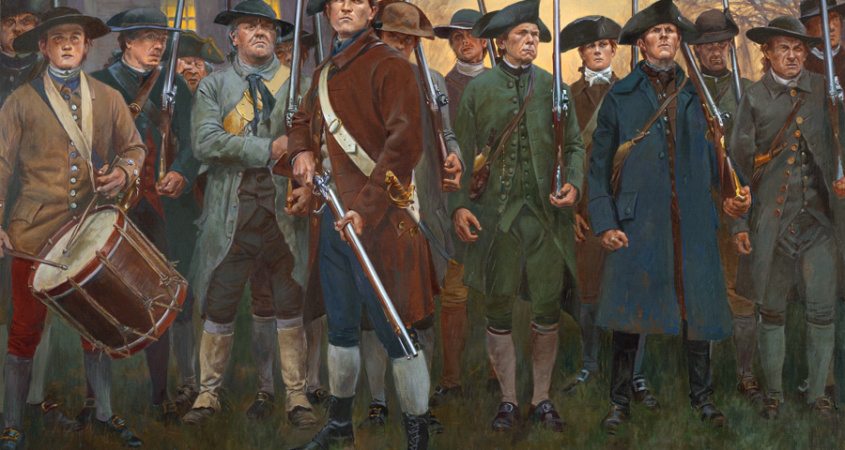
Most people today are horrified by the idea of chattel slavery. The practice is widely considered one of the most vile and evil institutions in human history, and for good reason. What most people fail to realise, however, is that we are still slaves living on a big plantation, but instead of cotton it’s all about taxes.

The truth is that our societies are little different to the cotton and sugar plantations of the antebellum American South. We are plantation slaves. The owners of capital are the same today as they were in the 1840s, and the overseers they employ are also little different. The main difference is that we are enslaved psychologically instead of physically.

This is why it was said that Kanye West had “left the plantation” when he began to repudiate the mainstream media’s relentless attacks on Donald Trump, as well as the implication that black Americans ought to always support the Democrat Party. The world view inculcated by the mainstream media is as constraining as any cotton or sugar plantation, and we’re the slaves on it.

On the tax plantation, all that matters is submission to the neoliberal capitalist globohomo agenda. Just as the owners of cotton plantations didn’t care about the well-being of their slaves, as long as they produced cotton, neither do the owners of our society care about our well-being, as long as we produce taxes.

In the same way that the owners of the cotton and sugar plantations got their overseers to squeeze as much productivity as possible from their slaves, so too do the owners of the tax plantations direct the overseers in the media, government and mental health industries to squeeze as much tax money as possible from their slaves. Sheep are farmed for wool, cows are farmed for milk, but humans are farmed for taxes.

The ideal is to get the slave to willingly produce tax money. The main method of achieving this has been to create a culture where possession and acquisition of material goods is considered the meaning of human existence, with ostracisation the penalty for anyone who disagrees. With this achieved, the people within that culture will work long hours for the money necessary for all this stuff, and that labour can be taxed without fear of resistance. The more work, the more tax.

If a slave is unwilling to produce tax money, the response of the overseers is similar to that taken by the overseers on a cotton plantation.

The initial reaction is abuse. The cotton plantation overseer would use physical abuse, in the form of whips. The thought plantation overseer, not being able to use corporal punishment, uses psychological abuse instead. This usually takes the form of calling the slave lazy, or a malingerer. The overseer will create the impression that the slave’s unwillingness to produce taxes for their owner is a moral failure on the part of the slave, something they should be ashamed of.

If this fails, the overseers move on to medicalisation. This is where the unwillingness to produce taxes is labelled a mental disorder requiring correction. On the thought plantation, the unwillingness to produce taxes is usually treated with psychiatric medication. The idea is that all thoughts of doing anything besides working and paying taxes are suppressed.

In the 1800s, a medical condition existed called drapetomania. This was a a diagnosis that could be given to slaves that had run away from their plantations. It referred to a kind of mental illness that impelled its sufferers to not want to be enslaved. The doctor who came up with the concept said “proper medical advice, strictly followed, this troublesome practice that many Negroes have of running away can be almost entirely prevented”.

Another fictitious mental disorder that was used to justify slavery was called dysaesthesia aethiopica. This was the Slavery Age equivalent of what doctors nowadays call “amotivational syndrome”. The idea was that the unwillingness to be treated as a slave must be a mental illness that had to be corrected. After all, a mentally healthy slave would accept his position and work hard for the master.

We can see the same logic applied by psychiatric doctors nowadays. Individuals who are disinclined to participate in society, on account of its overwhelming shitness, are diagnosed with mental illnesses similar to drapetomania. Schizotypal personality disorder is one such – the withdrawal from social contact is labelled a mental illness and medicated. Antisocial Personality Disorder and schizophrenia are other common reactions to enslavement, also pathologised.

The overseers and plantation owners can never, ever admit that the lives they have constructed for us are grossly unnatural, and that this unnaturalness is so severe that it has caused most of the mental illness that we now suffer. They can never admit that removing people’s agency over their lives causes a frustration that ends up becoming expressed as depression or homicidal rage.

The only way forward for those of us on the thought plantation is to liberate our minds, even if the plantation owners and overseers respond with abuse. Crucial to this is a sense of solidarity with other slaves, in which we support each other to defy the overseers and the owners. We must work for each other, and not for the sake of the plantation.

*

If you enjoyed reading this essay, you can get a compilation of the Best VJMP Essays and Articles of 2018 from Amazon for Kindle or Amazon for CreateSpace (for international readers), or TradeMe (for Kiwis). A compilation of the Best VJMP Essays and Articles of 2017 is also available.

Can We Euthanise Parliament, And Start Again?

Animal lovers and ethologists in New Zealand were dealt a blow yesterday by the news that four baboons at Wellington Zoo had to be put down, on account of that their social structure had collapsed. This social collapse had led to increased interpersonal aggression, and it was decided that it would be cruel to allow it to continue. As this essay will examine, the baboons were not the only group of primates in Wellington whose social structure has broken down.

Not all animals take well to captivity, and so the type of fighting that the Wellington baboons fell into is far from unique. It’s common for zoo animals to feel depression, anxiety and elevated levels of aggression. The reason why is described in the linked article, by the CEO of animal rights group SAFE, Debra Ashton:

“Social structures suffer in enclosed environments and could be attributed to fighting and anxiety for animals. When these social systems break down and there is fighting, vulnerable animals are not in a position to be able to escape as they would in the wild.”

People find this easy to accept in the case of baboons, but all of these facts are equally true of the human species. Individual human animals can fail to adapt to captivity in much the same way that the baboons in the story above did. Our society is equally as much a closed, prison-like space with no opportunity of escape – in fact, we arguably have even less opportunity to escape, with the advent of our 24/7 social media culture.

Nowhere is this more true than Parliament.

It’s clear from what happened between Jami-Lee Ross and the rest of the National Party, in particular Simon Bridges and Sarah Dowie, that the social structure there has broken down, leading to elevated levels of interpersonal aggression. These people are supposed to be colleagues, and yet they psychologically abuse each other to the point of openly wishing that the other would commit suicide. They are causing each other horrific amounts of harm, and it might be humane to intervene.

The problem is that many Parliamentarians have become demented. It’s apparent from observing individuals like Jacinda Ardern and Judith Collins that all the humanity has long since been lost from these people. They are twisted creatures of hate, willing to cause any amount of suffering to their own people if it furthers their ambitions. Any amount of suffering caused is acceptable if it makes you wealthier, or increases your standing in the eyes of the United Nations.

All of this raises a question: would it be more humane of us to accept that the social environment of Parliament has disintegrated, that this is causing great pain, and to euthanise all our MPs to prevent further suffering to them?

We don’t have to do it in a bloody manner. It can be done dispassionately and without prejudice. We just have to line our MPs up and march them into a veterinary office, where they are held down and given a lethal injection, one by one, and the bodies disposed of. We could even model our approach on that taken towards the four baboons at Wellington Zoo.

Once the humane thing has been done, Parliament would be empty. The New Zealand people would then be free to fill it with individuals who represented them, and who could co-operate in order to solve the challenges facing us as a people. Euthanising all of our current MPs would allow us to dissolve the rotten culture of abuse and hatred that defines our current Parliamentary system, and to replace it with something that worked for the people it’s supposed to represent.

Some might say that this proposal sounds cruel. The reality is that it would be cruel to continue to allow our Parliamentarians to suffer inside a completely failed social system. The individuals inside the Beehive are in deep emotional pain, and nothing will be able to prevent this, apart from starting again. This is apparent from the months off work that Jami-Lee Ross had taken in order to deal with the stress-related damage of the constant abuse he received from the others.

Therefore, euthanising them all is the most humane option.

One popular proposal is for the New Zealand people to come together and to agree on a list of inalienable rights that any future Parliament would be forced to accept, else run the risk of being euthanised again. This would start with the creation of a mission statement, which would declare that the objective of the New Zealand Parliament was to eliminate the suffering of the New Zealand people.

This means that the euthanisation of Parliament would not have to lead to chaos and disarray. If the correct approach was taken, and sufficient preparations made beforehand, it could lead to a drastic decrease in suffering among the New Zealand people.

*

If you enjoyed reading this essay, you can get a compilation of the Best VJMP Essays and Articles of 2018 from Amazon for Kindle or Amazon for CreateSpace (for international readers), or TradeMe (for Kiwis). A compilation of the Best VJMP Essays and Articles of 2017 is also available.