Generation X and the Wisdom of Robert Anton Wilson

The great philosopher Robert Anton Wilson liked to say “It only takes twenty years for a liberal to change into a conservative without changing a single idea.” As it happens, I first heard this statement almost 20 years ago, when I was just about to begin studying at university. How did RAW’s observation stack up for those of us born at the arse end of Generation X? Let’s have a look.

In 1999, when I first went to university, I was more or less a liberal. I had grown up in a welfare family that had been strongly adversely affected by the 1991 Budget of the conservative National Party. A consequence of this budget was that sometimes my brother and I had to go hungry, and the effect of this would often reduce my mother to tears. This gave me a very deep and powerful sense of contempt for conservative politics.

Twenty years later, things have changed immensely, although I haven’t. RAW’s observation holds just as true this century as it did in his time.

In 1999, race was a major issue, as it had already been for centuries, but the tone of it was different. The liberal belief in 1999 was that, although there had been a lot of inter-racial violence in the past, people of all races were capable of coming together in shared humanity. Although biological reasons could clearly explain much of the racial differences in intelligence and behaviour, segregation was an example of the utmost evil.

All that has been flipped. In 2018, the white race stands alone as the singular cause of all the suffering in the world. Now, I’m a conservative because I don’t support the outright destruction of the white race and of Western culture. Even believing in borders is seen as conservative in some quarters, merely an impediment to the neoliberal objective of maximally efficient allocation of labour resources.

Although it’s true that no two things in Nature are identical, it’s no longer permissible to assert that racial differences in intelligence have a biological component. Although this was accepted without question 20 years ago, now one must blame everything on economic and social reasons or be considered right-wing, if not actually fascist. All races are perfectly equal in intelligence, not only when measured in general terms but also when it comes to specific behaviour. Evolution stops at the neck.

Neither has gender escaped this miserable phenomenon. In 1999, I considered myself a strong believer in women’s rights. I considered men filth if they abused or harassed women, and was glad that New Zealand had its first elected female Prime Minister later that year.

Now, a man is sexist if he does not support a system that actively undermines and destroys him. It’s not enough to support scholarships for women to study at university – now that women heavily outnumber men among university students, the agenda has moved on to boardroom quotas and the “gender gap”. MPs like Julie Ann Genter attack white men on account of being white and male, even when there is already a suicide epidemic among those some young men.

Anyone who mentions that men commit suicide at 300% the rate of women is considered a bigot, or dismissed as an incel men’s right’s activist. It’s not enough for men and women to be equal – men have to be made to suffer for the historical crimes of their gender. Many people, like New Zealand’s Poto Williams, want to remove the right to presumption of innocence from men accused of rape.

Religion is no different. Some say that religion is supposed to represent the timeless and eternal, but public attitudes to religion have not remained the same over the past 20 years. In 1999, it was widely understood that Islam was an extremely conservative religion that treated women and homosexuals appallingly. For these reasons, it was obvious that Islam was a right-wing ideology and therefore the enemy of liberals such as myself.

Twenty years later, it’s all different. In 2018, Muslims are – bizarrely – seen as victims, despite a 1400-year world tour of slaughter, mayhem and conquest. I’m a racist if I don’t like people who choose to worship a murderous warlord paedophile. If I oppose the mass immigration of Muslims to my country, I am equated with Hitler, despite being able to point to dozens of historical examples of local populations suffering immensely after mass Muslim immigration.

Believing in history is now conservative, because it supposedly normalises a white male way of thinking. The liberal approach to history nowadays is just to make up whatever needs to be made up in order to further one’s political aims. Lebanon was always a Muslim country, and no natives ever benefitted from colonialism.

Last of all, a similar thing has happened with homosexuality. In 1999, I was a fervent supporter of gay rights. Not only did I think it was appalling that our government had taken until the mid-80s to decriminalise homosexual activity, but I fully supported gay marriage. Gay adoption was clearly a step too far, however, as society was made up of men and women, mostly in breeding pairs, and it would be best for a child to be exposed to this and to both genders.

Now, 20 years later, I’m a conservative for believing that a gay couple is different, in any way, from a heterosexual one. A man can just say he’s a woman now, and if I continue to insist that he’s different to a woman – in any way – then I’m a bigot. I’m not even allowed to find homosexual activity odd, or disgusting, no matter how fervently I support someone’s right to engage in it. Fucking a 16-year old boy in the arse is as natural as anything else in the world.

Even worse, those same homosexuals I defended for many years against hissing, hateful Christians are now attacking me because of my criticism of Islam. They call my criticism of Islam ‘racism’, even though it’s motivated by an appreciation for gay rights – precisely the same sentiments that motivated my criticism of Christianity!

If you are also young and reading this, don’t think it won’t happen to you too. When I first heard RAW predict that I would be a conservative in 20 years if I didn’t change any ideas, I refused to believe him. RAW was old, and didn’t understand that we had now made everything right after centuries of misrule, and that we didn’t need to go any further.

But RAW was right, and much wiser and more perceptive than me. If you are a liberal now, and young, just know that in 20 years those who call themselves liberal will be pushing all manner of absolutely insane shit, and if you don’t go along with it then you’ll be considered a conservative.

*

If you enjoyed reading this essay, you can get a compilation of the Best VJMP Essays and Articles of 2017 from Amazon for Kindle or Amazon for CreateSpace (for international readers), or TradeMe (for Kiwis).
Writing Phobias

Most people are familiar with the idea of phobias – the term refers to intense and persistent fears of things, to the point that a person with a phobia will take extraordinary measures to avoid triggering it. Although most people have mild, subclinical phobias of some things and manage okay, for others a phobia can cause immense disruption to everyday life. This article looks at how to believably write characters who suffer from phobias.

The degree of fear caused by a phobia is enough to cause chaos in a person’s life. Instead of merely feeling alarm, a person presented with the object of their fear (or even the threat of it), will often break out in sweats, heart palpitations, dizziness and shaking. They will go to great lengths to avoid being exposed to the triggering stimulus, even if doing so has a heavy impact on their day-to-day social functioning.

Generally speaking, there are three major kinds of phobia.

The first kind of phobia is called a specific phobia – it’s a phobia of something specific, such as spiders, heights or dogs. This sort of phobia is usually a reaction to situations that occurred frequently in the biological past. For this reason, there’s nothing really unnatural about them – it’s just that the fear has been exaggerated to a point where it causes more harm through disrupting a person’s life than it helps avoid harm from danger.

Many phobias begin with an incident in which the object of the phobia caused intense fear in a person. For instance, a person walking through a field and being stopped in their path by an angry dog might develop a phobia of dogs. A phobia of spiders might develop from a childhood in an unclean house that was full of spiderwebs.

Readers who have never experienced living with a phobia could well be interested in reading about the sort of thoughts that go through the head of a character with one, or how they behave (or feel themselves forced to behave) on account of having the phobia. Few who have never had a phobia can imagine how intrusive the fear can be, and how greatly it can impact the ability of a person to live a normal life.

Social phobia is different to a specific phobia in the sense that the phobia reflects a general fear that follows the person with it. Social phobia relates to an intense fear of being judged. In particular, it tends to revolve around a fear of being humiliated in public by means of some judgment being levelled. People with it tend to feel very uncomfortable around authority figures, and would never raise their hand in class to answer a question from the professor.

Most people have a degree of self-consciousness that modifies their actions, but for a person with social phobia this will be exaggerated well beyond mere shyness. For instance, someone with social phobia may be unable to get a driver’s licence on account of being unwilling to sit with the traffic control officer and risk being judged as unfit to drive a motor vehicle.

A character with social phobia might be more interesting if their phobia was ultimately grounded in narcissism. It might be that they were only afraid of being judged on account of having an enormous ego that could not handle even the faintest criticism. This might lead them to becoming vicious in defence of that ego, or to adopting an exaggerated ‘cool’ affectation intended to mask their extreme fragility in the face of judgment.

The third major kind of phobia is agoraphobia. This relates particularly to a fear of finding oneself in an environment that offers no easy means for escape. These environments are common ones such as trains, elevators or open spaces, which naturally leads to a significant impact on ordinary life function. Being caught in such a space with no easy avenue of escape can easily cause a panic attack in an agoraphobic.

Much like social phobia, a character that has agoraphobia might live a particularly lonely and unhappy life. Having agoraphobia makes it much harder for a person to get out of their house, because their house becomes a kind of safe zone from the horrors of society. Stressful and traumatic events can trigger agoraphobia, and central to it is the fear of loss of control. Going outside comes to feel like stepping into the maelstrom.

Generally speaking, it’s easy to include a character with a phobia in your story because almost all of your readers will understand fear, and so they will be able to relate to that character. Having a character with a phobia might be an easy way to create a strong sense of fear and dread in your reader, especially if the phobia is a common one.

Phobias are not generally believed to arise as a result of a moral failing or of any personal weakness. It will therefore be easy to write a character with a phobia who comes across sympathetically to the reader. Portraying a character who struggles valiantly to live a normal life despite a crippling phobia might read as heroic, but if emphasis is put in the wrong places the character might come across as a milksop.

*

This article is an excerpt from Writing With The DSM (Writing With Psychology Book 5), edited by Vince McLeod and due for release by VJM Publishing in the summer of 2018/19.

Writing Anorexia Nervosa

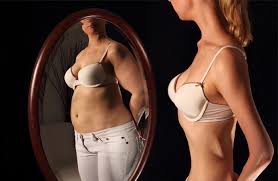
A person with anorexia nervosa can see themselves as hideously fat even while dangerously underweight

Anorexia nervosa (usually just called anorexia) is an eating disorder characterised by an overpowering fear of being fat or of gaining weight. This fear is so all-consuming that it can lead to illness from self-starvation. This article looks at how to write engaging and believable characters with the condition.

The basis of the psychopathology of anorexia is believed to be valuing of thinness. People with anorexia feel that being thin is extremely important, to the extent of it being an obsession. For this reason, anorexia is much more common among women compared to men, and more common among women exposed to fashion media or who have an interest in sport and fitness compared to other women.

More specifically, thinness is considered important because it’s where a person’s sense of self-worth derives from. Thinness is seen as a virtue by anorexics, which is why the condition is so hard to understand for people who don’t have it.

Some might be surprised to hear that anorexia is one of the most deadly of all psychiatric conditions, up there with schizophrenia and major depressive disorder. An unusually low body weight is linked to a wide range of physical ailments, as many elementary bodily functions cannot operate past a certain level of starvation. Even without intending to, it’s common for anorexics to become sick and die as a consequence of lengthy periods of starvation.

If you are writing about a protagonist that suffers from anorexia, their internal dialogue might have a lot of anxiety based around a need to be in control of their body weight. Sometimes such a person will have a ruthless, almost sadistic approach towards their own body. This explains why there is a high degree of comorbidity with Obsessive-Compulsive Disorder. A person with anorexia often becomes extremely particular and fussy about their food and their calorie intake.

Then again, the approach might be more feminine. Instead of a desire to control, having a meal might conjure feelings of fear, almost panic. The sight or smell of food might trigger a reaction similar to that of a person with a phobia encountering their object of fear. It might be enough to also trigger powerful feelings of self-loathing.

Much like psychosis, anorexia tends to come and go in ’bouts’. An episode of anorexia is often triggered by a traumatic life event. It may be that sudden high levels of stress and anxiety result in a desire to compensate for a perceived loss of control.

Anorexia is not a psychotic disorder. A person with it will generally know that they have something amiss about them – but therein lies the difficulty. This reasonable part of the mind struggles incessantly against the part of the mind that commands that one must be thinner no matter what. It might be that the part of the mind that desires thinness above everything is somehow stronger, or more able to assert itself.

The effect that this might have on a protagonist of your story is therefore similar, in many ways, to that of one with depression. Constant feelings of having undermined oneself lead to guilt, personal recrimination, and a loss of confidence in one’s own intelligence, one’s competence or even one’s will to live. As is true of most of the conditions in this book, anorexics tend to have damaged self-esteem.

Like many of the other conditions in this book, it’s believed that anorexia nervosa frequently has an origin in childhood abuse. It might be that this is the reason for why it goes in bouts: dysregulated stress responsivity arising from the trauma leads to extremes of anxiety, and when one of those extremes is reached, a sudden desire for extreme control appears.

The experience of other characters who have a friend or family member suffering from anorexia is usually a difficult one. In many ways, watching someone waste away through anorexia is similar to watching them waste away through a heroin addiction.

This often brings with it a range of feelings that might profoundly affect that character, in particular frustration at not being able to get through to the anorexic about how dangerous their condition is, and guilt about not being able to “do more” for them. Although it’s true that it’s hard to reason with people who have mental illnesses – by definition – it’s still very common for friends and family of people with them to feel guilt about not being able to do more to get them to live a healthy, normal life.

A more distant character who encountered someone with anorexia might get the feeling that the anorexic is uptight and rigid. Anorexia is often associated with a sensitivity to insults and disrespect, as as perfectionism, and a character that demonstrated any of these traits could plausibly develop anorexia or have a past history of it.

*

This article is an excerpt from Writing With The DSM (Writing With Psychology Book 5), edited by Vince McLeod and due for release by VJM Publishing in the summer of 2018/19.

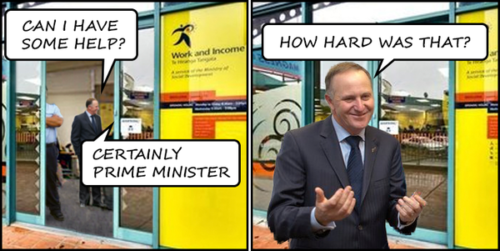
Our Mental Health System Shouldn’t Run on WINZ Logic

A lot of people complain about the way WINZ treats its clients, but their logic makes a certain sense. By verbally and psychologically abusing many of the people who come to them for help, WINZ staff sharply reduce demand for WINZ services and thereby save taxpayer money. This is called WINZ logic, and our mental health system runs by the same principles.

WINZ logic seems to appeal to the vast majority of New Zealanders. We like to consider ourselves a people who have “hardened up”, and who don’t need faggy things like welfare. Moreover, the high levels of diversity in our society mean that those at the top are unwilling to pay taxes for the greater good, because those taxes won’t be helping people like them. So we make sure that WINZ runs an extremely tight ship, where there is absolutely no wastage.

Somewhere along the way, someone working at WINZ realised that many of their clients could easily be discouraged from seeking WINZ services. Many people who need WINZ services are socially outcast or psychologically damaged, and so they are easily disheartened by abuse. If these people were spoken to like thieving, bludging, malingering scum, instead of being treated like fellow humans who need help, they were less likely to come back and ask for more money.

Ultimately, the essence of WINZ logic is this: the more unpleasant the experience of being a WINZ client can be made, the fewer resources WINZ clients will collectively consume.

With ever-tightening social welfare budgets under nine years of a National-led Government, treating the clients badly became the default way to distinguish between the deserving and the undeserving poor. If someone really needed a benefit, WINZ logic claimed, they’d keep coming back despite the mistreatment. So treating the clients badly achieves the twin goals of saving money while still helping the needy.

Unfortunately, our mental health system works on the same logic. In order to save money, patients are systematically verbally and emotionally abused by support workers. They don’t admit to this, and nowhere is it written that this is official policy, but it’s apparent from collating the experiences of many users of the mental health services that this is the case.

The logic appears to be that it’s better for a hundred schizophrenics to starve in the street than it is for one person to perhaps get a benefit that they didn’t 100% need. After all, a severely mentally ill young person who is unlikely to work again is liable to cost the country up to half a million dollars in benefit payments alone over the course of their lives. If people like this could be convinced to commit suicide instead, the potential savings could run into the hundreds of millions.

This might sound implausible to some, but it’s a natural consequence of neoliberal reasoning. Human life has a dollar value. If mentally ill people can’t contribute to the tax farm, and if we can’t just kill them directly, we have to encourage them to kill themselves. This reasoning was introduced to New Zealand by Ruth Richardson in the 1991 Budget and it’s now an indelible part of our culture. After all, we already have “by far the highest youth suicide rates in the developed world”.

If this wasn’t true, then the experience of being a user of the mental health services would be entirely different. One would be treated much like a person ill with a physical illness – as a fellow human being who had had something unfortunate happen to them and required care in order to recover to normal function. Doctors would answer your questions honestly. Consultations would work towards improving your mental health rather than merely assessing your work readiness.

Further evidence for this comes from the refusal to acknowledge cannabis medicine. Despite the fact that there was enough evidence for the medicinal value of cannabis for California to make it legal already in 1996, New Zealand politicians and doctors still have their heads up their arses. Now even Zimbabwe has legal medicinal cannabis.

What this approach to cannabis tells the mentally ill in New Zealand is that the mental health system isn’t really interested in helping them. It’s just: “Take these sedatives and get back to picking cotton.” It wouldn’t matter if 100,000 people all lined up to tell doctors that cannabis had helped them sleep or had helped with anxiety, depression or suicidal ideation. No-one’s listening, no-one cares.

Our mental health system shouldn’t run on the WINZ logic of withholding aid to as many people as possible. It should be recognised that an investment in a person’s mental health now will have excellent returns in both their future productivity and future unwillingness to use mental health services. The emphasis should be on treating them well so that they can get better and we can save money over their lifetime, not treating them like shit to save money this month.

*

If you enjoyed reading this essay, you can get a compilation of the Best VJMP Essays and Articles of 2017 from Amazon for Kindle or Amazon for CreateSpace (for international readers), or TradeMe (for Kiwis).