
Anarcho-Nihilism

There are two popular strains of anarchism that are often conflated. The first accords with the more traditional definition of anarchy as “without rulers”; the second is when a person supports anarchy just because they want to see the world burn. This essay gives a name to this latter tendency, with the intent of making a clear distinction: anarcho-nihilism.

It isn’t easy for most people out there to tell the difference between an anarchistic sentiment against being ruled and anarcho-nihilism.

For one thing, a sentiment against being ruled inevitably brings a person into conflict with the ruling class, who tend to think that they have achieved their position by divine right. The ruling class can usually only hold its position by creating the perception that they are uniquely qualified to rule. Someone who is against being ruled, and someone who just wants to trash everything, are therefore similar in that they both oppose the ruling class.

This means that both usually find themselves socially outcast for not following orders in a sufficiently timely and enthusiastic manner.

For another thing, both anarchists and anarcho-nihilists accept that there is going to have to be a lot of destruction before this shit can get sorted. The Establishment is well entrenched: they own all the media, all the politicians, and all the lackeys with guns. Their fingers are in every pie, and any efforts to prise them out will be violently resisted, sometimes pre-emptively. There is going to have to be a lot of destruction.

The major difference is that the anarcho-nihilist has no plans for what to do after the destruction phase. That phase – the building and creating phase – is not important to them, in much the same way that neither building nor creating appeal to nihilists. What motivation could one have to build anything when no meaning exists?

A normal anarchist will have thought things through a bit further than just the destruction phase. Indeed, if the ‘anarcho’ prefix denotes the complete destruction of the current system, then the suffix denotes what a person’s preferred next move is. An anarcho-capitalist wants to get rid of the current system so that they can make money, an anarcho-communist wants to get rid of the current system so that they can co-operate, a mutualist wants to get rid of the current system so that they can trade, and an anarcho-homicidalist believes that humans know intuitively how to govern themselves fairly and how to build a society if not impeded by enslavers.

Someone who hasn’t thought things through this far might be an anarcho-nihilist.

Often, an anarcho-nihilist will be driven by a peculiar bitter resentment, sometimes because of a personality disorder. The fact that an immediate shockwave of destruction would cause a tremendous amount of misery is not a drawback to such a person – indeed, it could be the whole reason for why they support it.

The real difficulty with anarcho-nihilists, from an anarchistic perspective, is that no bonds of any kind can be formed with nihilists. In order for people to have a common bond of any kind, they must have at least one belief in common. Someone who believes in nothing is hard to trust – after all, what’s stopping them from turning on you like a wild animal?

Another way of making the distinction is that an intelligent anarchist will strive to find the correct balance of inducing chaos to the establishment and building a new, voluntary and peaceful order. The anarcho-nihilist doesn’t worry about order: they just want chaos and more chaos for the sake of it. There is no order that they will agree to.

The problem with this attitude from a practical point of view is that some laws are in place to contain natural disorder, they just go too far. For instance, a law proscribing a side of the road that traffic has to drive on is hardly tyrannical. The problem arises when you are fined $2,000 for harmlessly crossing the centre line by six inches when there was no oncoming traffic.

Overcoming anarcho-nihilism is extremely difficult, because it is not usually a position taken because of political philosophising – it’s usually a position taken because of a spiritual failure. Therefore, the path out is not obvious.

*

If you enjoyed reading this essay, you can get a compilation of the Best VJMP Essays and Articles of 2017 from Amazon for Kindle or Amazon for CreateSpace (for international readers), or TradeMe (for Kiwis).

Writing Avoidant Personality Disorder

Avoidant Personality Disorder (AVPD) is characterised by extreme action taken to avoid certain feared stimuli, usually social. Social anxiety, feelings of unworthiness, timidity and sensitivity lead to a pattern of avoiding situations that involve interacting or socialising with others. This article looks at how to write engaging and realistic characters with the condition.

AVPD is a Cluster C personality disorder, which means that it’s primarily an anxious condition. The essential characteristic of it is an inability to form social bonds brought about by an extreme desire to avoid particular feared stimuli. For example, people with AVPD tend to be very sensitive to social rejection or humiliation.

It is believed to be caused by abusive or neglectful parenting patterns. In particular, rejection by one or both parents is thought to correlate highly with the condition. It can be observed in other mammals that rejection by one or both parents sharply reduces the ensuing life expectancy for that creature. No doubt the trauma from such treatment makes an impact on the behaviour of human survivors.

If your protagonist has AVDP, it might be that they experience loss and social rejection so strongly that they are simply devastated by it. They might have an internal monologue that heavily plays on fears of social encounters going wrong. A story featuring them might read very strangely as it involved a number of events that ended up not happening or not being attended by the protagonist, who felt too anxious to participate.

This can easily lead to a darker, resentful pattern of behaviour, especially if a protagonist with AVDP comes to feel a malicious desire for revenge as a consequence of their rejection. Social rejection need not lead to learned helplessness and submission in every case – it can lead to violent reprisals, especially if the rejected person feels that they have been treated unjustly.

Someone with AVDP might make a convincing villain if the author can convincingly portray a character who has become nasty as a result of their pride. It might be that the villain received some mild slight or insult and their massive ego was punctured, leading to narcissistic rage. They could be the sort of person who never forgives an insult, leading to complicated revenge schemes.

To many outside observers, AVPD looks very similar to just having low self-esteem. People with the condition tend to believe that their social presence is unwanted, and that they are unworthy of the time and attention that they are given in their social relationships. In cases of parental rejection it’s obvious how such thinking might come about, but it can be caused by other things, such as a generalised perception of social rejection.

In the mind of a character with AVPD, the everyday experience might be one plagued by self-doubt and feelings of unworthiness, in much the same way that it can be for a depressed person. Indeed, one particular strain of AVPD has a number of depressive features, in particular the casting away of, and refusing to deal with, certain traumatic memories.

A protagonist with the condition is likely to consider themselves socially inept. There might be a lot of blame directed at the self in their internal monologue. It’s possible that there is a personal quality of their own that they fixate on as an explanation for their lack of social success. As mentioned above, this can easily become projected outwards onto society.

People with AVPD can be difficult socially because they can be very needy and very resentful. There is a particular strain of the condition that is hypersensitive in a way that is not dissimilar to those with Narcissistic Personality Disorder. This type can become easily wounded by jokes or banter, to the extent that others might call them “precious”.

Feedback loops are an unfortunate common effect of this condition. Anxiety about being socially rejected often leads to a range of behaviours that themselves increase the likelihood of social rejection. Anxious eye contact often appears shifty to other people, who then come to distrust the person with AVPD. Because these people trust the person with AVPD less, they speak to them in a less friendly manner, which validates the initial feelings of anxiety and strengthens the avoidant behaviours.

A protagonist with AVPD might find their everyday experience tormenting, because people with the condition have a normal need for social interaction and intimacy – they just fear it. Because of this fear, and sometimes because of resentments, a protagonist with the condition might find their everyday experience tormenting. It might be a relentless march of anxiety, blame, missed opportunities, guilt and rejection.

AVPD sounds, and is, similar to Schizoid Personality Disorder, but there are crucial differences. For one, a character with AVPD will like be more anxious than a schizoid. For another thing, schizoids don’t generally care about other people, whereas people with AVPD will still desire positive social contact.

*

This article is an excerpt from Writing With The DSM (Writing With Psychology Book 5), edited by Vince McLeod and due for release by VJM Publishing in the summer of 2018/19.

The New Zealand Government Has Been Separating Children From Their Cannabis-Growing Parents for Decades

This is no worse than what our own Government is doing to us

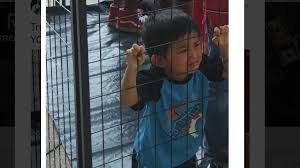
Today’s mass media assault on consciousness involved emotional images from America of Mexican children in cages. The ensuing outrage was based around the fact that when a Mexican family is apprehended crossing the American border illegally, the children are temporarily separated from their parents. Although this is regrettable, what the media is ignoring is that the New Zealand Government has been doing the same thing to its own citizens for decades.

For one thing, it’s standard practice for the New Zealand Government to separate children from their parents if those parents are going into custody for breaking the law. In this regard, the New Zealand Government’s normal actions are no better than what the American Government is doing. Even worse than this is the fact that many of those parents are going to jail for offences that don’t harm anyone, unlike (arguably) illegal immigration.

The fact that cannabis is a medicine is a fact near enough to universally acknowledged by the young people of the world, even if Baby Boomer politicians have been slow to understand it. However, cultivation of it remains a crime punishable by up to seven years imprisonment in New Zealand, despite that the plant has a wide range of medicinal effects and is used all over the country to alleviate needless suffering.

Because cannabis is so good for alleviating suffering – taking away pain, nausea, insomnia among other maladies – people continue to grow it, despite the law. But because of the law, a significant number of these people end up being apprehended by Police and sentenced to prison.

Many of the medicinal cannabis growers who have been put in prison over the past 40 years have had children. Those children were forcibly separated from their parents by the New Zealand Government for the sake of enforcing a law that should never have been a law.

So all the perfectly natural dismay that Kiwis have been induced to feel at what the Mexican children at the American border are forced to endure – a traumatic forced separation from their parents as a consequence of an arbitrary law enforced by armed men – could just as well arise as a result of thinking about what Kiwi children have to go through as a result of cannabis prohibition.

In fact, our own children have it worse, because they will often not get to see their parents again for a long time.

So if people in New Zealand are going to get upset because of an outrage that the global corporate media manufactured in order to target a conservative American President, let’s get equally upset about similar and equally evil actions in New Zealand.

Every time a New Zealander gets put in prison for a cannabis offence that has harmed no-one, leaving a child on the outside who is now missing a parent, we ought to react with the same outrage towards our own Government as we had today for the Trump Administration. If we’re going to expend energy on outrage let’s at least direct it somewhere where it can do some good.

*

If you enjoyed reading this essay, you can get a compilation of the Best VJMP Essays and Articles of 2017 from Amazon for Kindle or Amazon for CreateSpace (for international readers), or TradeMe (for Kiwis).
Writing Histrionic Personality Disorder

People with Histrionic Personality Disorder (HPD) are colloquially known as “drama queens” or “shit-stirrers”. Fundamental to the disorder is a desire for attention that borders on the narcissistic, as well as strong, shallow, rapidly-changing emotions. This article looks at how to write realistic and believable characters with HPD.

As is the case with many of the conditions in this book (and especially the personality disorders), people with HPD are often high-functioning in several ways. As with most of the conditions in this book, people with HPD can often be entirely competent and effective in their niche. For instance, they excel at screen and theatre acting.

A simple (if crude) way of conceptualising HPD is that, for people with it, drama is like a drug. They get hooked on it, they seek it out compulsively, they try to get bigger and bigger doses of it. The more attention they can draw to themselves the better. A cynic might call them a “psychic vampire” because dealing with them frequently leaves a person tired.

For these reasons, HPD is a fitting and excellent choice for some of the characters in your fiction. A character with HPD will naturally liven things up – even if they end up causing chaos. Because they seek drama out, it is never far from them. Not only do they like drama, but they tend to have just enough narcissism to bring some truly dark emotions out of others.

From the perspective of other characters who might encounter a character with HPD, one of the most difficult things about them is their apparent need to be overly emotional and dramatic all the time. Because emotional reactions are contagious to some extent, a person with HPD will tend to trigger those around them – a great quality in a bartender perhaps, but if there is a need for calmness and order this is usually unhelpful.

Other characters might also find the constant self-aggrandisement extremely tiresome. People with HPD like to use elaborate and flowery speech when unnecessary or even unhelpful, and love to tell stories that feature themselves looking good or being heroic. Such typically unsubtle attempts to draw praise are sometimes described as “needy”. Indeed, it is common for people with HPD to display symptoms typical of Dependent Personality Disorder.

Several common characteristics of HPD overlap with common characteristics of Narcissistic Personality Disorder. One of these in particular is the usual reaction to criticism. For the histrionic, any and all criticism is a brutal personal attack, an act of the utmost cruelty. It is so bad that any retaliatory measures are justified (although a character with HPD will tend toward passive-aggressive revenge tactics).

Related to this is the constant seeking of reassurance or approval. A protagonist with HPD might have compulsive thoughts about not being a good enough person and so seeks out ways of being told that they’re worthwhile. If a character has HPD, there might also be very clear ways that this can be shown through their clothing choice: “Loud and proud” would sum up their dress style.

Other characters might find it very stressful to be around a character with HPD, partially because of the narcissism but mostly because they don’t leave other people in peace. Because of their need to be the centre of attention, a character with HPD might continually butt into other people’s conversations, or make it all about them. They’re also generally happy to spread rumours around, especially if they think that doing so will make someone angry.

A character with HPD might strike other characters as superficial or false. After all, their emotions might strongly rise, but they also strongly fall and quickly transform into other ones. A second character might come to feel that they can’t really trust the histrionic one. It’s hard to know whether they’re acting or genuine.

One area in which the lives of people with HPD tend to be in particular disarray is romantically. They commonly perceive sexual interest where none exists. This makes their own lives difficult, as they often end up misreading the signals and making a move on someone who then rejects them. It can also make other people’s lives difficult, as people with HPD tend to perceive sexual infidelity where it doesn’t exist. This jealousy can fuel untold dramas.

On a darker note, people with HPD are well-known for hitting on people who are already in established relationships. This is partly because of the aforementioned tendency to perceive sexual interest where none exists, but this can also be influenced by a narcissistic refusal to respect other people’s boundaries and an inability to delay gratification.

Having said that, people with HPD are often very engaging to make love to. Excessive sensitivity and dependence on other people’s approval can make for a powerful contribution to the bedroom magic.

Adding a character with HPD to your story, or adding aspects of it to a character in your story, has the potential to liven things up but there is a risk that it can also make things more trivial. Because histrionic characters can get upset over small things, they can be hard for the reader to relate to, and therefore are often better as a foil to another character or as comic relief.

*

This article is an excerpt from Writing With The DSM (Writing With Psychology Book 5), edited by Vince McLeod and due for release by VJM Publishing in the summer of 2018/19.