
Writing Bulimia Nervosa

Bulimia nervosa (usually known as bulimia) is a psychiatric condition characterised by intense bouts of over-eating, followed by a “purge” of some kind. The condition is about nine times more common in women than in men, and is believed to affect 1% of young women at any given time. This article looks at how to write engaging and believable characters with bulimia.

The classic example of bulimic behaviour is to consume an abnormally large amount of food, and then go to the toilet to vomit it all up. It’s worth noting that simply throwing up a lot, even after eating, is not sufficient for a bulimia diagnosis. The throwing up is not the main factor, as the condition is psychological and not physical.

It’s also worth noting that bulimia is very different to anorexia, despite that both conditions are eating disorders caused by a nervous complaint. Bulimics and anorexics share many symptoms, in particular the obsession with food and body image, but there are major differences. Bulimics are often at or near a healthy weight (despite the unhealthiness of much of their activity), and anorexics do not binge eat as a general rule.

If the protagonist of your story encounters another character with bulimia, it might be a matter of slowly coming to the realisation. The character with bulimia might show signs of having thrown up a lot or recently, such as bloodshot, puffy eyes or burst blood vessels in the face. Other physical tell-tale signs are low energy and evidence of self-harm.

Another character might give away signs that they are falling into a pattern of bulimia. An obsession with dietary rules is a common early sign. A character developing bulimia might also develop a set of strict dietary rules that they expect themselves to abide by. These rules might seem obsessional to a second character, but the bulimic character is unlikely to appreciate this sentiment.

These rules are key to understanding the condition. Because consuming fewer calories than one needs to survive is not sustainable in the long-term, the strict dietary rules will inevitably be broken. This doesn’t come with a sense of relief but a sense of horror and shame – feelings so intense that they have to be purged. In this state, vomiting often brings the desired relief.

If the protagonist of your story has bulimia, they are likely to live a very difficult life with a considerable amount of confusion. Thoughts of suicide are common, a symptom of both the condition itself and the difficult life circumstances caused by the condition. Also common are depressive and obsessive-compulsive thoughts, especially self-recrimination and rituals relating to food.

A protagonist with bulimia will probably experience a great deal of anxiety in their everyday life. This is not just because of the condition itself, with the neverending worry and guilt relating to food and body shape. It is also because of the social anxiety that comes with trying to keep their condition a secret. Your protagonist might find themselves telling lies to keep other characters from realising they are bulimic.

A character who develops bulimia may do so on account of exposure to media images that create an idea about what a human body ought to look like. It’s common for teenage girls – especially those who have never previously thought about their bodies as things that sexually attract men – to develop an obsession with what their bodies ought to look like. Bodily self-hate is an inevitable consequence of this for some people.

Some societies that have not yet been exposed to sophisticated and manipulative Western advertising culture find it a shock when they finally are. Many people have been unaware of the possibility of hating their own body on account of it being the “wrong shape”. Some cultures are naive when it comes to lies and lying, and are more easily affected by them. These cultures can see sudden spikes of bulimia rates when this advertising does come.

Like many other psychiatric conditions, bulimia carries an increased risk of depression, anxiety and self-harm. Thoughts like this form an unpleasant positive feedback loop, where the low self-regard puts a person at risk for bulimia and the bulimia causes low self-regard. A character with the condition may not realise that their thoughts are circular. On the other hand, they might be all too aware, and start losing sanity.

Also like other psychiatric conditions, there is a body of literature that suggests a strong correlation between having bulimia and early childhood abuse, in this case sexual. It’s possible that the trauma of sexual abuse leads to some difficulty in handling thoughts and feelings related to one’s own sexual attractiveness.

Bulimia is, along with anorexia and schizophrenia, one of the psychiatric conditions most likely to end in suicide. It is easily possible that such a fate will await a bulimic character in your story – after all, the average woman can no easier look like a photomodel than the average man can look like Schwarzenegger. However, like most mental illnesses, the majority of people with bulimia find some way to accommodate it in their lives.

*

This article is an excerpt from Writing With The DSM-V (Writing With Psychology Book 5), edited by Vince McLeod and due for release by VJM Publishing in the summer of 2018/19.
Should The West Convert to Islam?

Islam may be horrifically illiberal and oppressive, but, as this essay will argue, it may be the only thing strong enough to save the West from its own degeneracy

Westerners are not stirred to rage by many things – not by mass homelessness, not by declining wages, not even by the British Government covering up serial child sex abuse by Jimmy Saville and by various Asian rape gangs. Our spirits have been broken, and this had led us into a state of decline. This essay argues that the Western World could solve many of its current problems with a wholesale conversion of every country to Islam.

People can criticise what they like on social media, and people can defend what they like. Some criticisms meet with more defence that others. Nothing inspires an impassioned defence more than criticism of Islam. If a person criticises Islam on social media, hundreds of people will line up to scream all kinds of abuse at them, but they won’t do the same for any other ideology. This suggests that Islam has a special place in the heart of Westerners; it’s already holy, in a way.

If one considers that almost all of the Western World was Christian before World War One, it seems that the widespread loss of faith that resulted from that conflict could be resolved with a switch to a similar religion. Islam is also an Abrahamic cult, so it contains much of the same message as Christianity; the idea that God is male and that the feminine is inferior is an Abrahamic idea, as is the idea that homosexuals should be killed and the genitals of infant boys mutilated.

So Westerners have long been conditioned to accept the ideas of Islam, by way of accepting these same ideas in the guise of Christianity. Islam, like Christianity, considers itself a branch of the tree of revelation that began with Adam and continued through Moses and Abraham. In a sense, then, switching to it would represent a natural progression.

Already in Britain, there are more weekly mosque visits than church ones. This fact alone suggests that Islam might already be stronger than Christianity in Britain. The same is likely to also be true of other countries with large Muslim populations, such as France and The Netherlands. So Islam is arguably already stronger than Christianity, and one reason to adopt it would be to recognise this fact.

The most pressing reason for a widespread conversion to Islam would be to arrest the decline of the West.

Western birthrates have fallen to the point where we are no longer replacing our own people. The fertility rates in major Western countries like Italy, Poland and Spain is less than 1.5 children per woman. This is going to cause our populations to shrink ever-further until we are no longer capable of resisting foreign domination. Birthrates in Muslim countries, by contrast, remain high: Afghanistan 4.6, Iraq 4.4, the West Bank 4.0, Pakistan 3.5, Egypt 3.3, Algeria 2.8.

For whatever reason – perhaps the admonition to wage war against the infidel with the wombs of Muslim women – Islamic countries have maintained a much higher birthrate. A switch to Islam might rid us of the meek self-hatred of Christianity that has caused us to believe that we were no longer worthy of continued existence, and inspire our people to ensure a physical future for themselves.

Adolf Hitler once declared that:

“It’s been our misfortune to have the wrong religion. Why didn’t we have the religion of the Japanese, who regard sacrifice for the Fatherland as the highest good? The Mohammedan religion too would have been much more compatible to us than Christianity. Why did it have to be Christianity with its meekness and flabbiness?”

and that logic still holds. The meekness of Christianity has caused the West to lie down and die out of guilt and the resentment of strength; the vigour of Islam might be what is required to revitalise our people.

Some might object that Muslim culture has a number of obscene and immoral practices that ought to be resisted on account of the immense human suffering they cause. Not so.

Many of the most obscene practices of Muslims are already accepted by Westerners. Muslim cultures also practice widespread male infant genital mutilation, much like America. Although this practice results in horrific psychological damage to the victim, it’s not considered too barbaric for America (or many European countries). Moreover, like the Europeans, Muslims despise Jews and can’t wait to exterminate them for good.

Of course, a mass conversion of all Western nations to Islam would be terrible for the homosexual community. Homosexuality is illegal in the vast majority of Muslim countries, and punishable by death in South Sudan, Iran, Saudi Arabia, Yemen, Mauritania, Afghanistan, Pakistan, Qatar, the UAE, parts of Nigeria, parts of Somalia, parts of Syria and parts of Iraq. The Koran repeats the Biblical story of Sodom, and implies at several points that homosexuality ought to be punished severely.

Should the West convert to Islam, a wholesale persecution, if not outright massacre, of the homosexual community would have to be expected. However, against that, it has to be pointed out that the homosexual community is one of the strongest proponents of mass Muslim immigration. Homosexuals are on the front lines of the war against the people who oppose mass Muslim immigration, frequently attacking people for mentioning the deleterious effects of it elsewhere.

A wholesale Western conversion to Islam would also be terrible for women, whose rights are severely restricted in Islam. Women would likely have to face the daily reality of sexual assault and the impossibility of getting Police help for domestic violence or sex crimes against them. Again, however, like the homosexuals, women have been eager proponents of mass Muslim immigration and arguably would be getting what they deserve.

So maybe we should just surrender. Is it time to admit that we don’t have the willpower to resist the Islamic conquest of the West? That Muslims will keep stealing from us and raping our women as long as they see us as infidels and so we ought to join them? The conclusion of this essay is that we should jump on board while we can still get favourable terms.

*

If you enjoyed reading this essay, you can get a compilation of the Best VJMP Essays and Articles of 2017 from Amazon for Kindle or Amazon for CreateSpace (for international readers), or TradeMe (for Kiwis).

Writing Bipolar Disorder

Bipolar Disorder is an extremely taxing mental disorder that is believed to affect about 1% of the population at any given time. Most commonly affecting people in their mid to late 20s, the condition affects men and women in roughly equal numbers. This article looks at how to write believable and realistic characters with Bipolar Disorder.

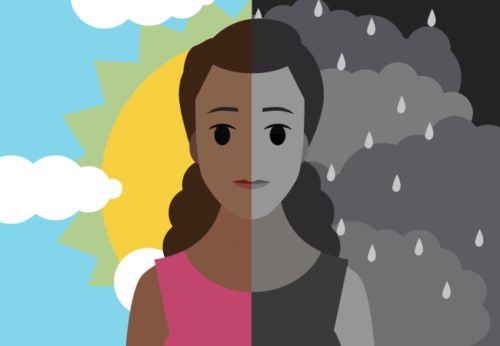
As the name suggests, bipolar disorder refers to two distinct poles, one corresponding to ‘up’, the other ‘down’. These relate to mood and behaviour; Bipolar Disorder was once known as “manic depression”. The stereotypical course of Bipolar Disorder is for someone to feel extremely low and depressed, and then suddenly feel high-energy and manic, only to fall back into depression, in a cycle that never ends (important to note here that the cycle is not predictable, like a pendulum, but chaotic).

Although the idea of mania can sound appealing to those with no experience of the condition, and although it is generally much less unpleasant than depression, Bipolar Disorder causes problems at either pole. It contrasts with healthy, natural changes in mood in the sense that people with the condition are seldom in an average, moderate state inbetween the two poles, as mentally healthy people are.

When a person in this condition is in a depressed phase, they are at risk for all of the suicidal behaviours that accompany Major Depressive Disorder. Self-harm is common among people with Bipolar Disorder, a function of the deep self-hatred that occurs in depressive phases. However, when a person is in a manic phase, they are also at risk of harming themselves.

Manic periods have to last for at least a week to really count, as an elevated mood could occur for any number of reasons. The manic phase of Bipolar Disorder can, at its most extreme, present much like a methamphetamine bender. A character undergoing one will tend to talk fast, sometimes stammering, and will have difficulty following a conversation, being easily distracted. Also like a methamphetamine bender, manic episodes tend to result in very little sleep. At worst, they can cause a person to become psychotic.

The combination of these factors can result in some extremely risky behaviour, which could be dynamite for your creative fiction. Hypersexuality, gambling, drug-taking and speeding in motor vehicles are all common behaviours for a person with Bipolar Disorder while they are in their manic phase. Someone behaving like this might seem like they’ve been given a week to live and want to make the most of it.

A character with Bipolar Disorder might not be easy for other characters to deal with. The erratic moods of bipolar sufferers means that other characters seldom feel comfortable around them. People with bipolar can be unpredictable. They are also very high suicide risks, because of the combination of impulsiveness arising from the mania and the self-hatred arising from the depression.

Sometimes a character with Bipolar Disorder will come across as full of energy and life and enthusiasm, making them seem very charismatic to another character. Other times they were be low in energy and miserable, which makes them seem very different. Someone who meets a Bipolar character while they are at one pole, and then meets them again while they are at the other, might have difficulty believing they’re the same person.

If the protagonist of your story has Bipolar Disorder, they might find themselves facing a considerable degree of social stigma. As mentioned above, their condition might make other characters feel uncomfortable. The protagonist might find themselves getting overlooked for parties and for social occasions on account of that other characters are afraid they will be in too crazy of a mood.

If the protagonist encounters another character with Bipolar Disorder, things might not be much easier. It’s common to meet a person with Bipolar Disorder during one of their manic phases, because this tends to cause them to become more extraverted. During this time, they might strike others as dynamic, engaging and enthusiastic. However, if a friendship is formed, it may not survive the depressive phase.

There are two kinds of Bipolar Disorder, known as Bipolar I and Bipolar II. The essential difference lies in the severity of the manic symptoms. The more powerful the manic symptoms, the more likely the sufferer will get a diagnosis of Bipolar I. This is not to downplay the difficulty of living with Bipolar II, but some of the hypomanic episodes in the latter case can actually be useful for getting things done.

Bipolar Disorder is distinct from Borderline Personality Disorder, although the behaviour of people with the condition can appear similar. For instance, people with either condition are capable of changing their attitude towards another person very quickly, but the Bipolar sufferer tends to have more self-awareness than the Borderline and maybe aware that their change in perception is not fully rational.

*

This article is an excerpt from Writing With The DSM-V (Writing With Psychology Book 5), edited by Vince McLeod and due for release by VJM Publishing in the summer of 2018/19.