
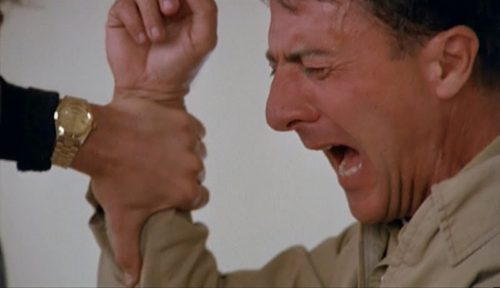
Writing Autism Spectrum Disorder

Autism has gone from being a little-known condition to being a condition that everyone is accused of having, autistic or not. However, just because everyone is aware of autism doesn’t mean that everything they think they know about the condition is accurate. This article looks at how to write believable and realistic characters with autism.

The most characteristic feature of autism is a pronounced difficulty with social interaction, usually coupled with an obsession with certain repeated actions. This difficulty with social interaction is enough to cause immense difficulty in the lives of some autists and the people around them. This goes beyond mere awkwardness, to a point where fundamental communication becomes difficult.

From the perspective of a person with autism, much of the difficulty about living with the conditions comes from an inability to make the intuitive understandings about other people, and their behaviour, that is usually taken for granted. A person without autism (a “neurotypical”) seems to have an almost psychic understanding of how other people think and behave. Social interaction just seems so effortless for such people.

Your protagonist might have difficulty getting along with someone who has autism, on account of that the autistic character doesn’t seem to understand what the protagonist believes to be the rules of social interaction. The protagonist might make jokes that don’t get laughed at, and come to think that the autistic character doesn’t like them, when the problem is a low level of communication.

Then again, your protagonist might get along with an autistic character just fine. Autists can make a lot of sense, in their own way. Often, a person with autism will be capable of observing human interaction without all the pretense and brainwashing, and can arrive at objective, if odd and unconventional, conclusions. These can sometimes be valuable wisdom (and they can sometimes be juvenile truisms).

Viewed from the outside, an autistic character might appear as excessively orderly, to the point of dysfunction. Autists often like to ritualise certain behaviours (much like Obsessive-Compulsive Disorder), to the point where not being able to perform the ritual sometimes creates unbearable anxiety. Their speech can be likewise regimented and repetitive. It’s common for them to compulsively stack objects or line them up.

Moreover, autists often feel solidarity with other neurodiverse people, and vice-versa. Autism is entirely different to, say, schizophrenia, but much of the lived experience of autism is similar to other mental conditions. The social rejection and the anxiety about more rejection, the anxiety, the shame, the frustration, the despair: these are all emotions that mentally ill people tend to experience more than others. An autist might relate strongly to someone who also feel them, even if that person is not autistic.

If your protagonist has autism themselves, you will have to be very careful about how you render their internal dialogue, should you write about them in the first person. A lot of fiction is poorly written because the characters in it have an unrealistically high level of understanding the behaviour of other people. An autistic protagonist will frequently be baffled by the behaviour they encounter. Much of their behaviour will be a complete mystery.

One of the most dramatic things about autism is the emotional consequences of the social difficulties that arise from having the condition. The awkwardness of autism is often mistaken by other people for malice, psychopathy, pedophilia, terrorist intent and all manner of other things. This makes life extremely difficult and can make for a harrowing story (unless your protagonist turns out to be a pedophile or terrorist).

It ought to be easy to engender sympathy from your reader here, because most people are sympathetic to the sense of injustice that comes from undeserved social rejection. Despite that, the other characters might feel like they have good reasons to reject the autistic character. After all, it is hard to tell the difference between social clumsiness and malice sometimes.

Because autism is a spectrum, there are many subclinical versions of it. A character with a subclinical level of autism will be relatable for many – after all, there is no person who has perfectly smooth social interactions all day every day. For them, their autism might be something that just makes life more colourful or interesting.

Autism can increase in severity all the way up to the point where a character with it will just about live in their own world, divorced from the concerns of most of the others. Realistically, a character with severe autism will have a hard time being a major character in your story because their degree of communication impairment will be so severe that no-one else will understand them. More moderate forms could involve a degree of social impairment that can be more or less overcome.

There is reason to believe that small amounts of autism can be helpful in certain occupational fields, especially those that pertain to the imposition of order upon chaos. Therefore, an autist need not be presented as conspicuously mentally ill. They might have found a niche that suits them perfectly, in some job that requires order to be imposed upon chaos. Mechanics and computer engineers are favourites.

*

This article is an excerpt from Writing With The DSM-V (Writing With Psychology Book 5), edited by Vince McLeod and due for release by VJM Publishing in the summer of 2018/19.


Should A Right to Animal Companionship Be Added to the Bill of Rights Act?

Animal companionship is neither a luxury nor a vice

The next attack by the do-gooders on the freedom of people to live their lives unmolested by government interference seems like it’s going to involve attempts to make companion animals illegal, usually on the grounds of some environmentalist excuse such as protecting wildlife. This essay argues that the control freaks need to be headed off at the pass on this issue, by enshrining the human right to animal companionship in the Bill of Rights Act.

The do-gooders have learned nothing from their failed attempts to ban alcohol, cannabis, psychedelics, and currently nicotine. Wielding the power of the state as if a waterblaster, they have attempted to blast away evil by getting the Police to smash in the heads of anyone dealing in this contraband. As anyone with an IQ over 90 could have predicted, this clumsy and cack-handed administration of punishment has only led to immense resentment and unfortunate unforeseen consequences.

People will naturally disobey unjust laws. So when the control freaks try and ban people from owning cats, as has been suggested by the mad witch Eugenie Sage with regards to Wellington, we decent people need to be ready to take counteraction. In fact, we ought to take pre-emptive action now, and agitate for the right to animal companionship to be added as a amendment to the Bill of Rights Act.

There are three major reasons why this should happen.

The first reason is that cats and dogs, and the presence of cats and dogs, are part of the natural life of humans. As described at length here, humans have lived with cats for so long on account of needing the cats to control the rodents that attacked their grain supplies, that we have essentially formed a symbiotic relationship with them. We have lived with dogs for even longer.

Cats are effectively a technology that has developed for the sake of pest control. Dogs are effectively a technology that has developed for the sake of hunting and security.

There are tens of thousands of rural dwellers who could tell you about the consequences of not owning a cat when you live in the country, as many Kiwis do. The consequences are to have everything in your house destroyed by rodents. The situation is not much better in the cities, because wherever people live they store food and throw away rubbish, and either action attracts rodents.

Because rodents and disease are constant companions, owning a cat is an essential part of home hygiene. People who are aware of the hygiene benefits of cats would no sooner not own one than they would stop washing their own hair.

The second major reason why a right to animal companionship ought to be enshrined in the Human Rights Act is because of the mental health benefits of animal companionship. These benefits are so great that any attempt to take them away from people ought to be construed as cruelty, the same way that it is illegal to withhold a medicine from people.

Loneliness is one of the biggest killers in our modern societies, and is a main driver of suicide. The natural tribal model has collapsed under the pressures of industrial capitalism and the population explosion brought about by the Green Revolution, and there is ample evidence that a lack of healthy social relationships is what is responsible for the increasing rates of youth suicide.

Science has shown that for people with compromised social support networks, such as the elderly or the unwell, animal companionship has a massive positive effect on their mental health. For people in these situations, quality time with a cat or a dog might be the only quality time they spend with any sentient being, and can easily be the difference between psychological good health and mental illness.

The third major reason to write something about animal companionship into the Bill of Rights Act is to pre-empt Government overreach. We already know that the kind of person who runs for Parliament, and who succeeds in becoming a lawmaker, is usually a power-crazed control freak with little to no respect for the free will of the voting public.

The thought that these overpaid bureaucrat-psychopaths in Wellington are sitting around thinking up new excuses to take rights away from people is enough to stoke outrage. Where does it end? Do we get told how many calories of food we’re allowed to consume per week, or how many hours we’re allowed to spend on the Internet?

The control freaks need to be pre-empted with a clearly defined and explained law that makes it illegal to ban either cats or dogs from a given neighbourhood, or to discriminate against a potential property tenant on the grounds that they own a pet. The Bill of Rights Act should be amended to state that New Zealanders have the right to animal companionship.

New Zealand has, sadly, destroyed our hard-won reputation as a human rights leader with our complete failure to deal with cannabis law reform. We could win that reputation back by taking intelligent and progressive measures to combat mental illness. One of these measures could be the entrenchment of the right of New Zealanders to have animal companionship in their place of dwelling.

*

If you enjoyed reading this essay, you can get a compilation of the Best VJMP Essays and Articles of 2017 from Amazon for Kindle or Amazon for CreateSpace (for international readers), or TradeMe (for Kiwis).

Writing Dissociative Identity Disorder

Once known as Multiple Personality Disorder, and known casually by some as “split personality”, Dissociative Identity Disorder (DID) is a condition characterised by more than one distinct personality in the same physical body. The disorder is one of the most misunderstood and mischararacterised of all psychiatric conditions. This article looks at how to write believable and non-cliched characters who have Dissociative Identity Disorder.

People who have DID don’t change personalities whimsically. It usually only happens in response to intense stress or emotional pressure. When it does, however, it can be frightening and confusing for the people who see it. A person who has “switched” personalities might indeed seem to be an entirely different person, with different facial expressions, a different gait, different body language and an entirely different way of talking. Their vibe might feel entirely different, and not just in the sense of a change of mood.

Like many of the conditions in this book, DID is believed to have origins in early childhood abuse. The currently prevailing theory is that particularly intense early childhood trauma can cause the mind to dissociate. If this is severe enough, this dissociation can lead to one part of the mind becoming almost quarantined from the others, as if to protect the whole.

For example, a child might receive such intense physical abuse that their personality splits into a regular child’s personality (or primary identity) and a second, much harder and meaner one, who comes about as an adaptation to the abuse. What this can lead to is a situation where the second personality comes out in stressful situations as if trying to “defend” the primary personality from further trauma and abuse. That second personality might be willing to make decisions and take measures that the first cannot countenance.

Characteristic of this condition is the inability for one persona to remember things that have been said to another persona. Because the various personas are complete personalities with their own set of memories, things that are understood by one persona are not necessarily understood by others. People with DID can also lose track of time very easily, on account of that time that passes for one personality doesn’t necessarily also pass for another.

If the protagonist of your story encounters a character with DID, their first clue might be observing signs of depression in that other character. People with DID commonly also have depression, partially on account of the difficulty of living with the condition, and partially as a result of early childhood trauma and abuse. Other conditions are commonly comorbid with DID, especially the other conditions that are believed to have origins in heavy childhood trauma, such as schizophrenia, borderline personality disorder, anorexia and bulimia.

Your protagonist might find it baffling how that the character with DID sometimes doesn’t remember what’s said to them. Even more baffling is that the character with DID will often react with anger if it is put to them that a certain subject had already been talked about. Your protagonist might conclude that the character with DID is on drugs of some kind, and they might feel like they have good reason to draw such a conclusion.

In other ways, your protagonist might have to tread carefully. The heavy childhood abuse that usually precedes the development of DID can make a character with the condition hard to deal with for reasons not directly related to it. For example, they might be paranoid, suspicious, vicious etc. before the effects of DID are accounted for. This might mean that your protagonist mistakes the separate personalities of a person with DID as them being dishonest. Your protagonist might feel that the character with DID is only pretending not to remember things.

If the protagonist of your story has DID themselves, then telling a story about them automatically becomes a challenge because it isn’t clear who is speaking in the first person and who is speaking in the third. Assuming that there’s a primary personality and a secondary one, the primary one might be the one that is written about in the first person. It’s possible to do both, but care has to be taken not to sound like you are retelling the story of Jekyll and Hyde.

Your protagonist’s encounters with other characters could become extremely difficult if the protagonist has this condition. They might find themselves confronted with repeated accusations of being two different people – an accusation which is, understandably, not simple to deal with. Neither are accusations of being on drugs, or being a bastard, or lying, or just being fucked-up – all things that a protagonist with DID might have to deal with from other characters.

DID is not schizophrenia, but it shares many things in common with schizophrenia. DID is believed to be the single most strongly correlated psychiatric condition with severe early childhood abuse and neglect, with schizophrenia closely behind. So a person with DID might have deep understanding of how schizophrenics think and operate, and may have gone through some parts of the schizophrenia spectrum themselves.

It’s worth noting here that attempting to get off a criminal charge by claiming that one has DID and that one’s alternate personality did the crime has virtually zero chance of success, and that even if it did succeed the consequences would probably entail involuntary psychiatric care every bit as unpleasant as going to prison. Juries and judges are wise to such simple tricks and it won’t succeed outside of an extraordinary setting.

*

This article is an excerpt from Writing With The DSM-V (Writing With Psychology Book 5), edited by Vince McLeod and due for release by VJM Publishing in the summer of 2018/19.

Writing Dependent Personality Disorder

Dependent Personality Disorder (DPD) is a condition characterised by an extreme emotional dependence on other people. It’s usually a long=term condition that makes it much harder to live an ordinary life, and is slightly more common among women and young adults. This article looks at how to accurately write about characters with Dependent Personality Disorder.

People who have DPD have extreme difficulty making decisions on their own on account of their dependence on other people. They tend to lack the self-confidence to back their own instincts and their own decision making. They are rarely certain that they have made a good decision, unless someone else gives it their approval. This approval they constantly seek, and they constantly act to avoid disapproval.

DPD is a Cluster C Personality Disorder, which means that fear and anxiety are ever-present features of it. In this case, the fear and anxiety primarily relates to making wrong decisions. For whatever reason, people with DPD don’t learn that no-one on this planet really knows what they’re doing and that their decisions are usually as good as anyone else’s. Dependent personalities have a strong desire to have someone else give the “stamp of approval” to their behaviours and actions.

If the protagonist of your story encounters a character with DPD, they might perceive that second character as childish, even infantile. Many of their mannerisms will be the same as young children who are yet to learn the boundaries of social behaviour. A common example is when they make a joke but become afraid that it was a social error until someone else laughs, at which point they do too.

This can be frustrating if the protagonist has to get the character with DPD to take adult responsibilities and to be independent. The condition is especially challenging since the harder someone pressures a person with DPD to take responsibility, the more anxious they will become, and consequently the more dependent. The protagonist will have to know patience to succeed, and if they don’t know if they have to learn.

Your protagonist might be resented by a DPD character if that character feels the protagonist is not approving enough. It’s common for people to think disparagingly of someone with DPD because they see dependency as weak and craven. This timidity can breed resentment, so that a character with DPD might easily feel themselves slighted and wish to take revenge. Passive-aggressive behaviour is a common feature.

A protagonist who has DPD themselves probably lives a life of extreme anxiety. Because so many decisions are made in everyday life, a protagonist with DPD will almost certainly have a lot of difficulty living one. They will have great difficulty getting projects or activities started, because they are too dependent on what other people think to take the initiative themselves.

This is especially the case when a person with DPD has to be examined by an authority figure. If a protagonist with DPD has to, for example, sit a driver’s licence test, it’s common for them to work themselves into a state of panic beforehand, thinking about the possibility of making a mistake and earning the instructor’s disapproval. Passing through international customs is also a great trial. Both of these situations induce far more anxiety in someone with DPD than in a person without the condition.

If your protagonist has this condition, they might find it extremely difficult to ask for their rights if they are being taken advantage of. A character with DPD might be so afraid of disapproval from their boss that they don’t seek to enforce their rights, and standing up to one’s parents is out of the question (unless one is really pushed too far). They might also take measures to ensure that they are never alone, because this requires that one think for oneself.

People with this condition tend to be highly motivated to seek out and maintain relationships with people they consider protectors or caregivers. A protagonist who is acting along these lines might find that pledging their allegiance to a leader of some kind alleviates much of their anxiety about not making correct decisions, for good or for ill.

DPD patients usually have a perception of themselves as powerless or incapable of anything, which might betray a life story of having been treated in that manner by authority figures. Mirroring this is a perception of other people as all-powerful and infinitely capable. This is not simply the same as low self-esteem, because DPD doesn’t tend to come with the bitterness and resentment that characterises a poor self-image.

As with many of the conditions in this book, there is believed to be a considerable link between early childhood abuse or neglect and later development of DPD. In particular, it is thought that parenting styles with too much overprotectiveness or authoritarianism correlate with having the condition. Overprotective parents might prevent a child from exposing themselves to danger and therefore from learning that they are capable of overcoming it, whereas authoritarians might create a sense of learned helplessness.

*

This article is an excerpt from Writing With The DSM-V (Writing With Psychology Book 5), edited by Vince McLeod and due for release by VJM Publishing in the summer of 2018/19.