
Category: the human condition
The World That Sober People Built
“That person must have been on drugs” is a common response to observing all kinds of wacked-out behaviour, as if taking a psychoactive drug inevitably brings about false kinds of thinking – a cognitive bias this column has previously described as Sobriety Bias Syndrome. But if we look around the world that sober people built, and the moral values agreed upon by sober people, things really didn’t turn out that great.
It was pious and sober people who decided, a few thousand years ago, that mutilating the genitals of baby boys was a legitimate expression of God’s will. It was sober people who decided to adopt this tradition from the foreigners who practiced it, and people are sober when they argue for the “health benefits” of the mutilation.
George W. Bush, completely sober, decided that sending the firepower of the US military after Saddam Hussein’s Iraq was a great idea, even though it led directly to the deaths of over a million people. The US Congress, elected to represent the American people, also soberly decided that this was a great idea.
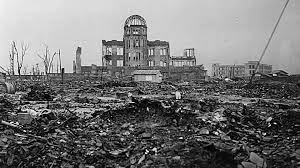
In the 1930s we created and watched “documentaries” such as Reefer Madness, which exhorted us to tell our children that smoking cannabis will turn them into murderers; a dozen years later, with god-fearing sobriety, we built nuclear weapons and dropped them on Japanese civilians, killing hundreds of thousands in one hit.
These are the actions of sober minds. So clearly a person doesn’t have to be intoxicated in order to do terrible things to someone else.
Far from it. In many ways, sobriety can be seen as a kind of virus. Its presence in a person’s mind tends to work to drive out periods of non-sobriety, usually because of egoistic religious delusions about achieving purity of thought. The sober mind tends to have thoughts repeating in it over and over again, and this repetition can lead to a powerful commitment to some ideas.
This is a fact long understood by television programmers, who appreciate how repeated exposure to a short, powerful stimulus is more likely to induce purchasing behaviour in a potential consumer than a single exposure to e.g. a lecture about the qualities of a product.
Because novel psychoactive experiences tend to destroy this conditioning by allowing the conditioned person to see things from new perspectives, if you want to get everyone marching in lockstep then these psychoactive experiences need to be either discouraged or made illegal.
Consequently, entirely sober people have decided, presumably using sober logic, that putting another human being in a cage is a fair punishment for being caught growing a medicinal plant without permission.
Maybe there’s an argument that too much sobriety makes an individual mean from a lack of levity, and a society dumb from a lack of questioning?
After all, the mass shooters making the front pages recently are definitely not smoking weed, taking ecstasy or tripping on mushrooms or LSD, and neither are the genital mutilators, military warhawks and brainwashers that are responsible for most of the world’s evil.
The truth is that the world needs a diversity of ideas if humans are to survive the challenges of coming years. Never mind a diversity of skin colour – such superficial qualities do not constitute real diversity. Real diversity is diversity of ideas, even outlandish ones, even crazy ones, because that is the kind of diversity that saves us from groupthink and prevents us from making the kind of error that arises from self-righteous conviction about one’s correctness.
To that end, sobriety is our enemy and getting wasted is our friend.
When Opening the Borders to Mass Immigration, The Effect on the Locals’ Quality of Life is Not Considered

The forces pushing for mass immigration in recent decades have been an alliance of both the left and the right, which is why the West has seen so much of it, despite that it often has clearly negative effects for the locals. Some people don’t seem to fully understand that, when agitating for mass immigration, the forces in favour of it have got no interest whatsoever in the effect of that immigration on the quality of life of the locals. This essay looks at why.
Western conservatives are not only terrified of being seen to oppose immigration lest they be confused with the racial conservatives who lost World War II, but they are more than happy to open the floodgates to mass immigration for economic reasons.
First among those economic reasons is that mass immigration destroys the existing bonds of solidarity among the native population, which works to divide and conquer them and make them ripe for wage exploitation. Western conservatives know that Westerners are too afraid to protest the importation of low-skilled workers from outside the country lest they be seen as racist, even when that same importation is undermining their labour power and thereby sharply lowering their quality of life.
It’s obviously much harder to start a union when much of the workforce doesn’t speak English, or if they’re here on temporary visas, or if they’re from a cultural tradition that has little idea of worker’s rights (which is most of them). So the wealthy know that by opening the floodgates to the whole world they can smash the sentiments that prevent workers from selling each other out as cheaply as possible.
Second among these economic reasons, but no less important, is that mass immigration drives up the value of investment property, which a large proportion of Western conservatives hold. In so far as the value of any given piece of land is a function of the amount of money willing to bid to own it, it’s mathematically obvious that opening the borders to all and sundry will remove previous restrictions on demand, thereby driving it up – alongside the price of the property.
After all, no-one is making more land, so the supply of land in New Zealand is a constant. By letting in a few extra million people, the wealthy can stimulate demand which pushes the price of that land up.
Which is great if you’re in the minority that already holds land, and terrible if you’re in the majority that doesn’t.
This reason, incidentally, is why the population will never be allowed to fall, and why it has not been allowed to fall in Western European countries where the birthrate has been below replacement level for a number of generations. Economic reasons mean that the rich will simply force their puppets in Parliament to maintain the price of their land holdings by opening the borders.
This is why the population of France has not decreased in several decades, despite that native French women have had a below replacement level birthrate for over a century now. The French elites would rather import foreigners to replace the missing locals than allow their property values to decline with a falling population – and the same is now true of Britain, Spain, Italy and Germany.
After all, if you’re in the top 1%, then it doesn’t matter if the average goes down as long as inequality rises by enough to compensate, because rising inequality will see the top 1% cream more and more of it. Selling your countrymen out for shekels might lower the standard of living of the nation, but it won’t lower yours (until enough other people do it of course, but the hope is that this point is never reached).
Western liberals, for their own reasons, are also more than happy to open the floodgates to mass immigration.
One reason is that these liberals do not generally live in the same neighbourhoods that are affected by mass immigration and the crime that comes with it. So the negative side of agitating for mass immigration is not considered to outweigh the positive side of virtue signalling one’s good will towards poor foreigners.
Another reason is that they are ideologically opposed to national bonds for the reasons that these are impediments to a global communist state. The sharper the lines are around who counts as a Kiwi and who doesn’t count as Kiwi, the more difficult it is to subsume New Zealand into the global communist consciousness.
None of this is to argue that immigration is a bad thing or that it should be stopped. But it’s clear that the National Party has lost control of the immigration system above and beyond the desire to keep wages low and house prices high. The wishes of the people who already live in New Zealand, and who have inherited a sense of guardianship over the land, is not respected and the effect of this immigration on their quality of life not considered.
Ultimately, the New Zealand immigration system needs to be run according to the philosophy that the New Zealand population as a whole are to be the beneficiaries of the fact that this is a nicer place to live than most of the rest of the world. Not right-wing special interests who want cheap labour for the sake of maximum profits or left-wing special interests who want the destruction of social coherency for the sake of maximum control.
The Big Lie of Our Age
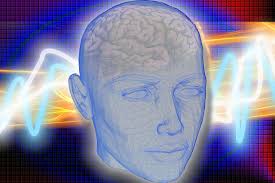
The Big Lie of our age is that the brain generates consciousness. It’s a lie characteristic of our exceptionally materialistic age, because in most other times in human history people have retained their intuitive awareness of the primacy of consciousness. In the modern West, however, it’s simply taken for granted that the brain generates consciousness, and the deleterious consequences of this belief are denied or explained away.
This Big Lie has come about as a result of a reasoning error that became fashionable in the wake of the Enlightenment. The idea was that religion had held humanity back during the Dark Ages by making scientific research impractical, and therefore religious dogma had to be discarded from the scientific reasoning process, and therefore all talk of a world beyond the material had to be abandoned, and therefore consciousness simply had to be a material property.
From this Big Lie a number of falsehoods arise. Many of these falsehoods are encouraged by the ruling classes because they make the plebs easier to rule.
For instance, the belief that the brain generates consciousness leads immediately to the belief that the death of the brain (alongside the inevitable death of the physical body) must inevitably mean the “end” of consciousness. Because if the body dies, and the brain dies with it, then the brain must logically lose its capacity for ‘generating’ or ‘maintaining’ consciousness and thus that consciousness must disappear.
This belief, while predicated entirely on a falsehood, leads to a number of other beliefs.
The most powerful of these is the belief that this life is all that there is. If the death of this physical body means the death of consciousness, then I cannot be held responsible for anything I do while in this place (i.e. Earth, more or less). Therefore, if I take money now in exchange for attacking another person, or if I murder, rob or rape, then I only have to get away with it for as long as this physical life endures.
Another odd idea that follows naturally from the Big Lie is that only creatures with brain structures similar to that which knows itself to be conscious can also be conscious. If the brain generates consciousness by means of some property inherent to it (such as a critical mass of complexity) then other creatures can only be considered conscious to the degree that they share these brain structures with the person thinking up the consciousness theory (after all, that person knows themselves 100% to be conscious).
One delusion is that mortal terror is an appropriately dignified response to mortal threats for a civilised human. It is if you believe that the brain generates consciousness, but if you don’t believe this it becomes possible to be genuinely courageous. After all, why subject yourself to mortal terror if you know that the contents of consciousness are ephemeral and transient?
Of course, the ruling classes are generally happy to have people believe that this life is all there is, for a variety of reasons. Not least of these reasons are because it discourages anarcho-homicidalist action by making people afraid of execution, and because it makes people greedy, aggressive and acquisitive as they try to cram an eternity’s worth of pleasures into one mortal incarnation.
It is ultimately because of this Big Lie that cannabis and the psychedelics are illegal. These drugs modify behaviour by making the user aware, however fleetingly, of a world beyond the material. In this world beyond are immutable moral principles, and it’s harder to pull the strings of people who are aware of these principles and believe in them. Such people tend to make their own decisions.
A common experience on psychedelics is to feel the material world slipping out of consciousness and to become aware of an entirely different world as seen through an entirely different set of eyes, but which is ultimately comprehended by the same consciousness. This often results in the tripper learning the lesson of the primacy of consciousness and how conceptions of time and space are illusions brought about by temporary separation from God.
It is because of the Big Lie that people who become privy to such revelations about the true nature of reality – whether by taking psychedelic drugs or through other means – are seen as having gone insane, and their revelations seen as chaotic nonsense of no value. After all, if a psychonaut comes to realise that the Big Lie is a big lie, then that psychonaut must be dismissed as a space cadet or schizophrenic lest this realisation catch on.