

21st Century Christianity and Its Manifestations

Opinions on how to treat homosexuals wax and wane with social fashion, but masochism is an eternal element of Christianity

Christianity hasn’t died yet, and it never will, for there will always be a niche for slave morality anywhere there is interpersonal conflict. Fittingly for the receptive, yielding principle that it represents, Christianity has morphed into a near-infinite variety of different doctrines depending on the time and place in which it was trying to be relevant. This essay examines the characteristics of 21st century Christianity.

The sort of person who finds themselves attracted to a slave morality such as Christianity remains the same as ever, much like human nature itself. Their essential characteristic is resentment, and their essential motivation is the destruction of that which inspires envy in them. They are like pathological horizontalists, who want to level every dominance hierarchy out of resentment for not being able to climb them.

The Christianity of our century has found an equivalent for all of its ancient tenets and dogmas. For instance, in this new manifestation of Christianity, America are the Romans. Representing the men of iron, America has a vast military empire that brings humiliation and subjugation to its rivals. Anything that happens in the world, no matter where and no matter who to, can be blamed on American influence.

An Islamic suicide bomber who walks into a mosque in Pakistan and kills a hundred other Muslims has nothing to do with America. But neo-Christians will say that it’s still America’s fault because they “destablised” the country somehow, or because America gave money to some unsavoury politician somewhere alsong the line, or because the CIA financed the bomber, or equipped the bomber etc.

The neo-Christians rarely know anything about the Sunni-Shia divide and how murderous it has become. They don’t appreciate that a Muslim has a hundred times more to fear from a fellow Muslim than he does from the average American. It doesn’t matter to them. All Muslims are low status, and therefore they are elevated above the wealthy, c.f. “The first shall be last and the last shall be first.”

Similarly, the Original Sin is no longer sexual desire, because that has been fully monetised by now. The Original Sin is now racism, with racism being defined as solidarity with white people. All (white) people are guilty (of racism), and all have fallen short of the glory of (the colour-blind) God. We have all had thoughts about how we liked white people better, therefore we are all guilty of Original Sin, and are thereby associated with the Great Adversary of 21st century Christianity: Adolf Hitler.

The only solution for this Original Sin is self-flagellation. However, because corporal punishment isn’t fashionable in the Soy Era, this self-flagellation has to take a metaphysical form, and so the 21st century Christian gets their masochistic thrills from disparaging their own family, nation, race, class etc.

It has to be emphasised that Christianity doesn’t care for material concerns, and it never has. Inherent to Christian dogma is the meme that the cult comes above all other considerations, such as family, nation or class. So it’s natural for the 21st century Christian to say things like “White people have a uniquely brutal history of imperalism and racism.”

It’s therefore no accident that Christian churches are often behind the political impetus to allow hordes of Muslim and African refugees – who will never integrate – into the West. For thing, the Muslims also worship the God of Abraham, so they’re fundamentally on the same side as the Christians anyway, but more importantly, their arrival degrades the strength of the national bonds that people have with each other.

These national bonds are competing paradigms of solidarity to neo-Christianity and therefore have to be attacked so that it can take a central role in everyone’s life. Like its Abrahamic brothers in Islam and Judaism, Christianity is a totalitarian ideology, and it seeks to control every last aspect of the people under its thrall. This is why Jesus is quoted as saying in Matthew 10:34 that “Do not suppose that I have come to bring peace to the earth. I did not come to bring peace, but a sword.”

All other culture must be bulldozed out of the way to make sufficient space for Abrahamic universalism. This belief is as common among the 21st century Christian as is was of the Taliban who erased Afghanistan’s history of Buddhism, or of the Jews who rewrite Western history to glorify themselves and to hide their own crimes. All other bonds of friendship or brotherhood must be smashed, so that the God of Abraham stands unchallenged above the world.

*

If you enjoyed reading this essay, you can get a compilation of the Best VJMP Essays and Articles of 2017 from Amazon for Kindle or Amazon for CreateSpace (for international readers), or TradeMe (for Kiwis).

How to Tell If A Political Ideology Has Failed

The genesis of the Soviet failure was the failure of their philosophers to accurately understand, and to account for, human nature

All political philosophies, when first expounded, claim to have a special and unique insight into the truth of human nature. This claim is the basis for the legitimacy of each one. However, this also gives us a limit point at which a political ideology can be said to have failed – when those expounding it will be trying to change human nature instead of change their philosophy.

Machiavelli was correct – human nature never changes. It is the one constant through which the rest of the world can be understood. Human nature is the same in all times and places and therefore anyone who understands it might as well be able to see into the future. This gives immense power to those who do understand human nature. They are able to flow with the waves of it, instead of being dashed upon the rocks.

Communism failed because it did not account for the masculinity within human nature. The assumption was that, after the structures of cruelty and capitalism were dismantled, we would all go back to a bonobo-style level of caring, sharing and free love. Everyone would have what they needed because those able to provide it would simply do so out of inherent kindness.

It did not account for the chimpanzee within us, the hypermasculinist who desires verticalisation. The fact is that resources are extremely limited in a state of Nature, which means that when times of scarcity roll around, some have to go without. There is an immense evolutionary incentive, for obvious reasons, for social creatures such as humans to evolve to fight like hell rather than go without, and so primates have evolved dominance hierarchies.

This means that a state of perfect solidarity, and full sharing totally free of resentment, is unnatural. Humans are a hierarchical creature in a state of Nature, and the attempt to reform humanity and the nature of humanity – as if it was a field that could simply be sown with a higher grade of crop – was the folly that killed a hundred million people last century.

Nazism failed for similar reasons. Their great error was to assume that the nature of the German people was more morally upright than what it really was, which created a cognitive dissonance that found resolution in the scapegoating of the Jews. Externalising the blame for personal failure is typical of the sort of person who finds merit in Nazism.

Neo-Communism, in its manifestation as social justice warrior culture, is failing because it failed to account for how unwilling young people are to be programmed into parroting utter bullshit, especially when that bullshit denies aspects of human nature that even children can observe. The neo-communist attempt to reform human nature into some kind of non-racist, non-sexist and non-judgmental perfect niceness is doomed to fail, as all people smarter than dogs can see the distinctions between the various types of humans everywhere they go.

Instead of accepting that the bonds of solidarity and philia that held society together have now been shattered by relentless waves of mass immigration and the ruthless application of neo-liberal ideology to every facet of life, the neo-communists try to brainwash everyone into denying their natural instincts by browbeating them into submission with terms like “Racist!”. This is clear evidence of failure.

Likewise, the neo-nazism of our age serves to misdirect blame rather than accept that its conception of human nature is inaccurate. The neo-nazis often have intelligent and accurate criticisms about how the current system has failed, and how the Marxists have failed, but their downfall lies (as with the Marxists) with their solutions.

The neo-nazi solution is still, as it was, to fundamentally change human nature by exterminating those who don’t fit in, the belief being that the remainder will become something like the perfect human. This was, and remains, a failed philosophy for the reason that human nature does not and will not change in response to human meddling.

Liberal democratic capitalism, for all of its flaws, tried to change human nature much less than either Nazism or Communism, and that’s why it defeated them both last century. The Anglo-American system accepted from the beginning that Nature will throw up a wide range of variance among her children, an acceptance made easier by the brilliant insights of Charles Darwin into the subject.

This meant that the Anglo-Americans, and those influenced by them, focused on building a system that would accommodate the widest variance of human behaviour. Their version of liberal democratic capitalism was able to account for both noble and debased natures, and find a place for both to contribute, meaning that it wasted much less energy on fighting itself and imposing order upon itself, relative to the competing philosophies.

The Anglo-American system deserves much criticism, particularly when it comes to how willing it is to sell its own people for small amounts of money, but it is less bad than anything hitherto attempted, on account of it making more accurate assumptions about human nature. This has minimised the desire of its political rulers to attempt to reshape human nature, which has minimised the risk of gulags and gas chambers.

Future political philosophies, when they arise, will not and must not be mere throwbacks to the 20th century way of doing things. The political philosophies of the 21st century will take into account an extra century’s worth of insights into the reality of human nature, and the reality of the Nature that spawned us, and they will be more accurate and more humane as a consequence.

The risk of the 21st century is that this new psychological knowledge inspires new attempts to remodel human nature under the delusion that “we know enough now to get it right this time.” The possibility of mass non-consensual medicating with psychiatric drugs cannot be discounted, and neither can some kind of virtual reality system created with the intent of brainwashing people more effectively than ever before.

*

If you enjoyed reading this essay, you can get a compilation of the Best VJMP Essays and Articles of 2017 from Amazon for Kindle or Amazon for CreateSpace (for international readers), or TradeMe (for Kiwis).

Writing Oppositional Defiant Disorder

Oppositional Defiant Disorder is characterised by repeated temper tantrums, pointless arguing, vicious outbursts and rulebreaking for the sake of rulebreaking. It’s what used to be known as “being a little shit.” The name comes from how a person with it sets themselves up defiantly in opposition to authority figures or anyone else trying to impose rules upon them.

If it is the protagonist of your story who is the character with ODD, they are extremely unlikely to think that the problem lies with them – but this is where their story gets interesting. If your protagonist has ODD you will be able to show someone whose thoughts twist through all manner of justifications for their behaviour, but who will not willingly take the blame themselves.

After all, your protagonist might actually have a point. Unlike the pure malice exhibited by a psychopath, someone with ODD might have a legitimate grievance against an asphyxiating rule-obsessed bureaucracy, or a surveillance state. This might make for an interesting story about an antihero who came into conflict with authority for the sake of his people or family (or for great justice).

For other characters in your story, a protagonist with ODD might appeal to them as a lovable rogue, or as a troubled soul with a heart of gold. The protagonist likely has a like-minded group of friends, as people with ODD often share the same grievance. This group of friends might have made a mission out of their shared grievance – and then you have a story ready to go.

In this sense, characters with diagnoses of ODD are especially well suited to fiction that appeals to the outsider, such as cyberpunk. Kris Smashtonati of The Verity Key is probably one such character. After all, any person with this condition is going to have some difficulty adjusting to live as a gainfully employed citizen, and that will put them on the margins, where life is more precarious (and dramatic). A properly integrated character with ODD might be better suited to comedy than to drama.

For the antagonists of your story (who are inevitably authority figures of some kind) ‘vindictive’ is a word they might describe the ODD character with. They would say that this character has difficulty regulating emotions or tolerating frustration. Such antagonists would dismiss the protests of the ODD character that the rules were too onerous – the rules are there for everyone’s good, like it or not.

In many ways, telling the story of ODD is really telling a story of an environment. There are believed to be biological factors involved, such as unusual neurotransmitter function or amygdala damage, but a person with ODD rarely develops it in the total absence of family or environmental factors.

Mood disorders are extremely common among the children of parents who have ODD, which gives a major clue about the etiology of the condition. If the protagonist of your story had ODD, it’s possible that his father was a real unpredictable sonofabitch, and the mother likewise. Inconsistent punishment is usually found among the childhoods of people with ODD.

ODD is capable of manifesting in a variety of different settings. Generally speaking, the broader the range of settings in which it manifests, the worse the ODD is. The most common is for oppositional and defiant behaviours to begin in the family home, so that the damage is done long before their first classroom experience.

This generalisation, or one like it, might be the key to understanding your ODD character. Usually the condition arises in response to the perception of unfair treatment from a parent, which may generalise into a belief that any and all authority figures are likewise unfair (and so to be defied). We can then predict that a character with this condition might have conflict with any other character that metaphorically represented a parent (teacher, policeman, bureaucrat etc.).

There is a sense in which ODD is on a spectrum that continues onto Conduct Disorder and, in the worst case, Antisocial Personality Disorder. In this regard, someone with ODD is likely to be much easier to get along with than someone with either of the latter two disorders. They might even be surrounded by such people so that they seem calm and reasonable by comparison.

Esoterically speaking, a character with ODD could be considered a chaotic element. It is unlikely that such a character will contribute to the good order of your story world, and their entrance might even be the spark that gets your story going. Indeed, it’s well possible that the ODD character has taken exception to a particular manifestation of order, and has resolved to break it up at any cost.

*

This article is an excerpt from Writing With The DSM (Writing With Psychology Book 5), edited by Vince McLeod and due for release by VJM Publishing in the summer of 2018/19.

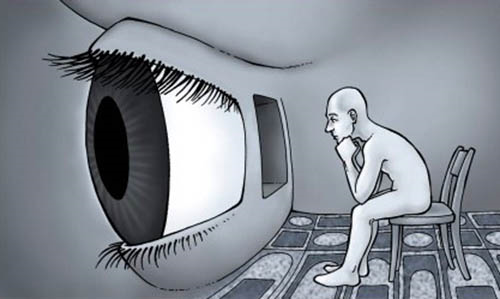
The Ultimate Power is to Make Peace With Death

Socrates was not wrong when he said “those who really apply themselves in the right way to philosophy are directly and of their own accord preparing themselves for dying and death.” The best thing a person can ever do is to accustom themselves to the fact that they are mortal and therefore that time on this planet is limited. To the extent that this can be achieved, a person can be liberated from a tremendous range of miseries.

All fear ultimately comes from a fear of death. The reason why pain is frightening is because we have evolved an instinctual appreciation that pain is a harbinger of death. When you are in pain, it means that Death has you in its sights. Pain gives us energy because we can instinctively appreciate the seriousness of the threat.

When kids fight each other in the playground, and they learn to force each other’s wills through violence, the natural fear of death possessed by each child makes this easy. A little bit of pain from a twisted arm, in the mind of someone young and inexperienced, is tantamount to a near-death experience, and so compliance is easily given. A little bit of social disapproval in the form of a stern teacher likewise.

It’s expected that adults will be a bit braver and harder to manipulate. Adults have had longer to come to terms with death, and in that time they might have overcome their fear of it. Failing that, they might have learned to behave in ways that hide their fear of it. Failing that, they might at least have found a way to trick themselves into going forward with some semblance of dignity.

The less fear of death any given adult has, the more powerful they will be. This is fundamentally a spiritual power, but it works its magic by way of its gradual effect on the people around its possessor (much like gold does). Someone unafraid of death will have charisma, they will inspire confidence, people will follow them, and people will respect them for having found existential solace. It’s a power more subtle than silver, but at the same time one with a much greater reach.

On the other hand, no-one is expected to make peace with death, or at least not entirely, for there is no public consensus of any kind as to what befalls consciousness upon the expiration of the physical body. Conviction in the matter of what does befall consciousness is reserved for a very few, most of whom are readily and fairly dismissed as some kind of religious fanatic who is merely parroting what they have been brainwashed with.

The gnosis of those who have seen beyond and know what lies beyond death is almost never accepted by the masses, and for good reason: the vast bulk of the people claiming to know are patently scammers, and so distrust is necessary and natural. Selling tickets to an afterlife in exchange for worldly goods has always been the default con job of the black priesthood, and one that may even have been practised in prehistory.

The Tao teaches us that, even in the time of the total triumph of yin, there is invariably a tiny speck of yang that will grow to impose a new order upon things. In a similar manner, all of these religious scammers have, in common, certain insights about the nature of life as a material being that remain true despite the horseshit layered on top of them. We all die, and we’re all afraid of it, and we’re all willing to take action to ameliorate that fear.

This column is willing to give you gold for free: once you make peace with death you are invincible, for all psychological weakness flows directly from the fear of it. Without a fear of death one cannot be threatened with torture, because death would simply mean a sweet release from such, and no other physical threat is as bad as torture. Without a fear of death, one cannot be intimidated in any way, for there is no reason to bow the knee to an oppressor if they are not able to materially hurt you.

A person who has made peace with their mortality will stand, on the metaphysical plane, like a great boulder of granite, which cannot be moved or damaged. The winds and waves of fear and dread will not impact such a person; they will barely change the expression on the face of one. A person who has made peace with death knows that there’s nothing more but to sit back and watch as the wave breaks upon the shore. The dissolution of the wave is something to be experienced, not feared.

However, there’s a risk.

The more you look into the face of death, the deeper you look into the void. What happens then is not necessarily up to you, not even with all the will in the world. As Nietzsche warned us, the void will also look into you. When it does, you might come to decide that life itself is evil on account of the inevitable suffering it promises and that death is to be welcomed and encouraged as a release from same and as a reunion with God.

And at that point it’s extremely easy to make a terrible mistake.

Do you have the courage to look into the very back of the void, with nothing more than a hope that one will be rewarded? This column can give no assurance that any person who does look will be the better off for it. Madness is an ever-present threat for those who do, for one might find that one’s will disintegrates under the weight of this hidden knowledge. All we can say is that one ought to prepare oneself thoroughly, for one is staking a claim to godhood and ought to expect that it will be commensurately challenging.

*

If you enjoyed reading this essay, you can get a compilation of the Best VJMP Essays and Articles of 2017 from Amazon for Kindle or Amazon for CreateSpace (for international readers), or TradeMe (for Kiwis).