

Are You Naziphobic?

Hatred of foreign ideologies – such as Nazism and Islam – is often rooted in xenophobic prejudice

Naziphobia is a big problem in the West right now. Irrational fear of Nazis, usually rooted in classism against workers and racism against Germans, is causing large amounts of unnecessary misery in the Western World. This essay will help the reader examine themselves for any signs of prejudice against members of the German National Socialist Worker’s Movement.

The common argument is that Nazism is inherently a hate ideology, and that it inherently calls for the destruction of non-followers. It is true that Mein Kampf does actually contain a plan to invade Eastern Europe and to starve the inhabitants to death to make way for German settlers, and therefore that anyone who supports Nazism is supporting ethnic cleansing and supremacist genocide, but there’s no reason to focus merely on that side of the story.

Some might argue an invasion followed by genocide by starvation is grossly antisocial, and that ideas so grossly antisocial should not be tolerated lest they become more popular. However, against this we can see that the standard for tolerance has been set by the degree shown for Abrahamic religious traditions, whose holy scriptures call for the extermination of non-followers and polytheists (Koran 9:5, Exodus 22:20).

After all, if the standards of tolerance are not exceeded by a holy book that commands its followers to kill polytheists, idolaters or homosexuals, or by an ideology that considers a man who chopped the heads off 600 Jews in one day to be the perfect man, then Nazism is clearly within acceptable bounds. Hitler’s plan merely called for the subjugation of Eastern Europe; Muhammad’s plan calls for the subjugation of the entire planet.

In any case, we cannot blame all Nazis for the actions of a few of their kind. To assume that all Nazis are violent just because many of them are is a form of prejudice and bigotry. Not all Nazis should be tarred with the brush of a violent few, and consideration should be given to the economic circumstances of Nazis before judgment is applied.

People argue that a repeat of a tragedy the size of World War II should be avoided at all costs, but it’s telling that people have to go back over 70 years to find an example of mass-scale Nazi violence. If anything, the fact that there has been no meaningful terrorist action in support of Nazism since 1945 is proof that Nazism has evolved from the barbarism that it’s often portrayed as in mass media.

Not all Nazis are violent. If they were, we’d all be dead by now.

It also has to be considered that some children are born into Nazi families and can’t simply give up the ideology because the rest of us tell them to. Many of these young people already feel like the world is against them, and overt expressions of Naziphobia will only make them less amenable to gentle persuasion.

Some middle-class people who don’t like Nazis ought to challenge themselves for any inner signs of class prejudice. Maybe they don’t really hate Nazis but really just hate working class people, and because working-class people are the most disaffected by the current political arrangement and therefore the most likely to see the appeal in Nazism, are the most likely to become Nazis. Therefore, Nazism is associated with the working class, which explains why so many people are prejudiced against Nazis.

As part of the efforts that need to be made to overcome institutional prejudice against Nazis and children of Nazi families, there is a need for more compassionate portrayals of Nazis in popular culture. The Government ought to fund media that stars Nazi characters and which portrays them as educated, competent and moral people. Perhaps it is even necessary to mandate that a certain percentage of television time be granted to Nazi characters.

Despite this show of compassion, we ought to help people to leave the ideology where possible. There was been success in funding community support groups for anyone willing to leave fundamentalist Abrahamic cults, and the same might be true of Nazism. Nazism is not as rough as Islam, since many Muslim countries still uphold the death penalty for apostasy, but there could still be value in wavering Nazis finding cameraderie in people who have turned their backs on what is really a hate ideology.

Ultimately, the olive branch must be held out to Nazis of all kinds. After all, the more aggressively we display contempt for Nazis, the more that individuals from Nazi families are likely to see us as the enemy and to dig their heels in. Remember, you can catch more flies with honey than with vinegar.

Therefore, treat Nazis as you would wish to be treated yourselves. Part of this involves maintaining solidarity with Nazis and taking action against those who are prejudiced against Nazis. Anyone who insults Nazism or Nazis should be made aware, in no uncertain terms, that they are a bigot and that their prejudice has no place in a world of ideological diversity.

*

If you enjoyed reading this essay, you can get a compilation of the Best VJMP Essays and Articles of 2017 from Amazon for Kindle or Amazon for CreateSpace (for international readers), or TradeMe (for Kiwis).

Writing Dependent Personality Disorder

Dependent Personality Disorder (DPD) is a condition characterised by an extreme emotional dependence on other people. It’s usually a long=term condition that makes it much harder to live an ordinary life, and is slightly more common among women and young adults. This article looks at how to accurately write about characters with Dependent Personality Disorder.

People who have DPD have extreme difficulty making decisions on their own on account of their dependence on other people. They tend to lack the self-confidence to back their own instincts and their own decision making. They are rarely certain that they have made a good decision, unless someone else gives it their approval. This approval they constantly seek, and they constantly act to avoid disapproval.

DPD is a Cluster C Personality Disorder, which means that fear and anxiety are ever-present features of it. In this case, the fear and anxiety primarily relates to making wrong decisions. For whatever reason, people with DPD don’t learn that no-one on this planet really knows what they’re doing and that their decisions are usually as good as anyone else’s. Dependent personalities have a strong desire to have someone else give the “stamp of approval” to their behaviours and actions.

If the protagonist of your story encounters a character with DPD, they might perceive that second character as childish, even infantile. Many of their mannerisms will be the same as young children who are yet to learn the boundaries of social behaviour. A common example is when they make a joke but become afraid that it was a social error until someone else laughs, at which point they do too.

This can be frustrating if the protagonist has to get the character with DPD to take adult responsibilities and to be independent. The condition is especially challenging since the harder someone pressures a person with DPD to take responsibility, the more anxious they will become, and consequently the more dependent. The protagonist will have to know patience to succeed, and if they don’t know if they have to learn.

Your protagonist might be resented by a DPD character if that character feels the protagonist is not approving enough. It’s common for people to think disparagingly of someone with DPD because they see dependency as weak and craven. This timidity can breed resentment, so that a character with DPD might easily feel themselves slighted and wish to take revenge. Passive-aggressive behaviour is a common feature.

A protagonist who has DPD themselves probably lives a life of extreme anxiety. Because so many decisions are made in everyday life, a protagonist with DPD will almost certainly have a lot of difficulty living one. They will have great difficulty getting projects or activities started, because they are too dependent on what other people think to take the initiative themselves.

This is especially the case when a person with DPD has to be examined by an authority figure. If a protagonist with DPD has to, for example, sit a driver’s licence test, it’s common for them to work themselves into a state of panic beforehand, thinking about the possibility of making a mistake and earning the instructor’s disapproval. Passing through international customs is also a great trial. Both of these situations induce far more anxiety in someone with DPD than in a person without the condition.

If your protagonist has this condition, they might find it extremely difficult to ask for their rights if they are being taken advantage of. A character with DPD might be so afraid of disapproval from their boss that they don’t seek to enforce their rights, and standing up to one’s parents is out of the question (unless one is really pushed too far). They might also take measures to ensure that they are never alone, because this requires that one think for oneself.

People with this condition tend to be highly motivated to seek out and maintain relationships with people they consider protectors or caregivers. A protagonist who is acting along these lines might find that pledging their allegiance to a leader of some kind alleviates much of their anxiety about not making correct decisions, for good or for ill.

DPD patients usually have a perception of themselves as powerless or incapable of anything, which might betray a life story of having been treated in that manner by authority figures. Mirroring this is a perception of other people as all-powerful and infinitely capable. This is not simply the same as low self-esteem, because DPD doesn’t tend to come with the bitterness and resentment that characterises a poor self-image.

As with many of the conditions in this book, there is believed to be a considerable link between early childhood abuse or neglect and later development of DPD. In particular, it is thought that parenting styles with too much overprotectiveness or authoritarianism correlate with having the condition. Overprotective parents might prevent a child from exposing themselves to danger and therefore from learning that they are capable of overcoming it, whereas authoritarians might create a sense of learned helplessness.

*

This article is an excerpt from Writing With The DSM-V (Writing With Psychology Book 5), edited by Vince McLeod and due for release by VJM Publishing in the summer of 2018/19.
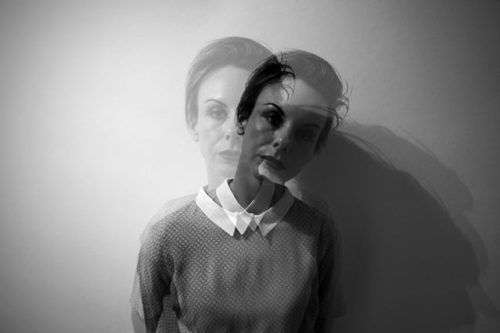

Writing Schizotypal Personality Disorder

Frequently confused with schizophrenia, Schizotypal Personality Disorder (STPD) is a schizophrenia spectrum disorder that manifests as an extremely odd or eccentric personality type, with strong social anxiety and unpopular beliefs. The characteristic feature of it is an unwillingness or inability to engage in close social bonds such as friendships. This article looks at how to write engaging and believable characters with STPD.

The concept of a “schizophrenia spectrum” is relatively new and the precise boundaries between the various stages on this spectrum are not yet perfectly clear. One way of thinking of STPD is as a less debilitating and destructive form of schizophrenia. STPD is a Cluster A personality disorder, which means that people with the condition broadly come across as odd or eccentric, but not particularly dangerous or anxious.

Despite affecting around 3% of the population (and a higher percentage in males), so that almost everyone will have met someone with it, STPD is not a well-known condition. A character with STPD might be conspicuous on account of odd habits when it comes to speech or dress. They might mumble and speak vaguely and imprecisely, and they might wear highly unfashionable clothing or styles of clothing without thinking it amiss.

Some theories consider that there are two different forms of schizotypal personality disorder, one which is passive and one which is active. These are called insipid and timorous schizotypy.

If the protagonist of your story encounters an insipid schizotypal person, they might have difficulty with that person’s strange and absent way of being. Sometimes this sort of schizotypy can come across as vacant, as if the person inside was without emotion. If your protagonist is not a worldly type they might mistake a character with STPD for being on heavy drugs.

The protagonist of your story might want to make friends with a character who has a condition like this, only to be constantly frustrated. The other character might have decided as a general rule that other people don’t like them and so it’s not really worth trying to be friends with them, and so they are not interested in a friendship with your protagonist. Your protagonist might try several ways to overcome this social reticence, and may or may not succeed.

People who are timorous schizotypal are likely to create a different set of problems. This version of schizotypy is more active, which means that it is more likely to present as hostility and paranoia. Although a character with this condition is not likely to become aggressive, they are still likely to exhibit much of the suspicion, wariness and hostility that other people often mistake for aggression.

If the protagonist of your story has schizotypal personality disorder, they might find that other people can’t tell the difference between them and a schizophrenic. It is possible that a person with schizotypal personality disorder is not much different from the characters around them, but that this difference is still enough to cause their ostracisation.

As might be guessed from the above descriptions, people who have STPD often have related conditions, such as Paranoid Personality Disorder, Depression or Avoidant Personality Disorder. People with STPD are often genuinely afraid of other people and what those other people might think of them, and this can lead to them becoming paranoid about what other people are saying about them.

A person with STPD might then choose to just stay away from other people so as to not give them a reason to dislike them. A character developing this condition might find themselves discovering more and more reasons for avoiding social contact until they end up becoming a shut in.

Also very common are what are called delusions of reference. This is when a person encounters an event that they interpret as having special meaning just for them. For instance, a character with STPD might hear some advertisement on television and think it’s referring to them specifically, or they might meet a person twice on the same day by total coincidence, and mistake this for being stalked or similar.

Like many of the conditions in this book, schizotypal personality disorder is heavily correlated with early childhood abuse and neglect. There are some theories that suggest that the schizophrenia spectrum, rather than being simply a form of damage, is an adaptation, in which the person afflicted falls into chaos in the hope of reforming in a healthy way, instead of staying hard and risking becoming vicious.

For this reason, the schizotypal personality, like the schizophrenic, often feels hard done by and misunderstood. They might be aware that the usual course of action for a person who has been damaged as badly as them is to become cruel, perhaps vicious, and that their condition has in some sense prevented this. A profound sense of injustice can arise from the reality that their condition will afford a low social status.

*

This article is an excerpt from Writing With The DSM-V (Writing With Psychology Book 5), edited by Vince McLeod and due for release by VJM Publishing in the summer of 2018/19.

Writing Bulimia Nervosa

Bulimia nervosa (usually known as bulimia) is a psychiatric condition characterised by intense bouts of over-eating, followed by a “purge” of some kind. The condition is about nine times more common in women than in men, and is believed to affect 1% of young women at any given time. This article looks at how to write engaging and believable characters with bulimia.

The classic example of bulimic behaviour is to consume an abnormally large amount of food, and then go to the toilet to vomit it all up. It’s worth noting that simply throwing up a lot, even after eating, is not sufficient for a bulimia diagnosis. The throwing up is not the main factor, as the condition is psychological and not physical.

It’s also worth noting that bulimia is very different to anorexia, despite that both conditions are eating disorders caused by a nervous complaint. Bulimics and anorexics share many symptoms, in particular the obsession with food and body image, but there are major differences. Bulimics are often at or near a healthy weight (despite the unhealthiness of much of their activity), and anorexics do not binge eat as a general rule.

If the protagonist of your story encounters another character with bulimia, it might be a matter of slowly coming to the realisation. The character with bulimia might show signs of having thrown up a lot or recently, such as bloodshot, puffy eyes or burst blood vessels in the face. Other physical tell-tale signs are low energy and evidence of self-harm.

Another character might give away signs that they are falling into a pattern of bulimia. An obsession with dietary rules is a common early sign. A character developing bulimia might also develop a set of strict dietary rules that they expect themselves to abide by. These rules might seem obsessional to a second character, but the bulimic character is unlikely to appreciate this sentiment.

These rules are key to understanding the condition. Because consuming fewer calories than one needs to survive is not sustainable in the long-term, the strict dietary rules will inevitably be broken. This doesn’t come with a sense of relief but a sense of horror and shame – feelings so intense that they have to be purged. In this state, vomiting often brings the desired relief.

If the protagonist of your story has bulimia, they are likely to live a very difficult life with a considerable amount of confusion. Thoughts of suicide are common, a symptom of both the condition itself and the difficult life circumstances caused by the condition. Also common are depressive and obsessive-compulsive thoughts, especially self-recrimination and rituals relating to food.

A protagonist with bulimia will probably experience a great deal of anxiety in their everyday life. This is not just because of the condition itself, with the neverending worry and guilt relating to food and body shape. It is also because of the social anxiety that comes with trying to keep their condition a secret. Your protagonist might find themselves telling lies to keep other characters from realising they are bulimic.

A character who develops bulimia may do so on account of exposure to media images that create an idea about what a human body ought to look like. It’s common for teenage girls – especially those who have never previously thought about their bodies as things that sexually attract men – to develop an obsession with what their bodies ought to look like. Bodily self-hate is an inevitable consequence of this for some people.

Some societies that have not yet been exposed to sophisticated and manipulative Western advertising culture find it a shock when they finally are. Many people have been unaware of the possibility of hating their own body on account of it being the “wrong shape”. Some cultures are naive when it comes to lies and lying, and are more easily affected by them. These cultures can see sudden spikes of bulimia rates when this advertising does come.

Like many other psychiatric conditions, bulimia carries an increased risk of depression, anxiety and self-harm. Thoughts like this form an unpleasant positive feedback loop, where the low self-regard puts a person at risk for bulimia and the bulimia causes low self-regard. A character with the condition may not realise that their thoughts are circular. On the other hand, they might be all too aware, and start losing sanity.

Also like other psychiatric conditions, there is a body of literature that suggests a strong correlation between having bulimia and early childhood abuse, in this case sexual. It’s possible that the trauma of sexual abuse leads to some difficulty in handling thoughts and feelings related to one’s own sexual attractiveness.

Bulimia is, along with anorexia and schizophrenia, one of the psychiatric conditions most likely to end in suicide. It is easily possible that such a fate will await a bulimic character in your story – after all, the average woman can no easier look like a photomodel than the average man can look like Schwarzenegger. However, like most mental illnesses, the majority of people with bulimia find some way to accommodate it in their lives.

*

This article is an excerpt from Writing With The DSM-V (Writing With Psychology Book 5), edited by Vince McLeod and due for release by VJM Publishing in the summer of 2018/19.