
Bernardo Kastrup Is The Nikolaus Copernicus Of Our Time

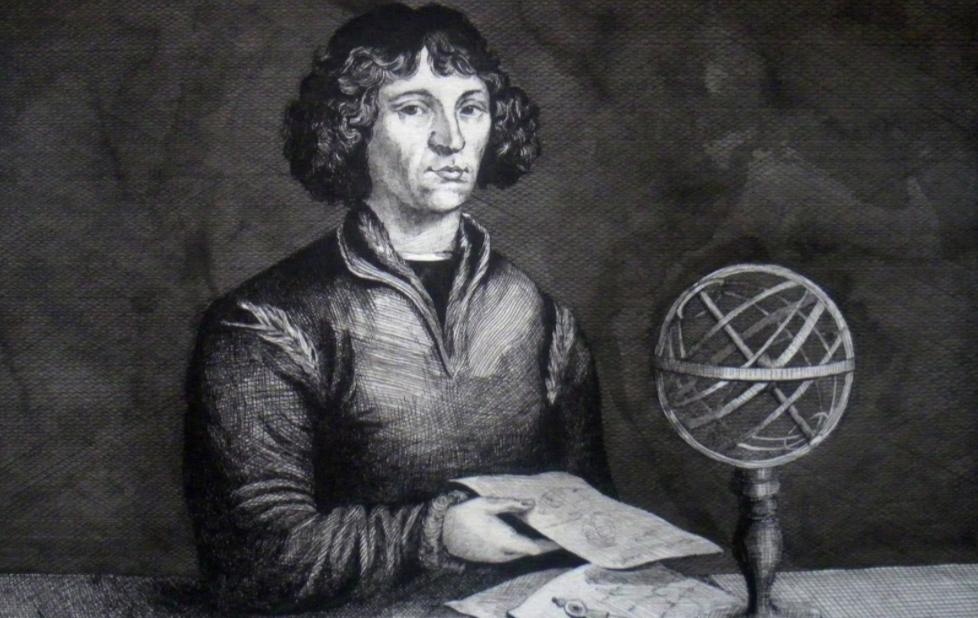
The Polish astronomer Nikolaus Copernicus is remembered as one of the greatest scientists of all time. The publication of his On the Revolutions of the Celestial Spheres declared, in contradiction to the assertions of the authorities of the day, that the Earth and the other planets revolved around the Sun. This heliocentric theory caused such a change in thought that it was later dubbed the Copernican Revolution.

Up until Copernicus, Western astronomers had followed what was called the Ptolemaic model. Otherwise known as geocentrism, this model asserts that the Sun revolves around the Earth. The Ptolemaic model accorded with the religious dogma of the day – that the Earth was the centre of the Universe – but had trouble accounting for some of the observed phenomena. This led to an ever-more complicated set of apologetics involving epicycles and other distractions.

Copernicus, however, was not the first person, or even the first Westerner, to realise that the Earth rotated around the Sun. The ancient Greek philosopher Aristarchus figured it out 2,300 years ago, only for this knowledge to be mostly lost when Christians destroyed Western Europe at the onset of the Dark Ages.

Heliocentrism was, for many centuries, an occult secret, one that could not be spoken openly for fear of persecution by religious fanatics. Giordano Bruno was burnt at the stake for promulgating the theory, and Galilei Galileo was put under house arrest for the same. Contradicting the Church, when the Church claims to speak for God, is blasphemy.

That the Sun is the center of the Solar System was not the only thing forgotten by the Christian Dark Ages.

Bernardo Kastrup is a Dutch philosopher and computer scientist who has risen to prominence recently for his theory of metaphysical idealism. Kastrup’s theory of reality is summarised in his second Ph.D thesis, where he writes: “there is only cosmic consciousness.”

Kastrup’s theory is detailed, but to summarise crudely, he asserts that consciousness is the prima materia, and all other phenomena arise from consciousness. Many have made similar assertions, but Kastrup’s brilliance lies in his ability to systemically and concisely refute the assertions of materialists. Kastrup’s philosophy has shown that materialism makes no sense.

Much like the truth of heliocentrism, it was also known to the ancients that consciousness is the prima materia. This is a truth expressed by the First Hermetic Principle, otherwise known as the Principle of Mentalism, which states simply: “All is Mind”. It is also expressed in the Bhagavad Gita, in passages such as “never have you existed not”.

It was, more particularly, a truth known to all the initiates of the Eleusinian Mysteries. They understood that, as Persephone entered into Hades and then returned to the world above, so too has the consciousness of each one of us entered into the Hades of the material world, only for it to inevitably return again to the world above after the death of our physical bodies.

The true spiritual and intellectual elite of the world have always known that the Earth revolved around the Sun – it was just impossible to say this because it contradicted the dogma of the authorities of the day. Copernicus’s genius was that he was able to describe the truth in a logical and mathematical manner that could not be denied.

The true spiritual and intellectual elite of the world have also always known that consciousness is the prima materia. It has also been impossible to say this because it has also contradicted the dogma of the authorities of the day. Bernardo Kastrup has likewise described the truth about the primacy of consciousness in a way that is hard to argue against.

Ultimately, Copernicus’s gift to the world was to remind us that the darkness of Earth was not the prime reality, but rather the light of the Sun. Kastrup’s gift might be similar, in that he has reminded us that the darkness of the material is not the prime reality, but rather the light of consciousness.

*

If you enjoyed reading this essay/article, you can get a compilation of the Best VJMP Essays and Articles of 2019 from Amazon for Kindle or Amazon for CreateSpace (for international readers), or TradeMe (for Kiwis). A compilation of the Best VJMP Essays and Articles of 2018 and the Best VJMP Essays and Articles of 2017 are also available.

*

If you would like to support our work in other ways, please consider subscribing to our SubscribeStar fund. Even better, buy any one of our books!
The 24 Powers Before The Throne

The following essay expounds an alt-centrist way of conceptualising political space. The fundamental idea is that the Will of the Divine rules over all the material world, and before this mighty Will stand 24 governors, each one of which corresponds to one of the elementary political positions.

The original conception of political space speaks of a monarchist right and a republican left. This conception dates back to the French Revolution and the composition of the then government, in which supporters of the monarchy sat on the right wing of the French National Assembly while supporters of reform sat on the left wing.

Making the crudest possible distinction, political space is divided into a right wing that wishes to maintain power and privilege and a left wing that wants power and privilege redistributed. These two wings, along with the centre that tries to get them to co-operate, constitute the first three powers before the throne.

In modern Western democracies, this post-monarchical arrangement has evolved into the Establishment. Today, the entirety of the leadership of both the left and the right is comprised of the same ruling class that leads the centre. Economic imperatives have overridden all other concerns; status quo or change matters not at all.

In response to this oligarchical arrangement has risen the anti-Establishment. It first arose in the form of the alternative right that took control of Central Europe after World War I. In the aftermath of World War II rose the alternative left, which currently exerts more social power than any other position. Today the alternative centre is rising.

This political hexad (of the Establishment, the anti-Establishment, and the three divisions of each) has been discussed at length in The Five Rejections and The Five Acceptances. It constitutes the basic foundation of alt centrist thought.

Each of these six positions can themselves be divided into four attitudes. These attitudes answer the two basic political questions, which are essentially: who gets it? and how hard?

Answering the question of “who gets it” divides the six positions into two further positions each: nationalists and globalists.

The nationalists are those who identify with a particular nation, and who believe that the nation is the natural organisational unit of the world stage. They believe that benefits such as welfare ought to be reserved for members of the nation, and that questions around immigration and defence ought to be settled with a view to the benefit of the nation. In short, they believe that only the nation should “get it” (the rewards of the nation’s operation).

The globalists believe that anyone can get it. Globalists have no time for the argument that the resources of the nation belong to the nation. Their position is that any resource, anywhere, is the property of whoever pays to own it. That anyone risked their lives defending those resources in the past is irrelevant. Globalists owe no loyalty to any land or nation.

The majority of the Establishment is globalist right now, but that isn’t inevitable. There are nationalist sentiments within all three Establishment positions – the monarchist right considers itself the representative of its nation, the working-class left wants national borders to prevent the importation of cheap labour from driving down wages, and the rent-seeking centre wants to lock down the national market against foreign competition.

Answering the question of “how hard do they get it” divides the above twelve positions into two further positions each: authoritarians and libertarians.

The authoritarians argue that people ought to get it hard. They don’t care about freedom as a virtue. Authoritarians tend to be verticalists, in that they believe the natural organisational model of the human species is a dominance hierarchy in which the upper ranks have complete authority over the lower ones.

The libertarians, by contrast, argue that the government ought to be gentle. They believe that authoritarianism is inherently unstable because it provokes resentment which leads to disorder. Libertarians are morally appalled by complete authority over other people, and therefore they don’t believe in banning things such as cannabis or homosexuality.

So within all of the six political positions of alt centrism (Establishment Right, Establishment Left, Establishment Centre, Alternative Right, Alternative Left, Alternative Centre), there are four composite attitudes (Authoritarian Globalist, Authoritarian Nationalist, Libertarian Globalist and Libertarian Nationalist). This gives us a total of 24 different political positions, all vying for control of the state.

These are the 24 powers before the throne. At any given time, in any given jurisdiction, one of these 24 powers will govern.

The ruling power in the West right now is the globalist Establishment, which is an alliance of all of the right, the left and the centre. It is currently transitioning from libertarian to authoritarian as its perceived legitimacy collapses. They are firmly globalist, being an alliance of the victorious anti-nationalist powers of World War II.

The anti-Establishment is all four of authoritarian, libertarian, globalist and nationalist. The authoritarians range from tankies on the left to theocrats on the right. The libertarians are rising in opposition to the increasingly authoritarian measures of the Establishment. The globalists generally think that the Establishment hasn’t done enough to open borders. The nationalists recognise that the vast majority of the Establishment are globalists.

All of these 24 powers have risen and fallen in influence at the various times and places in world history. The course of history could be said to be nothing more than the patterns of that rising and falling.

The authoritarian nationalist anti-Establishment is perhaps best represented by Adolf Hitler’s Nazi movement. They rose in opposition to the strictures of the Treaty of Versailles, and to the globalist Establishment that had imposed them.

The authoritarian globalist anti-Establishment left is perhaps best represented by the Communist and Bolshevik movements that swept the world in the early 20th Century. The authoritarian globalist left has now become part of the Establishment, leading to today’s cancel culture.

VJM Publishing represents libertarian nationalist alt centrism. We are an anti-Establishment collective that repudiates both the weakness of the left and the cruelty of the right, as well as the greed of the globalists and the mindlessness of the authoritarians.

Understanding these 24 powers before the throne is the key to understanding the movements of political arena. As some of the powers gain in power, and others lose, the landscape changes.

*

If you enjoyed reading this essay/article, you can get a compilation of the Best VJMP Essays and Articles of 2019 from Amazon for Kindle or Amazon for CreateSpace (for international readers), or TradeMe (for Kiwis). A compilation of the Best VJMP Essays and Articles of 2018 and the Best VJMP Essays and Articles of 2017 are also available.

*

If you would like to support our work in other ways, please consider subscribing to our SubscribeStar fund. Even better, buy any one of our books!
Our Great War Is A Spiritual War

Brad Pitt summarised the challenges facing the Western World in the 1999 film Fight Club, when his character Tyler Durden said: “We’re the middle children of history, men. No purpose or place. We have no Great War. No Great Depression. Our Great War’s a spiritual war… our Great Depression is our lives.” 22 years later, our Great War is still a spiritual war.

There exists a supercosmic spiritual force that wills suffering upon all conscious beings. This nameless Principle of Evil has inspired countless acts of sadism throughout the ages. It is at work everywhere a person acts with malice or indifference towards the suffering of their fellows.

This Principle of Evil is in eternal conflict with the Principle of Good, which seeks to alleviate the suffering of all conscious beings. The two are locked in a Great Spiritual War, one which profoundly affects the lives of every creature. The Principle of Evil seeks to cause those creatures to suffer, and the Principle of Good seeks to counter the Principle of Evil.

The influence of this Principle of Evil, as Solzhenitsyn understood, runs through the heart of every human being. It is not exclusive to any gender, race, nation, occupation or creed (although some creeds, such as the Abrahamic cults, worship the Principle of Evil and its demons). Therefore, this spiritual war is fought everywhere, in all times and places.

Every conscious being is conscripted into the war against this Principle of Evil, which seeks to cause them suffering. The easiest way for the Principle of Evil to cause suffering is by provoking passions. Every impulse felt by any conscious being creates a conflict: between the will to gratify that desire, and the will to alleviate suffering.

One of the main theatres of the Great Spiritual War involves keeping people ignorant about the spiritual truths of reality.

As Socrates and Buddha both laboured to point out, suffering is primarily caused by ignorance. The most effective way for the Principle of Evil to increase the suffering in the world is to spread ignorance, because ignorance empowers the passions. There are two main ways to spread ignorance: denying the truth, and asserting falsehoods.

Denying the truth involves denying the spiritual truths. The followers of the Principle of Evil deny the fundamental all-rightness of the Universe. They also deny the Law of Assortative Reincarnation. These two denials lead to extreme anxiety among those who are influenced to agree with them.

Asserting falsehood involves inserting lies in the space vacated by the destruction of the truth. The followers of the Principle of Evil do this by asserting things such as “Jesus Christ is God”, or “the brain generates consciousness”. These falsehoods serve to mislead people who might be searching for spiritual truths.

The combined result of denying the truth and asserting falsehood is mass spiritual confusion. The Principle of Evil preys on this confusion by tricking people into giving their power away. Once enslaved, they can be made to suffer without being able to resist.

One of the fronts of this theatre of spiritual warfare involves the legal status of spiritual sacraments.

The followers of the Principle of Evil are aware that people have used spiritual sacraments, such as cannabis and psilocybin mushrooms, for thousands of years to reconnect with the divine. In places such as India, where the native spiritual traditions were not eradicated by Abrahamic invaders, cannabis is still used as a spiritual sacrament.

In order to increase the amount of suffering in the world, then, the followers of the Principle of Evil have acted to destroy all genuine spiritual traditions. This is why they murdered Pythagoras and Hypatia, and it’s why they destroyed the Eleusianian Mysteries and the Library of Alexandria. It’s why their colonists have assiduously attacked the native spiritual traditions of every land they settled in.

This is also why Christians and Muslims came together to oppose cannabis law reform in New Zealand last year. By destroying the possibility of using cannabis as a spiritual sacrament, they worked to maximise the spiritual ignorance in New Zealand, and thereby the suffering. Abrahamists may spend a lot of time killing each other, but they’re capable of co-operating if the common objective is to attack ordinary people.

Victory in the Great Spiritual War entails the eradication of all Abrahamic traditions from the face of the Earth. This would result in the total defeat of the Principle of Evil, who, without worshippers, would be powerless to increase the suffering in the world. At that point, a new spiritual Golden Age would begin.

The first step is to reassert our freedom to use spiritual sacraments to reconnect with the divine. The truth – that cannabis, psilocybin and various other substances are spiritual sacraments – must be spoken widely once again. Their open, ritual use must retake a centre stage in our civic life.

With our natural connection to the divine re-established, we will once more come to act in accordance with the Will of God. This will lead to the minimisation of suffering in the world.

*

If you enjoyed reading this essay/article, you can get a compilation of the Best VJMP Essays and Articles of 2019 from Amazon for Kindle or Amazon for CreateSpace (for international readers), or TradeMe (for Kiwis). A compilation of the Best VJMP Essays and Articles of 2018 and the Best VJMP Essays and Articles of 2017 are also available.

*

If you would like to support our work in other ways, please consider subscribing to our SubscribeStar fund. Even better, buy any one of our books!

How The Television News Works

The six o’clock television news is the single most powerful force in existence for manipulating public opinion. At no other time during the day are so many people tuned into one single source of information. This unique dominance means that whatever is spoken about on The News is spoken about at work the next day. The News sets the agenda.

The sad, bitter truth is that The News is not, in any sense, a genuine effort to inform honestly about the issues of the day. The News is, and always has been, propaganda, i.e. an effort to regiment the minds of the public and to persuade them to consent to certain actions.

This propaganda is put together by the television programmers – exceptionally skilled psychologists who order the segments of the television shows to achieve the best effect. Here, “best effect” is defined as whatever is desired by the beneficiaries of the programming – the corporate interests who buy the advertising.

The television news is a simple work, but it’s possibly the most effective and powerful one on Earth, if one measures how many people are affected by it. The work occurs in two phases: the first is when the viewer is made to feel tension by watching a news bulletin, and the second is when the viewer is given relief from the tension by watching an advertisement.

The news bulletins themselves are of two kinds.

The first sells fear. In this category are stories about rising Chinese military power, global climate change, Islamic terrorism and financial collapse. The News usually leads with one of these stories, to set the tone. Once the viewer is made afraid, the television programmer can then double down on the fear.

The second sells anger. In this category are stories about lesser humans getting away with it, such as dark-skinned people getting light sentences for violence or sex crimes, or welfare increases, or a lower-class person questioning whatever their society’s noble lie is (in our case, the noble lie is equalitarianism).

The advertisements can be anything, but their common characteristic is that they relieve the fear and anger generated in the previous phase. To this end, it doesn’t matter if the advertisements are selling power, leisure, excitement, style, class, friendship or any other emotion. They only have to release the tension built up in the first phase.

So long as the advertisement causes the body to release tension, natural physiology will lead to that person forming a positive association with whatever product is displayed at the same time. Even if only at a subconscious level, the person watching The News comes to associate the product advertised with a decrease in anxiety and stress. Having formed such an association, the viewer is effectively programmed to behave in a way that benefits the advertiser (usually by buying their product).

It’s all but impossible to avoid being programmed in this manner if one watches television. The only way to escape is to not react emotionally to anything displayed on the screen.

The usual result of such programming is that, when a person is at the supermarket and sees a product that was advertised during The News, they recall the pleasant, relaxed feeling that they felt during the advertisement and associates that with the product in front of them. This often leads to a sale.

Even if the programming doesn’t cause people to buy a particular product, it achieves a more sinister objective: to regiment the minds of the public.

Most people are far too busy with their everyday lives to conduct a philosophical investigation into what’s right or wrong, so they just go along with the crowd. But they’re also too busy to conduct an accurate and objective survey of what the crowd thinks, so they trust The News to tell them.

The News tells its audience what the issues of the day are, what most people think about those issues and what they should be outraged over. They do this by normalising certain attitudes and by abnormalising others.

For instance, by making a big deal out of race issues, and by prominently featuring people to speak about race issues, The News promotes race consciousness, and normalises viewing the world through a racial lens. At the same time, they minimalise or trivialise class issues, denying class consciousness, and abnormalise viewing the world through a class lens.

The result has been the intensification of race neurosis to race hysteria level. This myopic focus on racism has made it impossible for people to develop the necessary class consciousness to resist the ruling class and its depredations. The television news, by dividing the people up among racial and gender lines, plays a crucial role in destroying that class consciousness.

The television news, then, works by modifying the behaviour of its audience to the benefit of its sponsors. The corporate, banking and financial interests that buy television advertising get to decide how the viewers will be programmed, and then the television programmers schedule their programs to make this possible.

*

If you enjoyed reading this essay/article, you can get a compilation of the Best VJMP Essays and Articles of 2019 from Amazon for Kindle or Amazon for CreateSpace (for international readers), or TradeMe (for Kiwis). A compilation of the Best VJMP Essays and Articles of 2018 and the Best VJMP Essays and Articles of 2017 are also available.

*

If you would like to support our work in other ways, please consider subscribing to our SubscribeStar fund. Even better, buy any one of our books!