The Case For Rejecting The Consensus

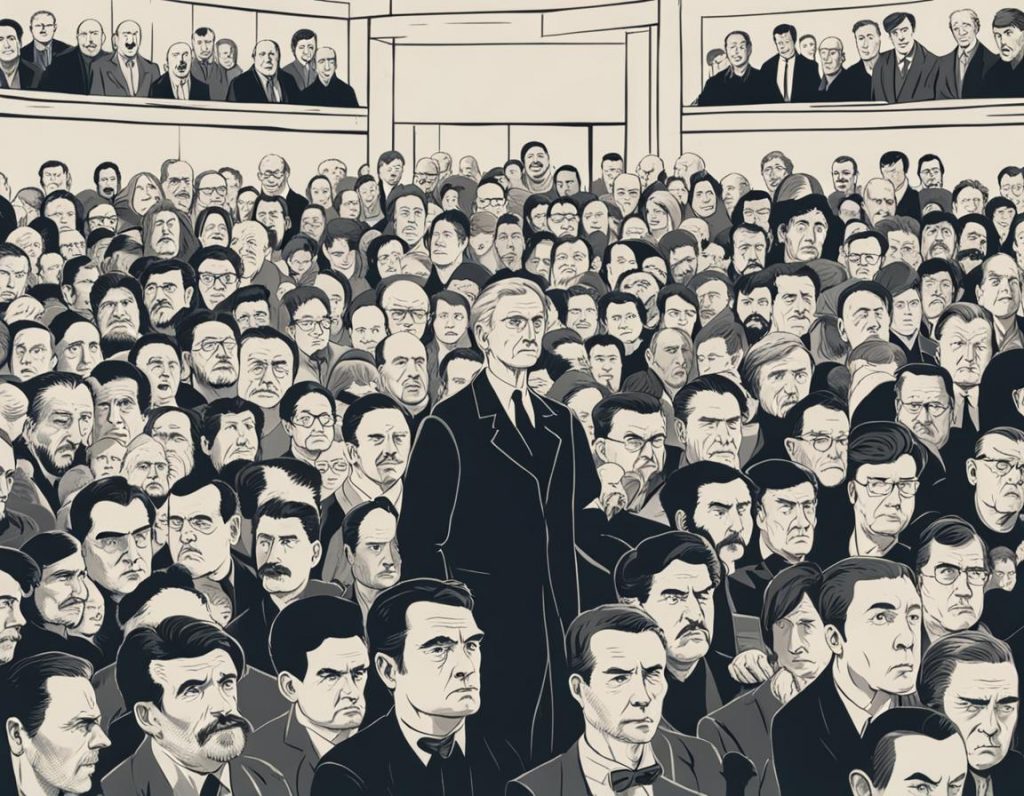
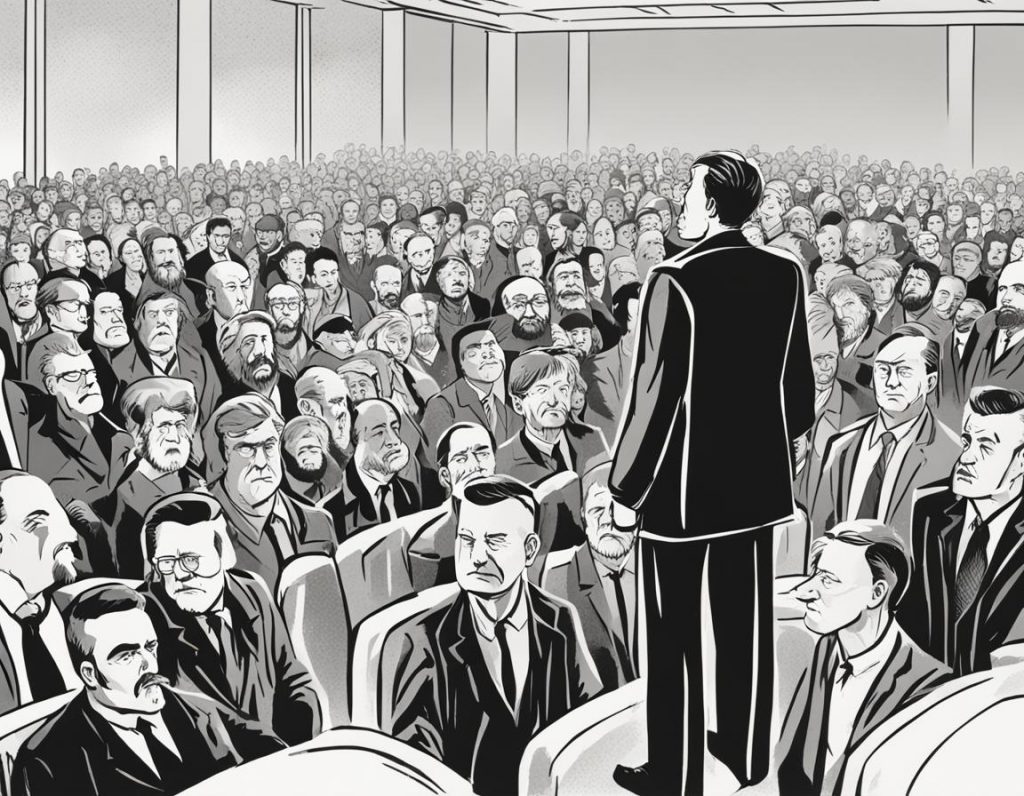
Here, I would like to suggest some reasons why someone might be justified in questioning their tacit, unswerving allegiance to the consensus.

Firstly, did you realise you were in an ongoing agreement? Because you may not have realised this, and you may not have already decided to say ‘no’ and walk away. What would that take? Simply that. Your refusal to continually go into agreement to that which no longer serves you – in your outer life, as well as your inner life. One produces a reflection of the other.

We have wars started by greedy idiots, bloodthirsty zealots and control-hungry ideological fundamentalists. We are brought to question whether we might abstractly agree or disagree that a given group of people could justifiably be blown to pieces, as though this were somehow our call. Your agreement or disagreement here doesn’t matter in order to qualify as insanity; what matters is that you are demanded to be on beck and call to participate​ in the insanity served up to you by a mentally diseased consensus.

The consensus wants to force your hand into playing the game to power the illusion that you were the one choosing it. Your choice to bear witness to all of this is your agreement to it. This happens in the same way a hostage might be forced to dictate the methods of his own torture – as though being invited to weigh your opinion on this narrative represents some kind of fairness, or democracy of mind.

We have political systems which are presented on the presumption of self-evidential necessity. You may choose this stream of madness, or the other – but you must​ choose. Remember that you tacitly agreed to this system, because you were born into it? At least, this is the narrative, as fragile as it is. Even the most benignant and equitable of these are a travesty – you are presented with an ultimate option of choosing one terrible option over another, as though there was no alternative.

This is in the service of democracy, the abstract notion that what is best for you lies in the appearance of having the ‘freedom’ to choose what is best for your region or your nation, when all of the information you are being fed derives from a source with an agenda to exert influence and control. Everything that was ever claimed to go to work on your behalf was an empty promise, a sham.

We are the inheritors of a scientific materialism, which against all true scientific spirit, presumes to dictate the total conditions of the universe at the level of human meaning. Specifically, that there is no possibility of individual or collective human participation in divinity, because we are all simply evolutionary automatons. 

Science is far from objective or disinterested – there is a wider agenda to uphold. Detraction from the mainstream narrative is punished through control of funding and decisions about how much influence you will continue to exert in academia. This is how public talks can justifiably be banned without red faces.

The new paradigm of the evil is named ‘pseudoscience’, although it has born different names as were suitable to the era or context, such as ‘witchcraft’, ‘atheism’, ‘socialism’ – essentially though, all it consists in is ‘the other’. It is the elephant in the room no one wants to discuss because it would undermine the authority of the institution in question.

All that this ‘other’ is ever reminding you of is the simple fact that you can’t ever know for certainty what you think you know – that is all it is, and yet this represents the vital human umbilical connection into the wider spiritual universe.

Our various cultural institutions’ insistence on the rigidity and finality of the knowledge they produce is leading us to squander our multidimensional heritage, our imagination, our shared godhood. What appears to be the groundlessness of epistemic uncertainty is far too subversive to those who pretend to this authority. So, the label ‘pseudoscience ‘is the new brush you will be tarred with if you dare detract from this reactive and emotionally fragile scientific consensus.

These are churches, if you haven’t noticed – there are priests, altars and rules to be followed. Dissent is not appreciated, and while we may no longer burn people at the stake physically, the same consequences can now be effected ruthlessly via social media. Technology has ironically permitted the expansion of ostracism to the digital realms, which are the foreshore of our mental meeting grounds as human collectives.

To adhere to a mindset whereby the majority of people in your culture will turn their backs on a person and say ‘we don’t acknowledge this person anymore’ is not only merely unhealthy, it indicates a collective personality disorder. Refusing to acknowledge a person whom the mainstream collective disapproves of is one of the tallest, broadest and brightest of red flags. It happens in small groups such as family groups and office environments, and it happens in nations – as above, so below. And yet, we retain the freedom to decide as the inheritors of the totality of human culture as to whether such behaviour is worthy to be kept.

The catch is, anything we sleep on is kept automatically. All it takes for the majority to continue to harbour such systemic insanity is to pretend that we don’t suffer from it, thereby immunising it from scrutiny.  Staying asleep then becomes akin to alcohol as the ’cause of’ and ‘solution to’ all of life’s various social ills.

We have a culture in which religious institutions are offered as fictitious oases from an insane materialism, only to discover that you are being thrown out of the frying pan and into the fire. The desire to save your soul and claim you for the eternal turns out to be yet another tentacle operating on the behalf of control and delusion, though flown under the banner of spirituality. The grandiose fantasies of the worldly ego are here offered in the spiritual realm, success, being chosen, included, and living forever as the personal self you know and love. The monotheistic religions reflect all the ego’s madness and self-importance back to it in an imaginary monarchy, which consists in a personal being at the top who variously approves, disapproves, judges, or becomes pleased or angry with you as the mood takes him. Your virtue and worth will be decided by how close you can get to the feet of the king at the expense of others through your various deeds, devotions and cringing prostrations. This is all for your group, the blessed and chosen, while those who have chosen incorrectly, believed wrongly, or failed to meet the standard within your group will be expelled like refuse through a cosmic garbage-chute.

The false promise propping up all of these religious institutions is this one delusional creed: unity through separation. Be better than the others, be better than the other groups. Then you will earn favour, then you will be united, so you had better make sure you beat down all the others. In other words, the spirit realm, as contextualised by the consensus ideocracy, is that if you are well-behaved, then you will be rewarded, but if you are poorly behaved or you have believed incorrectly, you will be punished.

You are either in line, or out of line.

Can you see how the cultural influence from the consensus reveals itself in the projection of the religious? It promises you the favour of an authority who is responsive to your own animal needs, wants and desires, and unresponsive of those whom you deem unworthy or inferior. Could there be a more tantalising ego-trip on offer for the disturbed human animal?

We have a media which enjoys success on the basis of how accurately the content resembles juicy gossip. We are offered these hints of what those individuals who are implied to be far more important than us are doing with their lives such as celebrities, including those we imagine to have sufficient fame and money to have earned freedom and happiness. The more important a person is deemed to be, the less significant the news about them need be in order to warrant publication.

For example, it is more important whether members of royalty are having a minor spat or social disagreement about wearing a certain hat in public than any question of whether you have any personal freedom or satisfaction in your life, from birth to death. Most of what we call ‘news’ is presented as a drama triangle in which you are framed as the victim, in the hope of inflaming your censure toward those framed as the perpetrators.

When slaves were kept, it was a common practice to lure them with the possibility that one day they might be freed by their own efforts. This ensured that they kept up the good work and didn’t lapse into despondency which might eventually collapse into such dense suffering as to spark an inner or outer revolution.

If you want to see how it is the consensus would prefer you to keep acting and thinking, take a look at how they medicate you with empty promises of your eventual success and freedom. These empty promises are on offer at every street corner, in every wing of human society. They are all clamouring for your investment of attention.

Does this sound like a balanced, sane society? Does this sound like a valuable investment of your ongoing input as a free being? What would it take to simply say ‘no’, and walk away from all of this idiocy once and for all – even if this only happened within your own most private inner sanctum?

Perhaps Aristotle was correct in his analysis of man as a political animal, and that humankind will always be bound by social conventions and the need for society in general. The big question however is: are you​ human? If not, what are you? Because if you are not what you think you are, what makes us think it is sensible to reduce our deepest needs to humankind’s needs, to the needs of the animal?

What are the requirements of the soul, what are the values of the true self? Maybe there are none, perhaps consciousness is just a temporary phantom. But how would you ever know unless you first cleared the table before you of all of the clutter?

There may not be very much time left to decide, as the human animal is now engineering intelligences capable of outsmarting itself. Consider the simplicity of the parlour tricks that have led man down the garden path over ages past. What is to come will likely consist in even more powerful demonstrations of illusion and persuasion.

What better time than now to inquire into the truth of who you are?

*

Simon P Murphy is a Nelson-based esotericist and philosopher, and author of His Master’s Wretched Organ, an astonishing and surreal collection of weird fiction stories.

*

If you enjoyed reading this piece, buy a compilation of our best pieces from previous years!

Best VJMP Essays and Articles of 2023
Best VJMP Essays and Articles of 2022
Best VJMP Essays and Articles of 2021
Best VJMP Essays and Articles of 2020
Best VJMP Essays and Articles of 2019
Best VJMP Essays and Articles of 2018
Best VJMP Essays and Articles of 2017

*

If you would like to support our work in other ways, make a donation to our Paypal! Even better, buy any one of our books!
The Drop Of The Penny

by Simon P. Murphy

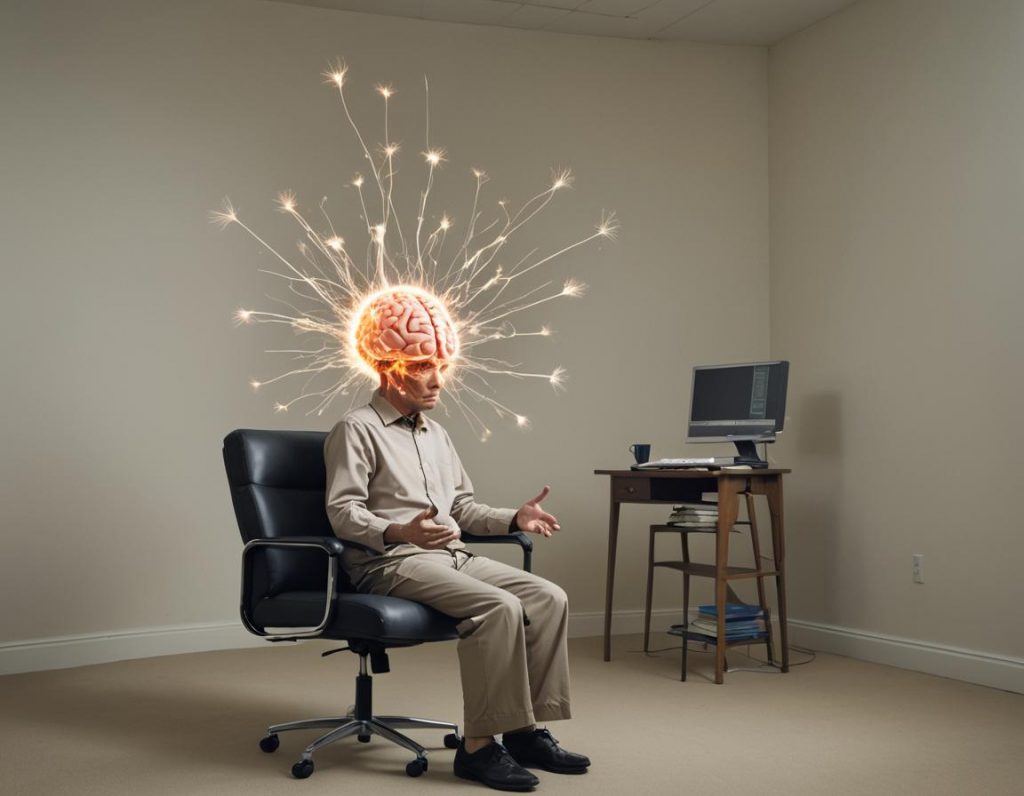
There is a trajectory within you like a hunger. That hunger is the drive to reconnect with what is true. It is not about belief, simple or complex, and is not about being holy or righteous. It is about one thing only – seeing clearly, and revealing that which is true and whole. Another way of putting this is that it is the drive to come to the full conclusion of your existential seeking.

Why would someone be averse to seeing clearly? Because usually, there is a whole raft of illusion at stake. If you chose to see clearly, through inner eyes unfettered by illusion, you might discover that what you have invested years into will someday end, despite your best efforts to the contrary. You might see that the knowledge will disappear, or the money, the health, the relationships, the career, the house, the identities, the religious or philosophical commitments. Why else would something feel fragile or impermanent, unless it carried within it the promise of its ending?  Why would it not feel like inherently immutable truth?

That is something we often choose not to look at, because it tends to render the scope of the illusion far less satisfactory than it already is. If we found ourselves examining the contents of our inner lives, which consist in the relationship we have with our illusions and what we think they afford us, we might find all of our illusions quite rapidly deteriorating or becoming displaced. And who would want that?

Interestingly, the part of us that is real actually wants that. Not to get rid of what is around us – but to critically examine our relationship to everything we hold to be real,  permanent and meaningful in order to make space for what is actually real to shine through our inner world. That is basically the entire spiritual project in a nutshell – the discovery, sudden or gradual, that there is not one true thought.

What is real that shines through has a curious origin – we are responsible for none of it. We can choose to be instrumental to its coming forth. This is where the sense of existential dissatisfaction and dislocation in life issues from – not from being alone, not from not belonging, or not knowing or believing the right things, but from having not been willing to see how things are clearly. This asks that we meet all the things that we have been responsible for. All of our choices, all of our beliefs, our cultural creations that we have been party to, all that was formed out of darkness in the strange refusal to look at who and what we truly are in our essence.

Most everyone would prefer to be told who and what they are in their essence, because that is simply the way that humans have become accustomed to living a conditioned life. We are used to being told who and what we are by our various cultural institutions, and then moving ahead with our lives. Those sources have presumed to give us everything we thought we needed by giving us what we are ultimately not – our names, roles, etc. The Truth of who you are, however, isn’t like that at all – not in the slightest. You absolutely cannot be told who you are, nor can you be given who you are. You also cannot have a belief so sophisticated or clearly refined that would provide the detail of who you are in a neat envelope.

There is a way of knowing for certain that you have not met the vital recognition of who and what you are in truth. It will be this: the question of who you are will continue to have some appeal to you. In other words, you want to know who you are, because you are under the impression that you don’t already know. The reason for this is simple: absolutely nothing else in your life has been able to tell you what you are with any degree of satisfaction. When you know who you are in truth, the question has fallen away completely- you have no question to ask about who you are – period. That is how you will know. No one alive has partial knowledge as to who they are; they either know who they are at this level, or they don’t.

The next question is: now that you know that you don’t know, that you have not yet met the recognition of who and what you truly are, what do you want to do with that?

Chances are, it will be one of the following – either you don’t want to look at it just yet, in which case you probably will not have read this far, or, you are so hungry to know the truth of who you are, that you are willing to push ahead in your integrity, even if it might mean losing everything that you know. Because after all, if you don’t know who you are, how much of your inner or outer world can you be certain is illusion? How much can you really say for certain will remain or fall away as a result of your discovery of your true identity?

If you are like most people, including myself, you will have gone a lifetime of feeling a sense of grave unease about not being sure of who you are, to a greater or lesser degree. You will have attempted to establish it through many courses of action which haven’t quite settled the matter. All of these ways have been tried before by people of all times and places, and without effect. This is because there is only one certain way of settling the whole question once and for all, and that is by coming to a true meeting with who and what you are.

Discovery of who you are is a milestone of what we might call spiritual evolution. It doesn’t begin there, and it certainly doesn’t end there – but it is the vital step forward. I like to frame this discovery to the drop of the penny. The penny drops, a realisation is forged, and a connection that wasn’t made before in this life suddenly clicks into place, and you can never, ever see the world or your place in it quite the same way as you did before. This experience will leave you altered, even if you do your best to forget it ever happened. There is also no guarantee whatsoever that your life will turn out great or awful as a result of this discovery- but you do have to decide how much you want to know, because the fact is, it could cost you everything.

It cost you your personal future, it could certainly cost relationships, and it could cost everything you thought you knew was real. The question is: just how much are you willing to know who you are? What is the deepest calling guiding you? For myself, there were certain moments in my childhood that led me on  paths of discovery that gave me a hunger to know who I was that in some ways seemed almost an inevitable collision course. But that only relates to me. What about you? Can the hunger within you, the divine yearning, be set aside for another few years? Or maybe for the rest of your life? Or are you willing to come to the truth of the matter now, in this moment? Is the yearning for self-knowledge diminishing of its own accord, or is it making itself known in more pressing ways?

I truly don’t have anything of value to say to anyone who isn’t genuinely interested in the truth of who we are. There is simply no capacity to help. For my part, there is no sales pitch, there is no ‘ought’ or ‘should’, no prescription for what you should be interested in, nor how you should be managing your life. There is nothing to teach those who aren’t curious.  However, if what you actually feel within yourself is being geared toward waking up into you-don’t-know-what, then what I can tell you is this: in no way can you force this process or make it happen, but you can invite a meeting with your true self. In other words, you can facilitate a space within yourself, your inner being, to become available to that which is living and true, that which has always been ready and available if we were simply to take the time to look and listen with an attitude of open attention.

What will happen, with time, is a true meeting with yourself. How that will look, I cannot tell you. In my own experience, I can tell you that there is an encounter with Being possible that is dependent on no time, no thought, no belief, no self. When you meet this for the very first time, after even a second you will no longer question the nature of who and what you truly are. The penny will have dropped, and all of the abstract and philosophical questions about your being you once found so ineluctable, so pressing, so heavy and urgent, simply cease, like engines which have been exhausted of fuel. All of the momentum of your endlessly tiring self seeking and self definition simply ends, and you probably never realised just how desperate and tiring it all was, until the relief of it ending – at which point, there is usually years worth of psychological mess to clean up.

You are suddenly in completely new territory. You come to ask yourself new questions, such as “what happens to my energy and attention that has gone into this absurd, erroneous pursuit?”

You may be surprised to find just how much of that energy was allocated into the seeking of your true identity via fictionalised structures. How many of your life choices have consisted in some version of “I will invest in this because this will tell me who I am, as well as show others who I think I am or how I want others to perceive me”. What if the very bssis for those kinds of investment of energy, the sense of derived identity, were very suddenly gone, like the floor taken out from underneath you? You have to understand that to thoroughly reveal your identity is a life-altering event, some might even say a catastrophic spiritual and psychological event. Once the horse has bolted, there is absolutely no putting it back, for better or for worse. However, if you look closely enough within yourself, you will know exactly how much this discovery really means to you. You will know what price you would be willing to pay.

To discover who you are can leave you with a lifetime of cleaning up the inner and outer detritus. The great news is that the energy from every illusion you ever invested in, every inner scam, is returned to you and becomes fuel for the glowing fire of your awareness. Nothing real can be lost, only illusion can fall away – and eventually it will anyway, with physical death. All it takes for you to discover the truth of your being now is your willingness to take that first step into the unknown. You aren’t even coming into something new. The strange thing about this experience is that it is a re-membering. You are pooling together once more the parts of you that somehow became divided. You are certainly not adding something new; you are removing something that has served as an obstacle to that which was always already here and available. It is not complicated, it is simple. Complexity and simplicity are like directions in self-inquiry. If you follow complexity further, you are moving further away from the truth. If you are following the direction of simplicity, you are always moving closer toward truth, being the recognition of that which is already here in unity and wholeness.

There are many who have gone before you, as there are many who are making the same journey now. The encouragement I would give is this: the only thing you will ever have to lose is that which you aren’t going to keep anyway.

*

Simon P Murphy is a Nelson-based esotericist and philosopher, and author of His Master’s Wretched Organ, an astonishing and surreal collection of weird fiction stories.

*

If you enjoyed reading this essay/article, you can get a compilation of the Best VJMP Essays and Articles from 2021 from Amazon as a Kindle ebook or paperback. Compilations of the Best VJMP Essays and Articles of 2020, the Best VJMP Essays and Articles of 2019, the Best VJMP Essays and Articles of 2018 and the Best VJMP Essays and Articles of 2017 are also available.

*

If you would like to support our work in other ways, subscribe to our SubscribeStar fund, or make a donation to our Paypal! Even better, buy any one of our books!

Why People Aren’t Willing To Fight

The war drums are beating, and everyone can hear them. The Western powers are arraying themselves for a cataclysmic showdown with the Eurasian axis of Russia, Iran and China. This means they’re going to be looking for cannon fodder to help them kill Russians, Iranians and Chinese people. But it won’t be as simple as previous times.

The glib assumption made by the Western ruling class is that they can declare an eternal war against their Russian, Iranian and Chinese foes, and simply draft young Westerners to fight it. This is what they have done in previous wars, and it worked out great for them. Today’s ruling class, however, have lost touch with reality somewhat: they don’t realise that many of the old rules of mass manipulation no longer apply.

Recent mainstream media propaganda has pushed the concept of conscription on us. This has been especially true in Britain and in Australia. But the Establishment was not prepared for the reaction from the populace. Many young people (not just VJM Publishing) have expressed an extreme unwillingness to allow themselves to get conscripted to fight for the West.

Why?

Most young people today feel like the social contract has been broken. The intergenerational social contract, as has been understood for centuries, was that each generation leaves the following generation a better society, in return for getting a decent pension from that society. The elders were respected and given a cut of society’s proceeds because they had left a quality standard of living to the next generation.

Today’s young people aren’t getting a better society. By most honest measures of wealth and well-being, young people today are doing much worse than the Boomers did, sometimes several times worse. This is especially true when it comes to housing: young people today have to put in about four times as much effort to own a house. The Boomers are now extorting the younger generations to the maximum.

On top of that, the Boomers are mass importing cheap labour to compete with the Boomers’ own descendants on housing and wages. So those descendants are finding themselves having to scrap with half of the Third World just to get a quarter of what their parents had. It’s a rotten deal by any fair analysis.

So now many young people are saying to themselves: if the social contract was never upheld for us, why should we uphold it for anyone else? Why fight for an arrangement where we’re little better than slaves, sentenced to pay off mortgage debts to Boomers until we’re decrepit ourselves?

Why fight for a system that’s rigged against us? Young people in the trenches against China wouldn’t be fighting for a system that gave them a better chance of owning a house and raising a family than the Chinese system, but the opposite (the homeownership rate in China is close to 90%). They’d be fighting for a system of usurious enslavement that sought to suck the life energy not only from them but from their descendants for generations to come.

No young Westerner can, with a clean conscience, support the system that has enslaved them. It follows that they would only fight for it under the most extreme form of duress. Given the extent of the fragging that existed near the end of the Vietnam War, the ruling class could rightly be concerned that something similar would happen again if they brought conscription back, only on a bigger scale.

Moreover, some are asking: Fight for what?

It’s no longer clear that we even have nations anymore, at least not in the way that we’re used to thinking about them. The advent of multiculturalism has meant that the old in-group boundaries are now very fluid. The countries our ancestors fought for are now very different – some would argue categorically different.

Most young Westerners now understand that they’re being replaced by Third World cheap labour, and that this replacement is not a natural phenomenon. Rather, it is deliberately being orchestrated by the Western ruling class for profit. So what would we be fighting for in the case of getting conscripted to kill Russians? A McNation of cheap labour imports? An economic zone ruled by an ideology of “every man for himself” economics?

Our families would be better off if we didn’t go to war. The only beneficiaries of war today are the globalists who would not only get to destroy their rivals, but who would also profiteer from the killing. Realising this en masse, young people are no longer willing to fight as previous generations had been.

Some of the unwillingness to fight can be attributed to the influence of alternative media. For decades now, alternative media outlets devoted to the fight against evil have served to educate the public about the workings of the ruling class, and how they manipulate the rest of us into doing their bidding. VJM Publishing has been among those, and we will continue to do what we can to enlighten people about how the warmongers manipulate them into battle.

*

For more of VJM’s ideas, see his work on other platforms!
For even more of VJM’s ideas, buy one of his books!

*

If you enjoyed reading this essay/article, you can get a compilation of the Best VJMP Essays and Articles from 2021 from Amazon as a Kindle ebook or paperback. Compilations of the Best VJMP Essays and Articles of 2020, the Best VJMP Essays and Articles of 2019, the Best VJMP Essays and Articles of 2018 and the Best VJMP Essays and Articles of 2017 are also available.

*

If you would like to support our work in other ways, subscribe to our SubscribeStar fund, or make a donation to our Paypal! Even better, buy any one of our books!
The Spectrum Of Slavery

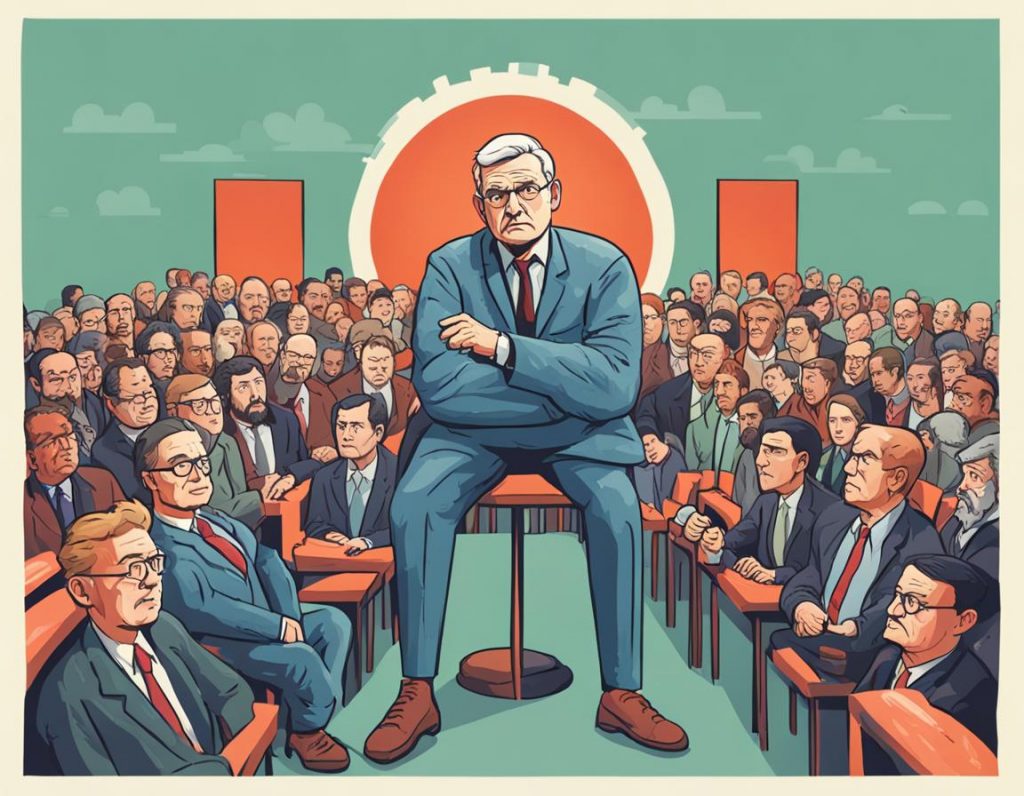
This essay claims that all people can be placed on a spectrum, wherein their point on that spectrum reflects how much of a slave they are. The totally enslaved are at the top, whereas the truly free are at the bottom. The exact position of any given person is primarily a matter of how much economic duress they are under.

Economic duress is a legal term, defined in such a way that the ruling class is almost never guilty of it. But, in practice, everyone not born into property ownership is subject to a kind of economic duress. The more extreme forms of it are slavery by another name – the term ‘wage slavery’ is not a complete exaggeration.

“Do this or I kill you” is maximum duress. This is the mainstream conception of slavery, inherited from the American plantation experience. It’s true that being forced to obey orders on pain of death is as extreme as duress can get. Someone at this level is at the very top of the spectrum of slavery.

Unbeknownst to many, slavery in other times and places wasn’t quite as awful thanks to the absence of the chattel aspect. There were often rules limiting the extent to which a slave owner could abuse their slaves (n.b. this is not a defence of slavery but an explication of the degrees of it).

“Do this or you will miss your rent, get kicked out into the street and die” is a high level of duress. Getting kicked out of your apartment is better than being killed, but it’s still a deeply unpleasant and stressful experience. If you have to keep working otherwise you get evicted, you don’t have a strong negotiating position.

Same with “Do this or I’ll replace you with some cheap labour”. The position of the employer in the West of 2023 might not be quite as strong as that of the plantation owner in the American South of 1850, but it’s almost as strong, for supply-side reasons. The Western worker of 2023 knows that he better not ask for raises to match inflation when there are a thousand Third Worlders lined up to replace him.

“Do this or you’ll have to look for another job” is no threat when the economy is humming and there are plenty of good employers willing to pay decent wages. When the economy is doing badly, it’s a significant level of duress. In a good economy looking for a new job is a mere hassle. In a bad economy, it raises the spectre of homelessness.

An actual free person, under no economic duress, can meet their needs for food, shelter and clothing without needing to obey an employer for money. This is the bottom of the spectrum of slavery, and surprisingly few people are here.

The simple rule is that anything improving the negotiating position of the worker decreases the extent of duress they are under, and moves them down the slavery spectrum towards free people.

Note that the more duress the worker is under, the greater the profits. This is why there is never a free market for labour. The ruling class will always try to put the working class under as much duress as possible, because this will suboptimalise the working class’s negotating position and optimalise the employer class’s negotiating position, thereby maximising ruling class profit and control.

If the worker needs the job or they will starve, it’s possible to negotiate them down to a minimum. Similar if they need to feed a family or pay a mortgage. Imagine, by contrast, that the worker wins $10 million in the lottery. Do they still need your job? Maybe not. If someone has $10 million sitting in the bank you can be sure that they only work because they want to.

Increasing the supply of labour weakens the negotiating position of the worker and thereby drives them towards slavery. Likewise, decreasing demand for labour (through e.g. raising interest rates) also drives the worker towards slavery.

Decreasing the supply of labour strengthens the negotiating position of the worker and thereby aids them towards freedom. Likewise, increasing demand for labour (through e.g. raising wages) also drives the worker towards freedom.

A sharp decrease in the supply of labour, such as through the Black Death or World War II, leads to unprecedented prosperity for the remaining workers. Employers are forced to pay a high wage because they have so few options.

Thus it can be seen that the intent of allowing mass immigration is not to create freedom for foreign workers but to deny it to domestic ones. It was to push the workers back down that Western countries opened their borders to cheap labour imports in the 1950s, 60s and 70s. The end result, by 2023, is that workers in Western countries can’t own homes – slaves by any other name.

*

For more of VJM’s ideas, see his work on other platforms!
For even more of VJM’s ideas, buy one of his books!

*

If you enjoyed reading this essay/article, you can get a compilation of the Best VJMP Essays and Articles from 2021 from Amazon as a Kindle ebook or paperback. Compilations of the Best VJMP Essays and Articles of 2020, the Best VJMP Essays and Articles of 2019, the Best VJMP Essays and Articles of 2018 and the Best VJMP Essays and Articles of 2017 are also available.

*

If you would like to support our work in other ways, subscribe to our SubscribeStar fund, or make a donation to our Paypal! Even better, buy any one of our books!