Good Nationalism and Bad Nationalism, Good Globalism and Bad Globalism

Leo Tolstoy wrote, at the start of Anna Karenina, that “Happy families are all alike; every unhappy family is unhappy in its own way”. Any occultist who understands that law of “as above, so below” also understands that this rule of Tolstoy’s also holds true for individuals – and for nations. Unhappiness expresses itself in a myriad of ways at all levels of reality.

The basis of empathy is the realisation that excessive self-regard leads to an increase in the suffering of other sentient beings. This excessive self-regard does harm on the level of the individual by, for example, inducing the individual to prioritise their own desires above other people’s needs. This leads to people going without and suffering heavily for the sake of a small amount of benefit to one other person.

However, there is also a good form of individualism. Happy individuals don’t feel the need to prioritise themselves over the rest of the world, because they don’t subscribe to a slave morality that tells them that the world owes them anything. But neither do they feel the need to prioritise the world at their own expense because of some masochism or deeply-imbedded guilt trip.

The good form of individualism acknowledges that, although every individual lives in a wider community and even wider communities, the individual themselves gets to decide over their own body and mind (see the Sevenfold Conception of inherent human rights) and not the community. As a result, they resist peer pressure and mob mentality for the sake of making the correct decisions.

So we can see that there is a good individualism and bad individualism. If we go the other way up the Great Fractal, past the family, we can find both nationalism and globalism. Despite the prevalence of the aggressive form of nationalism over much of the past 200 years, the idea that nationalism is automatically bad is globalist propaganda. Nationalism, per se, isn’t any worse than identifying at any other level of the Great Fractal.

As per the Tolstoy quote in the opening paragraph of this essay, we can see that healthy nationalisms are all alike, but unhealthy forms of nationalism are all different.

The good form of nationalism is the same as the good form of caring about one’s family and one’s community. In much the same way that solidarity with one’s family can induce one to have goodwill towards second cousins etc. who one is meeting for the first time, so can solidarity with one’s nation induce one to have goodwill towards countrymen who one meets for the first time.

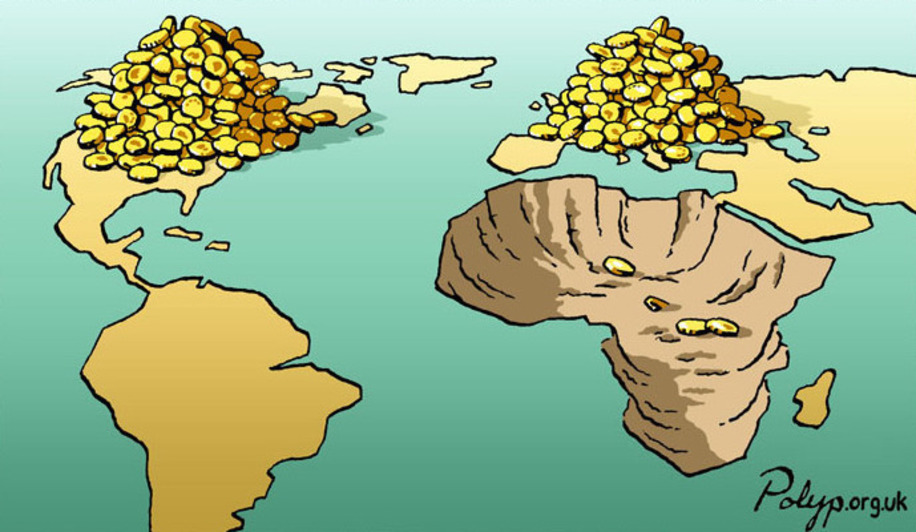
The bad form of nationalism is the same as the bad form of individualism. It can be found wherever a person (or group of people) make decisions that grant minor benefits to one nation but at the major expense of others – or of the world system. The worst expression of this kind of nationalism could perhaps be found in the colonial actions of Belgium in the Congo during the 19th century, and most globalists claim to be fundamentally motivated by opposition to this kind of nationalism.

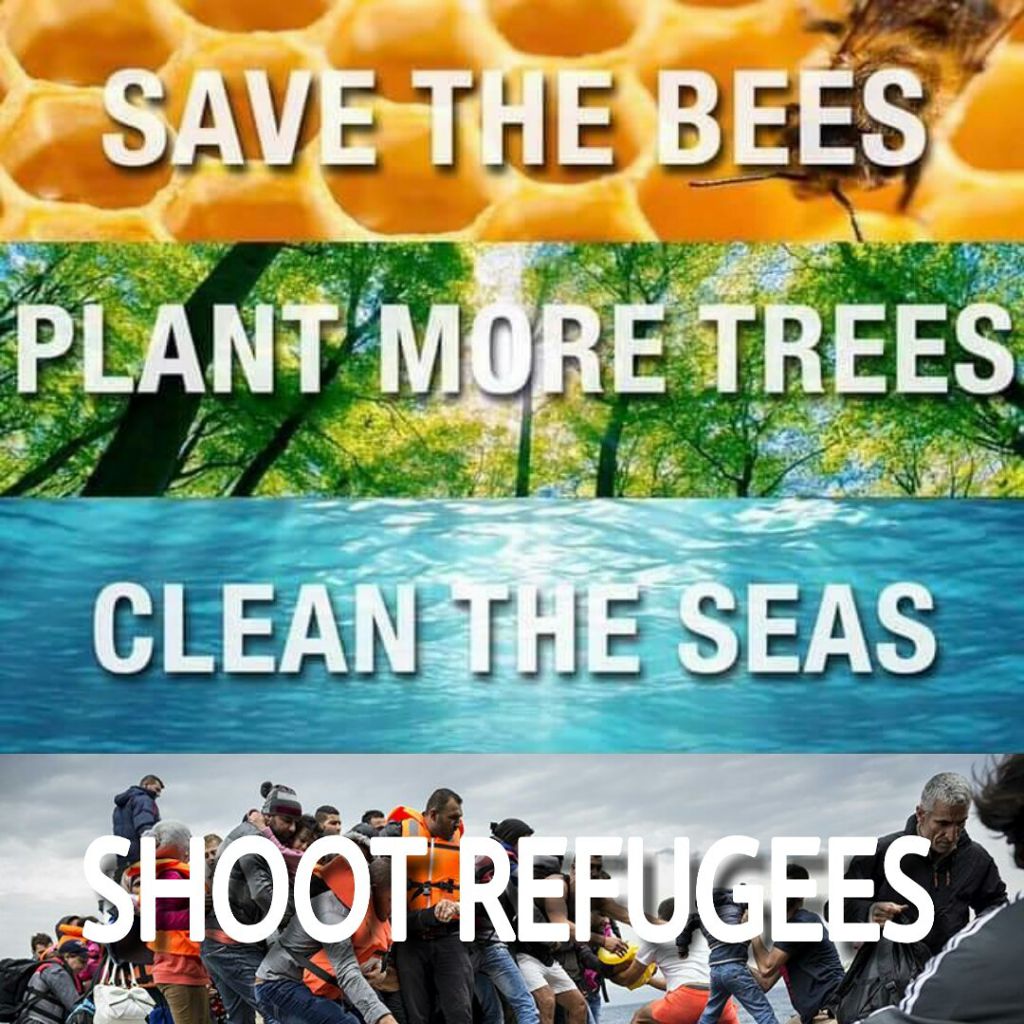
All globalists claim to be good globalists. They present themselves as enlightened types who have transcended petty nationalism, and as if they only make decisions with the entirety of all sentient beings in mind. Their attitude is that they are fit to serve as arbiters of planetary justice on account of the impartiality offered by their superior moral fibre. Therefore, they can be trusted to rule a global system.

This is true for some of them (more or less). After all, globalism is arguably nothing more than operating on a higher order of reality. It’s entirely possible to operate there, and there’s no reason to conclude that someone definitely does not belong there, just because they say they do.

However, there is also a bad globalism. In fact, there are two.

The obvious bad globalism is the kind that forces rules and regulations on people and places who do not want them. This is the same kind of tyranny as any other imperialism, in which a person in a distant land makes decisions that get imposed on the locals without their consent.

Cannabis prohibition was mostly a self-inflicted tragedy, but it wasn’t helped by the fact that the United Nations prohibited it with the Single Convention on Narcotic Drugs of 1961. This treaty obliged all signatories to keep cannabis perpetually illegal, regardless of the will of the people of the nations whose leaders had signed them up.

There remains a great risk of this form of globalism, particularly in the form of globohomo. This means the risk that all national cultures in the world will be erased and replaced with a manufactured kind of consumer fetishism that can be easily milked for cash using the same methods anywhere in the world.

There is a much more subtle and insidious form of bad globalism, however. This occurs when people promote globalist values to other people, while secretly maintaining nationalist or racist values for themselves. An example is fervently propagandising for other nations to open their borders while also propagandising for one’s own nation to remain an ethnostate.

This form of globalism is little different to any other kind of hate ideology in that it is supremacist and exploitative. It’s deceptive in the sense that it presents itself as something it isn’t, for the sake of lulling other people into a false sense of security. It plans to leave all nations except for one’s own in a state of chaos.

In summary, it is impossible to equate either nationalism or globalism with good or evil. In much the same way that there are happy and unhappy families and individuals, unhappy people who identify with the nation will tend to express an unhealthy form of nationalism, and unhappy people who identify with the globe will tend to express an unhealthy form of that.

*

If you enjoyed reading this essay, you can get a compilation of the Best VJMP Essays and Articles of 2018 from Amazon for Kindle or Amazon for CreateSpace (for international readers), or TradeMe (for Kiwis). A compilation of the Best VJMP Essays and Articles of 2017 is also available.

The Negrification of the New Zealand Maori

The New Zealand Maori is in a much better position than 120 years ago. Before World War One, many people did not expect Maoris to survive for much longer, or expected them to wind up in a condition as wretched as that of the Australian Aborigine or North American Indian. Through will and intelligence, he escaped this fate – but grave dangers remain.

The greatest risk facing the New Zealand Maori in 2019 is the risk of his ongoing negrification. By this, it is meant that the Maori continues to be reduced to a dependent population, one that has no chance of surviving without government welfare, as has become the fate of the Black man around the world.

The American Negro is no longer a slave in the realm of iron. No more does he have to bear iron fetters, manacles and chains. However he is now, more than ever, enslaved mentally and spiritually. His grand narratives about vital enjoyment of life have been replaced with narratives about how the world is a hateful place that owes him. He is the eternal victim.

These new narratives do him an immense disservice. Instead of putting the emphasis on his own agency and capacity to create the conditions in which he can thrive, they put the responsibility for his well-being on a great and impersonal system which he has no capacity to change, and on the people who populate this system. This naturally leads to a sense of victimhood, which is a kind of aggression.

The New Zealand Maori risks going down the same path.

The greatest danger the New Zealand Maori faces is further mental enslavement. This is a peril that he shares with everyone else in the world, not least White people in New Zealand. But the greatest enslaving force in the world is no longer a totalitarian ideology or Abrahamic religion. Today it is the culture that has been created by the collective will of accumulated capital.

Accumulated capital, and the financial interests it serves, has reshaped the world to further its own interests. It does this through a variety of means, not least its near-total control of the apparatus of propaganda, the mainstream media. It uses this media to manufacture consent for a variety of policies and cultural values that further the interests of accumulated capital.

One way is the normalisation of mass Third World immigration so as to reduce wages to a minimum, and demonisation of its opponents as “racists” and “white nationalists”. Another is the normalisation of narratives of resentment and slave morality so that only weaklings stand up to be leaders.

If one looks at the plight of the American Negro, one is immediately struck by the lack of quality leadership arising from among them. Instead of people who genuinely care to end the suffering of the people they claim to represent, there are a bunch of grifters who profit from stoking division and a grievance narrative. This is, as mentioned above, the consequence of a massive propaganda campaign to normalise slave morality narratives.

Such a campaign also targets the Maori people. A minority can only hate the majority to the benefit of an ever smaller minority, never to themselves. This is why it can be observed that all of the Maori leaders stoking an anti-White narrative (Hone Harawira, Tariana Turia, Metiria Turei, Marama Davidson) have gone on to become extremely wealthy, while the people they claim to represent have not.

The New Zealand Maori has Winston Peters, and the non-racist Kiwi nationalists of the New Zealand First Party. Apart from these and a few others, the majority of Maori leaders are the same sort of shit-stirrer that has led the American Negro down the path of mental and spiritual enslavement.

In order to avoid extreme suffering, the New Zealand Maori needs to produce leaders capable of keeping their people free in the realms of silver and gold.

Regarding the realm of silver, it’s necessary to, as Sir Apirana Ngata said, “ko tō ringa ki ngā rākau a te Pākehā.” An imperative has arisen to use the tools of technology to provide a living, and therefore to educate and to stoke the desire to learn and to understand. This imperative does not in any way suggest that it’s necessary to be grateful for the introduction of technology by the Pakeha. However, it does mean that grievance narratives must be abandoned.

It’s ridiculous for a Maori to feel a genuine sense of grievance about colonisation when he is five times wealthier than the citizens of neighbouring countries who were never colonised, such as Tonga. All narratives that put the moral emphasis on someone else to set right the balance of grievances are doomed to fail, because such narratives merely stoke new grievances elsewhere.

Black people in America have by and large failed to realise this, and this has led them down a precarious path. Now, not only are they still poor, but they have much less goodwill in the eyes of the majority. For Maoris to go down this path would be a disaster. Much better to have a narrative like Esoteric Aotearoanism, according to which all can move forwards together according to their strengths.

Regarding the realm of gold, it’s necessary to return to the original practices and traditions that existed before Abrahamism imposed itself on these lands and exterminated all competing faiths. These spiritual methodologies are what Sir Apirana Ngata referred to when he said “ko tō wairua ki te Atua, nāna nei ngā mea katoa (your spirit with God, who made all things).”

This means that Maori leaders have to come to accept the role that spiritual sacraments such as cannabis and magic mushrooms play in connecting their people to God. After all, it is through separation from God that all misery and suffering flows. Unfortunately, this is another area in which the current Maori leadership has been poor. Their general reluctance to admit that cannabis prohibition causes immense suffering to Maori families has been disgraceful.

A return to God, and a return to a positive narrative that emphasises the strengths of the Maori people and their own agency in finding ways to end their own suffering, is the way to avoid the negrification that will leave Maoris a slave race. The dual temptations of alliance with short-term grifters and Marxist anti-Whites need to be resisted.

*

If you enjoyed reading this essay, you can get a compilation of the Best VJMP Essays and Articles of 2018 from Amazon for Kindle or Amazon for CreateSpace (for international readers), or TradeMe (for Kiwis). A compilation of the Best VJMP Essays and Articles of 2017 is also available.

Ardern Is Only In Power Because National Was Shit

Numerous voices are bitching about the things that the Sixth Labour Government has done since seizing power. Persecution mania has ramped up to the point where many people feel personally aggrieved and targeted by the actions of Jacinda Ardern and her supporters. As this essay will show, the abuses of the Sixth Labour Government are a direct result of the neglect of the Fifth National Government.

People like to complain. Seldom do they like to consider that they themselves may have played a role in what has transpired. Even more seldom to people like to consider that they are part of an interdependent system with, and no more important that, all of the things they hate, compared to which they are like yin to yang.

When John Key’s Fifth National Government came to power, they inherited a number of social issues that had festered for a long time. There were large numbers of Kiwis who were desperate for a change to the housing situation, or the mental health system, or to the medicinal cannabis laws. Many of them had reason to believe that a change in Government from Helen Clark’s autocratic style to a more classical liberal style would bring relief.

All of these people were flat out ignored for nine years.

In this act of ignoring people with legitimate grievances, National sowed the seed for their own failure. All National had to do was to acknowledge that spending $400,000,000 per year on enforcing cannabis prohibition was poor fiscal management – a perfectly reasonable argument. That there was no good case to force taxpayers to stump up for the immense cost of enforcing a law that most of them didn’t want, especially when health and infrastructure were underfunded and could have used the money.

But they couldn’t even do this!

If the National Party wasn’t capable of understanding something as simple as the need for cannabis law reform – something that Third World countries like Uruguay understood years ago – then it’s a fair conclusion that they simply aren’t competent. So why not vote them out?

The situation with the mental health system is equally as jarring an example. The Fifth Labour Government didn’t do much to help those who had lost out from neoliberalism, but the attitude of the National Party towards the mentally ill was “just let ’em die.” Key ended his term with the highest suicide rate since records began.

National’s refusal to respect the will of the people wasn’t just a matter of degree. Sometimes it was categorical, as in the case for asset sales, where they were told explicitly that the nation didn’t want them sold, but did it anyway. This is the sort of arrogance that leads thinking supporters to switch allegiances.

So no-one who supported the Fifth National Government ought to grizzle about socialism or communism now. If you’re willing to sit on your arse while your fellows are needlessly suffering, even in cases where they’re not asking you for money but simply an end to the misery, then you’re also willing to accept the consequences of this neglect.

The Labour Party gets consent for the abuses it commits from the neglect shown by the National Party before it. Because one half of the population looked the other way when Kiwis were put into cages for growing medicinal plants, so does the other half of the population look the other way when the right to free speech is violated. The fact that we have the right to both grow medicinal plants and to speak freely is lost.

The great problem, from the perspective of a member of the Kiwi nation, is that this cycle of one bunch of incompetents getting revenge on the previous bunch of incompetents by punishing their supporters – almost all of who are Kiwis – is not helpful.

Labour and National are effectively a one-party dictatorship that has agreed to a power-sharing arrangement between the left and right wing factions. Perversely, the worse one wing of the Establishment Party does, the worse the other wing also gets to do, as there is no alternative to the National/Labour duoligarchy. Thus, anyone complaining about how crap Ardern is must also give some thought to the system that put her in power.

It might be true that Ardern and her Government panicked in response to the Christchurch mosque shootings, and overreacted by working to ban semi-automatic rifles. It might also be true that their actions to violate our right to free speech are obscene and bordering on tyrannical. It might even be true that none of this would have happened if National had still been in power – but National would still be in power if they hadn’t been so shit in the first place.

If we don’t like this arrangement, then the onus is on us to organise ourselves in ways that leave the Establishment no place to step in and take control. One way to do this might be to mutually agree on the sevenfold conception of inherent human rights. If all Kiwis mutually agreed that each other possessed those rights inherently, then we would have the solidarity necessary to enforce them.

*

If you enjoyed reading this essay, you can get a compilation of the Best VJMP Essays and Articles of 2018 from Amazon for Kindle or Amazon for CreateSpace (for international readers), or TradeMe (for Kiwis). A compilation of the Best VJMP Essays and Articles of 2017 is also available.

The Case For Cannabis: Other Acceptable Drugs Are More Harmful

The standard argument is that cannabis is too harmful to be allowed and this is why it has been made illegal. This extreme level of harm is ostensibly the reason why criminal penalties are applied to its possession and cultivation. However, as this article will examine, this argument is hypocritical and dishonest.

There’s no doubt that alcohol and tobacco are more harmful than cannabis. In New Zealand, alcohol is believed to kill between 600 and 800 people every year, mostly from cancer, heart failure and liver failure. This is a horrendeous body count by any standard, even higher than the suicide count and the road toll.

The butcher’s bill for tobacco is even worse – this is believed to kill 5,000 people in New Zealand every year. 1 in every 1,000 Kiwis killed every year by one legal drug can only really be described as carnage. It’s orders of magnitude more destructive than cannabis, which is not conclusively known to kill anyone.

This argument for cannabis law reform is therefore very simple. If alcohol and tobacco do not meet the threshold for causing sufficient harm to be banned, then neither does cannabis. Put another way, if either alcohol or tobacco are acceptable when judged by balance of harm, then so is cannabis.

Others will respond that there’s no reason to add yet another harmful drug to what’s already available.

As mentioned elsewhere, this argument is ignorant of human psychology. People who want to get high will use whatever is available to them. There are no perfectly sober people enjoying their lives right now who are at risk of becoming a cannabis addict after one puff. There are, however, a lot of hard-core alcohol, tobacco and pharmaceutical users who would switch to using cannabis instead if it were available.

In much the same way that voting in an election means supporting one evil for the sake of defying a greater evil, many people use cannabis instead of a drug that is more harmful. In other words, cannabis can serve as a substitute for alcohol. This point has been argued at length elsewhere, but it’s important enough to be worth bring up again here.

If you could reduce the nation’s alcohol consumption by a quarter, you should also reduce the nation’s death toll by 150-200 every year. A proportion of people would use cannabis instead of alcohol if they were given the opportunity, so if legal cannabis would reduce the alcohol intake then it would save lives.

Even if a third of those who gave up alcohol for cannabis died from complications related to cannabis use (a ridiculous idea if one realises that legalisation will mean vaping instead of smoking), this would still represent a saving of 100 or so lives every year. So if other drugs are both more harmful than cannabis and legal, then it makes sense that cannabis should also be legal, because then some people could switch to it.

Some will respond that alcohol and tobacco are “part of our culture”. Well, we cannabis users would respond that cannabis is part of our culture. Certainly no-one asked us what our culture was, and if they had asked, many of us would have told them that we prefer to use cannabis. The people who made the decision are in the pockets of big alcohol manufacturers – they’re not objective judges.

For those of us who are part of the cannabis culture, using cannabis simply fills the same niche as those who recreationally use alcohol or tobacco. We know that it’s slightly physically harmful and can be mentally harmful if misused. Everyone knows this. It’s just that we believe the social, emotional and psychological benefits of recreational cannabis use outweigh the minor harms.

Yet others will argue that “the horse has bolted” when it comes to alcohol and tobacco. These drugs are so widespread that they are now impossible to prohibit.

However, the same is true of cannabis. Cannabis is easier to manufacture than alcohol, and getting hold of seeds is barely more difficult than getting hold of seeds for any other plant. Cannabis is everywhere in New Zealand, and plenty of people are willing to help others get seeds (or even clones) simply to defy the Government. An entire underground culture dedicated to its survival and propagation exists.

If it’s too late to enforce alcohol prohibition, then it’s too late to enforce cannabis prohibition as well.

In the end, the fact that there are drugs that are both more harmful than cannabis and legal is proof that our drug laws are not logical. Indeed, our drug laws are based more on past hysteria than any sober appraisal of the evidence. Cannabis law reform would be the first step in rewriting these laws to achieve harm minimisation.

*

This article is an excerpt from The Case For Cannabis Law Reform, compiled by Vince McLeod and due for release by VJM Publishing in the summer of 2018/19.