Category: society
Will Drinking Alcohol Still Be Popular In 50 Years?
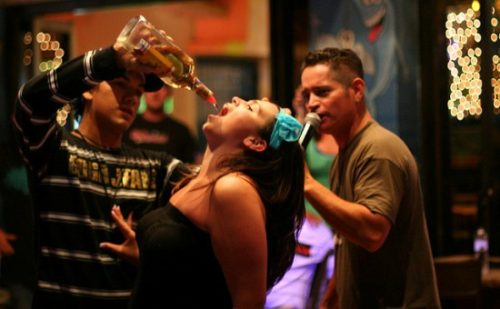
A lot of really stupid things have fallen out of fashion in recent decades, and for good reason. Smoking tobacco is now uncommon, because we’re now much more aware of the deleterious effects than we used to be, and seeing someone riding a motorcycle without a helmet is rare too. This article asks the question: will drinking alcohol still form the basis of Western social interaction in half a century?
Let’s face it: the only reason we drink a lot is habit. It’s not because alcohol is good, and it’s not because alcohol is safe. Alcohol isn’t really good because there are plenty of other common drugs that are better: MDMA is a better entactogen, cannabis is more relaxing, opium is better for getting wasted with. It’s also not safe, for reasons that are obvious to anyone who has spent time around drunks.
No – the reason why we drink a lot is because our parents did, and they drank because their parents did, and so on, and in every case it’s true that people drank alcohol because that’s just what people did. For thousands of years, the ancestors of Westerners knocked back the booze – they didn’t know about the relationship between alcohol and heart disease, liver failure or cancer, because people seldom lived long enough to be affected by such things.
Moreover, there are large capital interests that are tied up in alcohol manufacture and sales. The alcohol industry is easily big enough to buy off politicians at the national level – and they do. These politicians have been more than happy to stop any competitor to alcohol getting established, which is why our recreational drug scene is soaked with booze (and thereby with the violence, sluttiness, vomiting and hangovers that inevitably accompany the alcohol experience).
These factors might very soon stop having an impact. The changing drug market scene has smashed the duopoly over the recreational drug market that alcohol once enjoyed along with tobacco. Not only are there now over a dozen territories where cannabis is properly legal, but the rise of dark markets on the Internet has made it possible for people anywhere to access a wide variety of drugs without needing anything more than a postal address.
There have also been more sinister undertones to the historical promotion of alcohol use.
From the earliest days of the Age of Colonialism, European traders were aware of the destructive effect that alcohol (usually in the form of rum) had on the natives of the New World. There was no need to shoot them when you could simply trade them some booze and watch them destroy themselves. Although it was not appreciated at the time, alcohol was effectively able to be used as a bioweapon by the Europeans.
This was because they had developed a genetic resistance to alcohol over thousands of years of exposure, while the natives had not. Over the past several thousand years, because Europeans were getting drunk much of the time, there was a selective pressure against those who misbehaved while drunk. Anyone who became excessively violent or stupid while drunk was liable to delete themselves, and their genes, from the gene pool. Over time, therefore, Europeans adapted to behave relatively tamely when intoxicated.
So when the European traders introduced alcohol to the delicate psychobiological balance of the New World, it had a similar effect to a hand grenade. Alcoholism has destroyed the native peoples of North America, South America, Australia and Polynesia. If European complicity in this was widely accepted and owned up to, the need to legalise recreational alternatives to alcohol would become obvious.
Given all of these factors, it has to be asked whether the widespread consumption of alcohol is something that will continue much further into the future. It can already be observed that the youngest generation is abandoning alcohol en masse, usually for cannabis but sometimes for other substances that can be easily be obtained: MDMA or research chemicals are popular alternatives.
Global recreational drug culture this century is more likely to revolve around cannabis for the reasons described. Cannabis is something that people of all nations and races can enjoy equally without any sense of cultural advantage, unlike alcohol, which is really the white man’s drug. It can already be seen (in the few places they exist) that cannabis cafes serve as places where people of many cultures come together in harmony and good cheer.
As awareness of the harms of alcohol spreads, as recreational alternatives become increasingly available and as world culture moves further away from a Eurocentric model, it’s possible that the prominence of alcohol in our culture diminishes in the same way tobacco did. It’s hard to imagine now, but there are good reasons to think that hardly anyone will still be regularly drinking alcohol in 50 years’ time.
*
If you enjoyed reading this essay, you can get a compilation of the Best VJMP Essays and Articles of 2017 from Amazon for Kindle or Amazon for CreateSpace (for international readers), or TradeMe (for Kiwis).
Is It Time to Nationalise Empty, Foreign-Owned Houses in New Zealand?
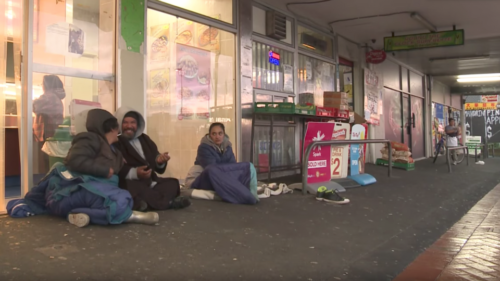
As seen by its climbdowns on the TPPA, on medicinal cannabis and on immigration, the Sixth Labour Government lacks courage. This means that the time has come to make some truly bold suggestions. Given that our homelessness crisis has long ago reached critical status, it’s time for a bold solution to the housing shortage. This essay proposes that we nationalise all empty, foreign-owned houses to provide shelter for our own people.
The state of homelessness can be summed up by the fact that there are believed to be 24,000 homeless in Auckland alone. This gives New Zealand by far the worst homelessness rate in the OECD, a list which includes much warmer and poorer countries like Mexico.
Per capita, our homelessness rate is far worse than the second-placed Czech Republic and around twice that of Australia, despite that it’s much easier to be homeless in the Australian climate. It’s gone beyond being a national disgrace, to the point where it is threatening our status as a developed country with a functioning society. It’s time to consider extreme measures.
It’s hard to get an accurate figure on the number of New Zealand homes owned by foreigners. The people making most of the profit off selling them have a vested interest in restricting awareness of, and information about, their activities. However, we can make educated guesses.
A 2016 census revealed that over 8% of Vancouver homes are unoccupied. From the same link, we can see that slightly fewer than 6% of Vancouver homes are both unoccupied and owned by foreigners. So roughly two-thirds of empty homes in Vancouver are also owned by foreign residents.
There are believed to be 33,000 empty houses in Auckland, with others saying 35,000. If two-thirds of those houses are both empty and owned by foreigners, that makes for 22,000 homes – about the same number as there are homeless people in Auckland.
The Vancouver solution so far is to charge a 1% property tax on an annual basis for every Vancouver property left unoccupied. This amounts to $10,000 in taxes for a million-dollar property. Vancouver is infamous for its overheated housing market and perhaps represents an extreme case, but the basic principle is the same as in Auckland: most of these foreigners are speculators who have parked money in real estate for the capital gains, and they have no interest whatsoever in the ability of the locals to find affordable housing.
The question naturally arises: if there are so many foreign residents who are keeping houses empty purely for the sake of making a profit, and so many Kiwis who are going homeless because of the shortage of available housing, why be satisfied with a tiny bit of tax as compensation for the damage done? Why not nationalise empty houses that are owned by foreign residents?
Nationalisation could proceed on the grounds that owning a house in New Zealand and deliberately keeping it empty is a crime, in much the same way as owning a business and refusing to serve a customer on the basis of their race is already a crime.
Deliberately keeping a house empty when there is a housing shortage would therefore be declared to be a crime equivalent to refusing to stop to ascertain injury at the site of a motor vehicle accident. In other words, it would be an action that represented a criminal level of disregard for the well-being of the people of this nation.
The logical punishment would be forfeiture of the property.
After nationalisation, the houses would simply be added to the existing Housing New Zealand stock as an asset on the balance sheet. From there, Housing New Zealand would proceed to treat them as regular state houses, and they would be rented out or apportioned to the needy as was necessary to meet their needs for shelter.
*
If you enjoyed reading this essay, you can get a compilation of the Best VJMP Essays and Articles of 2017 from Amazon for Kindle or Amazon for CreateSpace (for international readers), or TradeMe (for Kiwis).
What’s the Century, Winston?