Will the Sixth Labour Government be a One-Term Affair?

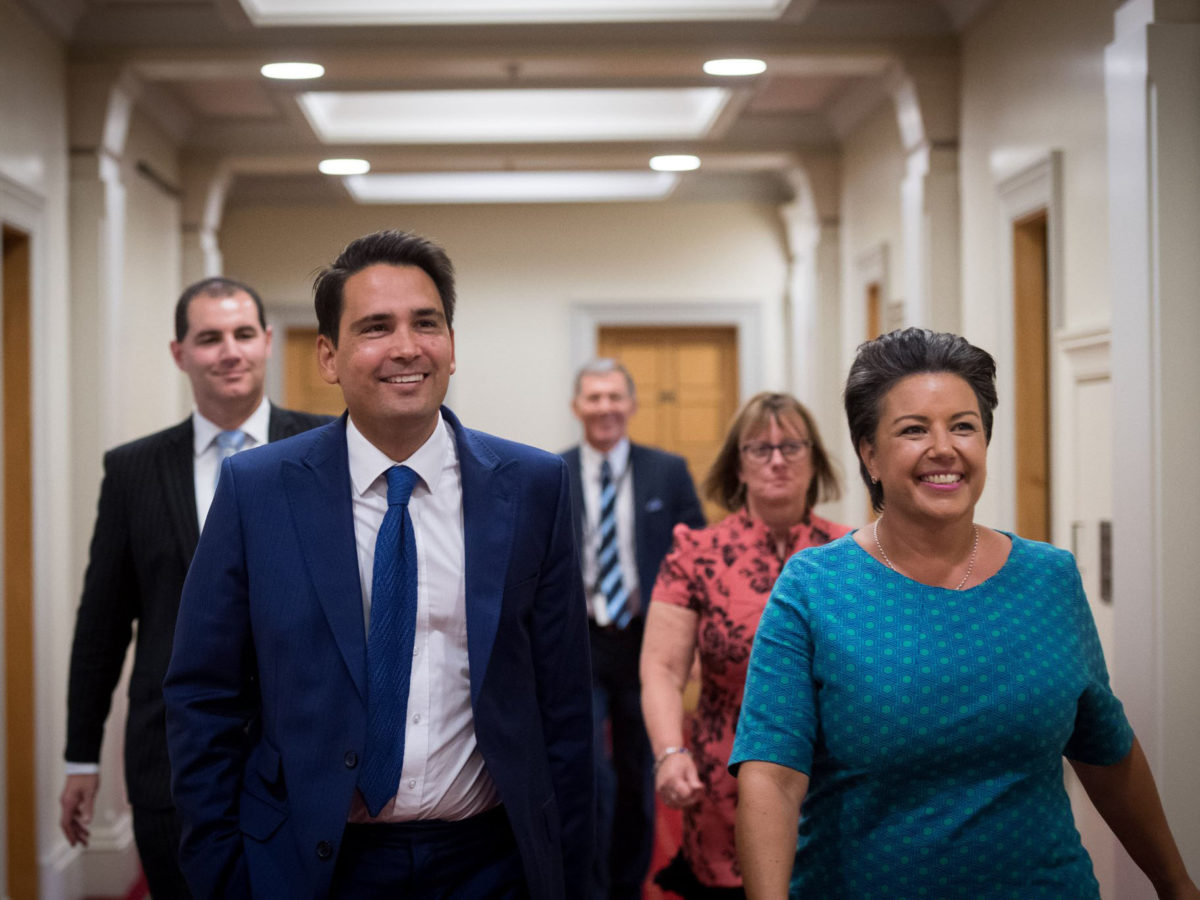
The Sixth Labour Government has already made one colossal error in its short time in power, and it looks like it’s set up to make another. Considering that their grip on power was already slim, and that they are relying on the infamously treacherous Winston Peters to maintain it, there’s every chance that the Sixth Labour Government ends up being a one-term affair. This essay discusses the possibility.

There are many forces that threaten to tear apart every party in every Parliament, but within the New Zealand Labour Party some gigantic fissures are starting to become particularly prominent. The decision to raise the refugee quota was a slap in the face to the poorer voters within Labour, and can be counted as a colossal error. The other error will be forced by the referendum to legalise cannabis.

Make no mistake – raising the refugee quota was an error of profound magnitude. The reality of the situation is this: European governments have, for a couple of decades now, placed the needs of foreign “asylum seekers” above those of their own working classes, and the consequences of doing so are clear. Doing so will lead to a return of authoritarian populists, as has been shown with the rise of the Sweden Democrats in Sweden, the AfD in Germany and Matteo Salvini in Italy.

If you are a poor New Zealander, then you are probably a natural Labour voter, but it’s extremely galling to see Labour spending the money that could have helped you on refugees instead. Adding insult to injury, these refugees are usually dumped in working class areas because that’s where the cheapest housing is. The cherry on the top is that any working-class person who protests their demotion in favour of foreign chancers will be denounced by Labour supporters as a racist.

The decision to double the refugee quota will drive a thick wedge deeply between the working-class faction of Labour, who are dependent on a limited pool of government largesse for their personal well-being and who resent more people claiming a piece of it, and the champagne socialist faction, whose primary concern is virtue signalling for the sake of social status and advancement.

This is the current rupture. It’s unlikely that a populist worker’s movement will arise merely on the basis of this, but it will cause some Labour voters to switch to New Zealand First in 2020 and some to abstain.

The inevitable future rupture comes with the cannabis referendum that will likely be held near the end of 2019. Labour will not admit this, but the referendum has the potential to tear the Labour Party right down the centre, for demographic reasons. This is not a concern for either the Green, New Zealand First or National Parties, because the demographic equation does not apply in their cases.

Maori voters are massively in favour of cannabis law reform – this is one of the strongest relationships in all of New Zealand politics. The correlation between being Maori and voting for the Aotearoa Legalise Cannabis Party in 2017 was 0.91. This is much stronger than all of the other well-accepted relationships in New Zealand society, and is immediately apparent if one observes the fact that the ALCP gets twice as many votes in Maori electorates as it does in General ones.

Pacific Islanders, by contrast, are much more lukewarm on the issue. The correlation between being a Pacific Islander and voting ALCP in 2017 was -0.00 (i.e. perfectly uncorrelated), much weaker than the correlation between being Maori and voting ALCP. The reason for this is clear if one looks at the general demographic profile of Pacific Islanders: they tend to be religious, and the religious tend to be prejudiced against cannabis.

Therefore, the Labour Party cannot avoid being divided when the cannabis referendum comes around, and they cannot avoid losing a large swathe of voters because someone will inevitably feel betrayed. Either Maori voters will punish them for being too strict on cannabis, or Pacific Islander voters will punish them for being too loose. So Labour is damned if they do campaign for change and damned if they don’t.

These two errors need to be viewed in their correct context. Many political commentators assume (incorrectly) that, because all political parties generally fall on a left-right spectrum, if a given voter doesn’t like the government of the day then they will move leftward or rightward to cast their vote next election.

The truth, as Dan McGlashan demonstrated in Understanding New Zealand, is that for many Kiwis, the alternative to voting Labour is not voting at all. If you are a working-class New Zealander, and therefore a natural Labour voter, the preferred option when Labour is too right-wing is not voting Greens but abstaining from voting.

As the article linked immediately above describes, the correlation between voting for Labour in 2017 and turnout rate in 2017 was a very strong -0.72. That tells us that as many as half of all natural Labour supporters actually don’t vote. The real challenge for the Labour Party is not convincing the masses that National is bad or even that Labour would be better, but convincing them that Labour would be better enough to make it worthwhile to vote for them, and to not rather abstain by way of protest.

The two major errors discussed in this article might collectively have the effect of significantly reducing support for the Labour Party. They have already greatly disappointed their voters who are dependent on social assistance, and the cannabis referendum will force them to either greatly disappoint Maoris (who will then abstain from voting in 2020) or greatly disappoint Pacific Islanders (who will then abstain or switch to National in 2020). This disappointment might be enough to tip the balance back towards National in 2020.

*

If you enjoyed reading this essay, you can get a compilation of the Best VJMP Essays and Articles of 2017 from Amazon for Kindle or Amazon for CreateSpace (for international readers), or TradeMe (for Kiwis).

The Case For Cannabis: Prohibition Harms Minorities

Cannabis prohibition causes harm across most levels of society, but some bear the brunt more than others. In the Western World, it can be seen that cannabis prohibition has a disproportionately heavy effect on minorities, and there are multiple reasons for this. This article will discuss the need for cannabis law reform from an ethnic rights perspective.

The South African High Court found found in a recent judgment that “the
criminalisation of cannabis […] is certainly characterised by the racist footprints of a disgraceful past.” In other words, the South African authorities are willing to admit that cannabis prohibition was forced on the people of South Africa out of malice.

They found that “it is general knowledge that some sections of the [Black] population have been accustomed for hundreds of years to the use of dagga, both as an intoxicant and in the belief that it has medicinal properties, and do not regard it with the same moral repugnance as do other sections of the population.”

It followed from this that the prohibition of cannabis and the normalisation of alcohol was to put European values first and foremost, and this was mentioned in part of their judgement when they made recreational cannabis legal earlier this year.

Ever since Jamestown – and possibly long before then – European colonialists knew that native peoples had a great susceptibility to alcohol. The American Indians called it ‘firewater’ for the explosively violent behaviour it caused among their kind. Rolling a barrel of rum into an Indian village had a similar effect to rolling a barrel of gunpowder into one.

The science is like this: in Europe, most of the people who could not handle alcohol had been wiped out of the gene pool over thousands of years of exposure. Anyone who chimped out when drunk got killed or put in prison, and thereby failed to reproduce. Consequently, Europeans (much like Middle Easterners) do not lose self-control when drunk at the same rate as peoples who have not had that historical exposure.

The people who conquered the New World did not understand the genetics behind this, but they were well aware of the destabilising effect that alcohol had on native communities. So they passed laws, such as cannabis prohibition, that forbade any alternative to alcohol. This forced the natives away from cannabis and forced them towards drugs that would destroy them.

Laws prohibiting alternatives to alcohol are extremely prejudiced in favour of European people and people of European descent. In terms of the damage it can do to people who don’t have a genetic resistance to it, alcohol is almost a bioweapon, and passing laws that prohibit recreational alternatives to it could rightly be seen as acts of genetic warfare against non-European populations.

In New Zealand, Maori leaders like to talk about economic reparations and the damage done by colonisation. But never do they talk about the damage done to Maoris by cannabis prohibition.

Maoris have no cultural tradition of alcohol drinking. Unlike Europeans, Polynesians have only been exposed to alcohol for a few centuries. This means that they have not had time to evolve a resistance to the substance, and neither have they had time to make alcohol part of their culture. Alcohol is a foreign substance to the New World, and it’s foreign to the natives here.

As anyone with a clue knows, Maoris love cannabis. Not only do you frequently see Maoris smoking weed at parties, but it’s common to see Maoris in the street wearing Bob Marley t-shirts or with the red-yellow-green of reggae culture somewhere in their clothing. Their love of cannabis is unrepentant – in other words, it’s part of the culture.

The reason for this is simple: not only is cannabis great fun, but Maoris are also aware of the destabilising effect that alcohol has on native communities, and have found that their social recreational drug needs can be met just as well by cannabis as by alcohol (in most cases). Given an even playing field, it’s better to smoke cannabis because it leads to much fewer problems, in particular much less violence.

However, although this behaviour is fair, rational and reasonable, it’s prohibited. There are hundreds of Maoris in prison right now for cannabis offences, even though the prohibition of cannabis has nothing to do with their culture and is something that was forced on them by (some) white people.

It follows, then, that anyone who is truly interested in racial justice in the West must also be in favour of cannabis law reform. This will not only give minorities an alternative to alcohol, instead of having alcohol culture forced on them, but it will remove one possible source of discrimination against those minorities by taking the issue away from Police discretion.

*

This article is an excerpt from The Case For Cannabis Law Reform, compiled by Vince McLeod and due for release by VJM Publishing in the summer of 2018/19.

Understanding New Zealand: Demographics of Maori Speakers

With the uptick in interest in Maori language recently, there has also been an interest in understanding who speaks the language. A large correlation matrix based on electoral and Census data can tell us a great deal. In this article, Dan McGlashan (author of Understanding New Zealand) tells the statistical story of Maori speakers.

There are two different ways of telling the story of the Maori-speaking demographic. The first is by comparing them to the population as a whole, and the second is to compare to them to the general Maori demographic. This article will do both because it is worthwhile to look at the two separately.

The correlation between being a Maori speaker and being a Maori is 0.99. Essentially this means that virtually everyone who speaks Maori in New Zealand is ethnically Maori. It also means that all of the correlations with being a Maori speaker will be close to the respective correlations with being a Maori, so that any differences between the two groups will be subtle ones (but hopefully instructive).

Curiously, the correlation between median personal income and being Maori (-0.48) was exactly the same as the one between median personal income and speaking Maori, but if we go down a level we can see a wider pattern in this data. For the most part, the voting patterns of Maori speakers mirrored that of Maoris, but there are patterns in the differences.

The average Maori speaker is slightly less likely than the average Maori to have voted Labour in 2017 (0.56 to 0.58). This is a small difference and it remains a fact that the average Maori speaker is strongly inclined to vote for the Labour Party. This is mirrored for National: the average Maori speaker is slightly more likely than the average Maori to have voted National in 2017 (-0.72 to -0.74).

The average Maori speaker was also slightly more likely to vote Green than the average Maori. The correlation between voting Green in 2017 and being a Maori speaker was -0.12, compared to -0.14 for the correlation between voting Green in 2017 and being Maori.

But if being a Maori speaker made one slightly more inclined to vote for the Greens, it made one slightly less likely to vote for New Zealand First. The correlation between voting New Zealand First in 2017 and being a Maori speaker was 0.35, compared to 0.38 for being Maori.

Because the Greens and National are the parties that tend to attract the most well-educated people, we can guess from this that the average Maori speaker is slightly better educated than the average Maori. Indeed, this proves to be the case.

The correlation between being a Maori speaker and having a university degree was -0.42 for all of Bachelor’s, Honours and Master’s degrees and -0.38 for a doctorate, whereas the correlation between being Maori and having a university degree was -0.45 for both Bachelor’s and a Master’s degrees, -0.46 for an Honours degree and -0.41 for a doctorate.

This tells us that the average Maori speaker is slightly better educated than the average Maori, despite being more poorly educated than the New Zealand average.

The correlations with age brackets tell us that the average Maori speaker is a bit older than the average Maori. The correlation between being in the 0-4 age bracket and being Maori was 0.82, whereas the correlation between being in that bracket and being a Maori speaker was 0.78. Conversely, the correlation between being in the 65+ age bracket and being Maori was -0.48, compared to a correlation of -0.47 between being aged 65+ and being a Maori speaker.

The correlations with the various industry types tells us in which industries we are more likely to find Maoris who speak Maori.

The correlation between working in the education and training industry and being Maori was 0.43, but the correlation between working in that industry and being a Maori speaker was 0.48. This tells us that a very high proportion of the Maoris working in that industry speak te reo (possibly because they work in whare whananga or similar).

On the other side of the equation, Maoris in some professions were less likely than average to be a Maori speaker. These were usually working-class professions. The correlation between working in the transport, postal and warehousing industry and being Maori was 0.47, whereas the correlation between working in this industry and being a Maori speaker was only 0.41. From this we can conclude that very few of the Maoris working in transport, postal and warehousing are Maori speakers.

In summary, this suggests that the average Maori speaker is a Maori who is a bit older and better educated than the Maori average.

*

Dan McGlashan is the man with his finger on the statistical pulse of New Zealand. His magnum opus, Understanding New Zealand, is the complete demographic analysis of the Kiwi people.

The Five Rejections

It is not easy to say what the alt-centre is, but it is easy to say what it isn’t. The alt-centre is the sixth political position: the one that remains after the explicit rejection of the other five positions. This rejection is necessary because all five positions have evidently failed. This essay seeks to delineate the boundaries of alt-centrism by rejecting the flaws of the other positions.

The alt-centre rejects the position of the old right that the current system is the best system and that the status quo ought to be maintained.

The desire to always keep everything the same is an instinct born of fear of change and greed. Not everything has to stay the same as much as possible and for as long as possible. To fear change is to misorient oneself because everything changes; all of the contents of consciousness are temporary. Therefore, the alt-centre rejects conservatism for conservatism’s sake.

Much the same as all of the non-right-wing positions, the alt-centre is appalled by heavy concentrations of wealth and power in few hands. The alt-centre shares a sense with these other positions that gross inequalities of privilege are obscene, on account of that there is a limit to how much privilege can be earned. Compassion for those who are on the edges of poverty is paramount.

Verticalism is rejected by the alt-centre, for the reason that the majority of people in Western societies are educated to a decent level and can therefore be expected to be reasoned with. Reasoning with people, instead of bullying, mocking, coercing or abusing them, is how bonds of solidarity are formed, and so it ought to be encouraged where practicable.

The alt-centre rejects the position of the old left that the ruling class is inherently illegitimate and that anyone with wealth or power is bad.

Just because someone has wealth and power doesn’t make them evil. Trying to rip people down because of envy is not a behaviour that will lower the prevalence of human suffering on this planet – to the contrary. That sort of resentment-based aggression is precisely the sort of slave morality that the alt-centre rejects.

Horizontalism is therefore also rejected by the alt-centre. Instead, a premium is placed on scientific evidence. This tells us clearly that there are no two things in Nature that are precisely equal, and therefore a desire to equalise everything is a recipe for eternal conflict.

The correct way to get those born into unearned privilege to relinquish it is not by threats and violence and it isn’t by trashing the whole world. It is by reason. The alt-centre seeks to minimise the deleterious effects of unearned privilege by maintaining strong bonds of solidarity across all groups within society, so that none are incentivised to hoard wealth by an indifference to the poverty of others.

The alt-centre rejects the position of the old centre that an insipid compromise between the old left and the old right is the way forward.

You can’t have a compromise between people who seek to cling to power at all costs and people who just want to trash the whole world. This inevitably leads to short-term solutions that fail to meet the genuine long-term challenges of our political and economic climate. These short-term solutions end up causing more damage in the medium to long term.

Neoliberalism is an example of an insipid compromise. In the case of neoliberalism, we get a plastic corporate liberalism that seeks to McDonaldsise the whole planet for the sake of maximum profit and efficiency. Such compromises are considered categorically wrong by the alt-centrist, which abhors reducing things to their lowest common denominator.

In any case, the centre demands the perpetuation of the Establishment, and the alt-centre cannot accept this. The alt-centre cannot accept that the Establishment be allowed to remain on their throne. They have fucked up too badly. In any case, the challenges facing us are too massive, and our culture too sclerotic to adapt to meet them – they can only be overcome with a new paradigm of thought.

The alt-centre rejects the position of the alt-right that segregation and separation are the answers to the failures of the Establishment.

There are many competing ideologies in the world, and most of them have glaringly obvious flaws, it is true. But isolating oneself from these competing ideologies, like a monk hiding in some mountain retreat, is not a philosophy that can sustain an entire nation. Just because the Establishment has failed doesn’t mean we have to throw all of societal advancement and all culture out the window.

Just because the Western World has fallen into chaos, doesn’t mean that we should swing as far as possible in the direction of order. The lessons of the Hemoclysm are still relevant – absolute power still corrupts absolutely. All totalitarian ideas about controlling information or limiting freedom of expression – whether in cyberspace or meatspace – are rejected by the alt-centre.

Related to this, the alt-centre rejects all obsessions with degeneracy, purity and wholesomeness. Altering one’s consciousness for the sake of creativity or social interaction is not “degenerate”. The alt-centre argues that avoiding all drugs is saying no to life, and is therefore an anti-life philosophy. Likewise, the desire for an ethnostate is anti-life, because a diversity of human phenotypes is natural. The alt-centre rejects all anti-life philosophies.

The alt-centre rejects the position of the alt-left that diversity is strength.

It’s obvious that having some things in common is necessary for any group to function as a group. In order for the concept of a group to even be possible, the individuals that institute it have to have something in common. The more they have in common, the stronger the bonds of solidarity will be. These strong bonds of solidarity are necessarily for a society to function.

It’s also obvious that open borders are simply going to lead to a primitive, precarious and paranoid existence where nothing can be certain from one moment to the next. There is no moral imperative to make our societies more diverse just for the sake of it. Indeed, the alt-centre would argue that diversity allows the ruling classes to divide and conquer the masses more effectively. The correct balance between solidarity and diversity has to be struck.

Moreover, the alt-centre completely rejects the new anti-white narrative that is being promoted by the alt-left. The only real privilege is class privilege: a black man with money is more privileged than a poor white man. This remains the core of alt-centre philosophy. The moral imperative is not to God, or to the State, but to alleviate suffering in our fellows.

These five rejections are sufficient for the alt-centre to carve out its own niche in political space. It is one that will grow, and may well eventually come to power. Anyone who repudiates any one of these rejections cannot be an alt-centrist.

*

If you enjoyed reading this essay, you can get a compilation of the Best VJMP Essays and Articles of 2017 from Amazon for Kindle or Amazon for CreateSpace (for international readers), or TradeMe (for Kiwis).