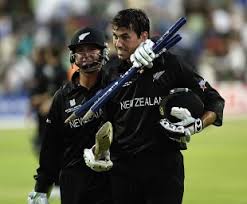
Bangladesh in New Zealand Test Series 2017, Second Test Preview

The Black Caps, the Tigers, and cricket fans will all be on the same side for the Second Test, their adversary: the Christchurch weather. It is forecast to rain on at least three of the five days of the Test, and anyone who has lived in the Garden City knows that this could mean anything from five days of blazing sun to five days of hammering down.

BetFair doesn’t seem too concerned about the possibility of the Draw, though. At time of writing this was paying $6.60.

On the face of it, this looks very high when you consider that the first two innings of the First Test went for over 1,100 runs for only 18 wickets. In fact, at Tea on the fourth day, the Draw was paying a mere $1.05, and the majority of cricket fans were astonished by how rapidly the second Bangladeshi innings fell apart from that point.

Probably the market is anticipating that Bangladesh will have difficulty replicating their batting feats of the first innings in Wellington – after all, Bangladeshi batsmen cannot break the record for their nation’s highest ever Test score every match, as Shakib al Hasan did with his superb 217 from 276 balls.

The Black Caps are paying $1.26, which is very marginal value at best.

Although they showed in Wellington that any of Tom Latham, Kane Williamson or Ross Taylor can play a matchwinning innings, it’s doubtful whether the Black Caps have the firepower with the ball to justify accepting a margin of twenty-six cents in the dollar.

The Black Caps bowlers may have knocked the Tigers out for 160 in their second innings, but aside from skilled bowling from Mitchell Santner, and Neil Wagner setting up Mominul Haque, this was mostly due to poor shot selection and being injured by the ball.

Certainly there is motivation for Tim Southee to bowl well in Christchurch because his claim to a spot in the team is arguably more tenuous than anyone else beside Henry Nicholls.

With match figures of 3 for 192 in Wellington, and with an average of 36 at a strike rate of 70 since the start of 2015, he will have to improve to keep the next generation of strike bowlers from replacing him in the first choice side.

Bangladesh are paying $16.50 at time of writing, which appears good value but not as good as the Draw. They were paying $24 before the First Test so the market has taken account of how impressive they were.

Taskin Ahmed was impressive without reward with the new ball on debut, suggesting that much of his promise in the shorter forms will carry over to Tests once he makes the adjustment. He may have only got one wicket but it was Williamson with a delivery of excellent line and length, and if a bowler can dismiss Williamson he can dismiss anyone.

Subashis Roy, the other debutant, did not have an action that suggested he would be dangerous but he did pick up 3 for 121, very good figures in the context of a defeat of this magnitude.

The main difficulty for Bangladesh is that – although Mominul Haque and al Hasan are a match for the Black Caps bowlers with the bat – Williamson, Taylor and arguably even Latham and BJ Watling outclass with the bat anything the Tigers can put forward with the ball.

So – as was amply demonstrated in Wellington – the Tigers may have the potential to put up a huge innings on occasion but probably lack the firepower to break the Black Caps defences twice themselves.

Certainly with regular captain Mushfiqur Rahim out injured for the second Test, the Bangladeshi men of silver will be having nightmares about how to get Kane Williamson out twice. Williamson was dismissed once in Wellington for the McCullumesque match return of 157 runs from 145 balls.

Considering that there are very few match outcomes that could result in the Black Caps being shorter than $1.26 at the end of the first day, the optimal betting strategy might be to lay the Black Caps before the start of play. In doing so, you will be in a position to cash in on both the possibility of rain and of a large first innings from Bangladesh.

This bet will very likely have value until at least late in the fourth day, given the fact that the batsmen in both teams are collectively more skilled than the bowlers in both teams.

The trader may also wish to consider that in the previous Test at this venue, the Black Caps lost Latham, Williamson and Taylor for a total of 16 runs in the first innings – and still won by eight wickets. So if the rain does not play a role there may well be a result.

The Life Cycle of Internet Forums

As any long-term reader of this magazine can recite by heart: as below, so above. The life-cycles of men and women are well known; those of empires somewhat less so. This essay will examine how the life cycle of Internet forums follows a pattern similar to what can already be observed in Nature.

If one follows the series of 19th century Thomas Cole paintings known as The Course of Empire, one can surmise that, on a much smaller scale, Internet forums follow the same pattern.

The first stage is known as The Savage State. With regard to empires this refers to the state of nature that existed before human civilisation arose. It is therefore an especially feminine time, full of raw potential and untrammelled chaos.

Internet forums begin in a similar state before anyone starts regularly posting. Often there is nothing but forum software to start the process. At this stage the forum has the full potential to go in many directions, as the people running it are yet to make any firm decisions regarding subforums or posting etiquette.

The second stage of an empire is known as the The Arcadian State. This is functionally almost identical to a world run by philosopher-kings. In the Arcadian state, humanity lives at peace with Nature. We might have learned to alter our environment in order to not die as easily, but nothing major has happened.

An Arcadian state exists in Internet forums when the people who have the greatest personal interest in the subject matter naturally find the forum and start to populate it with quality threads. This usually occurs when the name of the forum is spread around by whoever started it and they attract a small, hard-core of highly interested experts.

The third stage of empire is known as The Consummation of Empire. This is represented by glorious buildings at noon on a summer’s day. Everywhere there are marble steps; one can observe a triumphant general crossing the bridge that spans the central river, and all of this in the shadow of the great domed temple.

This is also the best stage of an Internet forum. In this third stage, the excellence established in the second has attracted a huge number of other people. They all want to take part in the glory, and so they flood in and tell their friends. The forum expands, and develops. More rules become necessary to deal with the friction naturally caused by such heavy interaction.

However, in the same way that the seed of decadence present at the height of the glory of empire is also the seed of its destruction, so are the abundance of rules and restrictions that come with the greatest extent of traffic the downfall of Internet forums.

The fourth stage of empire is known as Destruction. In this stage, the empire is collapsing. The painting represents the fall of the Roman Empire as it was sacked by Vandals and Goths, but it could serve as metaphor for the fall of any empire into destruction and ruin. It is hinted that the cause of the destruction may have been a civil war.

Again, the pattern is replicated perfectly in the life of Internet forums. The barbarian invaders are the people who recently joined the forum at its height but who would clearly have not have belonged back in the Arcadian stage. In other words, plebs.

These plebs have the effect of dragging the forum back down, firstly by reducing how willing other posters are to be open and creative, and secondly by provoking whoever is running the forum to bring in more and more rules to crack down on the plebs and to try and restore the glory days.

In this fourth stage of forums, it becomes harder and harder to post anything unorthodox or interesting as true creativity becomes ever more likely to fall foul of censure. Consequently, many of the threads, instead of discussing current events like in the glory times, are just wistful ramblings about old posters and old arguments.

New posters, instead of finding a niche they can feel happy in, are persecuted by older ones, frequently in the manner of high school girls psychologically abusing a victim. This henpecking has the effect of making the forum into a troll’s paradise, which attracts an ever nastier grade of poster, until the stream of new blood dries up completely.

The fifth stage of empire is known as Desolation. This is similar to the first stage, with the exception that the potential of nature, instead of bursting forth with vitality, is exhausted. There are no more human beings – Nature has entirely reclaimed the space on which a glorious capital once stood; weeds and flowers grow from the cracks in the shattered marble.

This is also the natural end stage of all Internet forums. Indeed, 99.9999% of them are already at this stage. Here, there are no more truly human posters, just ghosts of people who used to be funny, back when they were younger and cooler, and before they sold out for a job or became bitter because of a family or or extended period of time without getting laid.

In this stage, there are as many banned users are there are regular ones. Here, no new posters even want to join the forum, because there is no joy in listening to middle-aged washouts droning out about how everything was cooler a decade or more ago. Especially not when these same washouts feel obliged to pack bully anyone who threatens the morgue-like atmosphere.

Because computer software does not need to eat and is therefore cheap to maintain, some forums are capable of lurching along in zombie mode for many years.

And History, with all her volumes vast,
Hath but one page…

Bangladesh in New Zealand Test Series 2017, First Test Preview

Facing Trent Boult on a green wicket in Wellington promises to be daunting challenge for the Bangladeshi top order

Bangladesh are currently paying $24 on BetFair to win the First Test of their 2017 tour to New Zealand, beginning tomorrow in Wellington. New Zealand are so heavily favoured that if Bangladesh can manage so much as a draw it pays $6.60.

On the surface of things, there are few areas in which Bangladesh have an advantage over New Zealand.

The Black Caps top order is looking as composed as it ever has done. Jeet Raval may have only played two Tests but across those two he averages 49.33, with two fifties and a not out. By the standards of Black Caps openers since Richardson, that’s as promising as anyone apart from Tom Latham.

Latham, Kane Williamson and Ross Taylor comprise the rest of the top order, and one would have to go back as far as John Wright, Andrew Jones and Martin Crowe to find an equivalent solidity.

In the middle order things are not as certain. If Henry Nicholls cannot impress at No. 5 soon, he might have to return to domestic cricket for a spell while one of the next generation has a turn at trying to fill the Brendon McCullum-sized hole.

Colin de Grandhomme has, like Raval, only played two Tests but he has also looked solid, averaging 32, and also has a strong first-class record. Even though Watling at 7 is a solid pick, the overall feel of the Black Caps middle order is far from settled.

The pitch at the Basin Reserve is expected to be unusually green, which means that Trent Boult and Tim Southee can be expected to pose a considerable danger. In an odd quirk, Boult (12) and Southee (13) are, with Neil Wagner at 11th, grouped together on the ICC Test bowling rankings.

The Bangladeshi batting will depend heavily on certain key players, and if the Black Caps can get a couple of them early they will back themselves to roll the visitors, on a green wicket, for very little.

Although the spine of the Bangladeshi side is much stronger than it has been in recent years, few would expect it to stand strong against the Black Caps’ heavy artillery on a green track.

Opener Tamim Iqbal is the highest ranked of the Bangladeshi bastmen, at 22nd. An opener averaging 40 is an impressive asset for a side of Bangladesh’s reputation, and perhaps the foremost way that the Tigers could claim to have an advantage over their opposite numbers.

With a probable 4-5-6-7 of Mahmudullah, Shakib al Hasan, Mushfiqur Rahim and Sabbir Rahman, the Bangladeshi middle order is a fairly battle-hardened unit. All four of these batsmen are, if not intimidating, skilled enough to make the Black Caps pay for any errors.

The major disadvantage that the Tigers will have is a bowling attack highly unsuited to the conditions they will face in Wellington. Shakib al Hasan may be ranked 2nd of all the allrounders in Tests, but his gentle left-arm spin will pose far less of a threat at the Basin Reserve than in Bangladesh.

If Bangladesh are to win, it will almost certainly take a handful of good spells from Taskin Ahmed, who with an ODI strike rate of 29 is growing into a strike weapon in the shorter form of the game, or from his expected new ball partner Subashis Roy, about who very little is known apart from a respectable first class average of 28.

The best hope for an interesting match might be for Bangladesh to win the toss and put the Black Caps in on a green wicket tomorrow morning, then to ambush the top order with their debutant new ball pair and get into the soft middle order before lunch.

Virtue Signalling in the Post Truth Age

Observant readers may have noticed an increased awareness of a social phenomenon that has come to be known as ‘virtue signalling.’ This is exactly what is says it is – an attempt on the part of the person expressing themselves to enhance their social standing among the listeners by advocating a particular political viewpoint, and ostensibly on the grounds that it is the morally correct thing to do.

The most recognisable recent example of virtue signalling was all the people who expressed support for allowing Syrian refugees into their country as the Syrian Civil War accelerated.

What made this virtue signalling, as opposed to a genuine regard for the well-being of the Syrians, is that very few of the people making noise about the refugees actually cared about them one way or another. This was evident in two major ways.

The first was that the virtue signallers were mostly young, fashionable people who wouldn’t be seen dead with a refugee or in the kind of neighbourhood that the refugees are going to end up in if they are accepted. Very rarely did any of these people actually volunteer time to refugee services.

The second was that the virtue signallers, rather than making any effort to ensure that anything good happened to the Syrians, simply moved onto the next opportunity to signal virtue (which was opposing Brexit, and then opposing Trump).

These two points explain why, once the refugees are let in, they’re inevitably dumped in a cheap neighbourhood or suburb and forgotten about.

Virtue signalling has always existed. In fact, it is a part of nature. Darwin himself realised that the extravagant, luxurious tail of the peacock was a significant survival disadvantage as it was a beacon for predators and made it harder to escape them. Such a sight could only have evolved if there was some compensatory mechanism, such as if presence of a glorious tail attracted females to a degree that outweighed the increased death rate from having to bear it.

Virtue signalling signals more than just virtue. It also signals being part of the leisure classes, which necessitates the expression of contempt for the labouring classes and their unfashionable and brutal politics and desire for neighbourhood solidarity.

Virtue signalling can therefore be a statement of belonging.

In our society, being cluelessly out of touch with reality is seen by some as a virtue. It suggests that one is from a family wealthy enough to have shielded one from the harsh realities of life, and that one has enough leisure time to indulge in truly wasteful peccadilloes like advocating for the conquest of the West by a hostile foreign ideology.

Note that this has always existed in the human sphere – the previous generation of virtue signallers made a show out of advocating for communism, for the same reasons their descendants advocate for mass Muslim immigration. The generation before that signalled virtue by appeasing Hitler and claiming this was motivated by a sensitivity to the value of peace.

Unfortunately, there is now so much virtue signalling that when someone expresses a political opinion, the listener actually has no idea at all whether this opinion is genuinely believed, or if it is merely a brazen attempt to ingratiate the speaker with the sort of person the speaker presumes will agree with that opinion.

This would explain why mass Muslim immigration has such passionate apparent support from homosexuals, even though Muslims would gladly throw those same homosexuals off the top of buildings as soon as they were given the opportunity.

It may be that what is being signalled is not ‘virtue’ but rather a masculine or feminine orientation. So that a person against mass Muslim immigration is rather expressing themselves in a masculine manner, like when people advocate exercise, and anyone for it is expressing themselves in a feminine manner, like when people advocate veganism.

In the Post Truth Age, you can never take anything at face value, not even your own desires.