South Africa in New Zealand 2017 Limited Overs Series Preview

The theme of revenge for South Africa’s 2015 Cricket World Cup semifinal loss to the Black Caps has been well established. The Proteas came to Auckland with every reason to think they had what it took to seize a place in the World Cup final, but were denied at the last moment.

The Limited Overs leg of this year’s tour begins tomorrow and involves six matches. For South Africa there might be something of the 2015 World Cup about it, as the final match is, once again, at Eden Park.

The leg begins with a T20, also at Eden Park. Much of the interest in the T20 revolves about the late call-up of prodigious Auckland talent Glenn Phillips, who is replacing the injured Martin Guptill.

The 20-year old Phillips is already being talked about as a talent on the order of Kane Williamson and Tom Latham. In last year’s Super Smash he scored 369 runs at an average of 46 and a strike rate of 143, including one century scored at a strike rate of 200.

That is the sort of hitting the Black Caps will need at the top if they are to find an adequate replacement for Guptill. In limited overs matches the Black Caps know that if Guptill goes big, they win, because his striking ability is unmatched.

New Zealand sit comfortably on top of the current world T20I rankings, with South Africa at fourth. It’s almost exactly the other way around in the ODIs, with South Africa ranked at the top and the Black Caps third.

Despite that, the Black Caps are currently paying $2.34 on BetFair to win the T20, so there appears to be some value there.

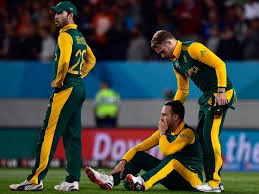
The South African batting features four of the top ranked seven batsmen in the world at the moment, in AB de Villiers, Faf du Plessis, Hashim Amla and Quentin de Kock. With any four of those players capable of a matchwinning innings, that makes the Proteas top order arguably the strongest ODI top order that has ever come to these shores.

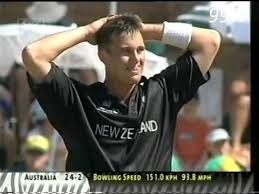
The Black Caps, for their part, have a diverse and highly skilled array of artillery to break through this. But barring Trent Boult, who is currently ranked the No. 2 ODI bowler, none of them can rightly be said to be at the same skill level as the South African batting lineup.

Although there is much to choose from out of Matt Henry, Tim Southee, Lockie Ferguson, Mitchell McClenaghan and Adam Milne (the latter two returning from injury), none of those names pose the known and established threat that Boult does.

Probably the Black Caps will pick Trent Boult, one of the two speedsters (likely to be Ferguson who is in the squad ahead of Milne) and the other spot will be decided by who is best for the conditions out of Henry and Southee.

Ish Sodhi will also be back in case the Black Caps decide to try and strangle the South Africans with the spin of Sodhi, Mitchell Santner and perhaps even Williamson. If the seamers end up getting dominated by the superb Proteas batsmen, expect a wholesale shift to Plan B: strangle by spin.

The South African bowling unit would generally back itself to defend the large totals their batsmen would expect to put up. They have the No. 1 ranked ODI bowler in Imran Tahir, and the ever-more impressive Kagiso Rabada, who is ranked equal with Matt Henry at 7.

Rabada ought to find New Zealand pitches to his liking, with his Courtney Walsh-style action a test of any batsman’s technique. Chris Morris might be hard to get away but Wayne Parnell, JP Duminy and Andile Phehlukwayo will not be names the Black Caps batsmen are afraid of.

Dean Brownlie scored an excellent 63 in the Black Caps’ Hadlee-Chappell winning effort in their last ODI against Australia, and he has been selected to open in place of Guptill for the first two ODIs (Guptill is expected to be fit for the third).

The rest of the Black Caps top order looks very strong, with Latham, Williamson and Ross Taylor making up the remainder. With Luke Ronchi back in the ODI squad there is plenty of middle order hitting power as well.

Expect a high-scoring series in stark contrast to the recent Hadlee-Chappell, as both South Africa and the Black Caps have considerably stronger batting lineups than they do bowling attacks. It is, however, likely to be close, with a 3-2 win to the Proteas probably the slight favourite over a 3-2 to the Black Caps.

Is this the Age of the Pleb?

There are many systems of thought that describe various times, epochs or ages that humanity appears to pass through on its collective historical journey through the Great Fractal. Plato’s Republic described it alchemically, the Hindu cosmology describes it in a similar fashion and many other traditions have a time of increasing disorder leading to a climactic revolution.

In Republic, Plato laid out how culture disintegrates over time. Society begins in a Golden Age, according to Socrates in Book VIII, and gradually deteriorates.

It begins with rulers who put virtue above all, and who accordingly cannot own property. Because of the errors that these good people inevitably make as a consequence of being fallible, they are replaced by an inferior and greedier set of rulers.

Eventually the greed of the society leads to money being lent out at high rates of interest, which inevitably concentrates wealth in the hands of a very few. Society degenerates further into the rule of the mob, when doing whatever one wishes to do is the only value.

Here there is little of the higher order that an alchemist would associate with gold, silver or iron. Indeed, the men of gold have vanished by the time it comes to democracy. The man of clay takes charge by convincing the man of iron that the man of silver wishes to enslave him, and by convincing the man of silver that the man of iron wishes to kill him, and so ensures that those two mutually destroy each other.

The Hindu timeline tells a fantastic – and weirdly similar – story. Each Great Year, or Age of Man, or Maha Yuga, itself consists of four smaller Yugas.

The first of these, the Satya Yuga, is also known as the Age of Truth, and it corresponds very closely to what an alchemist would call a Golden Age and what Plato would have called rule by aristocracy. Here it is the gods that are, rightly, in charge of their creation, and everyone knows their correct place.

In the next age, the Treta Yuga, righteousness gradually diminishes. An alchemist would call this an Age of Silver – spirituality begins to give way to materialism, and kings and rulers must use cunning to get their will through, no longer able to rely on the confidence that the ruled have in them.

The final stage is the Kali Yuga, which is known in Hinduism as a Dark Age.

Both of these systems of thought, like the Norse Ragnarok and the Abrahamist Armageddon, suggest that the human experience starts good and gradually gets worse until it has to be restarted in violent revolution. Before we get to this point, however, things have to become genuinely terrible.

An alchemist might point to the immense population surge of the last 150 years and declare that this must be the time of the man of clay, because it appears that no longer does anything other than sex matter. People breed mindlessly, with no thought to the long-term benefit of their actions or whether more offspring are desirable, and so the human population has exploded.

A consequence of this is a resurgence of lowest common denominator culture. American popular culture seems to have sunk to an almost childish level, with the people happy to accept any display of gross incompetence or unfitness for leadership from their ruling class.

In New Zealand it can be seen with the increasing media attention given to soccer, which is the McDonalds of world sports, at the expense of excellent sports such as rugby and cricket, and with the degeneration of the nation’s most popular media portals into click-baiting drivel.

Perhaps all of these systems of thought are all correct and we are currently living in the Age of the Pleb, ruled by the worst among us, and by the worst instincts within ourselves.

The good news is that, in all systems of thought that warn us of such a thing, the Age of the Pleb is always replaced by a new Golden Age.

To some extent, how this develops is inevitable. The man of gold, born into the age of the man of clay, finds himself impelled to take action. The degree of degeneration strikes him as obscene, and out of righteous anger he takes action.

This action usually has the effect of bringing fire into the world to burn away the rot and filth of the Age of the Pleb. Sometimes this means war – and with a massive and still-growing human population creating ever more pressure on ever depleting natural resources, this seems very possible.

The other way we might exit the Age of the Pleb is by a fiery revolution of thought, in which the mental cobwebs of long-decayed religions are burned away by righteous fire and the brutal monkey instincts at the bottom of our brains are tamed and sublimated into something valuable.

Generation X, We’re Now On Our Own

The last of the Silent Generation are leaving us. The oldest Baby Boomers, born in 1945 and so 71-72 years old, are now the bulk of the elderly. Pretty soon, those of us of Generation X will be the voice of reason wedged between the insanely selfish Baby Boomers and the insanely pathetic Millennials.

There are many repeating patterns in Nature that skip one or two generations. The mindlessly narcissistic hubris of the generation that led the world into the hemoclysm of World Wars I and II is re-expressing itself in the consumer-rapist greed of the Boomers.

The grim cynicism of the generations that stopped Hitler is another pattern that has skipped some generations. The Boomers don’t get it: their world is very serious. The God-given mission to squeeze every last cent of material productivity out of the Earth is one that brooks no levity.

Neither do the Millennials get it: their world is also very serious. In the hyper-connected cyberworld of the Millennial, to take your finger off the pulse for one moment is to risk becoming fatally unfashionable.

Their great taboo is to never ask who is pulling the strings of all these fashions and fads and to what ends. The Millennial merely follows, a perfectly feminine creation for an excessively feminine age.

We in Generation X – often raised by our grandparents in the Silent and Greatest Generations while our parents were building careers – do get it. Make no mistake: for us, in between two opposing and mutually annihilating generations that are both deeply detached from reality, survival for our generation will involve getting out of the way while the nutbars fight each other.

As the 21st century takes a more definite form, four distinct groups of enemies have arisen to challenge those who wish for a peaceful world. These are Boomer globalists, Boomer nationalists, Millennial globalists and Millennial nationalists.

The Boomer globalists and nationalists are already familiar to us as the representatives of the various political interests. The globalists are the alliance of the capitalists and communists who want to bring the whole world under the yoke of one system.

The nationalists are those resisting this process, who usually bring with them masses of conservative baggage in the form of disrespecting anyone not like them, in particular women, other races and other sexual orientations.

The Millennial globalists and nationalists are their useful idiots on the streets and in cyberspace. Millennial globalists like Antifa and other social justice warriors will attack nationalist interests under the delusion that they are doing “good”, because there’s nothing a brainless dog enjoys more than biting someone and then getting a pat on the head from the master.

Their opposition, the Millennial nationalists, are naturally the foot soldiers of the wealthy, often religious and ethnonationalist interests who oppose the globalist interests. In practice, many of these people (usually men) are involved in the burgeoning alt-right movement.

This is the arrangement of major sociodemographic forces in the West as we drift towards the second quarter of this century.

However, the timeline before us is chaos, about which little can be known. We can say this for certain: the Baby Boomers will cling to power like shit clings to a blanket, and the Millennials will demand power as if they were all royalty and born to it.

Keeping the world on a even keel will involve making sure that the balance of these forces does not come out of alignment and cause the whole shithouse to go up in flames.

Probably the best historical example of the current plight of Generation X is the way in which Britain was, 80 years ago, caught between insane right-wing Nazis and insane left-wing Communists. At that time, the best strategy was to work on consolidating the strength of one’s position, and to wait for a future opportunity to expand while enemy forces exhaust themselves.

The New Masculine Age Will Be One of Either Reason or Brutality

The feminine has done its dash as ruling force in the human world, for now at least. The feminine epoch that has just ended may have saved us from warring ourselves back into the Stone Age during the Cold War, but its logic and its attitudes are now glaringly ineffective for dealing with the challenges we face in 2017.

Let’s be fair. The feminine can probably be credited with saving us from nuclear hellfire in the aftermath of World War II. Curtis LeMay wanted to pre-emptively nuke Russia and China, and he once had the ear of the US President. Cooler heads prevailed there, as they did in the Cuban Missile Crisis, so we’re all still here.

The potential geopolitical catastrophes of our generation will be different in nature to the ones of our parents. Our danger is not an outside enemy killing us in fire but that we rot from within.

If one looks back at the earliest history of humankind, the most fundamental masculine action a man could possibly make was to build shelter in the form of a house or a wall.

Building a wall is incredibly masculine for many reasons. On the physical level, a person has to be able to lift large stones and chisel them into flat shapes. On an emotional level, a person has to look out into the world and see dangers that they want to protect their people from. On an intellectual level, a person has to do maths to calculate how the wall ought to be constructed, and on a spiritual level a person has to discriminate between that which belongs close to their people and that which does not – and to have the will to declare that which does not belong is to be kept on the other side of the wall.

This latter point reveals the genesis of the current European migrant crisis. It isn’t a matter of not having the knowledge, strength or skill to build a wall; the crisis of the West is a matter of will. In particular, we seem unable to make intelligent decisions about who to let through the wall and who not to.

Why did the European Union adopt an immigration policy that made it hard for people from similar cultures – such as the Americas or the ANZAC countries, to enter – and hard for people from high-energy, low-crime cultures – like the Far East Asians – to enter, but easy for people with very little to offer?

It could be many reasons – historical guilt, cultural decadence, internal corruption, out-of-touch political elites or that history is a masculine subject and therefore taboo in a feminine age like the one we have just come out of.

If this rhetoric about will and cultural decline sounds like something Hitler might have dreamed up, heed this warning: a new masculine age will inevitably be either one of reason or brutality, and it will be up to us to decide which.

Most women will be pleased at this new state of affairs, for the reason that if men become men again then women will no longer be forced to become men to compensate. As many women can tell you, it’s not dominating a man that is the difficult thing, it’s knowing what to do with him once you’ve brought him to heel, as a feminine woman has no natural use for such an arrangement.

Some men will be pleased with this new state of affairs, most obviously the masculine ones who find it natural to move forwards. Some will find it more difficult, in particular those not fully weaned who prefer to just drift along, but the zeitgeist of this new age may transform such half-men into correct ones.

If the masculine does its job correctly, the heroes of this new age will be men like Professor Jordan B. Peterson, whose commitment to reason is so complete that he is baffled by the irrationality of the criticisms levelled against him.

If the masculine does not do its job correctly, then we only have to look back to the last time people were in this situation to guess that the heroes of this new age will be much like Hitler.

The biggest danger is that the mainstream media has cried wolf so hard over Trump that if Trump does not turn out to be the next Hitler, the next Hitler could simply stand up and go full Nazi knowing that no-one was going to believe the warnings about him.

Whether humanity survives the challenges of the next half-century will be a matter of whether it can correctly identify reasonable men to follow and correctly identify brutal men to keep out of power.

It is becoming ever more obvious to ever more people that we can no longer rely on the mainstream media or the Government to be the gatekeepers of such knowledge. But with the Internet before us and alternative media growing every year, there is no excuse to rely on the authorities of a bygone age.