
The Seven Masculine Elements

A previous essay in this magazine discussed the four masculine elements. This conception is the same as taking the Fundamental Masculine Axis – a spectrum that spans good and evil and everything in between – and dividing it into four distinct levels. There’s a more sophisticated way to do it. This essay discusses a division of the spectrum of good and evil into seven masculine elements.

At the feminine pole of the Fundamental Masculine Axis is the element of lead. This is a dull, heavy and malleable metal, and is therefore the most feminine of them all. The root chakra corresponds to the element of lead, and is represented by Saturn, the planet furthest from the Sun (of the planets known to the ancients).

The mentality that comes with the element of lead is the primary feminine. The lead is the basest of all the seven elements, and therefore it is the ground from which the others spring. The human spirit, in its unworked form, will sit at the level of lead. Such a person will be indistinguishable from another animal, such as a chimpanzee.

One step up from the feminine pole is the element of tin. This metal is brighter and lighter than lead. Metaphysically, tin distinguishes itself from lead by being larger. Tin doesn’t represent strength and muscles so much as size and natural vigour. The sacral chakra corresponds to the element of tin, and is represented by Jupiter, the largest of the planets.

The mentality that comes with tin is joviality. The word ‘jovial’ comes from Jove, another name for the god Jupiter. At this level, one enjoys very base and simple pleasures, such as getting drunk, gambling and rutting with women. It’s for this reason that the adjective ‘tinny’ gets applied to anyone who goes through life with Zeus-like dumb luck.

One step up from the element of tin is the element of iron. The essential aspect of iron is that it is hard. A sword made of iron will carry a much keener edge than a sword made of tin. Therefore, it is a much better tool for imposing order and control. The solar plexus chakra corresponds to the element of iron, and is represented by Mars.

Iron may be a blueish-grey, but in a metaphorical sense it is the red of the blood that it spills. Appropriately, this is the same colour as the red of the planet Mars. It’s from the Roman god named after this planet that we get the adjective ‘martial’, dealing with physical discipline and prowess in combat. People at this level feel a moral imperative towards honour and order.

One step up from the element of iron is the element of copper. The essential aspect of copper is its attractive colourfulness. Copper sits at the centre of the Fundamental Masculine Axis. Therefore, it is the meeting point of the masculine and feminine energies. It’s for this reason that copper represents the heart chakra, a place from where true love can flow in any direction it deems appropriate. It also represents the planet Venus.

Copper represents true romantic love, as opposed to the physical love represented by lead, tin and iron. This is why it has colour, because romance gives colour to life. Love, of course, is whimsical, and it comes and goes. This whimsicality gives us the word ‘capricious’, sharing an etymology with the Latin word cuprious, meaning copper-containing.

One step up from copper is the element of silver. Essential aspects of silver are that it shines, reflects and is bright. Like the word ‘bright’, silver stands for a simple kind of intelligence. While simple, this intelligence represents a higher level of animation than any of lead, tin, iron or copper. Silver is represented by the throat chakra and by the Moon, which itself reflects the light of the Sun at night.

Silver is associated with speech and communication. A person who is glib, verbose and perhaps a bit dishonest is one that might get described as ‘silver-tongued’. Al Pacino’s character in The Devil’s Advocate is an archetypal example, using his linguistic ability to baffle, bluff and beguile. The simple intelligence represented by this element is far from the final stage of spiritual development.

One step up from silver is the element of mercury. The essential aspect of mercury is that it has been quickened. Here the concentration of spirit is so great that it starts to influence behaviour. This quickening represents a complex, deeper kind of intelligence, as opposed to the simple reflection of the element of silver. Mercury is represented by the third eye chakra and by the planet Mercury itself.

Mercury is associated with intuition and imagination, and is why creative people are often described as ‘mercurial’. Someone at the level of silver might be able to hear a lecture or read a book and then repeat the philosophy they heard, but only someone at the level of mercury will be able to produce truly original thought. In doing so, they are beginning to approach the divine action of creation.

One step up from mercury is the element of gold. This is also the masculine pole of the Fundamental Masculine Axis, and as such represents the highest possible good. This point on the axis represents what a Taoist would call the Tao, and what Plato would call the Form of the Good. It is represented by the crown chakra, and by the Sun, whose light brings life and order to the world.

Gold is the most precious of all the elements. In this, it represents the most precious of all things, which is the grace of God. A person who has raised their frequency to the level of gold is someone who is enlightened. From the vantage point at the very top of the Fundamental Masculine Axis, they can see beyond.

These seven elements comprise a hierarchy from the most base to the most precious. Not only does each of them represent both an emotional state and an energy, but they also represent seven stages in the raising of spiritual energy from the animalistic to the godly. Through understanding these elements it is possible to understand how to transform oneself from a place of suffering to a place of absolution.

*

If you enjoyed reading this essay, you can get a compilation of the Best VJMP Essays and Articles of 2018 from Amazon for Kindle or Amazon for CreateSpace (for international readers), or TradeMe (for Kiwis). A compilation of the Best VJMP Essays and Articles of 2017 is also available.

*

If you would like to support our work in other ways, please consider subscribing to our SubscribeStar fund.
The Three Dominance Hierarchies

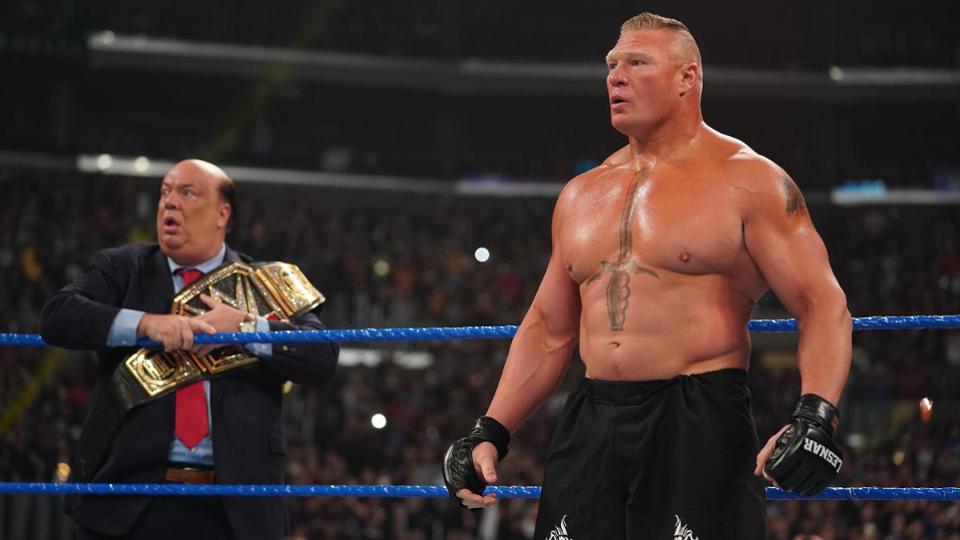
The hierarchy of iron is characterised by big muscles; the hierarchy of silver is characterised by flash suits

A lot of discussion in social psychology revolves around the idea of the dominance hierarchy. This refers to the fact that humans, as a form of primate, have social dominance hierarchies like other primates (and other mammals). There are actually three separate forms of dominance hierarchy, depending on the nature of the situation, as this essay will examine.

The elementary dominance hierarchy corresponds to the realm of iron. This is the same as the dominance hierarchy that exists in a state of Nature.

In principle, there’s little more to the elementary dominance hierarchy than who can beat up who. The dominance hierarchy relating to iron is similar to the dominance hierarchy that exists in prison. Authority is determined by a capacity and a will to use violence. The top of this hierarchy is held by mighty warriors, warlords and kings.

All the posturing one sees about who could beat up who is establishing a dominance hierarchy in the realm of iron. There is a whole art to posturing in this manner, and males will start learning it while they are still boys. The point of it is to establish who is better at fighting, but without actually fighting. The man who is believed to be the best fighter is at the top of this hierarchy and, if you disagree, he will bash you.

The dominance hierarchy that corresponds to the realm of silver is the same as the social hierarchy.

This hierarchy doesn’t reflect fighting ability but rather social status. In a civilised setting, where peace reigns, the person who generally makes the most intelligent long-term decisions will be at the top of the dominance hierarchy. Fighting in terms of social status means that the loser gets ostracised (or incarcerated) instead of killed.

The dominance hierarchy of silver is the same as the hierarchy of all the people who have agreed to play by civilised rules. The uncivilised can contest the dominance hierarchy of iron by bashing and stabbing each other, but in doing so they will fall down the hierarchy of silver, because civilised men will not respect them.

In practice, the hierarchy of silver often represents the hierarchy of wealth. When it comes down to it, this hierarchy is an extension of the hierarchy of iron because silver gives you the opportunity to hire men of iron to do your bidding. Wealth can buy loyalty, even if only temporarily. It can also buy land, weapons and propaganda.

However, social status can be afforded to people on the basis of their knowledge alone, which is why the hierarchy of silver can, on occasion, promote a knowledgeable man above a wealthy one. This is most obviously the case in the university system, where extremely knowledgeable people are afforded a high status.

The third form of dominance hierarchy is much more subtle, and consequently it corresponds to the realm of gold.

The spiritual hierarchy reflects those who are most closely attuned to the Will of God. Because every person has their own idea of what the Will of God is, it’s rare that people openly agree as to who is at the top of the spiritual hierarchy. Therefore, this hierarchy is subtle, sometimes even occluded.

At the top of the spiritual hierarchy is the person with the greatest knowledge of God. In most cases, this will not only be a person who believes in God, but will also be a person who maintains a practice that keeps them in connection with God. This means that they have explicitly repudiated the other two dominance hierarchies and no longer contest them.

These three hierarchies interplay with each other in many ways.

The hierarchies of iron and silver clash all the time in civilised society. The hierarchy of iron is almost always topped by a male aged between 20 and 40, because it’s in these years that men possess maximum physical strength. The person at the top of the hierarchy of silver, by contrast, will have achieved their position after decades of building social and financial capital, and so will be much older.

This means that the person at the top of the hierarchy of iron is almost never the same as the person at the top of the hierarchy of silver. This is all but inevitable if the population is larger than 50 or so. With two different people at the top of two different dominance hierarchies, conflict between them is possible. This is why some ancient tribes used to split leadership into a war chief (man of iron) and a peace chief (man of silver).

Likewise, the person at the top of the hierarchy of gold will not be the decision-maker all the time. This person will only be in charge as long as others put their egos down and seek wise counsel instead of trying to force their will on others. As long as people choose to fight, then they will fall behind the leadership of either the best physical fighter or the best social fighter, and neither will follow the man of gold.

Because of the Conceit of Silver, people of silver will regularly fancy themselves to be people of gold. This leads many people of silver to adopt the trappings of the people of gold and to start mimicking them. Therefore, one can never be sure that anyone claiming to be a believer in God really is one. This means that the hierarchy of gold cannot be measured.

The hierarchies of silver and gold naturally clash with each other, as those driven by egoic desires for self-aggrandisement clash with those driven to minimise the suffering of all sentient beings. The men of silver are generally happy to cause suffering to other sentient beings if it grants them more power, but in doing so they inevitably provoke the ire of the men of gold.

These three dominance hierarchies can be observed in virtually all human groups. The interplay between physical strength, social strength and moral strength all but ensures that ultimate decision-making power is never held in the same hands for long.

*

If you enjoyed reading this essay, you can get a compilation of the Best VJMP Essays and Articles of 2018 from Amazon for Kindle or Amazon for CreateSpace (for international readers), or TradeMe (for Kiwis). A compilation of the Best VJMP Essays and Articles of 2017 is also available.

*

If you would like to support our work in other ways, please consider subscribing to our SubscribeStar fund.

Orderworkers And Chaosworkers

There are many different ways of making an elementary magical division among the people of the world. Some say that there are black magicians and white magicians, others say there are lightworkers and shadow-workers. This essay divides the world’s magicians into two basic types on their relation to order: orderworkers and chaosworkers.

The essential distinction is that orderworkers cause change to the world by applying order to chaos, whereas chaosworkers cause change to the world by applying chaos to order. In theory, an orderworker will impose order upon a harmful chaos, whereas a chaosworker will impose chaos upon a harmful order, although this need not always be the case.

An example of an orderworker would be a doctor who prescribes a medicine that gets rid of a disease. Such a person would recognise that the physical body before them is in a state of disorder, and their diagnosis and prescription is an attempt to apply order to reduce the suffering that the disorder was causing the patient.

A cleaner is another example of an orderworker. They take something that has become disorderly on account of use, and apply order to to it to make reusable for other people. They apply order with mops and vacuums in much the same way that a surgeon does with a scalpel – perhaps with less precision, but the action is the same on a metaphysical level.

Another example would be a Police officer or security guard. Their remit is to keep the peace or to prevent things from being stolen, which means that they have to impose order upon the various criminal elements out there. They apply order in the form of preventing outside elements from disrupting the status quo.

It can be seen from this that being an orderworker does not imply any moral superiority to a chaosworker or even any higher social rank, as order and chaos are on an entirely separate axis to good and evil. It’s simply a descriptor of someone who applies order to achieving their goals.

Chaosworkers introduce chaos into order. This requires some elaboration because many people automatically assume that order is a good thing and that chaos is a bad thing, and that anyone fitting the label “chaosworker” must be a destructive and malevolent force. This is true to an extent, but there are major ways in which it is not true at all.

An excess of order can be suffocating. It’s easy to imagine order as a straight line – in this sense, an excess of order could be like a prison cell that confined a person to a limited space.

An excess of order can also be sterile. A fertile ground for growth requires a variety of components that can interact with each other as necessary. An excess of order will produce a desert; such an environment requires the addition of chaos in the form of water before it can become fertile.

A chaosworker, then, is someone who releases someone else from bonds that imprison them, or who provides a form of novelty that serves to fertilise the mind of those who encounter it.

The most common examples of chaosworkers are the bartenders and musicians that one would encounter in a city’s entertainment area. After a hard day of work, most people have built up an excess of order in their minds. They have become excessively conditioned, and as such risk becoming entrapped by their thoughts. These people have a need to unwind.

Such an excessively conditioned person is at risk of becoming aggressive if they cannot get a chaosworker to help them relax. Bartenders and musicians are here in the same category as cannabis dealers, sportsmen and comedians. In applying chaos to people’s minds, these people break down harmful order and help them find joy and contentment.

Prostitutes are also chaosworkers, because they take a powerful instinct and work to dissipate it into something harmless. This chaos work serves to prevent rapes, suicides and other expressions of sexual frustration. Soldiers are another kind of chaosworker, in that they work to blow things up and to kill people. They break down the harmful order that is the enemy command and control structure.

The orderworker/chaosworker distinction explains why there is a distinction between jobs such as Police (whose warrant is to keep the peace) and the Army (whose remit is to fuck things up). It’s a similar distinction to how non fiction exists to to inform, while fiction exists to remove ignorance.

Note that neither implies moral superiority. Although it’s certainly true that an orderworker will feel a kind of disgust at an excess of chaos, so too will a chaosworker feel disgust at an excess of order. As far as everyone else is concerned, the best of the two is whoever can best help with the current problem. A man with a broken arm needs an orderworker; a man with a neurotic obsession needs a chaosworker.

Orderworkers and chaosworkers are just as valuable as each other, because the transitory nature of all Earthly phenomena mean that sometimes it’s the yin that is ascendant, and sometimes the yang. This means that sometimes it’s chaos that is the greater problem (which requires an orderworker) and sometimes it’s order (which requires a chaosworker). The same person might even have to do both.

*

If you enjoyed reading this essay, you can get a compilation of the Best VJMP Essays and Articles of 2018 from Amazon for Kindle or Amazon for CreateSpace (for international readers), or TradeMe (for Kiwis). A compilation of the Best VJMP Essays and Articles of 2017 is also available.

If you would like to support our work in other ways, please consider subscribing to our SubscribeStar fund.

The Four Kinds of Tribe

Humans are tribal animals, and have been since before we were even humans. It’s very difficult for an individual to feel at peace if they do not also feel like they are part of a tribe who are watching their back. As this essay will examine, there are four major kinds of tribe, corresponding to the four feminine elements of Earth, Water, Air and Fire.

The element of Earth corresponds to the soil, and reflects one fundamental kind of tribe: that which grows out of the soil together. This kind of tribe is that which occupies a particular geographical territory. The element of Water corresponds to blood, and reflects the other fundamental kind of tribe: that which is related by family relations. Roughly speaking, Earth can be described as neighbourhood and Water as family.

In a state of Nature, there is very little difference between the first two kinds of tribe. This is because, in a state of Nature, the overwhelming majority of people don’t move very far from where they were born. So what people usually mean by their tribe is those who they share bonds of soil and blood with. For the first 99% of human history, one’s tribe was the same thing as one’s tribe of Earth or Water.

The third kind of tribe is the tribe of ideology. This corresponds to the element of Air. This could be said to have first come into existence with the arrival of civilisation. The advent of civilisation brought with it original dilemmas, such as whether or not a person should leave their tribe of savages to join the clean and peaceful people. This opportunity would have created great tensions with the loyalties to the tribes of Earth and Water.

In this sense, religions count as ideologies, because they are also supranational and also of the mind and not the physical world. The existence of religion creates an ideological tribe that inevitably leads to tension with existing bonds of solidarity with tribes of soil and blood. This is especially true now that the Age of Imperialism has mixed things up so much.

The fourth kind of tribe is the tribe of spirit, or frequency. This corresponds to the element of Fire, and reflects a person’s soul or true nature, independent of outside influences.

The bonds of solidarity at this level are, like flames, both subtle and extremely powerful. Not everyone automatically understands what their own spiritual tribe is, which is why the bonds are subtle. When understood, however, these spiritual bonds can often override the others.

All four of these tribal affiliations can play off against each other.

The tribes of Earth and Water can come into conflict when two blood tribes come to compete for the same territory. One tribe might get pushed out of their territory by a natural disaster or by a stronger tribe, and this often leads to them fighting with the incumbent tribe in the new territory they enter.

They also conflict a lot in today’s world on account of that there has been so much immigration. A New Zealander might find himself facing a loyalty test between people of a different race but who they grew up around and people of the same race but from other countries. This conflict occurs anywhere there is mass movement of peoples.

The tribes of Air often conflict with those of Earth and Water when ideological demands cause bonds of physical solidarity to weaken. Certain religious traditions, in particular the Abrahamic ones, run across racial lines. This means that followers of a religion might have divided loyalties, where they are as loyal to a foreigner of the same religion as they are to a countryman who follows a different creed.

Luke 12:51-52 cites Jesus as saying “Do you think that I have come to bring peace to the earth? No, I tell you, but division. From now on, five in one household will be divided, three against two and two against three.” This says explicitly that the religious ideology promoted by Jesus would threaten existing bonds of soil and blood. This is all but inevitable, unless a person’s ideology stems directly from the soil and blood themselves.

Another common conflict here is when a person from a particular family graduates into a different social class. A person from a working-class family might get an advanced education, and this might put them in conflict between their intellectual peers – who respect that person’s education and appreciate them for it – and their blood relatives who don’t appreciate it or who feel envious about it.

The tribes of Fire conflict with all of the others. A person’s spirit will see them form bonds of solidarity with others who have the same spirit, and this is true even within a family or an ideology. These spiritual bonds can cause all kinds of subtle tensions – or gross ones.

A classic conflict is when a couple’s romantic inclinations cause them to come into conflict with their tribes of Earth, Water or Air. This often happens when a person falls in love with a foreigner, because foreigners are often of different religions and races as well as different geographical areas. Some family and friends will not approve – others will think it great.

Another one is when a person’s true Nature causes them to feel bonds of solidarity with certain people – and not others – within a workplace or social club. This phenomenon could be said to be the basis of true friendship, because the solidarity involved does not necessarily confer material benefit.

These four basic kinds of tribe can be found all over the world, and so can the basic types of conflict between them. As the world continues to rapidly change and become more complex, we can predict that conflicts between the four kinds of tribe will occur with greater frequency. This is true whether the conflict occurs between or within groups, or between or within individuals.

*

If you enjoyed reading this essay, you can get a compilation of the Best VJMP Essays and Articles of 2018 from Amazon for Kindle or Amazon for CreateSpace (for international readers), or TradeMe (for Kiwis). A compilation of the Best VJMP Essays and Articles of 2017 is also available.

If you would like to support our work in other ways, please consider subscribing to our SubscribeStar fund.