

Hierarchies of Silver Versus Hierarchies of Gold

There is a lot of discussion about power dynamics, and whether the people who end up at the top of them have got there through competence or by machination. A person’s position on this question will correlate extremely strongly with their level of revolutionary zeal. This essay seeks to illuminate the subject from an esoteric perspective.

There are three ways for a person to dominate another one. They can do so physically, in a manner akin to the effect iron has on clay; they can do so with trickery, in a manner akin to the effect silver has on clay; they can do so by offering up an example of behaviour that ought to be emulated and allow the clay to imitate it, in a manner akin to the effect gold has on clay.

For the most part, people can generally agree that hierarchies of iron are illegitimate, except for the odd occasion when they are entered into legitimately, such as an army volunteer or a consensual BDSM participant. In nature, the effect of iron upon the clay is necessarily coercive and non-consensual, and the majority of people find this sort of thing unpleasant, so hierarchies of iron are generally discouraged.

Everyone generally agrees that hierarchies of gold are ideal. The ideal form of hierarchy is for an excellent person to behave excellently and for people who aspire to a similar excellence to support that first person on account of their great deeds. This is identical to the philosopher-king model proposed by Plato in The Republic and most people can immediately see the merits in it.

The difficulty arises when a hierarchy of silver is formed in imitation of the hierarchy of gold. To some extent this is unavoidable because almost all hierarchies of silver are – in the human world at least – imitations of the hierarchy of gold.

For example, a man might arise who is crafty enough to swindle the people around him into believing whatever he said. He might then, as many men have previously chosen to do, take advantage of this opportunity and tell them all that he’s a living god and that his every word is infallible and that his will cannot be questioned.

This is an ancient trick – it worked 10,000 years ago and the Pope is still running it now. It works because the hierarchy of silver built by the swindler is sufficiently close to the ideal hierarchy (assuming a sufficient level of stupidity among the peasantry) that the dull cannot tell the difference, and those who do can be silenced by swift application of sharp iron.

Hierarchies of silver have a multitude of forms, as numerous as there are opportunities to cheat others. They all have in common, however, the property of illegitimately acquiring and concentrating power.

Either they put the power into the wrong hands or they put it in the right hands but in the wrong amounts. The hierarchies of silver share this quality with the hierarchies of iron, but unlike the iron they do not do so by acquiring powerful weapons, but rather by controlling the minds of the men who control the weapons.

In other words, a hierarchy of silver will misdirect the men of iron. This means that the men of silver will make laws that are unjust, such as levying unfair taxes, or banning certain luxuries that should remain freely available. The men of silver will not be able to adjust their system to reflect accurate criticism because, not being of gold, their hierarchy is not intended to represent correct rule.

Hierarchies of gold are when the right people have the power in the right amounts, and usually result in Golden Ages for the people within them. However, they are more fragile than the others, in the same way that gold is the softest of all metals. The proximate challenge for the philosopher-king is usually keeping the men of silver from hatching some plot to steal the loyalty of the men of iron.
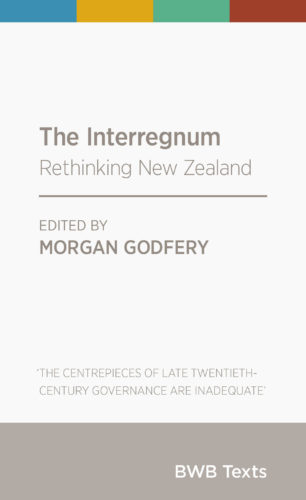

VJMP Reads: The Interregnum: Rethinking New Zealand VII

This reading carries on from here.

The seventh essay in The Interregnum is ‘Contributing to Public Life From Afar’, by Lamia Imam. If the essays so far had mostly managed to be worryingly Marxist without being alarmingly so, this essay leaps right into the deep end with no restraints at all.

In an effort that stretches credibility beyond breaking point, Imam complains about the difficulty she has found being accepted by New Zealanders as one of our own, despite literally being an anchor baby who spent almost all of her formative years overseas.

Echoing the complaints of Golriz Ghahraman, who also spent most of her formative years overseas being raised by non-Kiwis, Imam describes being born in New Zealand only to move away with her parents while still a toddler, only to wonder why she isn’t welcomed with open arms when she decides that she is a New Zealander many years later when she briefly returns to study (before shifting off again).

The question she does not confront is: why should Kiwis form close social bonds with people who are liable to up and leave the country forever, rendering that social investment worthless? If a person has all of their family overseas, and are themselves getting educated overseas, the likelihood of them still being here in 25 years is very low, at least in comparison to anyone else.

Really this essay should be seen for what it is, which is an effort to destroy the social bonds between New Zealanders for the sake of making us more easily exploitable by the international globalist class of which Imam is a member. To this end, it uses a number of globalist rhetorical devices that have previously been successfully employed towards the destruction of the Western working class.

One of the most obvious of these is crying about the “racism” she has faced on account of being Muslim (which is, of course, not a race). Another is the astonishing claim that people who don’t consider her to sound like a Kiwi on account of her admitted lack of a Kiwi accent are “ignorant”.

Claiming to be “hyper-aware of her privilege”, Imam appears to make no effort whatsoever to understand the thinking of the New Zealanders she claims to be her countryfolk. Relating an incident where a highly distressed man at a Community Law Centre “started screaming at me about immigrants, and specifically Muslims… ruining his job prospects,” absolutely zero effort is made to commiserate with one of the many Kiwis who have lost out from globalism.

Instead she complains that “acceptance was hard to come by,” as if the rest of us ought to have been grateful for the presence of a Muslim immigrant – a sight that has heralded the impending destruction of communities and nations all around the world for 1,300 years.

It seems that, according to Imam, Kiwis no longer have the right to decide for themselves what a Kiwi is. That can apparently now be decided by people who have lived three years of their life in New Zealand and who do not have Kiwi ancestors. Now you can just step off a plane and say you’re a Kiwi and that’s as good as anyone else can do.

As a reader I wondered how welcoming Imam would be if I turned up at the funeral of a wealthy family member, declared myself to be one of their tribe and demanded a share of the family fortune? Would I also find that “acceptance was hard to come by”?

In the end, I gave up when I read “Ordinary Kiwis supposedly do not care about identity politics, which suggests to me that they don’t have an identity.” No-one who, while claiming to be a Kiwi, writes something that stupid is worth reading.

In summary, this poorly-written effort rambles, does not employ logic and frequently contradicts itself, but the essay does raise many questions that are yet to be meaningfully discussed in the West, such as: who are we allowed to exclude?

Answering those question is not for The Interregnum. This book that preaches inclusivity as the highest of virtues has expressly excluded right-wing and working-class voices.

Fair enough on excluding the right-wing, if one wants to restrict the dialogue to the voices of the young, but why provide a platform for a jetsetting middle-class professional woman while denying a platform to working-class white people? It seems very strange that a book can claim to be speaking for the underdog but deny that underdog the right to speak about the issues that are causing them to suffer.

VJMP Reads: The Interregnum: Rethinking New Zealand VI

This reading carries on from here.

The sixth essay in The Interregnum is ‘Radical Kaupapa Maori Politics’ by Carrie Stoddart-Smith. Turning to maoridictionary.co.nz I discover that kaupapa means, in this context, something like ‘agenda’ (indeed, within the first page it has been defined as “something like first principles”), but the essay itself explores the various definitions of ‘Kaupapa Maori’.

At the core of this essay is the question that Maori have been asking themselves for 200 years. To what extent to we cling to the old ways, and to what extent to we abandon them for the sake of adaptation to a world that is different to what it was when the old days arose?

Many mainstream readers, conditioned to mainstream journalism, will find the tone of this essay jarring, as it is heavy on the kind of guilt-based sermon-style rhetoric that so many have learned to manipulate otherwise well-meaning audiences with.

It’s also full of the unnecessary race-baiting and shit-stirring that has become associated with the American style of race rhetoric, such as when Stoddart-Smith justifies the exclusion of non-Maori with “empowering Maori voices that continue to be silenced by the noise of history, and by the protestations of white New Zealand that insist on shouting us down and shutting us out.”

Unfortunately this dishonest, deliberately aggravating style of rhetoric is a throwback to the Cultural Marxism espoused in the introductory essay. Only “white New Zealand” is the enemy; the fact that Asian and Pacific Islander New Zealanders think much less of Maoris than white people do, not having had two centuries of living together, is ignored on account of not fitting the narrative (the fact that Asians and Pacific Islanders are harder to guilt trip may also be a factor).

It’s a shame that a confrontational and antagonistic stylistic approach was taken, because there’s plenty of philosophical value in this essay. In particular, Stoddart-Smith draws multiple parallels between kaupapa Maori and the anarchist philosophy of mutualism.

After all, pre-European contact Maori did not have a central government, and as a consequence they adapted to learn patterns of mutual support that helped them and their neighbours to survive. In some cases the agreements over which tribe had the rights to access what were very sophisticated and complicated, but the important thing was that they were mutually consensual, in contrast to today’s arrangement where representatives of the Queen enforce the law whether people like it or not.

If this side of things had been emphasised, this could have been a good essay. Unfortunately it’s full of common separatist canards like “colonialism embedded patriarchy in tikanga Maori” and the revisionist attempt to ignore He iwi tahi tatou, as if the historical nature of interactions between Maori and British settlers had been entirely involuntary on the part of the Maori, rather than mutually beneficial.

One feels that a sophisticated approach to redressing the historical wrongs done to the Maori people, and this essay falls a long way short of that. It is, however, a good example of Marxist agitprop.