Cannabis Cowardice is Punishing Andrew Little in the Preferred PM Stakes

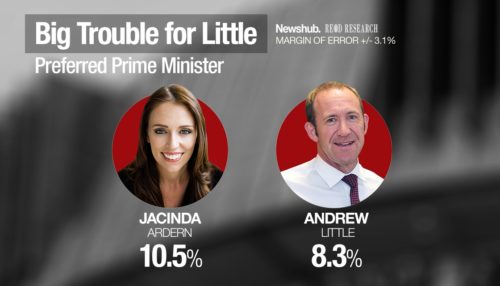
Andrew Little has been the Labour Party leader since 2014, and has struggled so far to gain much traction with prospective Labour voters. A recent poll brought some very bad news for him – namely that he has now fallen behind his deputy Jacinda Ardern in the preferred Prime Minister stakes.

No doubt the Labour Leader will have a team of pollsters working overtime ringing people up to ask why they’re not interested. However, they won’t ask the large numbers of Kiwis who are disenfranchised from the political and economic systems – and this is supposed to be Labour’s constituency and is the key to their recent failure.

These disenfranchised people are mostly the young, the invalid’s beneficiaries and Maori. These three groups will all tell you that they are crying out for a change to New Zealand’s cannabis laws.

The young are crying out for a recreational alternative to alcohol. All young people have had the unpleasant experience of watching people in their parents’ generation destroy themselves with alcohol, while noting that people who preferred cannabis generally had a much better time of things.

Invalid’s beneficiaries are crying out for medicinal relief for their suffering. Huge numbers of invalid’s beneficiaries in New Zealand have found that cannabis is a better medicine for alleviating the suffering that comes with their condition than the pharmaceutical alternatives.

They will point that since medicinal cannabis is now legal in 28 states of the USA there’s no continuing to deny that it is a medicine.

Maori are probably the group worst brutalised by cannabis prohibition, for a number of reasons. The foremost is the lack of genetic resistance to alcoholism that has seen so many Maori come to prefer cannabis as a recreational alternative to cannabis.

Not only Maori – there are many, many New Zealanders whose close family history has a detailed history of either alcoholism or violence related to drinking. All of these people are desperate for a recreational alternative to booze.

Andrew Little’s refusal to even consider a 21st century approach to the cannabis laws is causing him to bleed support among all of the Labour Party’s major demographics – all of which are crying out for some kind of cannabis law reform.

On the cannabis issue, Little appears to hover somewhere between cowardice and supporting a National party-style prohibition. This hits hard against exactly those sort of people who like to vote Labour.

As has been described in an excerpt to Dan McGlashan’s upcoming book Understanding New Zealand, the sort of person who votes Labour is the same sort of person who is likely to be adversely affected by the country’s cannabis laws.

The correlation between median age and voting for the Aotearoa Legalise Cannabis Party in 2014 was -0.55, which tells us that the bulk of ALCP voters were young. The correlation between median age and voting for the Labour Party was -0.70, so that tells us that Labour and the ALCP are competing for the same voters to a large extent.

The correlation between being on the invalid’s benefit and voting for the ALCP in 2014 was a very strong 0.76. This is because many, if not most, people on an invalid’s benefit would be greatly helped by any change to the law that made cannabis more readily available.

Finally, the correlation between being Maori and voting for the ALCP in 2014 was a whopping 0.89. This is not at all surprising considering that Maori suffer by far the worst of the abuse from cannabis prohibition. This is enough to suggest that a mature, intelligent cannabis law reform policy would attract masses of Maori voters.

All three of these groups also have very strong correlations with not voting at all in 2014 – because of the total failure of any of the mainstream political options to represent their needs.

What this tells us is that there are legions of disaffected, disenfranchised New Zealanders who will not support the Labour Party as long as it has a leader who is too timid to support a definitive change to the country’s cannabis laws.

Going by the large numbers of young, sick and Maori non-voters who are desperate for a change, we can predict that the Labour Party will lose the General Election this year unless it adopts an intelligent, modern, compassionate cannabis law reform policy.
The Use of Major Psychedelics in Healing Psychological Trauma

At some point in the near future, the potential for using psychedelic medicines to help heal the major psychological traumas that cause most mental illnesses will be a hot topic. Unfortunately, we will have to begin almost from the beginning, as the bulk of our historical knowledge about these substances has been destroyed.

Despite this, there is still a considerable amount of shamanic knowledge in the underground culture, certainly much more than what exists in the mainstream medical establishment, for whom the retarded calculus of “drugs = brain damage” still dominates thinking.

The essential thing that has to be understood is that psychedelics, like cannabis, serve to decondition the mind and brain, only in a much deeper and more sudden way than cannabis.

Deconditioning is here used in the clinical psychology sense to mean a process of unlearning – in particular, of unlearning involuntary subconscious reactions to things that may have been useful to deal with the problems of the past but which no longer are.

This is principally why the psychedelic experience is so difficult. It is also why the psychedelic experience is so exhilarating. One sees things as they actually are, as one did when a child, without the experience being filtered through hundreds of layers of conditioning collected over many forgotten years.

It is possible to condition oneself into a mental illness by thinking too hard about things, because the brain (crudely speaking) works like muscles in the sense that the more it is exercised the stronger it becomes.

Because anxiety and depression are often little more than a habitual fixation of thinking on either the future or the past, respectively, a psychedelic experience often has the effect of deconditioning a person from thought patterns that made them unhappy.

This is why a lot of practiced psychedelic users take them when they feel it’s time to reset the thinking. Usually this is after a certain amount of time has passed since the last experience.

Likewise, many people have suppressed traumatic memories. The suppression often makes good short-term sense in that it allows the damaged person to deal with their immediate problems of survival, but it often makes bad long-term sense in that the warping effect it has on someone’s personality magnifies over time.

This points the way to the major positive use of psychedelics in healing mental illness. Any mental illness that has been caused by overconditioning in an area of the brain/mind could be helped by a medicine that deconditions a person from the thoughts they did not want to have.

It could also give them an opportunity to bring up the suppressed memories and to consider them in a new light, free of the conditioned anxiety response that usually accompanies recollection of past traumas.

Where more research will be necessary is to make sure that the patient does not lose conditioning in areas of the brain/mind that actually helped them in their life.

There are many concepts and habits that people have learned for good reasons, in particular concepts around good social conduct that make life much easier for all of us. An 18-year old adult will have been conditioned for almost their entire life about many things.

So in order to be able to use these tools effectively, mental health practitioners will have to educate themselves past the barbaric superstitions that currently inform our approach to pre-pharmaceutical medicines.

Much of this will involve sitting down with drug users and talking to them to discover what benefits they have found in the use of various substances in their explorations of the mind.

This cannot happen until society comes to appreciate both that psychoactive drug users are people who have followed the prehistoric shamanic path, and that this path is still necessary in our society to protects us from the excesses of groupthink, of tradition and of mindless, knee-jerk programmed reactions and thinking.

Medicinal Cannabis Users in New Zealand are Treated Worse Than Animals

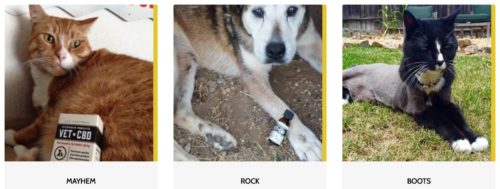
The above image is from the testimonials page of VetCBD, a medicinal cannabis product formulated specifically by veterinarians for conditions that might cause suffering to pets. All of the animals in the above image have been (according to their owners, at least) successfully treated with VetCBD.

Some Kiwis will be amazed, but this simple Californian website offering therapeutic treatment for pets actually offers more advanced and accurate cannabis science than you will get from a New Zealand doctor.

Namely, it will tell you that that CBD oil, an extract of one of the cannabinoids in the cannabis plant, is known to have considerable medicinal value.

No Kiwi doctor will tell you such a thing – if you ask them about CBD oil they will reflexively groan, zombie-like, “Cannabis causes braaaaaaain damage!”

Some pet owners in places with legal medicinal cannabis treat their pets with more compassion than Kiwis treat each other with

The website also lists a number of conditions that their product is believed to reduce the suffering associated with, in particular pain, anxiety, nausea and loss of appetite – in other words, the same things that human medicinal cannabis users use cannabis for.

Another way of putting this is: people in California treat their dogs with more compassion than New Zealand politicians and doctors treat their patients.

Yet another way of looking at is that medicinal cannabis users in New Zealand have cause to be envious of animals in more enlightened parts of the world.

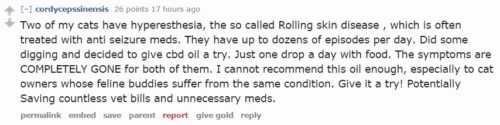
Cannabis ought to work on pets if they have an endocannabinoid system, which all mammals do.

But whereas animals in over twenty American states can access CBD oil out of compassion for their misery, adult human New Zealanders cannot legally access it, as we have been commanded to go without this medicine for the sake of higher profits.

Next time you think you are living in a free country, Kiwis, just remember that there are places in the world where they don’t even allow animals to suffer to the degree that your own politicians and doctors will allow you to suffer if you have a condition that can be alleviated by medicinal cannabis.