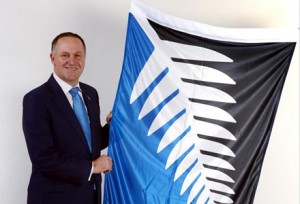
Understanding New Zealand: Demographics of Flag Referendum Voters

Given what is already known about the demographics of the various party voters, we can tell a lot about who supported the flag referendum just by looking at the correlations between voting for a given party and one of three other major variables.

The first major variable is the turnout rate in the first flag referendum.

The correlation between turnout rate in this first referendum and voting National was a very strong 0.86. That is enough by itself to suggest that the bulk of the people who did end up voting in it were National supporters.

The correlation between turnout rate in 2014 and voting National was, however, 0.76, so we can see that the people who voted in the first flag referendum were mostly those who are generally inclined to vote whenever they can. This was also true for Conservative Party supporters, who had a correlation of 0.70 with turnout rate in the first flag referendum.

Green, ACT and New Zealand First voters were only mildly interested. The correlation between turnout rate in the first flag referendum and voting Green was 0.07, with voting ACT it was -0.01 and with voting New Zealand First it was -0.21. None of these were significant.

Labour Party voters were almost entirely indifferent to the whole idea. The correlation between voting Labour in 2014 and turnout rate in the first flag referendum was a very strong -0.84.

This was something broadly shared by all of the Maori-heavy parties. The correlation between turnout rate in the first flag referendum and voting for both the Maori Party and Internet MANA was -0.67, and with voting for the Aotearoa Legalise Cannabis Party it was -0.55.

Predictably, given these statistics, it was mostly Kiwis of European descent who were interested in the first referendum. The correlation between being of European descent and turnout rate in the first flag referendum was 0.85.

The correlation between turnout rate in the first flag referendum and being either Maori or a Pacific Islander was -0.65, and with being Asian it was -0.27.

Perhaps the most striking correlation of all is that between turnout rate in the first flag referendum and turnout rate in 2014 – this was an extremely strong 0.90. Those who like to vote tend to take every opportunity they can to actually do it.

There was also a correlation of 0.89 between turnout rate in the first flag referendum and median age.

The correlations between wealth and turnout rate were significant, but only marginally so.

All of the income bands above $70K were significantly positively correlated with turnout rate in the first flag referendum, but only marginally so – the strongest of them was 0.31. None of the income bands below $70K had a significant positive correlation with turnout rate in the first flag referendum.

By contrast, all of the income bands below $10K had a correlation of -0.50 or more strongly negative, the strongest of all being for those who had a negative income. The correlation between being in this income bracket and turnout rate in the first flag referendum was -0.84.

Likewise, the correlations between education and turnout rate bordered on statistical significance.

Although there were significant positive correlations between turnout rate in the first flag referendum and having either an Honours degree (0.25) or having a doctorate (0.27), this was true for neither a Bachelor’s nor a Master’s degree (both 0.13).

Mirroring this, the correlation between turnout rate in the first flag referendum and having no academic qualifications was not especially strong, at -0.28.

One of the strongest correlations of all was between turnout rate in the first flag referendum and living on freehold land: this was 0.87.

All of this gives us a clear picture. The sort of person who turned out to vote in the first flag referendum was the same sort of person who is most heavily involved in running the country: rich, old, white and National voting with leisure time.

The second major variable is the turnout rate in the second flag referendum. Here it is only really meaningful to speak of the differences in voting pattern to the first flag referendum.

Although the second flag referendum was still mostly a vehicle for Kiwis of European descent (the correlation between the two demographics strengthened from 0.85 to 0.88), the people who turned out for it tended to be more Maori. The correlation between turnout rate in the second flag referendum and being Maori came in to -0.57 from -0.65.

Against this, turnout rate for the second flag referendum faded among Pacific Islanders and Asians. This may have been because the further the process wound on, the more likely the least established Kiwis were to drop out of it.

People who voted Green were also less likely to turn out in the second flag referendum. The correlation between the two fell to 0.02 from the 0.07 of the first flag referendum. This was probably because the correlation between being in the 20-29 age bracket and turnout rate fell from the -0.41 of the first flag referendum to the -0.50 of the second.

All of this reflected the fact that the second flag referedum saw a considerably higher turnout rate among those who did not want to change the flag. The correlation with voting to change the flag fell from 0.86 for the first flag referendum to 0.80 for the second.

The third major factor is the percentage of people who voted to change the flag.

These people were almost all National voters. The correlation between voting National in 2014 and voting to change the flag in the second flag referendum was a whopping 0.95. This is an extremely strong correlation, and it tells us that basically the only people to even vote to change the flag were died-in-the-wool National voters.

Maoris really didn’t want to change the flag – the correlation between the two was -0.77. These numbers suggest that there was a small core of Maoris who knew from the beginning of the process that they didn’t want to change the flag, but who waited until the second flag referendum to voice their disapproval.

Asians were a curiosity, because they had a negative correlation with turnout rate in either referendum, but a slightly positive correlation of 0.11 with voting to change the flag.

Some will find it very curious that the old were much more likely to vote for change than the young, which goes against the usual pattern of the old being more conservative.

The correlation between being aged 65+ and voting to change the flag was a very strong 0.62, which is amazing if one considers that one of the arguments for keeping the flag in the first place was that old people had become accustomed to it over many years of living under it.

For their part, the young preferred to keep the flag. The correlation between being in the 15-19 age bracket and voting to change the flag was -0.53.

Some might find these latter points extremely interesting, because they support anecdotal evidence from overseas suggesting that the generation to follow the Millenials – those who some have dubbed Generation Z – are more conservative than their immediate predecessors.

This question will be revisited in the second edition of this book, to be written after the 2017 General Election!

*

This article is an excerpt from Understanding New Zealand, by Dan McGlashan, published by VJM Publishing in the winter of 2017.

The Government Giveth; The Government Taketh Away

There was some excitement in the New Zealand cannabis community this week after the news that the Government would remove restrictions on doctors who wanted to prescribe cannabidiol (CBD) in the form of an oil. It was the first admission from the Government, ever, that cannabis actually had medicinal value, and for this reason it was significant.

Those of us who are not enamoured of politicians are naturally eager to point out that, after twenty years of sick Kiwis being completely ignored when it came to the cannabis question, progress is only now being made in the foreshadow of a general election.

Neither are we surprised to see hordes of Green Party hacks swarm the battlefields of social media to play down the magnitude of this change. The consensus tactic appears to be describing the changes as “not medicinal cannabis”, despite the fact that CBD is the component of cannabis that has shown by far the greatest medicinal promise.

After all, it’s important for the Green Party – now that the will of Kiwis for some cannabis law reform is undeniably clear – to craft a narrative of having been at the forefront of cannabis law reform all along.

Politicians being what they are, the Greens will deny at all costs the truth: that they sucked up cannabis law reform votes from 1999 and gave back nothing but contempt, until a few months before Peter Dunne (of all people) changed the law himself, without Green Party input.

All of this shitfighting distracts, and is intended to distract, from the fact that if the Greens do get into Government and change the cannabis laws to something intelligent and reasonable, they will, at the same time, make some other aspect of legislation stupid and unreasonable – and this is the necessary flipside of the deal.

The Government giveth; the Government taketh away. This is the nature of politics. The Government never simply gives freedoms back to the people it manages.

We are losing rights now, and will continue to lose them into the future, because the Government and all parties running for Government are in agreement about taking away our rights to use tobacco.

Many people have been able to predict that we will get legal cannabis at the same time as we lose legal tobacco. The rhetoric from the Government is for a “Smokefree New Zealand” by 2025, and we know that they will pursue this futile goal (previously described by this column as a sadistic idea dreamed up by morons) with the same mindless zealotry that they did the goal of making New Zealand cannabis-free.

And it will be equally as futile. Tobacco may be less fun to smoke than cannabis, but people still do it – not because they are “addicted”, as our moronic mental health establishment would have it, but because tobacco has a strong medicinal effect to people suffering from a wide range of mental problems, in particular psychosis and/or excess anxiety brought about from complications of trauma.

Statists and control freaks everywhere are mewling: “But we used to think tobacco was medicinal, but now science has advanced and now we know better.”

But this was exactly what they said when they made cannabis illegal.

Cannabis has been widely used by humans for centuries, and the propaganda against it early this century was all based on a two-pronged attack: first, deny any and all benefits of the substance, no matter how obvious; and second, attribute any and all detriments to the substance, no matter how peripherally related.

And so, in much the same way that we just had nearly a century of hearing that cannabis causes psychosis and schizophrenia and brain tumours and amotivational syndrome and blah blah blah, and how all of the positive effects that people had noticed from cannabis use were really just delusions brought about by the psychotogenic effects of the plant, now we’re going to hear all the same rubbish about tobacco.

Mental health patients will continue to tell politicians and doctors that tobacco use significantly alleviates their suffering, as it has done for mentally ill people for centuries, and they will increasingly be ignored as the devotion to the righteousness of the crusade against tobacco overrides all logic and reason.

We’re sure we banned the right thing this time!

Of course, at some point in the future we’ll get legal tobacco back, because the suppressed mental health benefits of its use will at some point be rediscovered, and then another campaign of spending decades trying to talk basic commonsense to goat-stubborn morons and brainwashed doctors will begin.

And when that process ends, we will lose legal alcohol, probably on the grounds that it causes too much violence and brain damage. At this point, the massive social and emotional benefits of alcohol will be suppressed and forgotten.

The Government giveth; the Government taketh away.

Toxic Femininity

Feminazis and cucks are always screaming about toxic masculinity. The concept, according to Wikipedia, “describes standards of behavior among men in contemporary American and European society that encourage domination and control of others while being opposed to intellectualism and emotional sensitivity.”

It’s apparent to any reasonable person who reads this that the concept is fundamentally dishonest, because nothing about the behaviours described above are exclusive to either men or to Westerners.

The concept is fundamentally dishonest because it is not intended to describe any part of reality in a scientific sense. The intent of the concept is to advance the political goals of the person advocating it, not to contribute to the sum total of human knowledge through intellectual inquiry.

However, as above, so below: the concept of toxic masculinity, valid or otherwise, has a mirror image in toxic femininity.

The nature of the masculine is to go outwards and into the material world. Naturally this manifests as a desire to put the material world to order. This is not the same thing as trying to control the outside world, although the two do overlap.

The characteristic emotion of masculinity, then, is anger, and this manifests as physical violence, which basically everyone recognises as bad.

The nature of the feminine is to go inwards and into the mental world. The characteristic emotion of femininity, then, is fear, and this manifests as emotional violence, which very few recognise as bad.

Where a man is more likely to hit someone in order to control them, a woman is more likely to psychologically abuse someone in order to control them.

This emotional abuse takes different forms to physical abuse. The emotional abuser prefers to lay a guilt or shame trip on their victim, coercing them into the desired behaviour by stoking fears of social rejection. The abuser will detail disappointment, shame or embarrassment that they attribute not to their desire to control, but on the actions of their victim.

Another source of emotional violence is dishonesty. After all, to lie to someone is to do them a psychological violence (this is routinely denied by the liars themselves).

The major source of dishonesty in the world is politics, or, more precisely, the desire of certain humans to remake the entire world in their own image (which is all politics is). Because this desire naturally brings egotistical people into direct conflict with others who want to remake the world in their image, a lot of lying about it has sprung up.

For example, the feminazis who shriek about things like toxic masculinity will never admit that they are doing so for political reasons. In particular, they are trying to shift the balance of the culture towards the feminine, for the sake of their own gratification, not that of the wider society.

Claiming that being “opposed to emotional sensitivity” is necessarily “toxic” is a value judgment, not a scientific description of reality. It is a political statement, not a psychological or sociological one.

After all, there are plenty of reasons why emotional sensitivity might be discouraged. It’s not just a simple matter of hardening up for the rigours of a battlefield. Emotional sensitivity is the opposite of emotional stability, and emotional stability is desired by all because it keeps things in good order.

It is not a coincidence that being emotionally sensitive will also leave a person more vulnerable to strategies of emotional coercion and abuse.

This tendency to conflate emotional stability with patriarchal oppressive male domination brings us close to a definition of toxic femininity.

Some have described the pattern of toxic femininity, perhaps without being aware that they had done so, as “feels over reals”. Extrapolating this with what we know about the association between femininity and dishonesty, we can define toxic femininity thusly:

“A specific model of womanhood, geared towards dominance and control. It’s a womanhood that views men and boys as inferior, sees conversation not as an act not of affection but domination, and which valorises emotional violence as the way to set the world to order.”

In other words, females are equally capable of being toxic as males, and for the same reasons. The only difference is that females tend to use indirect methods.

As described above, toxic females are more than happy to use emotional abuse as a method to impose control and to remake the world in their image.

Their conceit is that this emotional abuse is either 1) not really abuse because it is non-physical, or, 2) causes categorically less suffering than the physical abuse preferred by males and is therefore categorically less blameworthy.

As any reasonable person will have concluded by now, this is utter bullshit.

Leaving aside the politics and related bullshit for a second, it’s possible that the concepts of toxic personality types have some use.

The important thing is to first and foremost learn to identify toxic individuals, because toxic individuals are capable of expressing their nature in either masculine or feminine ways, regardless of whether that person is male or female.

An understanding of toxic femininity might make this easier to do, because if only masculine behaviours are considered toxic a person leaves themselves wide open to abuse by feminine methods.

Psychiatry is Just Rehashed Four Temperaments Theory

It’s so difficult to know who’s sane and who isn’t these days. In the Post-Truth Age, anyone can simply assert anything, no matter how ridiculous, and be taken seriously by hordes of morons. The only reasonable approach seems to be to declare yourself perfectly mentally healthy and everyone else variably so – depending on their relationship to you.

What a lot of people don’t realise is that, aside from the technology of pharmaceutical drugs, mental healthcare hasn’t advanced in 3,000 years, and in significant area has in fact gone backwards, as genuine wisdom inherited from previous ages is forgotten.

Because the wide world all fits into categories of earth, water, air and fire – and always has done – it is possible to fit all of the human personality types into these categories as well.

With regards to mental healthcare, one can simply do this by declaring oneself to be the fulcrum of sanity around which the world rotates, and then applying the four temperaments theory to everyone else.

So “modern” mental healthcare is mostly a matter of dressing up four temperaments theory in a cover of psychiatric jargon.

For example, patients who are sad no longer get diagnosed with melancholia, but with depression. The melancholic personality type, which is associated with a tendency to depression, is now called avoidant personality disorder.

Fittingly for melancholia, which is represented by earth and is consequently the most feminine of all of the conditions, avoidant personality disorder is characterised by feelings of inadequacy and a hypersensitivity to criticism.

Diagnosing someone as depressed and prescribing anti-depressants today is not significantly different from diagnosing someone as melancholic 3,000 years ago and prescribing them cannabis sativa.

The dependent personality, characterised by clinging and submissiveness, also falls into this category.

Marginally more warm-blooded people fall into the phlegmatic category of person. These usually end up getting diagnosed as schizoid or schizotypal, because their phlegmatic nature makes them broadly indifferent to social contact.

Some phlegmatic people are nonetheless capable of extracting small amounts of pleasant feelings from hoarding things. So if you meet a person who appears indifferent to much of the outside world, don’t be surprised if you end up finding out that they hoard newspapers.

Even more warm-blooded people – those who used to be called sanguine – lead us into the domain of the borderline and the histrionic personality disorders.

Unlike people in the previous two categories, these types are much more outgoing – indeed, one of the major distinctions relates to whether the condition causes problems for the person who has it or for other people, and the more warm-blooded a person is the more likely they are to cause problems for other people.

Borderline personality disorder is characterised by instability and impulsiveness, and a person is more likely to be impulsive the more warm-blooded they are.

Histrionic personality disorder, likewise, is too noisy and dramatic to fall into the categories of melancholic or phlegmatic disorders.

These two conditions have the common factor of both being primarily socially orientated. In much the same way that a mentally healthy sanguine person might be described by friends as easy-going, witty and spontaneous, a mentally unhealthy sanguine person would be like a reflection of this in a dark mirror.

Instead of wit there comes verbal abuse and manipulation, and instead of spontaneity there comes a puppet-like mindless lurching from one impulse to another.

The most hot-blooded kind of person was referred to as a choleric personality in ancient times. In modern times, a person like this causes problems because of being too aggressive or domineering.

Consequently, cholerics are often narcissists, possessing a grandiose desire for the admiration of others. This becomes unhealthy when the desire for this gets out of control and they try to force or bully others into showing admiration against their will.

At the most extreme, the choleric personality manifests as antisocial personality disorder, characterised by a pattern of disregard for the rights of others. In particular, the antisocial personality does not recognise rights as anything more than the ability to enforce them.

This is why the antisocial personality so frequently commits murder – if it has the capacity to kill it considers itself to have the right to do so, for if it did not it would not have the capacity.

Antisocial personality disorder could be considered a way of having an excess of masculinity, in the sense that the desire of a person with it is to impose a degree of order upon the world that inevitably brings them into conflict with other people.

Alchemically speaking, it is possible to see this four temperaments theory as representing the spectrum of personality from unhealthy feminine at the melancholic end, to unhealthy masculine at the choleric end.

Correspondingly, the melancholic personality at the feminine end is, at its least healthy, at risk of killing itself, and the choleric personality at the masculine end is, at its least healthy, at risk of killing another.