
How to Tell If A Political Ideology Has Failed

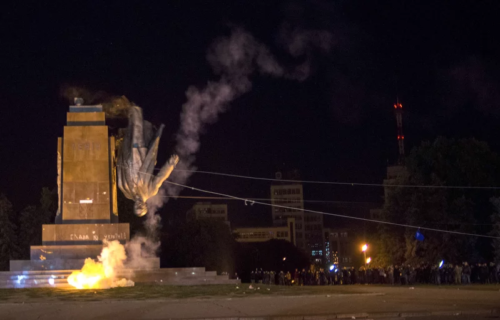
The genesis of the Soviet failure was the failure of their philosophers to accurately understand, and to account for, human nature

All political philosophies, when first expounded, claim to have a special and unique insight into the truth of human nature. This claim is the basis for the legitimacy of each one. However, this also gives us a limit point at which a political ideology can be said to have failed – when those expounding it will be trying to change human nature instead of change their philosophy.

Machiavelli was correct – human nature never changes. It is the one constant through which the rest of the world can be understood. Human nature is the same in all times and places and therefore anyone who understands it might as well be able to see into the future. This gives immense power to those who do understand human nature. They are able to flow with the waves of it, instead of being dashed upon the rocks.

Communism failed because it did not account for the masculinity within human nature. The assumption was that, after the structures of cruelty and capitalism were dismantled, we would all go back to a bonobo-style level of caring, sharing and free love. Everyone would have what they needed because those able to provide it would simply do so out of inherent kindness.

It did not account for the chimpanzee within us, the hypermasculinist who desires verticalisation. The fact is that resources are extremely limited in a state of Nature, which means that when times of scarcity roll around, some have to go without. There is an immense evolutionary incentive, for obvious reasons, for social creatures such as humans to evolve to fight like hell rather than go without, and so primates have evolved dominance hierarchies.

This means that a state of perfect solidarity, and full sharing totally free of resentment, is unnatural. Humans are a hierarchical creature in a state of Nature, and the attempt to reform humanity and the nature of humanity – as if it was a field that could simply be sown with a higher grade of crop – was the folly that killed a hundred million people last century.

Nazism failed for similar reasons. Their great error was to assume that the nature of the German people was more morally upright than what it really was, which created a cognitive dissonance that found resolution in the scapegoating of the Jews. Externalising the blame for personal failure is typical of the sort of person who finds merit in Nazism.

Neo-Communism, in its manifestation as social justice warrior culture, is failing because it failed to account for how unwilling young people are to be programmed into parroting utter bullshit, especially when that bullshit denies aspects of human nature that even children can observe. The neo-communist attempt to reform human nature into some kind of non-racist, non-sexist and non-judgmental perfect niceness is doomed to fail, as all people smarter than dogs can see the distinctions between the various types of humans everywhere they go.

Instead of accepting that the bonds of solidarity and philia that held society together have now been shattered by relentless waves of mass immigration and the ruthless application of neo-liberal ideology to every facet of life, the neo-communists try to brainwash everyone into denying their natural instincts by browbeating them into submission with terms like “Racist!”. This is clear evidence of failure.

Likewise, the neo-nazism of our age serves to misdirect blame rather than accept that its conception of human nature is inaccurate. The neo-nazis often have intelligent and accurate criticisms about how the current system has failed, and how the Marxists have failed, but their downfall lies (as with the Marxists) with their solutions.

The neo-nazi solution is still, as it was, to fundamentally change human nature by exterminating those who don’t fit in, the belief being that the remainder will become something like the perfect human. This was, and remains, a failed philosophy for the reason that human nature does not and will not change in response to human meddling.

Liberal democratic capitalism, for all of its flaws, tried to change human nature much less than either Nazism or Communism, and that’s why it defeated them both last century. The Anglo-American system accepted from the beginning that Nature will throw up a wide range of variance among her children, an acceptance made easier by the brilliant insights of Charles Darwin into the subject.

This meant that the Anglo-Americans, and those influenced by them, focused on building a system that would accommodate the widest variance of human behaviour. Their version of liberal democratic capitalism was able to account for both noble and debased natures, and find a place for both to contribute, meaning that it wasted much less energy on fighting itself and imposing order upon itself, relative to the competing philosophies.

The Anglo-American system deserves much criticism, particularly when it comes to how willing it is to sell its own people for small amounts of money, but it is less bad than anything hitherto attempted, on account of it making more accurate assumptions about human nature. This has minimised the desire of its political rulers to attempt to reshape human nature, which has minimised the risk of gulags and gas chambers.

Future political philosophies, when they arise, will not and must not be mere throwbacks to the 20th century way of doing things. The political philosophies of the 21st century will take into account an extra century’s worth of insights into the reality of human nature, and the reality of the Nature that spawned us, and they will be more accurate and more humane as a consequence.

The risk of the 21st century is that this new psychological knowledge inspires new attempts to remodel human nature under the delusion that “we know enough now to get it right this time.” The possibility of mass non-consensual medicating with psychiatric drugs cannot be discounted, and neither can some kind of virtual reality system created with the intent of brainwashing people more effectively than ever before.

*

If you enjoyed reading this essay, you can get a compilation of the Best VJMP Essays and Articles of 2017 from Amazon for Kindle or Amazon for CreateSpace (for international readers), or TradeMe (for Kiwis).

Lies Are Far More Toxic Than Drugs Ever Could Be

Illegal drugs are illegal, so we are told, because they harm the brain. Drugs such as cannabis are apparently toxic enough to cause brain damage in those who use them, rendering them mentally defective and often permanently so. One notable thing harms the brain more than cannabis though – lies.

The brain is an extremely plastic organ, and it has a number of defences against injury and poisoning, notably the blood-brain barrier which prevents poisons reaching the brain from the main blood supply (contrary to popular belief, smoking cannabis doesn’t cause psychoactive molecules to enter the brain directly through the lungs). It’s a terrible idea to mistreat your brain, but the fact is that the brain can deal with a lot.

The human mind is also extremely plastic, but, also like the brain, there are circumstances in which it is not. Under these circumstances, suffering can cause part of the mind to solidify so that it fixates on a certain belief or impression. This is very common in the case of trauma, because there is a clear biological imperative to learn quickly to avoid it.

A great example of this is how a religious upbringing often leads to people who hate religion with a passion. It is traumatic to be subjected to the heavily guilt and shame-based psychological manipulation that is a cornerstone of many religions (particularly the Abrahamic ones). Many women and homosexuals grow up hating themselves because of religious abuse, and if/when they realise as adults that this abuse was unnecessary, they come to hate the culture that abused them.

When people are told that, for example, male infant gential mutilation is a good thing, or that Johnny from down the street is going to hell forever because his family are the wrong denomination, they learn to hate and fear. When these people grow up and become adults, and realise that they now need Viagra because of lost penile sensitivity from the mutilation in infancy, the natural response is to hate the religious and anyone who claims to speak for the spiritual.

Perhaps the most disgusting, harmful and shameless set of lies are those stemming from the War on Drugs that the Government is conducting against us. These lies have been destructive in two major ways. Not only have they obscured the truth about the medicinal value of the cannabis plant, but they have also eroded public trust in institutions that society relies on to function.

For instance, many people who distrust and despise Police officers do so because they had a Police officer come to their school and lie to them about the alleged negative effects of cannabis use. It’s distressing to have an authority figure and representative of the state come and lie to you in order to justify their War on Drugs, and doubly so when you have family members who benefit from the medicinal use of cannabis, as many people do.

Many people have similar feelings towards, psychiatrists, who have also been willing tools in the Government’s war against drug-using members of its own population (i.e. us). It’s an awful feeling to be told, by a supposed mental health authority, that cannabis only causes psychosis and brain damage, while also being aware of the reality that medicinal cannabis is helpful for a range of psychiatric conditions – a reality that is becoming ever more apparent as research progresses.

It’s hard to overstate the amount of psychological damage that such actions cause. Many of the students who see a Police officer lying to them about cannabis – like the patients who hear a doctor lying about cannabis – come to lose trust in all authority figures. This makes it harder for the Police to find witnesses to crimes, because any witness who also happens to be a cannabis user will not want to volunteer their contact details, and it makes it harder for psychiatrists to convince patients to take medicines that do benefit them, because the patients suspect that the doctor is lying.

Much of the antagonism that Police officers face on a daily basis is a consequence of the lies that their authority upholds by virtue of upholding the drug laws. In the Netherlands, where these lies are not told (at least, not about cannabis), relations between the Police and their communities are much warmer. Dutch people don’t have to worry about the insult of getting arrested from using or cultivating a medicinal plant, and so they have little reason to see Police officers as enemies.

Another extremely damaging set of lies relates to the “Wir schaffen es!” mentality of Angela Merkel’s Christian Democrats with regard to the hundreds of thousands of allegedly Syrian refugees that have poured into Germany in recent years. We were told they would integrate, work, learn the language, pay taxes, abide local laws, but these promises turned out to be lies also.

They should have told us the truth about all of these things. Lies generalise, so that when a person suffers trauma from believing one they learn to distrust not only the person who told the lie, but also any other people who belong to groups that the liar also belonged to. And so, one doctor lying about cannabis one day leads to a parent refusing that doctor’s advice to vaccinate their children on another day.

The real danger for the West is that authority figures have told so many lies now, and for so long, that no Westerner has cause to trust any authority at all any more. If the masses decide that religious, political, academic, scientific and business authorities are all just liars, they will be primed for the coming of a demagogue and the catastrophes that demagogues bring with them.

*

If you enjoyed reading this essay, you can get a compilation of the Best VJMP Essays and Articles of 2017 from Amazon for Kindle or Amazon for CreateSpace (for international readers), or TradeMe (for Kiwis).

Truthophobia

A new mental illness has been observed in the modern world. It’s found among people who have irrational, fear-based responses to hearing true statements. Instead of responding to these statements like rational adults, and acknowledging their truth value, they tend to have abusive outbursts: they have truthophobia.

We can define truthophobia along the lines of other phobias, which are defined as: “exaggerated usually inexplicable and illogical fears of a particular object, class of objects, or situation”. In short, truthophobia is an exaggerated, inexplicable and illogical fear of statements of truth.

It may have a second meaning, along the lines of homophobia and Islamophobia, which is to say a political meaning alongside its linguistic meaning. In this sense, truthophobia refers to the act of denying the truth specifically because that truth is politically inconvenient.

Characteristic of a truthophobe are theatrical displays of moral outrage intended to distract from good points made by truth-tellers. For example, they like to scream “Racist!” when statistics about the sexual assault rates of Muslim and African immigrants to Europe are brought up. They also like to scream “Racist!” whenever criticisms of Islam are made, even when those criticisms have nothing to do with any racial distinctions.

What’s telling here is that truthophobes don’t ask questions about these true statements in an effort to understand them, like an honest person would do. The truthophobe simply reacts, on the basis that the truth might harm a belief that they hold, and that this belief needs to be defended by any means necessary. They are dishonest as well as cowardly.

Any learned Buddhist could quickly determine what was wrong with the average truthophobe. Clinging to material phenomena causes suffering, and clinging to a particular interpretation of reality so tightly that expressions of any alternative interpretation are taken as threats is a fitting example of such. The more truthophobic a person, the harder they dig in; the harder they dig in, the more suffering they cause themselves and others.

Why do people become truthophobics? We can group them into three major groups.

The first are the simply dumb. Being dumb is not enough by itself to be a truthophobe, but it can be a major contributing factor, especially if the dumb person has already been brainwashed into believing something untrue. Dumb people mostly are truthophobic because of the cognitive dissonance arising from really thinking about things properly. Consequently they prefer comfortable lies to truths.

This first group are arguably the least malicious of the three, because they are the most likely to admit the truth once it is evident. Being dumb doesn’t necessarily preclude one from being honest, and dumb people are often capable of seeing the truth if they are given the time and space in which to do so. The other two groups lack the shame to admit the truth no matter how evident it is, but this first group will often change their mind if the truth is presented to them correctly.

The second group of truthophobes are the fanatics. This group believes fervently in a particular doctrine, usually political, and so much so that any statement contradicting it is aggressively attacked regardless of any truth value that statement may possess. This group is worse than the first, because not only do they refuse to accept the truth when it’s presented to them, but they actively talk a lot of shit and thereby obscure the truth from those honestly seeking it.

Fanatics are also dumb, because their fanaticism invariably creates more suffering than their ideology would prevent, even under the best possible circumstances. Fanatics degrade the quality of public discourse by being unreasonable and dishonest, which makes the truth harder to see. In this group can be found a large number of Marxists as well as the religious fanatics that they resemble.

The third group are evil. The unfortunate truth is that a particularly malicious strain of truthophobes exist – one who tell lies and deny the truth specifically because to do so brings suffering into the world. Many in this category spread confusion and fear because they directly profit from it. Invariably they don’t simply reject the truth but actively seek to destroy the reputations of anyone speaking it, so as to discourage them from trying to speak the truth again.

People in this third group are mostly afraid of the truth about themselves, because it’s this fundamental fear that motivates their evil. Their ultimate fear is that they are truthfully not worth very much themselves, and the key to defeating these people is to never let them suspect otherwise.

Anyone trying to speak the truth in today’s environment will certainly encounter all three of these types in short order.

*

If you enjoyed reading this essay, you can get a compilation of the Best VJMP Essays and Articles of 2017 from Amazon for Kindle or Amazon for CreateSpace (for international readers), or TradeMe (for Kiwis).

The Real White Privilege Is Not Being White – It’s Being Around White People

If you live around white people, you’re generally in good hands

Some say that it’s a privilege to be intelligent, but genetic studies have shown that it’s actually of more benefit to be around intelligent people than to be intelligent oneself. In a social species such as homo sapiens, the real privilege is to reside in an environment that has intelligent people in it, thereby reaping most of the benefits of intelligence for none of the costs. This essay will argue that a similar scenario exists in the case of being white.

Being intelligent has clear benefits. It’s easier to see patterns that lead to dangers, it’s easier to remember dangerous things that happened in the past, it’s easier to come up with new and creative ideas. These abilities have a massive benefit to the survival prospects of those few who possessed them, creating immense selective pressure in favour of more intelligence.

However, being intelligent also has less obvious drawbacks. It’s much easier to get depression or anxiety if you’re hyperaware of all the dangers out there. It’s also much harder to get over trauma if you have a good memory, which the vast majority of intelligent people have. Many intelligent people are also more sensitive, which makes them more prone to psychological trauma.

So the real benefit to individual intelligence is gleaned by the friends and family of that individual more than by that individual themselves. This is the real privilege of intelligence, and it’s the same with being white. White privilege doesn’t come from being white. It comes from being around white people.

The wealthiest countries are wealthy not because they have high IQs or the right skin colour, but because they are not corrupt. Corruption – not intelligence or skin colour – correlates the most highly with national wealth because in a corrupt environment, intelligence and hard work are not rewarded.

The correlation between wealth and white people can be explained by that white people are less likely to be corrupt. This can be proven by noting that where white people are corrupt (i.e. Russia) they tend to be poor, and where non-white people are not corrupt (i.e. Japan and South Korea) they tend to be wealthy.

An understanding of reciprocal altruism reveals the brutal truth behind all these figures. The reason why white people have it good is because people trust them to reciprocate mutually beneficial acts of social benefit, and one of the results of a high level of mutual trust is wealth. The easiest way to understand all this is to think in terms of investments.

When a person has to decide quickly whether or not to trust a person they don’t know, they will make their judgment based on any recognisable cue. Skin colour (alongside skin health, clothing quality, posture, general grooming, tone of voice, display of status symbols) is one of those cues that tells you what’s likely to happen to your investment.

The point of weighing up these cues is to answer these questions: If you treat a person kindly, will they treat you kindly in exchange? Or will they use your kindness as an excuse to get into a position to exploit you? Because if having white skin correlates with a propensity towards reciprocal altruism, then living around white people is likely to make a person both wealthier and more trusting regardless of their own skin colour.

We could talk about Asian privilege in the same way – after all, it’s fundamentally a matter of investment. Some would argue that investing social capital in an Asian is unwise because it’s less likely to be reciprocated, but most would disagree. The fact is, history shows that when a large number of Asians move into an area the local standard of living either increases or stays the same.

Indeed, we can see that wealthy Asian countries such as Singapore, Hong Kong, Japan and Taiwan also rank among the least corrupt, while corrupt Asian countries like China are poor despite their high IQs. All of this is because acts of reciprocated kindness increase trust, which increases wealth. It’s a privilege to be trusted, true, but it’s also a privilege to live around trustworthy people – and it’s the trustworthiness that leads to being trusted, which leads to wealth, not the other way around.

Ultimately, the reason why white people are frequently favoured for certain roles and positions is because the people putting them there have good reason to expect that their largesse will be reciprocated. White privilege, then, can be boiled down to the fact that people have learned to trust individual white people more than individuals of other races on account of historically getting rewarded more for doing so.

This is certainly unfair to two groups of people: low-value whites who get a free ride on the erroneous assumption that they are high-value, and high-value non-whites who get offered worse deals on the erroneous assumption that they are low-value. The best way to combat this unfairness is not by shrieking about how racist and evil white people are, but firstly by rewarding other people’s trust and secondly by learning to make more sophisticated and accurate appraisals of other people’s trustworthiness.

*

If you enjoyed reading this essay, you can get a compilation of the Best VJMP Essays and Articles of 2017 from Amazon for Kindle or Amazon for CreateSpace (for international readers), or TradeMe (for Kiwis).