Why So Many Kiwis Hate The Police

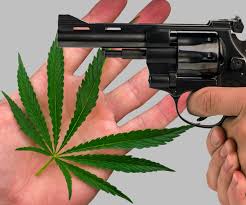
“If you were to come and ask me for a tinnie of marijuana and I give you a tinnie of lawn clippings, you’ve still committed an offence, even though you haven’t got drugs in your possession.” Sound reasonable? Perfectly reasonable according to Senior Sergeant Rupert Friend of the Hamilton Police.

In the odd case of Betty Tamihana, who tried to purchase some cannabis on Facebook to treat an anxiety disorder, she found that if you try to buy some medicine and get ripped off, the New Zealand Police will not help you if that medicine was cannabis. In fact, they will attack you.

Such an attitude is especially galling for the tens of thousands of Kiwis who use medicinal cannabis. Imagine being told that not only is your medicine illegal but if you so much as get ripped off by someone falsely claiming to sell you it then you are a criminal.

It would be more honest just to make it a criminal offence to suffer from a medical condition that could be treated by cannabis. Perhaps specially equipped Police units could raid the houses of cancer sufferers and if it was found that cannabis would be an effective medicine for the terminal pain then the sufferer could be charged with the crime of ‘Having a Reason To Want To Try To Purchase Cannabis.’

If your light is on at night because you can’t sleep, perhaps that could be taken as sufficient evidence that you might end up wanting to buy some cannabis to cure the insomnia, and so the Police should have the right to pre-emptively break into your house and put you in a cage (for your own safety of course).

Joking aside, that shows how ridiculous cannabis prohibition is. Should we accept that, in New Zealand, after all the time and effort we’ve put into building a decent justice system, a Police officer might sell the sufferer of a mental illness some grass clippings in the guise of an anxiety medicine just to arrest them under a law that was supposedly enacted to protect the public?

None of this is to blame the Police. The Police are men of iron, and the key to understanding them is to understand dogs, who are also of iron.

The thing about dogs is that they have absolutely no concept of right or wrong – they just obey dominant males in their group. Anyone who feeds them, or pays them in the case of Police officers, is their total and complete master, and they will rip to pieces anyone who fails to pay this master due respect.

The real bad guys of this story are, as usual, the Paedophiles of Wellington, who are the ones responsible for maintaining the law against cannabis freedom that is mindlessly enforced by the Blue Dogs.

The refusal of the New Zealand political class to accede to the public will to repeal cannabis prohibition has driven a wedge between the Police and the public, as it has induced the Police to spend forty years attacking the citizenry in the War on Drugs, instead of acting as peace officers, which is their warrant.

This has meant that there are now several large demographic groups – the under 40s, Maori, the mentally infirm – who distrust the Police to the point of seeing them as no less oppressive than an enemy army.

Of course, the biggest irony of this story is that the only person to behave in a rational manner was the drug user who called the Police to report a fraud. The Police officer did not act rationally, because to have a total lack of sympathy for the sufferer of a mental condition is the kind of hatred that ends up getting reciprocated, even if indirectly.

Did A Weak Cannabis Policy Cost The Democrats The Presidency?

Let’s be clear – Donald Trump will not become American President this week because he out-thought the Democratic campaign during the election (although he did). He will become President because the Democrats and Hillary Clinton threw away a winning position out of sheer arrogance and hubris. One of the prime reasons for the Democrats squandering a sure-fire win was their refusal to promote a humane cannabis policy.

Cannabis became medicinally legal in California 1996, and many supporters of cannabis freedom were frustrated by George W. Bush’s refusal to countenance so much as a discussion about the subject between 2000 and 2008. When the Bush Presidency ended in 2008 and the Democrat Barack Obama became the President, it seemed like occasion for hope.

Indeed, Obama campaigned as the hope and change candidate. Part of this campaign was to distance himself from the haughty arrogance of the Dubya years. This manifested as a website – ‘We The People’ – where the American people could have their say on the issues important to them.

The top two subjects on this new website both related to repealing cannabis prohibition.

Cannabis users finally thought they had someone who would listen. Obama, infamously part of the “Choom Gang,” was sure to legalise cannabis. He had all the right rhetoric, admitting that he “smoked pot as a kid” and that cannabis is not more dangerous than alcohol.

So it isn’t as if Obama could claim to have been unaware of the strength of the sentiment of Americans in favour of legalising cannabis when he became President. By 2008, pretty much the entirety of Generation X believed that cannabis ought to be legal.

However, it turned out that neither Obama nor the Democrats had the guts to do anything about this generation’s foremost moral issue. This blog piece from 2009 provides an eerie premonition of the argument of this essay.

Obama, like the Green Party of New Zealand and almost everyone else, sold cannabis users down the river as soon as he got into power.

In fact, in 2009 Obama was even recorded laughing at the plight of the cannabis users who had just put him into power, as if putting tens of thousands of people in cages for their choice of medicine was an absurdly trivial matter.

Come 2016, and even a country with the socioeconomic challenges of Uruguay has managed to legalise cannabis fully – and still nothing from Obama or the Democrats, apart from a sense that they expect credit and gratitude for not sending the federal police to attack cannabis users in states like Colorado that expressed a democratic will to have legal cannabis.

So when the 2016 Presidential Election came around – and Democratic voters were asked to support a candidate who was known to not support cannabis legalisation – of course they simply refused and did not vote.

Despite a growing population and many large demographic advantages, Hillary Clinton got 4,000,000 fewer votes in 2016 than Obama got in 2008, and a large number of those will have been cannabis users. After being lied to by Obama, and then being presented in 2016 with a crusty old Boomer with no appreciation of medicinal cannabis at all, why vote?

It could be argued that the Democrats’ obstinate refusal to accept what all of their constituencies know – that cannabis prohibition ought to be repealed – cost them the Presidential Election. It showed them to be a party completely out of touch with the people they claimed to represent.

The New Zealand Labour Party looks set to ignore the lesson – Andrew ‘The Ditherer’ Little believes that cannabis causes “brain damage,” which means that there is no reason for medicinal cannabis users to vote Labour either.

Medicinal cannabis users will have to wait for him to run his course as Prime Minister, and then to wait for the next National Prime Minister to sit on their arse for nine years like Key and Clark did, which means possibly waiting until the year 2036 to get what Californians have had since 1996.

With a much more sophisticated appreciation for the national sentiment than the Paedophiles of Wellington, this column stands by the following prediction: the New Zealand centre-left will not win the 2017 General Election without the humane cannabis law reform policy that young people, Maori people, and both physically and mentally ill people are now expecting by right of natural justice.

‘I Like Smoking Weed’ Is a Perfectly Legitimate Argument

There is a faulty premise in the national consciousness – the premise that the pro-cannabis lobby has the responsibility to make the case for legalising cannabis before prohibition can be repealed. All kinds of politicians, from Andrew Little to Peter Dunne, have trotted out this lazy deception.

This line of rhetoric is false because it relies on a more fundamental premise, which is that the manner cannabis was made illegal was legitimate in the first place.

The usual apologia is that the politicians are our lawful representatives and so the laws they pass are done so with our consent, and so the politicians have the consent of the governed, and so all the laws they have passed are legitimate, including the ones pertaining to cannabis prohibition.

Basic logic that even a child can understand will tell you that, in the case of cannabis, the lack of a victim makes the law against it categorically different to other laws.

Punching people in the face is bad because it causes suffering.

Stealing someone’s food is bad because it will make them suffer from hunger.

Killing people is bad because it causes suffering to the remaining friends and family (not to mention the person while they’re being killed).

Murdering, shooting, stabbing, raping, kidnapping, defrauding, robbing, stealing, assaulting and battering – all of these are crimes because they have victims.

Outside of the delusional fantasy role-playing world that judges, lawyers and politicians have invented, crimes are distinguished from non-crimes on the basis that crimes cause suffering, not on the basis that a bunch of paedophiles in Wellington have decreed them thus.

This might sound really obvious to any Buddhist readers out there, but to many Kiwis, conditioned from childhood to obey authority without ever questioning its legitimacy, it appears revelatory.

It also puts the moral responsibility back on us to consider if the laws being passed by our supposed representatives actually have the effect of reducing suffering in New Zealand or not. The responsibility is not on our political representatives to make moral decisions on our behalf, because politicians are men of silver and philosophy is the preserve of everyone.

One argument is that cannabis, even if not directly harmful, may be indirectly harmful because of long-term health considerations of the user that the general taxpayer has to pay to treat. This argument contends that we ought to wait for science to prove that cannabis is relatively harmless.

The truth is this – we don’t need to prove that science says cannabis should be legal because science was never used to make it illegal. We also don’t need to prove that cannabis is harmless because harmless is not the standard things have to reach in order to be legal.

It’s legal to consume any of alcohol, caffeine, sugar, fat or tobacco to whatever extent one likes and to have the taxpayer cover any medical costs that may arise.

It’s legal to fill the tank of your car up with petrol, a vital and ever-diminishing resource, and to drive around and around in circles for no reason.

It’s legal to join a rugby team and to hit another person in a tackle with the intent of injuring them and to break a bone oneself and to go on ACC.

It’s legal to go into a forest with a rifle and shoot dead a whole bunch of large mammals.

All of these activities arguably cause more harm than smoking cannabis does, even under the broadest interpretation of health issues.

The standard to make cannabis illegal – which has never been met and which never will be met – is that there is more suffering under a regime of cannabis freedom than under a regime of cannabis prohibition.

Until this standard is met, no further reason for using cannabis need be given than ‘I like smoking weed.’