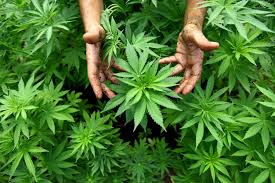
Labour Has Ignored Cannabis Law Reform At Its Own Cost

“Little isn’t listening.” That’s been the despairing conclusion drawn by the majority of the nation’s cannabis users over the past couple of years, as the total refusal of the Labour Party to take the issue seriously has caused many to switch off from politics entirely. Sentiments like these go some way to explaining why Labour is polling at their lowest level in over 20 years.

A change of Government at this stage of the electoral cycle is usually a procession for the opposition. After nine years of conservatism, which has left us with the world’s highest teen suicide rate, a completely dysfunctional mental health system and never-seen-before levels of homelessness, simply appearing competent ought to be good enough for Labour to win this year.

It’s likely that this has been Andrew Little’s strategy – appear as competent and steady as possible, and wait for the public to naturally swing to you as they start to desire an alternative.

The trouble is – and this is where Little is losing – is that his Labour Party doesn’t actually look like an alternative.

California legalised medicinal cannabis in 1996, meaning that New Zealand is already 21 years out of date on the issue, but the Labour Party website doesn’t even mention it.

The angry geriatric brigade might continue to dismiss the importance of the issue, but for the nation’s under-40s the cannabis law reform question is talismanic of the Establishment’s refusal to take their concerns seriously.

So when Andrew Little goes on television to say that cannabis causes brain damage, young Kiwis all around the nation drop their heads into their hands.

And then switch their vote to the Green Party. If one looks at the demographics of cannabis law reform voters in the 2014 General Election, it’s apparent that the bulk of them are young, poor, Maori and disenfranchised – precisely the sort of person the Greens had, until recently, neglected in their drive to the centre.

Last year’s policy change towards once again putting a high priority on the cannabis issue has attracted huge numbers of these otherwise disenfranchised demographics to the Green Party cause, and possibly even attracted some from Labour.

Young people are sick of having no recreational alternative to socialising with pissheads, and now that there’s clear evidence that cannabis can effectively serve as an alternative to alcohol there’s no reason to keep denying it to a New Zealand public that clearly understands the need for it.

And so, the Green Party has shot up to 15%, their highest ever poll result.

The hordes of morons living 20 years in the past will chalk this up to a coincidence, but the fact is this: cannabis law reform is a major issue for the under-40s, and by taking an intelligent and humane stance on it the Greens have rightfully gained some great electoral rewards.

For years, the issue has been sitting there as a soccerball before an open goal, with none of the cowards in Parliament willing to take up the issue.

The ridiculous Stephen Berry, mocked by our propaganda department for saying that ACT only cares about “the issues that matter to New Zealanders,” now finds himself a member of a party that is polling at 0.3% – lower than the Aotearoa Legalise Cannabis Party at the last General Election.

This is the truth: no-one cares about gay rights any more. That issue is settled; it’s the politics of our grandparents. There are far greater grievances and injustices in New Zealand society, and it’s time to sort those out.

As long as the National Party refuses to consider granting respite to the nation’s 400,000 cannabis users, they will keep crying out for an alternative to the Fifth National Government.

And as long as the Labour Party refuses to listen to those crying out – and refuses to consider being that alternative – they will continue to fall in the polls.

The Labour Party ignores the need for cannabis law reform at its own cost, a cost that escalates the longer they do so.


Cannabis Prohibition is a Pakeha Law With No Place in Aotearoa

The Maoris’ lack of historical exposure to alcohol meant that, for British settlers, the drug had a similar effect to a targeted bioweapon

Maoris are severely disadvantaged by the laws around recreational drugs for biological reasons. The Pakeha that introduced these laws knew about these biological reasons, and so they created a set of drug laws specifically designed to keep Maoris down. This essay looks at how.

Human use of alcohol dates back into prehistory. It is believed that civilisations in the Fertile Crescent were brewing a simple form of mead as far back as 8,000 B.C., and we’ve never stopped brewing it. After all, the effects of alcohol make some of the unpleasant aspects of life much easier to deal with.

Not every culture adopted alcohol at the same time, however. Use of it spread from the Fertile Crescent to nearby cultures, and then further afield, until it was introduced to Maoris in the late 18th century.

Alcohol is everywhere now, but, as any cosmopolitan worthy of the name could tell you, the various people of the world behave in different ways to the drug.

The basic rule is this: the greater the length of time that an individual’s ancestors have been exposed to alcohol, the greater the opportunity there has been for genes that lead to poor outcomes from alcohol use (in particular, violence and/or physically reckless behaviour, and alcoholism) to have been eliminated from that individual’s gene pool.

Middle Easterners tend to behave the best on alcohol, for the reason that they have been exposed to it for maybe 10,000 years. This means that, for a hundred centuries, anyone carrying genes that led them to go crazy on alcohol would have died at a significantly higher rate than their fellows.

Southern Europeans and Northern Africans are the next best behaved, because they were next to be introduced to the drug, and Northern Europeans, especially the British from which the majority of Kiwis descend, have themselves had between 2,500 and 5,000 years of exposure.

The Maoris, by contrast, have had 200 years of exposure to alcohol. Although trading rum for various goods and services was basically how interracial relations began in New Zealand, two centuries is not very long in evolutionary terms.

What that means, in practice, is that Maoris carrying genes that lead them to go crazy on alcohol, although they certainly die at a significantly higher rate than their fellows, have not done so for long enough for Maoris as a whole to have built up the genetic resistance to the drug that Kiwis of British ancestry have.

This explains why, if you put half a dozen standard drinks into 100 Maoris and 100 Pakeha, the Maoris would have significantly worse outcomes. It’s not a question of willpower or lack of mental discipline or fortitude, any more than the higher rate of skin cancer among Pakeha is a question of those things. Both are matters of explicable biology.

The fact is that alcohol has literally been used as a bioweapon against Maoris.

The logic about genetic resistance was understood by British colonialists well before anyone was aware of such things as genes. By the time the Empire had made it as far as New Zealand, it had had two hundred years of observing the effects of the drug on the natives of Africa, the Americas and Australia, and it had noted that in almost every case the social structure of those natives was obliterated by exposure to it.

They therefore knew full well what was going to happen when they introduced the Maoris to rum, and outcomes like Kororareka – “The Hellhole of the South Pacific” – were inevitable.

It was known that exposure to alcohol was going to cause the Maoris to fight each other and kill themselves, because there had been ample opportunity to see that happen elsewhere.

This genetic vulnerability to alcohol explains why Maori culture has taken so eagerly to cannabis. The majority of Maoris have tried cannabis at some point in their lives, and many of those prefer it to alcohol, for the straightforward biological reasons explained above.

For many Maoris, smoking cannabis is a way of getting the benefits of easy sociability and euphoria that one would get from alcohol, but without the drastically negative consequences that naturally befall anyone without an ancestral exposure to the drug. So cannabis prohibition has a massively disproportionate effect on Maoris.

Understood like this, it appears almost sadistic that a Parliament full of people of European descent would forbid, on pain of time spent locked in a prison cage, a recreational alternative to a drug that only they can safely use.

This could fairly said to be terrorism in the form of bioweapons.

*

If you enjoyed reading this essay, you can get a compilation of the Best VJMP Essays and Articles of 2017 from Amazon for Kindle or Amazon for CreateSpace (for international readers), or TradeMe (for Kiwis).