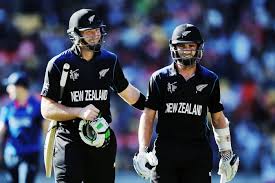
Black Caps vs. Australia, Champions Trophy Pool Match Preview

Trent Boult demolished the Australian lower order the last time these two sides met in an ODI, taking 6-33. The Black Caps will need something similar to concede less than 350 against this strong Australian side

The Black Caps had mixed fortunes in the Champions Trophy warm-up matches, but that will all be forgotten when their first pool match starts, against World Cup final opponents Australia, this Friday at 9:30p.m. (NZT).

Australia is a solid favourite on BetFair to win this encounter in Birmingham. They are only paying $1.53 compared to $2.84 for the Black Caps.

The main reason for this is their superb bowling. Mitchell Starc and Josh Hazlewood are both ranked in the top 5 of ODI bowlers at the moment, and they will have both Pat Cummins and James Pattinson backing them up.

Because Starc is capable of batting 8, Australia might be tempted to go with all four of them in the same side – which would make for an exceptionally fearsome ODI pace battery, one of the strongest ever. There would be no respite.

The Black Caps may have three of their best ever ODI batsmen in the top 4 – Martin Guptill, captain Kane Williamson and Ross Taylor, but question marks remain over Guptill’s opening partner and the middle order.

A number of players were tried in these positions in the warm-up matches and in the preceding tri-series against Ireland and Bangladesh. The difficulty is that there were no performances that will have forced the hand of the selectors.

Guptill will open with either Luke Ronchi or Tom Latham. The desire from the brains trust might be to favour the big-hitting Ronchi, because English surfaces in recent years have tended towards very big scores.

A variety of players have been recently tried in the Black Caps middle order. Neil Broom, Corey Anderson, Jimmy Neesham, Mitchell Santner and Colin de Grandhomme are all possibilities for the middle order and allrounder slots.

The Black Caps bowling unit, however, is easy to select. The tried and true combination of Trent Boult (ranked 6th in the world for ODIs) and Tim Southee will no doubt share the new ball, and it’s likely that Mitchell McClenaghan will be in as third seamer.

McClenaghan’s T20 experience will help to lend him skills that are useful in death bowling, and he has been talked about in that role in particular. This should see him take the spot ahead of Adam Milne, who is improving rapidly but still lacks the knockout punch of the more established seamers.

The three seamers will be complimented by Mitchell Santner, whose relentless accuracy and subtle variations have seen him rise into the top 10 of ODI bowlers for the first time.

The Black Caps bowling strategy will be to take two or three poles early with the moving ball, and then to at least restrict the scoring in the middle overs with Santner and the variations of either McClenaghan or Milne.

This will lessen the potential impact of the Australians’ big middle order hitters like Chris Lynn, Travis Head, Glenn Maxwell, Marcus Stoinis and Matthew Wade.

The Australian batting lineup appears to be following the general ODI zeitgeist at the moment by being packed with hitters. Any of David Warner, Aaron Finch, Lynn, Head, Maxwell or Stoinis is capable of striking at well over 100 for as long as they can stay in.

Their strategy will probably be to use Steve Smith at 3 as the fulcrum around which the other batsmen can hit. If Smith can stay in long enough then the others around him can throw the bat and Australia will post a colossal score.

Considering that 300 has been a par score in England recently even for average sides, this match between the two World Cup finalists has the potential to see 700+ runs scored.

The winner of it will have the box seat in qualifying from this group, as they will probably then only have to beat Bangladesh in order to advance to the semifinals.
An Essay Concerning Who Ought to Take the Crease at the Fall of a Wicket in T20s

When ODI cricket was invented, it took players, coaches and strategists a while to adapt to the fact that they were no longer playing Test cricket. For example, the fact that 220/3 after 50 overs is great in Tests and terrible in ODIs was not immediately appreciated.

The first ever Cricket World Cup match was famously marred by an innings of 36 off 174 balls from Sunil Gavasakar, who went on to state that “I wasn’t overjoyed at the prospect of playing non-cricketing shots and I just got into a mental rut after that.”

Gavaskar’s Test record shows that he was an exceptionally capable batsman, so the initial adjustment to such concepts as “scoreboard pressure” and “required run rate” must have been a big one, and a psychological one.

It was solved when it was realised that strike rate is about as important as average runs scored for an ODI batsman, especially the closer the game gets to the last over.

T20 cricket is still new enough that original plays are still being thought up. Every year there are new innovations, or new variations on old ones. Some concepts have to be abandoned, some concepts have to be tweaked, and some concepts have to be synthesised out of wordless intuition and perception.

This essay suggests one radical concept: that we need to do away with the old concept of batting order, and to replace it with a batting dynamic.

The major advantage of thinking in terms of a batting dynamic is that it would help the Black Caps find a place in the T20 side for Ross Taylor, who is simply too good to be left out.

A batting dynamic means no longer having a batting order in terms of openers, a first drop, a middle order etc. It means (to simplify it) to have one accumulator and one hitter at the crease at all times.

The reasons for this are mathematical. It’s better to have one accumulator than two hitters, because the hitters can lose wickets in clumps very easily and cripple the team. But it’s better to have one hitter than two accumulators, because you only have 20 overs and batting too slowly will lose you the game just as surely as losing a pile of wickets.

It’s best to consider these to be entirely separate skills – which they are, until the real slog of the last few overs.

The Black Caps have made it to No. 1 in the world T20 rankings partially by opening the batting with who are at time of writing both in the top 8 in the world – Kane Williamson at 3 and Martin Guptill at 8.

In doing so, they have a world-class accumulator in Williamson and a world-class hitter in Guptill, so all is good.

The problems arise when the first wicket falls.

Under the old concept of a batting order, this wouldn’t matter much, as it seldom does in Tests and hardly matters in ODIs.

But when the first wicket falls in a Black Caps T20 innings, the team runs the risk of making two mistakes, namely having two accumulators or two hitters at the crease.

The concept of a batting dynamic means that we divide the batsmen into accumulators and hitters, and that we try not to have two of both until the last few overs when everyone hits.

So for the T20 side, one might open with Kane Williamson and Martin Guptill, with Williamson the designated accumulator and Guptill the designated hitter.

If Williamson is dismissed early, we send Ross Taylor in. This way, it becomes less likely that the opposition will run through our lineup, as happened in February this year.

Conversely, if Guptill is dismissed first, the next hitter in line comes in to bat – perhaps Colin Munro, Corey Anderson, Tom Bruce, Colin de Grandhomme or even Tim Southee.

It doesn’t matter who it is, as long as they have a licence to hit, because the emphasis is on avoiding having two accumulators at the crease. This way we can avoid burning through the overs while scoring too few boundaries and using up our 20 with piles of wickets in hand.

So if Kane Williamson carries his bat, then Ross Taylor will not take the crease until all the other hitters are out. This means that Taylor could bat anywhere between 3 and 7 depending on the hitting ability of the other batsmen and when Williamson is dismissed.

But if Williamson is out on the first ball then Taylor comes in to ensure that the strike is always rotated to the hitter at the other end.

The worst case scenario (besides being bowled out) is that all our hitters get dismissed and we’re left with Williamson and Taylor to finish the innings. Obviously this is still an excellent outcome.

The other point is that if we aim to always have one of Williamson or Taylor at the crease until the death (let’s say until the 15th over at least), then the choice of the other batsmen in the team becomes much more straight-forward: they can simply all be hitters, as it’s very unlikely that Williamson and Taylor will both get out early.

Statistically, one would expect this to have the effect of causing the Black Caps to win by smaller margins, but to win more games, as the variance of the scores will be reduced if there are fewer hit-and-miss batsmen at the crease.

– DAN McGLASHAN

A Look at the Black Caps Squad For The Champions Trophy

The Black Caps squad for June’s Champions Trophy has been announced. The full squad is: Kane Williamson (c), Corey Anderson, Trent Boult, Neil Broom, Colin de Grandhomme, Martin Guptill, Tom Latham, Mitch McClenaghan, Adam Milne, Jimmy Neesham, Jeetan Patel, Luke Ronchi, Mitchell Santner, Tim Southee and Ross Taylor.

The Black Caps have a tough group to get out of. They must qualify in the top two of the pool to progress, and their group of four contains world champions Australia, home favourites England, and giant-killers Bangladesh. Finishing last is a realistic possibility.

Matt Henry might be the big omission from the squad. Over his 30-match career Henry has 58 wickets at 25.10, which makes the case for his inclusion about as compelling as the case for Trent Boult before the 2015 CWC. It is certainly a significantly better record than any of McClenaghan, Milne and even Southee.

Despite this, the Black Caps pace battery will be very strong. It looks as though the pace bowling attack will be based around Trent Boult (as could be expected up until the 2023 CWC), with Adam Milne returning to his pre-CWC injury third seamer role and one of McClenaghan or Southee sharing the new ball.

Adam Milne has the potential to be a tremendous bowler, as he has both the pace and accuracy. All he needs to learn is the subtlety that divides the cricket master from the journeyman and New Zealand will have another weapon in the bag.

Mitch McClenaghan has surprised a lot of people and continues to do so. He has been excellent for the Mumbai Indians in this season’s IPL and the Black Caps selection panel appears to believe that this white-ball success will translate well to English conditions.

English conditions will also suit the tricky Tim Southee. So in all cases, Kane Williamson knows he has 30 overs of top-drawer pace bowling available to him.

The Guptill-Williamson-Taylor axis comprises three of New Zealand’s best ODI batsmen ever and, if anything, these three players are better than the ones that took the Black Caps to a CWC final. So most of the top order picks itself.

Tom Latham is enduring a horror season with the bat, but he is still likely to open the batting alongside Guptill. His current average of just under 30 might make his place in the order look questionable, but with six Test centuries by age 25, his experience and skill against the new ball will be useful in English conditions with high levels of lateral movement.

The real selection questions are around the middle order.

The Black Caps are yet to find a dependable replacement for Grant Elliott, although the squad does include a number of possibilities. Neil Broom might be considered the front-runner for the position but Jimmy Neesham has recently been surprisingly good in the last batsman’s position.

Any number of players could take the allrounder’s position at 6. Probably the Black Caps will go with Corey Anderson, whose awful run with injuries seems to be over. Anderson, like McClenaghan, has been impressive in the IPL, and Williamson ought to be able to depend on him for four overs at least.

The other allrounder’s position at 7 is another open question. If Tom Latham opens the batting, there may be little advantage in choosing Luke Ronchi at 7, as Ronchi has been very poor with the bat for a long time and does not offer more than Latham with the gloves.

Mitchell Santner might have fallen out of favour slightly in the regard of the current set-up, and this could mean that Colin de Grandhomme takes his place as the bowling all-rounder, if the brains trust decides to go with Luke Ronchi at 7.

Given the strength of the top order with the bat, the smart thing to do might to pack the middle order with hard-hitting allrounders.

Likely team for the first match versus Australia on the 2nd of June, starting at 9.30p.m. New Zealand Time:

1. Martin Guptill
2. Tom Latham (wk)
3. Kane Williamson (c)
4. Ross Taylor
5. Neil Broom
6. Corey Anderson (5/6)
7. Colin de Grandhomme (5/6)
8. Mitchell Santner (4)
9. Mitchell McClenaghan (2)
10. Adam Milne (3)
11. Trent Boult (1)

South Africa in New Zealand 2017 Test Series Preview

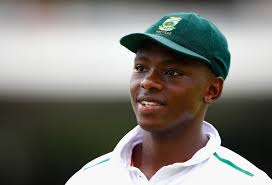
Kagiso Rabada, at only 21 years of age, is considered one of the most likely to play an influential role in this series

The limited overs leg of the 2017 South Africa tour of New Zealand was a close-fought contest that ended in South Africa’s favour. As the limited overs game is New Zealand’s strong suit, that means that the South Africans will take the ascendancy into the three-match Test series beginning tomorrow in Dunedin.

South Africa are ranked No. 3 in the world and the Black Caps No. 5. This might not be a large gap but the market is much more confident of a South Africa win. The Proteas are paying only $2.24 on BetFair to win the First Test, compared to the Black Caps paying $3.70 and the Draw $3.60.

The Black Caps will not fondly recall the disappointment from when these two sides last met in Tests – the two match series in South Africa last August. The First Test was ruined by rain and the Second saw the Black Caps at one stage 4 down for 7 runs before a respectable, if futile, rearguard from Henry Nicholls.

Since then, the Black Caps have demolished both Pakistan and Bangladesh at home. Although South Africa will be tougher than either of those two Asian sides in New Zealand conditions, the Black Caps’ home advantage should make this series more interesting than the previous encounter in South Africa last August.

If one makes the assumption that Tom Latham’s poor recent ODI form will not carry over into the Test arena, then the Black Caps top order looks as solid as it ever has been.

They will have the highest ranked Test batsman on display for either side, in Kane Williamson at 4th. His returns in the past year have been good but mediocre by his high standards and he would like to play a defining innings against the South Africans.

Ross Taylor at 15th and Tom Latham at 26th, with Jeet Raval looking solid in his limited opportunities so far, make it a respectable, if far from intimidating, Black Caps top order.

They will not be favoured to dominate the South African bowling attack, though, even in the absence of Dale Steyn. The 21-year old Kagiso Rabada had barely had time to find his feet but has already risen to 5th in the Test bowling rankings, with two five-wicket hauls in only 14 Tests.

He will likely open the bowling with Vernon Philander, who averages 21.40 with the ball over 40 Tests. In terms of bowling average, at least, it will be easily the most formidable opening bowling pair the Black Caps have faced since their last series against South Africa.

They also have Morne Morkel, whose height and bounce pose a threat that New Zealand batsmen rarely face, and an almost total unknown in left-arm orthodox Keshav Maharaj.

The Black Caps have no real bowling spearheads but are capable of sustained pressure. Neil Wagner, Trent Boult and Tim Southee occupy positions 11 to 13 on the Test bowling rankings table.

These three bowlers have proven themselves capable of hunting as a pack, and the variety of Wagner’s left-arm bouncer barrage, Boult’s left-arm swing and Southee’s right-arm seam should make it difficult for the South African batsmen to settle. It will also be interesting to see if Mitchell Santner can usefully transfer his tight ODI bowling into the Test arena.

The South African Test batting unit might not be as terrifying as it is in ODIs but it still poses a threat. They do not have AB de Villiers for this series but both of Hashim Amla and Quentin de Kock are ranked in the top 10 and either could play a matchwinning knock.

The Black Caps bowlers will back their bowling plans against the other batsmen like Faf du Plessis, Stephen Cook, Dean Elgar, JP Duminy and Temba Bavuma. None of the batsmen in South Africa’s second tier pose a particular threat but all are very good players. Even if the Black Caps pick up a string of wickets somewhere they will always have to work hard to get the rest.

A heavyweight South Africa side without their best two players and playing in foreign conditions over three Tests against a middle-of-the-pack Black Caps side hungry to make the top tier promises to be highly competitive cricket. This column is guessing the most likely outcome to be a two-one win to South Africa or a one-all draw.