
Why the Religious Oppose Drug Use

The religious are closed-minded about a lot of things, and drug use is one of them

One oddity about the Western political landscape is taken for granted with no explanation given. It is that the religious, especially the fundamentally religious, oppose all drug law reform measures. Considering that drug prohibition does immense harm to drug users by subjecting them to a justice system built for murderers, rapists and thieves, it’s not clear why the religions would oppose this. This essay looks at why.

The religious prohibitions against drug use seem doubly strange if one considers that many of the world’s oldest religious traditions involve the use of cannabis. This is particularly true of the South Asian religions like Hinduism, which arose in the same general area in which cannabis was cultivated. Why would a tradition of behaviour intended to get one closer to God oppose the legalisation of an entheogen?

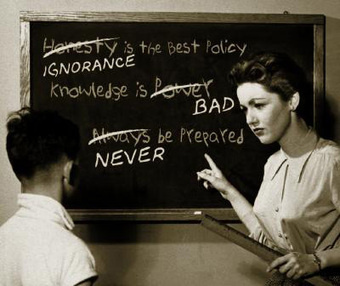
The truth is that religion, insofar as it’s practiced in our modern times, has degraded into the opposite of a spiritual practice. 21st century religion in the West no longer has anything to do with apotheosis or sharing any genuine insight into the nature of God that a person might have had.

21st century Western religion is just a sham, selling a communal sense of moral superiority, to people with low self esteem, for money. The people selling it don’t want their flock asking too many questions. They just want them regularly returning to be fleeced for a steady passive income.

In order for this ancient scam to be possible, people have to be separated from true spirituality. If a person is connected to true spirituality then they will instinctively understand that ridiculous stories like the need to mutilate the genitals of new-born babies, or that failure to worship God in the correct manner would doom someone to eternal punishment, or that a desert full of inbreds in Asia Minor was the holy land, are all ludicrous superstitions that serve only to distract people from genuine communion with God.

So religions need to deny people their spiritual birthright in order to make them confused enough to exploit them. Therefore, they need to deny them the entheogenic sacraments that the people have used since prehistory to connect themselves with God.

Entheogenic drug use leads to novel states of consciousness, which lead to original perspectives, which have a deconditioning effect on previous brainwashing, obsession or delusion. In this sense it is very similar to meditation, which also leads to novel states of consciousness that have a deconditioning effect (and it’s no coincidence that the religious have also tried to replace meditation with ineffective lizard-brain rituals such as prayer, chanting, contemplation etc.).

The religious oppose entheogenic drug use because it leads to genuine spirituality, because once this is achieved a person can no longer be scammed with fairy tales that are only convincing to the ignorant. It’s just a rehash of the many-thousands of years old story of wealth and power and the lies told to secure them.
VJMP Reads: Anders Breivik’s Manifesto XIV

This reading carries on from here.

In this section (pages 1153-1234), Breivik gives his thoughts on the Knights Templar and ethnocentricism. The ultimate goal appears to be the institution of a cultural conservative society akin to that of Japan or South Korea, or what Breivik believes Europe to have been like in the 1950s.

Again, an element of paranoia comes through in Breivik’s writings, evidenced through extremely cynical conclusions to otherwise intelligent paths of reasoning. He correctly notes that the Nazi loss in World War II made any nationalist or racial conservative sentiments start to look a bit dangerous, and that this gave the initiative in the culture wars to the Marxists, but it’s not necessarily true that what happened to the West was due to some nefarious master plan.

It’s more likely to be simple superstition – such a thing happens to the ideology of the losers of every war.

Despite the paranoia, Breivik’s cold Nordic honesty shines through as some points, such as when he concedes that the Marxists have up until now been better propagandists than the cultural conservatives.

Although Breivik decries Nazism as a hate ideology at many points in this document, this section, if read in isolation, could easily give the reader the impression he was a racial supremacist. He decries what he believes to be an attempt by the cultural Marxists to cause the extinction of the Nordic genotype on the grounds that this genotype is evil, and he justifies an ethnostate on the basis that one would preserve the indigenous rights of the European people in the face of high Muslim breeding rates.

At some points, Breivik’s argument shows a distinct lack of deeper coherence. At one point he correctly points out that women like Pamela Anderson, Gwyneth Paltrow, Scarlett Johansson and Taylor Swift attained fame due to their distinctively Nordic appearance, but the fact that this is true is evidence against a global media conspiracy to exterminate the Nordic genotype. Why would a media conspiracy put forward the Nordic genotype as a beauty standard when they could put forward an Asian or an African genotype and convince white men to ignore their women?

If the media puts the Nordic look forward as a beauty ideal this will simply shift the pressure of sexual selection to favour Nordic people, which means that the Nordic genotype would reproduce at a higher rate than it otherwise would have done.

The Nordic genotype is not really faced with extinction. People of Nordic genotypes control 30 million square kilometres of territory across Europe, North America and Australia and number close to 400 million (USA 180 million, Germany 75 million, Britain 55 million, Canada 20 million, Low Countries 25 million, Scandinavia 20 million, Australia and New Zealand 20 million). Their combined economic output is three times the closest competitor (either the Japanese or the Han Chinese).

Any idea that Breivik is a neo-Nazi can be decisively put to bed when he writes that “If there is one historical figure and past Germanic leader I hate it is Adolf Hitler.” However, he concedes that there is a 60% overlap between his ideal policy and that of the Nazis.

In a passage about sexual morality, Breivik writes “Approximately 50% of my female friends end up under the definition/category; promiscuous (female sluts) as they have engaged in sexual activity with more than 20 partners…” This sort of lifestyle was not for him, however, despite that “I could easily have chosen the same path if I wanted to, due to my looks, status, resourcefulness and charm.” This invites one to wonder how Breivik would have turned out if someone had given him some MDMA at age 18 or so.

Curiously, there is a passage where Breivik writes about the need to use “reprogenetics” to create a race of humans free from hereditary diseases in which he sounds very similar to the megalomaniacal Sigurd Mastersen in The Verity Key. Breivik wants to use women in third-world countries as surrogate mothers for embryos engineered to create a child of the Nordic genotype.

Further underlying Breivik’s inability to comprehend irony, he writes in one passage about the dangers of hip hop and how the lyrics can easily lead to a destructive and anti-authoritarian attitude. Well, it’s apparent that Breivik himself fulfills the criteria of having a destructive and anti-authoritarian attitude.

Notably, Breivik writes that “I never tried drugs myself as I never wanted to break that threshold.” Perhaps if he had been willing to try some drugs he would have broken out of the paranoid, obsessive, repetitive thought-loops of vengeance and justice that led him to kill over 70 people.

VJMP Reads: Anders Breivik’s Manifesto XIII

This reading carries on from here.

In this section (pages 1068-1152), Breivik writes about a wide variety of topics, including a proposal for a merit system for the society of knights, how to counter state propaganda, an entreaty to European police forces and an argument for the reinstitution of patriarchy.

Again without apparent irony, Breivik writes that “[The media] deliberately portray us as the anti-thesis of the ideal person so that we achieve a minimum of impact when it comes to appealing to the average European.” This is a curious position if it is considered that the average European, being rather civilised, generally finds murderers unappealing.

It’s obvious from reading a document such as this one that a person with Breivik’s mind was clearly capable of carrying out the deeds he was accused of. But it’s hard to know what to make of someone who advises prospective mass killers to “Visit a male salon if possible and apply light makeup” before taking photos of themselves in order to look the best.

Here Breivik gives a very interesting explanation for the phenomenon of the mainstream media describing white mass shooters as “lone wolves” or “mentally unstable”: ultimately, the Establishment wants to avoid having to explain why there is an ideological opposition to the way they are running things, because having to explain this would give that opposition the perception of legitimacy.

This explains why ruling classes of all times and places are so quick to decry their opponents as “mad” – because it delegitimises them.

Yet again, Breivik decries Nazism: “We hate everything Nazi Germany stood for, in fact we view the current EUSSR/Multiculturalist regimes of Western Europe as totalitarian Nazi regimes.” It’s apparent that there will always be people who call him a neo-Nazi, but anyone who has bothered to read this document knows that this isn’t true.

The most difficult thing for most readers of this document to understand will be Breivik’s frequently declared opposition to “all hate-ideologies; communism, cultural Marxism/multiculturalism, Islam and national socialism.” Most people tend to assume that any mass shooter belongs to a hate ideology and will therefore have considerable difficulty putting Breivik in a box.

Also difficult to understand is Breivik’s frank acknowledgement of the success of Islam in honouring those who have martyred themselves for its cause. Perhaps this has occurred out of Breivik’s will to approach the question of nationalism from a military perspective.

When Breivik writes that “It is every Europeans duty to defend their people and country against the ideology of genocide, conquest and destruction known as Islam,” this raises a number of questions. Some of these questions are fair, but many will resist asking them for fear of granting legitimacy to violent nationalist sentiments.

The biggest is this: how do we know that Islam is not an ideology of conquest? Because the only thing stopping more people from following Breivik’s line of reasoning is the pervasive belief that Islam is not an ideology of conquest. If this belief does not accord with reality then it will eventually yield.

This is no trivial point. The fact remains that if a large number of fighting-age men come into your territory with an ideology of conquest then you are literally at war, no matter how much you might deny it or want it not be true. Who decided that these “refugees” came to Europe with a long-term will to peacefully integrate? Who is even qualified to decide such things, and, if no-one really is, how can it have happened?

Certainly if the millions of Muslims who are currently in Europe decide that they don’t want to peacefully integrate – and the experience from everywhere else is that they don’t – then letting them in in such numbers was a catastrophic strategic error from the perspective of European leaders tasked with maintaining the quality of life of their people. It might be a problem that takes a century or more to solve.

Perhaps it’s not unreasonable to declare these leaders traitors?

Interestingly, Breivik explicitly mentions in this section the fact that attitudes to Jews make it extremely difficult for European nationalist sentiments to unify around a common goal. On the one hand are neo-Nazis, who consider Jews the enemy; on the other hand are Christian conservatives, who consider the Jews a common ally against Islam.

At the end of this section, Breivik underlines the strength of his identification with Christianity, making the argument that only the Catholic Church can unite and speak for all Europeans and that conservative Christian governments ought to reflect this in their policy.

In all, it’s clear that the Establishment is, and must be, very uncertain about how to respond to someone like Breivik. They appear to have mostly decided to make the subject of him and his ideas taboo (which is, of course, a red rag to those of us at VJM Publishing), but this strategy is doomed to fail because of the increasing pressure brought about by the political trends mentioned in this document.

VJMP Reads: Anders Breivik’s Manifesto XII

This reading carries on from here.

In this section (pages 949-1067), Breivik continues to evaluate strategies and tactics for terrorist acts. Chillingly, here he writes specifically about the benefits of targeting a party conference of social democrats, for the reason that security will probably be poor, as well as expounding on why this would be so excellent a propaganda move for the cultural conservatives.

This section continues the high detail discussion about how to best carry about a terror attack. Given the comprehensive nature of the rest of the document when it comes to listing Islamic crimes, one is left with the impression that an extreme amount of thought went into the planning for the massacre that Breivik did carry out.

The idea that the ends justify the means comes through very clearly in this section. On the subject of attacking a left-wing party gathering with a flamethrower, he writes that “A severely burned category A or B traitor will in reality become a living symbol of what awaits individuals guilty of trying to sell their own people into Islamic slavery.”

There is something grimly medieval about mutilating living people to let them serve as a reminder of what befalls traitors, and this section is much darker and more demented than the sections about history. One is reminded of the admonition not to lose one’s own humanity in the course of warfare.

Again the paranoid nature of the rest of the document shines through when Breivik writes, of the largest annual conference of Norwegian investigative journalists, “98% of them are considered quality category B traitor targets”. With a worldview like this, Breivik could justify killing almost anyone.

Unsettlingly for us at VJM Publishing, this explicitly includes us – “90%+ of [writers] support multiculturalism and usually portray their world view through their works.” So we would also be marked for death if Breivik had his way, as those who work in the arts and recreational services tend to have broadly leftist sympathies.

The descriptions of how to break out from being pinned down by Police forces during an operation read like Breivik is writing about a video game. One passage describes how a car can be stolen and driven through any cordon that the first wave of Police officers might set up. This gives the impression that Breivik must have spent countless hours in dark plotting and fantasising.

Reassuringly, Breivik is able to demonstrate a sense of moderation. On the subject of using nuclear weapons in terrorism he writes that this “would normally inflict too many civilian casualties and it is therefore hard to imagine how nuclear weapons could benefit our cause.”

Breivik emphasises in this section the need to keep “civilian” casualties at a minimum. By this, of course, he means people who are not leftists. One is further reminded of the paranoid and oppositional nature of the document. It is also grandiose, which comes through in passages such as the description of how to blow up a nuclear reactor for the sake of financial damage to the “mutilculturalist regime”.

An unappreciated irony, at least on Breivik’s part, is that the document repeatedly emphasises how important it is that any prospective “operative” avoid getting flagged by the domestic security and intelligence services, yet it is possession of this document itself, with its voluminous advice for how to carry out terror attacks, which is most likely to get a person flagged by said spooks.

In fact, given that Breivik actually did go on to carry out a mass shooting, possession of this document is possibly the biggest red flag one could raise to the security services. Instead of being titled “A European Declaration of Independence” it could just as well be titled “A European Declaration of War.”