
Political History Follows A Reverse Sawtooth Wave Function

We live in a world of explicate order. Because this order is hard to understand, the events of our lives often seem random, or at least unpredictable. But understanding the implicate order underneath the surface phenomena can give us great insight into how those phenomena will develop. Within this implicate order are the repeating patterns of history.

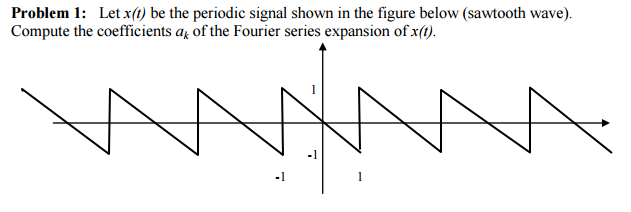
A sawtooth wave is a pattern like a sine wave, only the rise is much slower and the fall much faster. The sawtooth wave pattern is often seen in Nature, such as when a population slowly grows until it has consumed all available resources, and then plummets sharply. The reverse sawtooth wave is the same except the rise is extremely rapid, and the descent gradual.

Political history follows this pattern of a reverse sawtooth wave. If we imagine that the x-axis is time and the y-axis is the quality of leadership, a distinct pattern can be observed. The quality of political leadership gets gradually worse and worse over time until a revolutionary vanguard of high-quality leaders, excluded from the old system, overthrow that system and institute a new one.

This pattern is so old that Plato was able to write about it 2,300 years ago. Book VIII of Republic recounts the political cycle as observed by Plato. It begins with humanity’s natural rulers – an aristocracy of philosopher-kings – in charge. This leads to an initial state of maximum happiness but, over time, bad decisions are made when it comes to selecting new rulers from among the young people, and the quality of leadership starts to degrade.

The cumulative effect of these bad decisions is that the ruling class comes to think less about wisdom or rectitude and more about honour. This leads to a high-spirited militarism which creates more suffering than the enlightened benevolence of the philosopher-kings. This alone wouldn’t be so bad, if it didn’t lead to further degradation.

The tension between the aristocratic way of governing and what Plato called the timocratic way of governing leads to another step downwards, in the form of oligarchy. Eventually, rulers stop valuing money as an instrument to honour and start valuing it for its own sake. Once money starts determining who may hold public office, oligarchy is in effect.

This isn’t the end. Once money rules, people start using it to indulge their unnecessary desires. This leads to a base form of man taking control – the democratic man. The democratic man follows no higher order. He simply lurches from one whimsy to another. Much like today’s Baby Boomers, the democratic man lives a life of pure indulgence. This has serious consequences, in particular the rise of the tyrannical man.

Once people start living for indulgences instead of virtue, and society loses all discipline, the lowest form of man takes control. This is a man motivated by base lusts and consumed by lawless desires – the tyrant. His spiritual functions are entirely absent. Rule by tyrant leads to immense suffering, especially when contrasted by rule with philosopher-king.

This immense suffering brings about the humility necessary for people to finally listen to the philosopher-kings, instead of indulging their base desires. Chastened by the hangover of their indulgence, the people recognise the philosopher-kings as the most excellent among them, and make them leaders. This aristocratic revolution reinstalls the philosopher-kings as the ruling class, whereupon the cycle begins anew.

In Republic, Plato suggests that this pattern of gradual decline leading to revolution is inevitable, owing to the inevitable imperfections within each successive generation of people. This idea – that perfection existed in the past but decayed as time progressed – is one that the ancient Greeks shared with their co-religionists in ancient India, but not with today’s Westerners.

Most Westerners today adhere to an erroneous view of history that follows a regular sawtooth wave, in which progress is slowly made until resources are exhausted, at which point the system collapses. This regular sawtooth wave pattern is more typical of material phenomena, whereas the reverse sawtooth wave pattern is more typical of spiritual phenomena. It follows that history is fundamentally a spiritual phenomenon.

A modern understanding of political psychology sheds some light on how this could be possible. The potential risk in allowing society to degenerate one step further is small, whereas the potential risk in revolution is massive. Therefore, the temptation is to “kick the can down the road”. The best, most recent example of this phenomenon is the money printing of the last 14 years in response to the Global Financial Crisis.

So the future of Clown World is easy to predict. Our political difficulties, and our suffering, will both further intensify. At some point, people will get so pissed off about it that they decide to risk their lives in revolution. The only people willing to risk their lives so that their kin can avoid suffering are the best of all people, the philosopher-kings.

Before this happens, high-frequency young people will, in ever-greater numbers, reject Clown World in preference of simple lives away from the big cities (presaged today by the Chinese Lie Flat movement). These young people will have realised that money and pleasure do not provide meaningful happiness, following the example of voluntary poverty set by William James and Henry Thoreau. In seeing beyond the trappings of materialism, this cohort will have proven that it is fit to rule.

Away from the degeneracy of the cities, these young people will eventually form their own aristocratic and revolutionary culture, more excellent than anything that has gone before. So when the Globohomo Gayplex collapses, as it always does, these young aristocrats will surge into the halls of power, aided by all those who are glad to see the back of tyranny.

Our current position in Clown World can be understood as a point, found near -1 on the y axis, on a reverse sawtooth wave function. Our currently intense confusion and suffering presages a revolutionary vanguard of philosopher-kings. When the revolution comes and this aristocracy of philosopher-kings are installed as leaders, Clown World will end and a new spiritual golden age will begin.

*

If you enjoyed reading this essay/article, you can get a compilation of the Best VJMP Essays and Articles of 2020 from Amazon for Kindle or Amazon for CreateSpace (for international readers), or TradeMe (for Kiwis). A compilation of the Best VJMP Essays and Articles of 2019, the Best VJMP Essays and Articles of 2018 and the Best VJMP Essays and Articles of 2017 are also available.

*

If you would like to support our work in other ways, please consider subscribing to our SubscribeStar fund. Even better, buy any one of our books!
The Elementalist Conception of How Everything Evens Out

1. The Quadrijitu shows us that masculine becomes feminine, feminine becomes masculine, good becomes evil and evil becomes good.

2. The shape of the Quadrijitu reflects the Hermetic Principle of Correspondence.

3. As above, so below. As below, so above. As within, so without. As without, so within. As before, so after. As after, so before. As included, so excluded. As excluded, so included.

4. Every physical action has an equal and opposite reaction.

5. Every emotional action has an equal and opposite reaction.

6. Every mental action has an equal and opposite reaction.

7. Every spiritual action has an equal and opposite reaction.

8. Suffering inures the mind to suffering; joy inures the mind to joy.

9. Verticalisation inclines the mind to see the benefits of the horizontal; horizontalisation inclines the mind to see the benefits of the vertical.

10. When the Northern Hemisphere stands in the light, the Southern Hemisphere stands in the darkness. When the Southern Hemisphere stands in the light, the Northern Hemisphere stands in the darkness.

11. When the Occident stands in the light, the Orient stands in the darkness. When the Orient stands in the light, the Occident stands in the darkness.

12. When the soul stands in the light, the body stands in the darkness. When the body stands in the light, the soul stands in the darkness.

13. Consciousness exists at the intersection between the eternal past and the eternal future. Within it, all things are possible.

14. Energy flows where attention goes. To observe something is to make it more real.

15. To pay regard to any one aspect of life is to neglect all the others. Thus, appreciating one aspect of life primes oneself to appreciate the others in turn.

16. The gods are bored by the excessively good, and wish evil upon it.

17. The sum total of all positive values and all negative values is zero.

18. The sum total of one entire rotation around the Quadrijitu is zero.

19. Bad luck affords a greater opportunity to entertain the gods, for they are most entertained by those who successfully overcome.

20. Good luck tempts fate and leads to hubris, therefore it should be appreciated and not desired.

21. Great suffering can bring great wisdom. The purest gold can only be found after the hottest fires.

*

This chapter is an excerpt from Elemental Elementalism, the foundational scripture of the new religion of the Age of Aquarius.

*

If you enjoyed reading this essay/article, you can get a compilation of the Best VJMP Essays and Articles of 2020 from Amazon for Kindle or Amazon for CreateSpace (for international readers), or TradeMe (for Kiwis). A compilation of the Best VJMP Essays and Articles of 2019, the Best VJMP Essays and Articles of 2018 and the Best VJMP Essays and Articles of 2017 are also available.

*

If you would like to support our work in other ways, please consider subscribing to our SubscribeStar fund. Even better, buy any one of our books!
The Elementalist Conception Of How Life Began

1. The great and the learned have long debated how life began on this planet.

2. One popular theory is that life sparked into being when lightning struck a pool of water containing the right chemicals.

3. Another popular theory is that life came to Earth from elsewhere in the galaxy, perhaps on a comet or fragment of planet that exploded, and upon seeding the Earth began to evolve.

4. Yet another popular theory is that a god outside of the physical world created it for various reasons, willing life into being and then abandoning it to run its natural course.

5. The Elementalist, knowing consciousness to be the prima materia, laughs upon hearing all such nonsense.

6. There is no such thing as life; there is consciousness and the contents of consciousness.

7. The various fragments of consciousness incarnate into this world as the various creatures.

8. When these fragments of consciousness perceive each other’s physical forms through the sensory organs of their incarnations, it appears as if the physical world is the prima materia and that life has appeared on it.

9. The Elementalist knows this to be the Prime Illusion.

10. The physical world is a hallucination that is maintained by consciousness observing it.

11. The greater the number of fragments of consciousness that perceive any one part of the physical world, the more intensely real that part appears.

12. The apparent beginning of life on Earth, in proto-bacterial form, is illusory, as there is no such thing as time.

13. Life as a proto-bacteria, as with all other lives, is merely another set of perceptions that can be experienced by consciousness.

14. Life is precious because it is an incarnation of the divine.

15. All living things are incarnations of the divine experiencing the Great Fractal. Therefore, to cause suffering to life is to go against the will of the divine.

16. It’s not a crime to cause suffering to life if this should entertain the gods.

17. Few things appall the gods more than mindlessly causing suffering to life.

18. Each fragment of consciousness descends from a higher dimension into this physical world, and therein incarnates into a body. So begins each and every life.

19. Each of these bodies is fundamentally a vibration that resolves as different proportions of fire, air, water and earth, and from there to the infinite forms.

20. The fragment of consciousness ensouling each of these bodies is fundamentally a frequency that resolves as different proportions of clay, iron, silver and gold, and from there to the infinite forms.

21. The combination of vibrations of fire, air, water and earth and frequencies of clay, iron, silver and gold produce all the expressions of life on this planet.

22. Every form of life that could ever possibly exist exists within the Great Fractal, and always has, and always will.

*

This chapter is an excerpt from Elemental Elementalism, the foundational scripture of the new religion of the Age of Aquarius.

*

If you enjoyed reading this essay/article, you can get a compilation of the Best VJMP Essays and Articles of 2020 from Amazon for Kindle or Amazon for CreateSpace (for international readers), or TradeMe (for Kiwis). A compilation of the Best VJMP Essays and Articles of 2019, the Best VJMP Essays and Articles of 2018 and the Best VJMP Essays and Articles of 2017 are also available.

*

If you would like to support our work in other ways, please consider subscribing to our SubscribeStar fund. Even better, buy any one of our books!

The Therapeutic Value Of Psychedelics Is In Their Value As Spiritual Sacraments

The pharmaceutical machine is turning its attention to psychedelics. Having finally milked dry the antipsychotic and antidepressant market, Big Pharma has sniffed out new profit potential in using psychedelics to alleviate mental illnesses. This new paradigm brings the potential for great benefits if we get it right, but also great risks if we get it wrong.

Research suggests that MDMA alleviates the suffering of Post-Traumatic Stress Disorder, psilocybin alleviates the suffering of Major Depressive Disorder as well as alcoholism, ketamine also alleviates the suffering of Major Depressive Disorder, LSD alleviates end-of-life anxiety and depression, ibogaine alleviates the suffering of withdrawal when overcoming substance abuse and that psychedelics in general alleviate psychological distress and suicidality.

All of this research, however, is currently just data points, with no unifying theory to explain it.

Researchers understand that psychedelics can alleviate the suffering associated with several conditions, but they don’t understand why, or how to maximise the benefits of these mysterious substances. The danger is that they will never come to understand, because their science is based on erroneous assumptions about the nature of reality, and these erroneous assumptions prevent them from seeing reality accurately.

The vast majority of researchers in the field of psychology are materialists who believe that the brain generates consciousness, and therefore that all of the contents of consciousness are simply brain states. This is, in fact, the great delusion of psychology as it is currently practiced. The delusion is so prevalent that it’s rare to ever hear a psychologist challenge it. Anyone who does is usually shunned.

This materialist paradigm is assumed without any hesitation or doubt. One consequence is that all psychedelic phenomena are explained in materialist terms. Some researchers define a psychedelic as a high dose of a hallucinogen. Others group psychedelics based on which receptor sites they operate on. Inevitably, the psychedelic experience is explained (but only ever conjecturally) by a change in brain state.

The end result of the assumption that all suffering is caused by chemical imbalances: psychiatry has been reduced to dishing out pharmaceuticals. This is why modern psychiatry is next to useless (although it is true that a great many acutely psychotic people can benefit from being administered a sedative for a while). In this context, psychedelic sacraments have shown great promise, as a medicine that need only be administered once, and with a minimum of physical side-effects.

But in order for them to be properly understood, and therein properly utilised, psychological science will first have to outgrow materialism.

The fact is that psychedelics don’t alleviate suffering by altering brain chemistry or brain structure (at least not primarily). They primarily alleviate suffering by destroying spiritual illusions and delusions. The word ‘psychedelic’ means ‘soul-revealing’, and it’s precisely this quality that enables psychedelics to have their therapeutic effect. They reveal – in Aldous Huxley’s words – the fundamental all-rightness of the Universe.

In Western society, a great deal of suffering has resulted from the adoption of certain false metaphysical beliefs. The three most prominent false spiritual beliefs are: this physical world is all there is; the brain generates consciousness; there’s nothing divine about either this physical world or consciousness. All three of these beliefs are harmful, but the second one is particularly so.

If a person truly believes that the brain generates consciousness, then it inevitably follows that consciousness ends with the death of the brain. Because the death of the brain is inevitable, from there it follows that all experiences and memories of experiences are meaningless, because these are dependent on the brain and will disappear with brain death. Because nothing continues beyond the death of the physical body, there’s no overall purpose or goal to life here. It’s all just one bizarre fluke.

What remains to be commonly accepted is that this attitude leads to colossal amounts of misery, hopelessness and despair – and it’s not even correct.

If a patient comes to a psychiatrist in a state of existential despair induced by the apparent meaninglessness of life, the psychiatrist can do little other than commiserate on a human level (and perhaps dish out some pharmaceuticals). They cannot assure the patient that consciousness survives the death of the physical body and therefore that life actually is meaningful, because the vast majority of the time psychiatrists are materialist atheists. Christianity can’t fill the gap because no-one really believes it.

The uselessness of psychiatry, as it is practiced today, is why so many people take drugs.

Many addictions are fuelled by despair at the apparent meaninglessness of life. To get forced into existence as a mortal creature, doomed to suffer old age and death for no apparent reason, seems like a kind of torture. Many find this torture so excruciating that they decide it’s worth numbing the pain with alcohol or heroin. Others fill the gap with sex, power, social status or any of the other ape instincts that can substitute for a meaningful life.

Pharmaceuticals don’t help here. They can numb and stupify, and they can prevent the extreme agitation that often leads to fatal consequences, but they don’t alleviate any spiritual suffering. They don’t free people from fear of death. They don’t help people find any meaning in life.

Psychedelics liberate people from this spiritual suffering. They blast away the delusion that consciousness is trapped in the brain and doomed to die with the body. They reveal an entirely new world: one of meaning, purpose and fundamental all-rightness. This explains why there is a correlation between feeling mystic experiences on a trip and the therapeutical efficacy of that trip.

In other words, the more a trip helps a person to see beyond, the more suffering that trip will alleviate in that person. This is because so much psychiatric suffering is ultimately caused, not by material causes, but by spiritual illusions and delusions. The therapeutic effects of psychedelics lie primarily in their ability to dispel these illusions and delusions, and not until this is understood can the benefits of psychedelics be fully realised.

*

If you enjoyed reading this essay/article, you can get a compilation of the Best VJMP Essays and Articles of 2020 from Amazon for Kindle or Amazon for CreateSpace (for international readers), or TradeMe (for Kiwis). A compilation of the Best VJMP Essays and Articles of 2019, the Best VJMP Essays and Articles of 2018 and the Best VJMP Essays and Articles of 2017 are also available.

*

If you would like to support our work in other ways, please consider subscribing to our SubscribeStar fund. Even better, buy any one of our books!