How the Actions of the John Key Government Contributed to NZ’s Record Suicide Rate

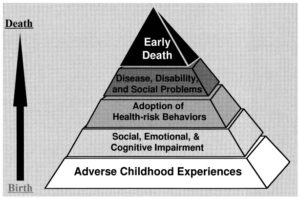
earlydeath

This year has been our generation’s equivalent of 1968 – changes on all fronts, and many records broken. Apart from breaking records at rugby, New Zealanders have also had recent success in breaking records at suicide.

Broadly speaking, we have some idea why people commit suicide. Although the biochemical reasons vary, the essential reason is a sustained abuse and/or neglect that convinces them it would be better to be dead than continue to live in a place where such things happen.

There is already evidence suggesting up to 90% of suicides occur in people with a mental health diagnosis or potential diagnosis, and an American study found that high rates of childhood abuse and neglect were correlated with a 12-fold increase in the frequency of suicide attempts as an adult.

Thus, it’s fair to say that – if it wasn’t already obvious to the reader – of those who attempt suicide as an adult, most will have a story of childhood abuse or neglect to tell.

What causes childhood abuse and neglect? Tragically, the answer to this is usually more childhood abuse and neglect; the child learns from its own parents that human life isn’t worth very much and naturally they treat their own children the same way. Monkey see, monkey do. Lack of empathy cascades down the generations.

Apart from this simplistic response, the strongest correlate with abuse and neglect of children is poverty. Poverty tends to lead to abuse and neglect for two reasons. The first is stress in the family unit, the second is that it causes mental illness in the mother.

Stress leads to abuse and neglect because a parent who is continually under high levels of stress will have greater difficulty maintaining the correct attitude towards their offspring. They are more likely to lash out from suppressed frustration and rage, and they are more likely to abandon consciousness through the bottle or other recreational drugs.

It might be obvious that mental illness in the mother contributes to an increased suicide rate among the offspring, but in case it isn’t obvious the science makes clear that such a causal relationship exists.

One of the most reliable factors predicting a future maltreatment report for any given child is known to be maternal depression.

It’s well known that poverty is one of the major causes of depression in women, usually because it imposes considerable psychological stress at the same time as removing women from accessing useful avenues of social support.

In fact the association between poverty and mental health is considered one of the most well-established in all of psychiatry.

For women it is especially acute because women tend to make much greater use of social networks to pre-empt mental health conditions. This means that poverty, in addition to the stress it already causes, makes it more difficult for women to maintain their social networks, and so an unfortunate feedback loop with poverty and decreased mental health outcomes can be observed.

Considering that the vast majority of people who are both poor and with dependent children are women, this pattern is especially impactful.

After reading all this, it is perhaps predictable that there is a relationship between childhood poverty and antisocial behaviour. Not only are children more likely to exhibit antisocial behaviour if they are from a home in poverty, but they are also more likely to show persistent patterns of antisocial behaviour into adulthood the more years that they spend in poverty.

All of this ultimately reflects an area where politics and health cross.

For, if poverty creates mental illness, then there’s a clear moral imperative to reduce poverty in the same way that there is a clear moral imperative to provide sanitation to people so as to prevent cholera outbreaks, typhus, plagues etc.

After all, in the same way that someone chucking a bucket of shit out into the street might impact you by creating a disease, childhood neglect and abuse is going to create the sort of adult that will rob, rape, burgle and murder you when you’re old.

However, a vote for the National Government of the past eight years was to vote for tax cuts in exchange for defunding rape crisis centres, slashing mental health funding, cutting benefits to sick people and perpetuating the war on drugs.

Looked at like this, it’s hard to deny that a vote for a National Government is a vote to decrease the mental health of everyone in the bottom half of society (or perhaps even bottom three-quarters, considering that many people vastly overestimate how wealthy they will be in ten years’ time), because it is a vote to redistribute wealth upwards from the already poor to the rich, thus increasing poverty and therefore the consequences of poverty, such as mental illness.

This might explain why so many old people vote National (the correlation between voting National in the 2014 General Election and Age is 0.81): they won’t be around to see the full extent of the damage that National policies do to the collective health of the nation, but they can cash in their tax cuts straight away.

Probably if John Key were to be presented with the information in this article he’d say that all mental health problems are caused by drug abuse. So there is little value in trying to talk sense to the current political establishment about the subject.

Perhaps the best thing to do is to educate the younger generations with the truth about how the bulk of psychological problems arose in our society, so that they’ll be in a position to do something about it when the grip of the Baby Boomers on the brass ring of power is relinquished in death.

How Low Does Turnout Have to Get Before Voting Loses Legitimacy?

illusionofdemocracy

The obvious smartarse answer is “It never had legitimacy”, but this merely ducks the question. The question of when a democracy can lose enough of the perception of legitimacy that it stops working, not by being usurped by authoritarians but from the populace simply not caring about it enough, is worth exploring.

The logic goes something like this. It’s reasonable to assume that if no-one voted at all, not even the politicians themselves, then no-one would care about democracy. So there is a clear limit case as votes approach zero.

If everyone votes (or at least everyone eligible), then it stands to reason that democracy has the biggest possible buy-in. Probably in a culture where 100% of the population votes there would have to be an exceptionally unusual degree of philodemos – a degree never seen in practice.

If a hypothetical democracy starts with 100% participation and this falls over time towards 0%, at some point along the line representing that descent the democracy will fail.

But where exactly?

The most recent American presidential election does not have an official turnout rate yet, but BetFair appears to be sure that it will be somewhere around 58%. This is low by the standards of Western democracies – but there appears to be no way to tell how much of this is due to disenfranchisement and how much is due to people seeing through the system and protesting by not voting.

This already highlights a problem with democracy – bombs dropped by American forces do not do 58% damage, and sentences for non-violent drug offences are not 58% as long as they would otherwise be. No matter how much the population wants democracy, they will get it good and hard.

Not even 58% buy-in is necessary in any case. Adolf Hitler’s NSDAP won the 1933 German Federal Election with under 44% of the vote, and this was enough to get rid of the Communists and pass the Enabling Act which paved the way to total fascism.

You could even argue that – if you take the example of the United States in its infancy, where only white male landowners could vote – even with support for democracy in single digits, it can still function as long as all other possible organisational approaches are prevented from taking form.

The tricky thing is that this line of reasoning exposes the truth at the bottom of the political system: the plebs were never in charge and any impression given to that end is simply a useful illusion.

Ultimately it’s whoever controls the loyalty of the Police that is in charge, because then anyone who disagrees that they’re in charge can be taken by the Police and put in a cage (replace Police with Army in many non-Western countries). This was all that Hitler needed to ensure to take power in Germany.

One has to then ask, if the ruling classes just took all the ballots and dumped them in the ocean, invented some election results that both sounded plausible and ensured the interests of said classes were protected, and then divvied up the remaining jobs among themselves, how much wiser would we all be?

Because the ruling classes doing so wouldn’t even be much different from the way the con is already played.

We can take heart that not all New Zealanders have fallen for the ruse – 63% of the electorate did not vote for a politician in last week’s Mt. Roskill by-election, which means that 63% of potential suckers did not give their power away to a shyster by consenting to the democratic charade.

Indeed, Dr. Richard Goode of Not A Party successfully claimed victory in attracting the non-vote, declaring himself Not A Member of Parliament for Mt. Roskill. This obligates him to not attend Parliament, which means that he is not responsible for levying taxes to spend on flag referendums, and nor is he responsible for putting non-violent drug users in cages by setting the Police on them.

I think we can all agree that this is a better deal than what we are getting from our current crop of MPs.

Faith in democracy will, however, have to get much lower before philosopher-kings such as Dr. Goode can be returned to their true position in society.

Understanding New Zealand: Voting New Zealand First

winston

The New Zealand First Party has been around for over 20 years and has carved a reputation as a nationalist socialist party that caters especially to the old. Although this is somewhat true it is a simplicity that comes nowhere close to giving the full picture of what is arguably New Zealand’s third largest political movement.

The statistic that will surprise many is that there is no correlation at all between voting New Zealand First in 2014 and being of European descent. This value is an even 0.00, which gives the lie to the commonly-held belief that New Zealand First appeals heavily to white nationalist sentiments. In fact, the correlation between being Maori and voting New Zealand First is a strong 0.66, which tells us that Winston Peters’s party has a much stronger appeal to the tangata whenua than it does to the culture of the settlers.

This correlation can be easily observed without any complicated analysis: one need simply note the high percentage of New Zealand First support in the Maori electorates.

Although the statistics downplay the idea that New Zealand First appeals to racist sentiments, they certainly do not have much support among Asians – the correlation between voting New Zealand First and being Asian is -0.60. For being a Pacific Islander the correlation is -0.08, which suggests that Islanders are generally indifferent to Peters’s message.

Another surprising statistic is that there is no significant correlation between Median Age and voting New Zealand First (-0.08). So the idea that New Zealand First is a pensioners’ party also is a banal simplification. Indeed, the average New Zealand First voter is not much older than the average Green voter (for whom the correlation with Median Age is -0.17). Certainly much younger than the average National voter, for whom the correlation with Median Age was a very strong 0.81.

New Zealand First voters are the poorest of the supporters of any major party: voting for them has a correlation of -0.59 with Net Personal Income. They are also the most poorly educated. There is a correlation of 0.79 with voting New Zealand First and having no qualifications, which suggests a surprising working-class sentiment among their voters.

Indeed, as the New Zealand working class, especially those with no qualifications, are the primary losers from mass immigration, which sees their niche in the job market swamped with competition at the same time their rents skyrocket, it is not surprising they vote New Zealand First in great numbers.

Voting New Zealand First had a correlation of -0.41 with voting to change the flag in the second flag referendum, which might reflect monarchist sentiments, or perhaps a working class conservative streak. It could also reflect a distaste among New Zealand First supporters for the flagship project of an international banker who sold assets and opened the borders.

Supporting the idea that New Zealand First has a strong working class base, voting for them has a correlation of 0.40 with not voting at all, suggesting a significant degree of disenfranchisement. This is, however, not as strong as the correlation between voting Labour and not voting (0.67). Perhaps this is evidence of a higher level of political engagement among New Zealand First supporters compared to people in similar sociodemographics. This might reflect a higher level of political sophistication among New Zealand First supporters in comparison to those who support Labour.

Of interest to potential post-2017 coalition options, voting New Zealand First had a correlation of -0.34 with voting National, -0.39 with voting Green and 0.11 with voting Labour. The strongest correlations were 0.44 with voting Internet MANA and 0.46 with voting for the Maori Party.

On the face of it, this suggests that a Labour-New Zealand First-Maori coalition might be the left’s best best after 2017. As the correlation between voting Labour and voting Maori Party is 0.41 this arrangement might well be most amenable to all sides. That New Zealand First voters have an apparent dislike for Green voters that is even stronger than their enmity for National voters suggests the current cozy assumption of a Labour-Greens-New Zealand First coalition post 2017 might be miscalculated.

Interestingly, voting New Zealand First had a correlation of 0.57 with voting for the Cannabis Party. Although this can be mostly explained by the common factor of Maori support, it probably also reflects a shared rejection of the mainstream media message (cannabis users and New Zealand First supporters tend to share an extreme skepticism of the mainstream media).

*

This article is an excerpt from Understanding New Zealand, by Dan McGlashan, published by VJM Publishing in the winter of 2017.

Understanding New Zealand: Wealth and Poverty

moneymoneymoney

This is the one correlation everyone knows. In fact, this might reflect the single most fundamental division in politics: the have-nots trying to get and the haves trying to keep. Kids at primary school figure out that rich kids are more likely to be conservative than poor ones, and nothing changes at adult level. So this article looks at correlates with Net Personal Income.

A vote for National has a moderate 0.53 correlation with Net Personal Income, whereas a vote for Labour is -0.51. These two are probably of the same magnitude because they reflect mainstream, everyday people rationally voting for what suits their economic interests (the rich for less sharing, the poor for more sharing).

Perhaps the most interesting is that the correlation between voting Conservative and Net Personal Income is an insignificant 0.06. The Conservative Party may have had a wealthy backer splashing the cash, but the sort of person who votes for them is much less big money than the average National Party voter. Possibly this reflects the degree to which religious fundamentalists were attracted by Craig’s righteous message – and religious fundamentalists are known for being uneducated and thus poor.

The correlation with ACT is 0.36, which is interesting because this is not as high as it is for National. This tells us that ACT voters are actually poorer than National voters – which goes against the stereotype of ACT being a party only for big business. They are, however, significantly more wealthy than average. This could reflect a voter base of young professionals who are doing well but lack the seniority for the really big money.

With voting New Zealand First the correlation with Net Personal Income is -0.59, which means that the average New Zealand First voter is even poorer than the average Labour one. This can be explained to a large degree by the fact that New Zealand First’s support base consists mostly of Maoris and of pensioners.

Voting for the Cannabis Party and Net Personal Income had a correlation of -0.40, which suggests that the average cannabis user, while hard done by, isn’t doing quite as bad as the average Labour or New Zealand First voter.

The correlation with voting for the Maori Party and Net Personal Income was -0.35. The fact that this is weaker than the correlation between being Maori and Net Personal Income (-0.48) suggests that the Maori Party attracts a relatively wealthy section of Maoridom.

It probably comes as no surprise to anyone that people of European descent are significantly wealthier than the average Kiwi – this had a correlation of 0.35 with Net Personal Income. Some might be surprised by the fact that this is a higher correlation than that of being Asian with Net Personal Income, at 0.22. This might reflect the fact that, although Asian immigrants often come here with a considerable amount of capital, their children usually end up the same kind of pleb as the rest of us.

Maoris are also much poorer than Pacific Islanders, which might surprise some. The correlation between Net Personal Income and being Maori is -0.48, whereas for Pacific Islanders it is -0.29. This might reflect the fact that a relatively higher proportion of Islanders have immigrated to New Zealand for full time work, and therefore a relatively lower proportion of them are students, children or beneficiaries.

Another correlation that will surprise no-one is that between having a Master’s degree and Net Personal Income (0.67). This was almost as strong, in the other direction, as having no qualification and Net Personal Income (-0.68). That the correlation between having a Master’s degree and Net Personal Income is stronger than with either voting National or being white underlines the value of an advanced education in an advanced post-industrial economy like New Zealand.

There is also a correlation of 0.27 between Net Personal Income and no religion. This probably reflects the fact that the religious are less likely to become educated and therefore will have less opportunity to trade their labour for high amounts of money. The correlation with being Christian was an insignificant -0.07, probably reflecting the degree to which Christianity is mainstream. The correlation with being Buddhist was 0.32, probably reflecting that immigrants from Buddhist cultures to New Zealand historically tended to be well-educated.

A statistic that will depress some and enthuse others is that the correlation between Net Personal Income and voting in the 2014 General Election is 0.52, which reflects the degree to which the poor are disenfranchised by politics in New Zealand (this correlation cannot be explained by age alone).

*

This article is an excerpt from Understanding New Zealand, by Dan McGlashan, published by VJM Publishing in the winter of 2017.