The Basics of Anarcho-Homicidalist Etiquette

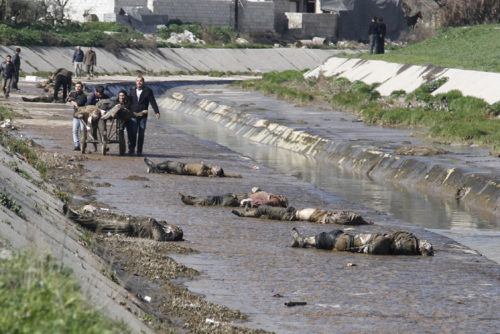
A couple of dozen supporters of the governing conservative party are shot dead by automatic rifle fire after coming out of a conference, and the gunman is soon shot dead by Police. On his YouTube account the media discover a video of the gunman talking about how his actions were inspired by the philosophy of anarcho-homicidalism. This essay examines the considerations that the anarcho-homicidalist will have needed to have made.

The purpose of undertaking a campaign of anarcho-homicidalism is to effect social change by increasing the adverse consequences of trying to enslave people.

One reason why slavery has been so common in human history is that there are very few downsides to it, as long as you are not the slave. All that’s really necessary is the ability and will to make a credible threat to the physical coherence of another person’s body, and it becomes possible to extort them out of their productivity.

In other primates, this credible threat is based around claws and fangs and is usually made to extort other primates out of food they have gathered or hunted. This is also the long-forgotten origin of slavery in the human animal.

The first ever anarcho-homicidalist action was probably undertaken by a young adult male primate, who had food resources constantly extorted from him through the threat of violence. As he grew from a juvenile into an adult, this male may have developed a physical strength greater than that of his tormentor, and then eventually killed that other ape to protect his own food supply.

When metallurgy became possible, it also became possible to place on other people chains of iron (they were literally chains of copper at first). This represented a considerable advance in the technology of slavery because metal allowed the enslaver to create physical bonds that could not be easily broken.

This meant that it was possible to bind a person to a particular place. Metal also made it possible to enslave people through the threat of stabbing them.

In the 21st century, slavery is primarily a question of chains of silver. These are not physical chains but mental ones. People are bound by their desires, and especially by their fears. They are also bound by confusion and deceit.

The way politicians enslave people with chains of silver is with laws and statutes. The trick with chains of silver is to get the slaves to put them on each other, backed up by the ultimate threat of a sharp and pointy bit of iron.

This method of enslavement reached its apogee in Communist East Germany. At one time it was estimated that 20% of the population were Stasi informants. In such an environment, ordinary people are regularly too terrified to do anything original or creative, and so the ruling classes are free to plunder the place without consequence.

Chains of silver are the basis of the question that has to be asked by modern people who want to be free. In particular, a person has to ask themselves, “At what point does Government overreach become slavery?”

Because once that point is exceeded, the anarcho-homicidalist will consider themselves duty-bound to take action; action predicated on the moral tenet that everyone has the right to kill anyone trying to enslave them.

The consequences of an act such as the one described in the opening paragraph of this essay might be taken if the National Government enforced a law that the anarcho-homicidalist considered to be slavery.

It doesn’t matter what this law might be specifically, because every individual has to decide for themselves at what point the actions of another become an attempt to enslave.

The idea is that, after anarcho-homicidalist action had been taken, the authority figure making the enslavement attempt might think again.

If the previous authority in their position had met a grisly end – such as the conservative party supporters gunned down in the opening paragraph – their replacement might well be conscious that the people they were trying to rule had set limits on that authority.

For this reason it would be necessary for an anarcho-homicidalist to make clear, to whoever was responsible to clean up the mess, why the mess was made.

For example, let’s say that an individual is facing criminal charges for collecting rain water on their own property. After a lengthy court struggle, that individual is put into so much debt that they end up losing the property, and consequently they decide to undertake an anarcho-homicidalist action by killing some of the council members responsible for making it illegal.

It would be essential to, at some point, make it clear to a likely-to-be shocked general public why this action was undertaken.

If the anarcho-homicidalist is shot dead by Police during their action – which is very possible – then it would be necessary to record a message beforehand. This could be a YouTube video explaining the reasons for the action, or a written message.

The important thing is that the anarcho-homicidalist makes clear that their actions are not simple acts of terrorism. Anarcho-homicidalist actions can only, by definition, be taken in self-defence. Therefore, any anarcho-homicidalist taking ultimate action is obligated to explicate their reasons for taking ultimate action, and to explain why their target was an enslaver and not an innocent.

National and the Greens Could Form A Globalist Alliance Post-Election

A recent leaked poll suggests that the Green Party might find themselves snookered after the election on September 23rd. Although they are polling fairly well, Labour is not, and so the Green-Labour alliance might find themselves dependent on New Zealand First, who the Greens have intimated they cannot work with.

The Greens have also suggested that they would not like to support a Labour-New Zealand First minority Government on the grounds that New Zealand First is “racist”.

This raises the disaster scenario of New Zealand First choosing to go into coalition with National, which would form a comfortable majority, with the Greens left out in the cold again.

Sounds like an everyday drama at a girls’ high school – and the participants are every bit as catty – but for us plebs out there in New Zealand it’s what decides whether we eat at the end of the week or not.

One scenario, however, has been relatively ignored – the Greens can always come around from the other side and form a globalist alliance with the National Party.

National wants to remove capital controls; the Greens want to remove border controls. This makes the two of them natural bedfellows.

After all, the only reason why the Greens are making noises about how “racist” New Zealand First is is because New Zealand First represents the nativist axis on the great globalist-nativist spectrum (that may define the politics of this century).

In other words, New Zealand First represents the people who are born in New Zealand – principally the Maoris and the majority of the white people.

But as Understanding New Zealand demonstrates in the section about Maori voting patterns, the Greens are themselves clearly more of an established power structure party than New Zealand First.

The correlation between voting New Zealand First in 2014 and being Maori was 0.66, whereas between voting Greens in 2014 and being Maori it wasn’t even positive, being -0.09.

So why would the Greens make a big song and dance about how not wanting tens of thousands of “refugees” is racism when the racism in question is an expression of the will of the indigenous Maori people?

Globalism.

The commitment of the Green Party to the globalist dream of destroying any connection between land and ethnicity is so great that they’re willing to further water down the Maori presence in Aotearoa by bringing in 5,000 “refugees” a year.

This may be so strong that, by itself, it tips the true home of the Greens away from the Maori they claim to be taking care of (and subsequently from New Zealand First and Labour) and towards the wealthy white people in the National Party, for whom any connection between land and ethnicity is merely an impediment to business.

Furthermore, as is also discussed in the Understanding New Zealand section about Green voters – “…the correlation between voting Green in 2014 and median personal income is 0.31, which is not as strong as National’s 0.53 but is much closer to that than to Labour’s -0.51…”

The Greens are, simply put, a much wealthier and whiter group of people than either Labour or New Zealand First.

The Greens essentially represent the urban wealthy, and as such it’s arguable that they could more naturally form an alliance post-September with the rural wealthy in the National Party, rather than the urban poor in the Labour Party.

Of course, an alliance with the rural poor – the diametric opposite of the Greens – in New Zealand First would be the most difficult of all.

*

Dan McGlashan is the author of Understanding New Zealand, published by VJM Publishing in the winter of 2017.

Te Reo With Mnemonics: Nature Words

Wind/Breeze – mātangi

A roaring gust of wind pulls up into the shape of a wild mustang.

Cloud – kapua

A mist floats through a section, and when it reaches the owner’s carport underneath their house it condenses into a cloud.

shine (Sun) – whiti

Thousands of rays of light burst out of the face of the Sun, and each of the rays has a foot at the end of it. The sunshine is very feety.

Sky – rangi

A man puts a phonecall through to someone. In the sky, another man picks up a phone made of clouds and says “You rang?”

Star – whetū

In the night-time sky, a star unwraps a block of feta cheese and starts eating it.

River – awa

An explorer stops by a river to get a drink of water, when an arrow lands in the water beside him.

The Maori word for mountain – maunga – shares a m-ng- pattern with the English word mango

Mountain – maunga

From the precipice of a craggy mountain, an avalanche of mangos roll down the cliff face.

Moon – marama

In the night-time sky, shining down in the place of the Moon is the face of Marama Davidson (if you don’t know who she is, imagine the Moon’s face is smeared with marmite).

Storm/stormy – tūpuhi

Seen from an inside window, a storm sets in, so bad that it blows a man’s toupee off his head.

Thunder – whaitiri

A skyful of clouds emits a peal of thunder and then, out of the clouds, comes a squadron of fighter planes.

Land – whenua

A Land Rover drives across a wide range of different landscapes, then hits a rock and damages its fender.

Rain – ua(-ina)

It starts raining. Instead of raindrops, weiner sausages fall from the sky.

*

The above is an excerpt from the upcoming ‘Learn Maori Vocabulary With Mnemonics‘, by Jeff Ngatai, due to be published by VJM Publishing in the summer of 2017/18.

The Dualistic Perspective, Positive Thinking and the Lower Self

There is a tendency in society for people to praise so-called ‘positive thinking’, because it is believed to oppose negativity and negative thoughts. How do you oppose negativity? Opposition is not the same as allowing, and allowing is not the same as capitulating.

Fighting negativity is the equivalent of war on terrorism. You cannot cease aggravation with aggravation, and you cannot wrangle the world into a peaceful situation by insisting that your perspectives have raised you above it all. From the perspective of duality, you are always inextricably complicit in the world’s dysfunction.

While it may be true that the subject of your thoughts involves ‘nice’ things, say, generosity, or hope, or love, the upshot is that you are still dreaming the dream of duality. Reality is already here, and does not correspond to the thoughts and judgments we make about it.

Much of the motivation behind positive thinking, as with any other branch of dualistic thinking, is that it is crafted to oppose or ward off other kinds of thoughts or events, like a talisman. What appears to be loving and peaceful turns out to be an elaborate exercise in nonacceptance. Dualistic ways of thinking oppose accepting the way things appear at this moment at the cost of peace. Duality always has an agenda to push, whether it is destructive and wishes to make things ‘worse’, or constructive and wishes to make things ‘better’.

Things don’t ultimately get better in a dualistic world. This is the ‘bad news’ if you are intent on staying within that limited paradigm (in reality, this is neither ‘bad’, nor is it ‘new’). It means that all of your efforts to screen and filter incoming experience for both yourself and others will be doomed to failure.

This is not fatalistic, because this too is merely a perspective. This is a natural consequence of your insistence on seeing reality divided into fictional categories, including ‘good’ and ‘bad’, ‘right’ and ‘wrong’, ‘holy’ and ‘unholy’, ‘beautiful’ and ‘ugly’, and most other polarized words you will come across in any dictionary. Things don’t get better in a world where you have designated the rules as dualistic and therefore inherently unstable and combatative.

From the viewpoint of unity, there is peace and deep acceptance of whatever comes to pass, because it is acknowledged deeply that everything is unified. This could be called many things, but essentially it means not minding what happens. This is not the same as apathy, or fatalism.

Apathy could be defined as not caring what happens because the world is seen as unsatisfactory, irrespective of what it should happen to contain. This is clearly an expression of duality.

Fatalism has two distinct philosophical meanings, the first is the belief that everything that happens is fated to happen. This may or not be true, and does not fall within the relevance of the present moment. How could anyone know this? What difference would it make to reality for you to believe it?

The second meaning is that of an extreme form of pessimism. This again is duality. Perspectives always see the world through a lens, which means they always imply an agenda – shoulds, should nots and endless efforts at negotiating with what is.

Reality has no agenda, it simply appears unfolding in the moment. Any notion of there needing to be something different to how it presently is occurs only within our cranial vaults. The view from beyond duality reveals the entire cosmos to be marvellous perfection. This can only happen when the false tyranny of the fragmentary mind has been deposed. When the conditioned structures which cloud your vision and prevent you from seeing clearly are removed or at least become transparent, you will see for yourself the breadth and perfection of the Divine.

People who despise the world, having mistaken part of the world for the whole and identifying suffering as essential to existence, are often some of the most vociferous. If you really don’t care, why is it that you care to have your opinions expressed to as many people as possible? Is it a sign of strength to want for others to know your opinion of not caring? What is the nature of the fleeting sense of satisfaction this expression offers you? Do you achieve a specialness from feeling more separate, do you feel adulated as a victim?

All cultures and subcultures, like all individuals, claim specialness, either overtly or implicitly.

It is ironic that there are even subcultures which claim their specialness by being indifferent to wider societal values. They are never so indifferent as to cease insisting that the society they wish to be seen opposing recognises them, even if only to push them away.

Even the most anarchistic and refractory of these subcultures insist on showing their open contempt for the rest of society and their rejection of its values and interests.

It is not enough for them to quietly keep their thoughts, beliefs and values to themselves. Like most egoic entities, they want you to either agree with them, or react against them. If they were truly indifferent and special in the way they would have us believe, why do they do they continue to insist that their differences be recognised by those whom they claim to be possessed of less wisdom?

Again, because all social divisions claiming special status or exclusion are ego based, it is that they want to be recognised as being different (and therefore special) by everyone else. Otherwise, ego would have no audience, and that is not a game that interests an entity whose only conception of being is based on perception of popular opinion – reflected image.

Within both society and individuals there is a strongly ingrained egoic yearning to appear special and to ‘stand out’. Advertising is built upon exploiting this self-induced fiction. The way that egos attempt to establish specialness and distinction is limitless, but they all derive from the same source, the same fictitious drive to appear in order to appropriate being or ‘realness’.

The compulsion to identify with unpopular or unconventional things is not indicative of freedom/authenticity or having somehow transcended the cycle of suffering, rather it is confirmation of the mind/ego’s insistence upon rating everything according to popularity and convention, even when expressed in ‘negative’ terms.

People are particularly aggrieved when something which they like which is relatively unpopular suddenly catches on as a craze. This is why there are bumper stickers and t-shirts which say “I liked (x) before it was popular”. Why should this happen? What is the relevance of this personal investment?

Liking something which is relatively unpopular confers a certain exclusivity. When this thing, whether it is a food, band, or a person, becomes widely appreciated, i.e. ‘popular’, then your claim to exclusivity is forfeit – a piece of life which you thought made you special is now lost, and there is a resulting pain.

This has curious effects. One might be that the thing which was previously identified with is rejected, and your attitude undergoes complete reversal in reaction to popularity – you become a ‘hater’. Otherwise, you might continue to enjoy it, but not feel the capacity to let go of your story about how at one point in your life you had the wisdom and refinement of taste to appreciate (x) before it gained popularity, hence the perceived need for the t-shirts and bumper stickers which congratulate your good taste.

There are people who reject popular films solely by virtue of their popularity alone and insist on praising the merits of less-popular films. This is where the terms ‘overrated’ and ‘underrated’ become especially relevant. You can be in chains by playing the role of the conformist, but you can be equally chained by playing the role of the dissident.

The lower self will happily work either way. One ego might see strength in crowds, popularity, and herd mentality, as in the case of most religions and global fads.

Another might reject the popular on the grounds that they would not be highlighted as sufficiently special, and adopt unconventional beliefs, dress, tastes, lifestyle in order to stand out. They see their implicit rejection of society as a show of force and a testament to their strength.

Ego will work with anything it has available in order to appear stronger. Going with the flow of society appears to have strength and momentum, and opposing it creates ripples. Either way, ego seeks confirmation of its relevance and specialness.

Awareness itself has no dog in the fight. It does not even register the conflict, since it does not arise from inherent duality as the lower self does. Mind is dualistic and therefore highly selective about the kinds of experience it would like to have and those it would rather avoid. It separates possible experience into categories and forms strategies for manipulating life in what it perceives to be its favour.

Awareness just watches. It does not discriminate between fictitious categories of experience or quality. It exists in radiant openness to this moment.

The more energy and ‘time’ that is invested in a life replete with mind, the more plans your mind will make for you, which means fabricated problems, disappointments, thrills and complications.

The more energy is withdrawn from mind and back into the source of that power, which is pre-reflective awareness, the more you live a life that is peaceful, ordinary, and free from the desperate need to stand out or ‘make it’. Identity is free to rest as itself in vibrant awareness.

From a higher perspective, none of this is ‘good’ or ‘bad’. It is just where you happen to be at this point in life. Not everyone’s relationship with this moment is dysfunctional, but most are. Some of the effects of this are stress, dissatisfaction, yearning for specialness and recognition, anxiety, depression and a persistent sense of disconnection from life as well as other people.

It isn’t surprising that people gravitate towards consciousness when their suffering increases. Some people feel that they are pleasurably lost in the complexities of life – that’s fine. That’s part of the game too, only sooner or later everyone will be reminded that all experiences are temporary.

*

Simon P. Murphy is the author of His Master’s Wretched Organ, a collection of short horror stories that deal with questions of transcendence, terror and spiritual absolution.