The Insanity At The Heart Of Western Culture In 2024

Mainstream media has made clear to every one of us that our current rates of material consumption are destroying the planet. If we don’t stop raping the limited resources of Planet Earth, we will induce a biosphere collapse that will probably kill us all. But there are very powerful forces preventing us from not pillaging the world.

Earth Overshoot Day is the day by when humans have used up all the resources that the planet can regenerate in a year. In 2024, that day was May 27. New Zealanders consume at such at rate that, if everyone consumed like us, we’d use up a year’s worth of resources by April 11.

The fact that an overshoot day even exists is proof that the world is insane. It means that we’re living in an unsustainable manner, much like a crackhead living on a giant ball of crack. We have to change course or we’re all going to die. But there are structural reasons why our global society can’t stop consuming the planet.

It’s not just a matter of resource depletion either. This March was the tenth straight month of record temperatures. The mainstream scientific consensus is that human activity has heated up the planet by almost 1.7 degrees Celcius since the late 1800s. If we don’t rein that activity in by reducing overconsumption, we will eventually cook the planet (and us with it).

The problem is that most of this consumption is motivated by the necessities of going to work and maintaining a state of work-readiness. A person must maintain a private vehicle, professional clothing and footwear, professional standards of grooming and body care, potentially all manner of tools and equipment, as well as pay for entertainment to destress from the demands of working. All of this costs resources – resources that are only used because of the obsession with working.

Realistically what we need is for a large number of people to go on something like a UBI, so that instead of driving to work every day and flying to meetings every week, and then spending the income they make from a forty-hour workweek on all kinds of consumer crap they don’t need, they can cut down both their work rate and their consumption rate.

The problem is that it’s simply not allowed to not work.

Our entire culture appears to be based on the logic that people not employed for wages are “not pulling their weight”, as if widespread starvation was imminent. There are dozens of words that can be employed to humiliate someone into working harder: bum, bludger, leech, moocher, parasite, lazy, shirker, grifter etc. To not be working for a wage is considered a great shame.

It could even be said that we live in a “workiarchy” where whoever works the most has the highest status. People brag about waking up extremely early in the morning to work, as if it was central to their moral value. This mentality has given us absurd humour like the “100 hours a week” meme, wherein it’s assumed that if you work less than 100 hours a week you’re taking it easy.

Mass abandonment of work is also not socially possible. The identities of most people are so closely bound with their work that they would suffer a catastrophic loss of personality structure if they were asked to give it up. In the same way that many people die shortly after they retire, because they no longer see a purpose to life, many people would lose the will to live if they were asked to stop working for the environment’s sake.

We’re killing the planet by consuming as much as we are. Yet it’s impossible to just simply not work. This irreconcilable conflict is causing immense levels of undiagnosed schizophrenia among Westerners, and especially younger ones, who are facing the existential dilemma of climate change head-on.

It is apparent from the widespread despair and malaise in Western society today that people want a change of direction. But who can change that direction, when most people are too busy working to pay rents to organise protest, and the people receiving the rents don’t want to change anything?

For the insanity at the heart of Western culture to be cured, we need to collectively come to the realisation that time spent in unpaid work can be just as valuable as time spent in paid work. We don’t need capitalists ordering us around for our lives to have value or meaning. We need to completely revalue the importance of work and industriousness in the light of the total ecological impact of humanity.

*

For more of VJM’s ideas, see his work on other platforms!
For even more of VJM’s ideas, buy one of his books!

*

If you enjoyed reading this piece, buy a compilation of our best pieces from previous years!

Best VJMP Essays and Articles of 2023
Best VJMP Essays and Articles of 2022
Best VJMP Essays and Articles of 2021
Best VJMP Essays and Articles of 2020
Best VJMP Essays and Articles of 2019
Best VJMP Essays and Articles of 2018
Best VJMP Essays and Articles of 2017

*

If you would like to support our work in other ways, make a donation to our Paypal! Even better, buy any one of our books!
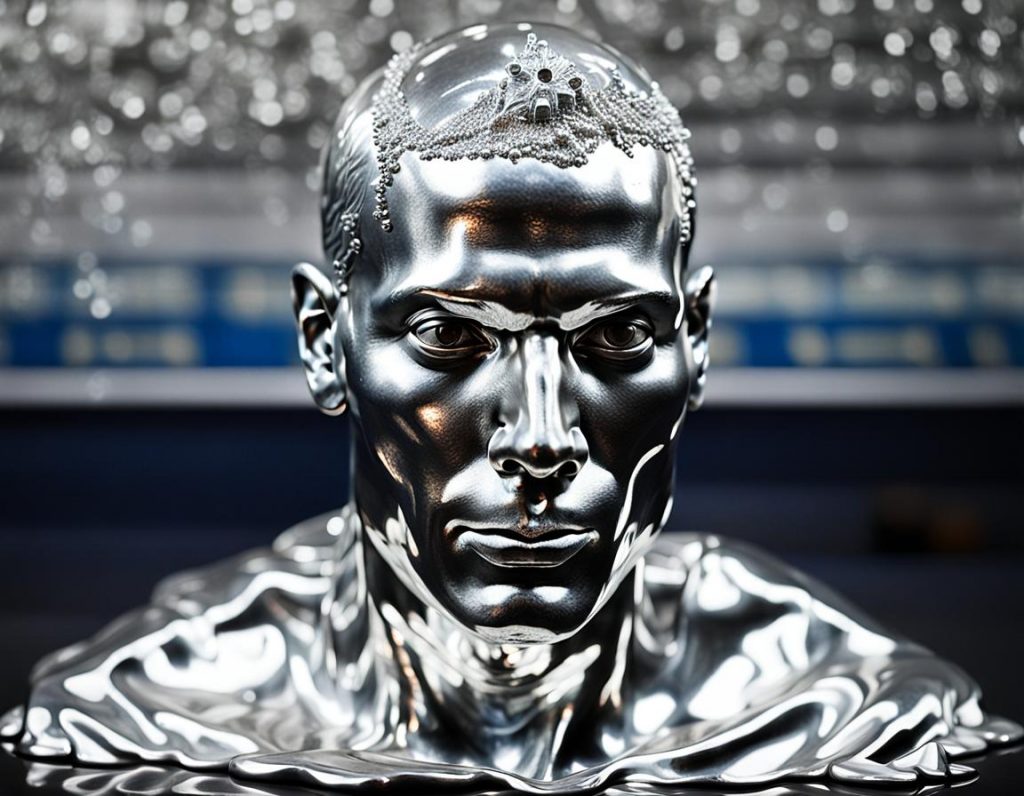
The Transmutation Of Iron Into Copper

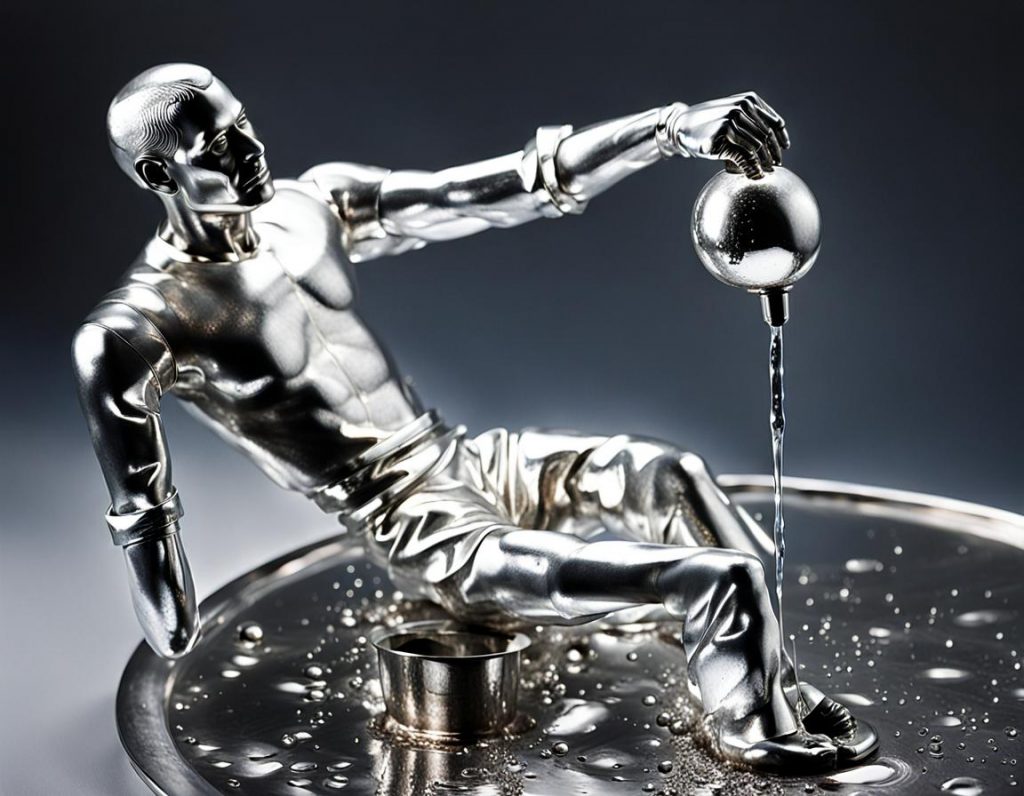
The third upward transmutation is that of iron into copper. To move into the fourth stage of the Mithraic Ladder is to move to the central stage: there are three stages both above and below. Befitting this central position is that copper represents the coming together of men and women in bonds of mutual love. This doesn’t mean that the transmutation into copper occurs without drama.

In a state of Nature, men fight for reasons, and the primary reason is women. The hardening to iron of any of the male expressions of life is usually in order to win fights for territory and status, the two prerequisites of attracting women. This is why the man of iron is typically what has been selected for in all low-sophistication cultures throughout time. But as cultures progress towards glorious civilisations, people of higher frequencies than iron start to appear.

In transmuting to copper, a man of iron begins to colourise. Lead, tin and iron are all a shade of grey. Copper, by contrast, has colour, reflecting the fact that it is a semi-precious metal, unlike lead, tin and iron. The reddish hues of copper symbolise the fire of the soul that is now beginning to rise.

This stage of transmutation is just as applicable to women as to men. It might not be as stereotypical for a female character to become a person of iron, in comparison to a male one, but it can still happen – and perhaps would make for a less cliched story. Women might not be as good as men when it comes to fistfighting, but they are just as capable of becoming hard-bitten. Thus, a woman is just as capable as a man of being put in a situation where she must transmute iron into copper.

Copper is a stage in the mental realm, reflecting the fact that intelligence – not of much use in transmuting lead into tin or tin into iron – is of great use in transmuting iron into copper. It’s primarily intelligence that causes a person to see the value in being something more than hard. (this is a foreshadowing of the future transmutation to mercury).

In the same way that the character of lead must let go of fear of death to become a character of tin, the character of iron must let go of fear of weakness to become a character of copper. Iron is the will to physically dominate at all costs. As such, its transmutation into copper begins when a character comes to realise that there are more important things than physical domination.

Once a fighter decides to become a lover instead, they begin the transmutation of iron into copper.

A character can become motivated to make such a change when they realise that other people don’t really respect people of iron. They might fear people of iron, but not respect them. The people of iron don’t get invited to the highest positions, or the best parties, or offered the best jobs, because they tend to scare others too much.

The person of copper is oriented primarily towards their family. At the level of iron or below, a person is primarily concerned with looking tough, cool or terrible in front of their friends or comrades. Such interests fade away when a person is tasked with raising and protecting a family.

Physically, the transmutation of iron to copper is encapsulated in the “Dad bod”. The entire concept of a dad bod reflects the observation that, for many men, once they have children and no longer feel the pressure to be tough and to fight over women, the incentive to maintain fitness and leanness is gone. A female character can also, of course, become fat once they advance past the imperative to attract a romantic partner.

It’s also reflected in general appearance. The character transmuting from iron to copper stops wearing black and starts wearing colours. They stop wearing skulls as adornments and start wearing love hearts. Their entire vibe switches from trying to intimidate to trying to win love.

Copper is, of course, better for making weapons than the other metals than aren’t iron. This is reflected in the fact that characters of copper are still highly effective at fighting, they’re just past the physical fighting prime that was achieved in the frequency of iron.

A character of copper is also signficantly more social than a character of iron. When the character of iron starts to realise that, through polishing their social qualities, they can obtain pleasures that cannot be obtained through violence, they start to transmute to copper. Because copper is a semi-precious metal, a character of copper can seem like a kind of nobility to characters of lower tiers. The ensuing admiration can be what drives such characters to rise to the level of copper.

Reflecting this increased sociability, a character of copper can play with children in a way that a character of iron cannot. In fact, the reaction of children can demonstrate that a transmutation from iron to copper has taken place. A character of iron might not care if they lose a game to a child, because they’re indifferent. A character of copper doesn’t care about the loss, because, unlike the character of iron, they care about the child and its socialisation.

Psychosexually, the transmutation from iron to copper is analagous to going from having sex to making love. The character of iron doesn’t feel the need to make love – they doesn’t care too much about how the other person feels. The character of copper makes love, reflecting their superior capacity for empathy in comparison to the lower three levels.

A typical psychosexual transformation at this stage might be a woman who learns to control men of iron through her sex appeal. Copper learns to dominate iron, not through hardness and violence as iron dominates tin and lead, but through subtler means. Copper is that in civilisation which tames the beast. This is why copper can also represent small-scale trading and business.

Spiritually, the colourisation characteristic of copper represents the first real flowering of divinity. The lower three metals are all dull, the higher four are all colourful. Copper is the first of the colourful, representing a character’s first inkling of some higher order of divinity in the world.

Copper can be realised just as easily through masculine as feminine energies. However, in transforming from iron to copper there tends to be less fiery energy and more watery energy. This quenching of rage is perhaps the essential emotional and spiritual transformation. A character must learn to sublimate anger into something higher in order to pass beyond the frequency of iron.

Perhaps the best-known transmutation of iron into copper is that of Samwise Gamgee in Lord of the Rings. Indeed, completing a great journey and winning your dream girl is an archetypal hero’s journey. Spiritual purification need not end there, however: a minority of characters go further, to the realm of silver.

*

This is an excerpt from Viktor Hellman’s The Alchemy of Character Development, the sixth book in VJM Publishing’s Writing With Psychology series. This book will show you how to use alchemy to create deep, realistic and engaging characters for your creative fiction.

*

If you enjoyed reading this piece, buy a compilation of our best pieces from previous years!

Best VJMP Essays and Articles of 2023
Best VJMP Essays and Articles of 2022
Best VJMP Essays and Articles of 2021
Best VJMP Essays and Articles of 2020
Best VJMP Essays and Articles of 2019
Best VJMP Essays and Articles of 2018
Best VJMP Essays and Articles of 2017

*

If you would like to support our work in other ways, make a donation to our Paypal! Even better, buy any one of our books!

The Cruelty Is The Point

Many have been surprised by the decisions made by the Sixth National Government. Taking food away from hungry children and giving the money to landlords seems pointlessly cruel. So does ticking up an eleven-figure debt that our grandchildren will labour to settle, just for tax cuts. Perhaps the most egregious is maintaining cannabis prohibition in the face of the mountain of international evidence that it doesn’t work.

What motivates these decisions?

A cursory examination of New Zealand political history shows that previous National governments have also been motivated by cruelty. The Fifth National Government slashed the mental health system and continued to withhold medicinal cannabis. The Fourth National Government slashed the welfare system and destroyed unions. All of these measures were blamed on Labour at the time, but in reality were motivated by simple cruelty.

Cruelty is, in fact, one of the major human motivations. The rush of sadism can be one of the most powerful of all. Ted Bundy once said “When you feel the last bit of breath leaving their body, you’re looking into their eyes. A person in that situation is God!” Similar feelings of grandeur flow through the National MP who cuts food programs for children.

It can be seen from the way that bullies abuse each other at school, psychopathic bosses abuse workers in the office and spouses abuse each other behind closed doors, cruelty and sadism are powerful motivators for action in many different times and places. People wired up this way readily find an outlet in National and ACT party politics.

Once the central motivating role of cruelty in National party psychology is realised, it’s much easier to understand National party policy.

This was seen most evidently during the cannabis referendum. National party supporters, who generally opposed law reform in this area, were not moved by arguments around the immense alleviation of human suffering that easy access to cannabis would allow. To the contrary – National voters, who seldom use cannabis themselves (preferring booze, painkillers and television), understood that cannabis prohibition usually destroyed Other People.

This also explains why National party voters were seldom moved by appeals to the fact that Maoris suffer more heavily than other races from cannabis prohibition. Given that National voters hate Maori people and want them to suffer, why would they then care about Maoris getting locked up because of cannabis prohibition? To the National mindset, that’s more of an argument to support prohibition.

John Ehrlichmann, Presidential Advisor under Richard Nixon, once said: “We knew we couldn’t make it illegal to be either against the war or black, but by getting the public to associate the hippies with marijuana and blacks with heroin, and then criminalizing both heavily, we could disrupt those communities. We could arrest their leaders, raid their homes, break up their meetings, and vilify them night after night on the evening news. Did we know we were lying about the drugs? Of course we did.”

Same deal in New Zealand. Of course the National party and their lackeys like Mike Hosking and Bob McCoskrie know the science. The science has been established for decades: cannabis is medicinal, and any amount of misuse is less harmful than misuse of alcohol. But by lying about it, the National party can target their enemies. Not hippies and blacks, but hippies and Maoris.

National party policy cannot be understood unless it is appreciated that the intent of such policy is to destroy people the National party hates. This is primarily the poor. National hates Maori people more because they are poor than because they are Maori – proof for this assertion comes from the fact that National voters don’t seem to hate Asians.

The central motivating role of cruelty in National party policy can be seen in this year’s benefit cuts. The indexing of benefit increases to inflation instead of wages has cost the average beneficiary $6 per week, which saves the Government a pittance in comparison to what they’re paying out in landlord tax cuts. But it’s not the saving money that motivates such cuts – it’s tightening the stranglehold on beneficiaries.

Nietzsche wrote, in Thus Spake Zarathustra, to “distrust all in whom the impulse to punish is powerful”. There was excellent reason for this. The impulse to punish is fuelled by resentment, which is the basis of slave morality. This impulse is referred to as a “justice boner” in modern Internet parlance, reflecting the fact that its ultimately motivated by pre-human, even reptilian, brain structure.

Unfortunately, the stupidity of Labour and the Greens means that the cruelty of National and ACT is something the rest of us must endure for as long as the two-party democratic system exists.

As long as democracy exists, it will appeal primarily to the lowest common denominator and thereby enable the most bestial and sadistic impulses of humanity. This is why the National and ACT parties have produced, and continue to produce, a parade of sadistic beasts: Shipley, Richardson, Prebble, Key, Brownlee, Bennett, Collins, van Velden et al., ad infinitum.

*

For more of VJM’s ideas, see his work on other platforms!
For even more of VJM’s ideas, buy one of his books!

*

If you enjoyed reading this piece, buy a compilation of our best pieces from previous years!

Best VJMP Essays and Articles of 2023
Best VJMP Essays and Articles of 2022
Best VJMP Essays and Articles of 2021
Best VJMP Essays and Articles of 2020
Best VJMP Essays and Articles of 2019
Best VJMP Essays and Articles of 2018
Best VJMP Essays and Articles of 2017

*

If you would like to support our work in other ways, make a donation to our Paypal! Even better, buy any one of our books!
Growing Roots Within

All attention you spend on the interior journey is valuable, and encourages the growth of roots within. It is all too easy for this to simply become talk. The fact is, this awakening business isn’t some step by step program for self improvement or self development. This is about pointing you back to what is real, what has always been real, and then dispensing with actors such as myself. When we speak or write, there is a brief role to play in life, and then it is done. This isn’t the vector of wisdom. The vital wisdom of the response, at best, is elicited in you. Engage your own interior journey: that is the encouragement.

Now, I’m not saying leave your job, your partner, your family – this is not about the radicalisation of your outer life. This is simply about your direct discovery of what it means to really be you.

Imagine wanting to gravitate towards blame, an accident, an argument, someone else getting in trouble. To want a problem, to feel the desire for there to be drama and trouble. Have you observed this others? Yourself? It is quite prevalent, so chances are you have crossed paths with this phenomenon many times. This represents a kind of dysfunctional energetic ecosystem, a pathological twist in the psyche. It is both an inner and outer ill. People become entrained by society to actually desire and seek pain and conflict, and the false self is primed to take this programming onboard as a matter of course. As a common example, have you ever said something to someone and they ‘took it the wrong way’, almost as if on purpose?

If you examine this, it could of course be the case that you perhaps said something inflammatory, but that is by the by. What really matters is that this person had the option to minimise their upset, but they chose to become aggravated. Maybe you baited the hook, but they took it.

Why would they want to be upset, to adopt the role of the incensed victim? Psychology refers to the value perceived in this type of martyrdom as ‘secondary gain’ – which is really just a way of pointing out that when someone acts out personal drama, they do so on the basis they are getting something out of it. There is a neurochemical satiety associated with being incensed, offended, or cast into the role of the victim. This is rooted within the brain and body, and is certainly capitalised upon by the separate sense of self. The notion that secondary gain is of personal value is only viable because someone has shallow roots within – if any at all. It is all too easy to be swept up in the drama if you are not grounded.

The drama on offer, as miserable as it is, outcompetes any value in peace for one without roots within. For the one so divided, it feels fleetingly better to be in conflict, butting heads and playing out the personal drama of being a separate ‘someone’ in competition with everyone else. This can only be possible when someone is so lost,  so deluded and indoctrinated by culture, that they aren’t even aware that real peace could exist. If they were, they would never abandon peace to play out these minor dramas.

This process may affect someone in scarcely noticeable ways, and yet even a small degree of seperation entertained in this way is sufficient to create vast rifts between the you and the perception of your true nature – there cannot be any actual separation, but I don’t want to go into that here. The point is that you do not have to be in the throes of being a total drama queen in order to suffer the consequences of perceived separation. Even just permitting yourself to be slightly irritated by the way someone else in your household puts something away in the fridge can be enough to hurl you out of the gates of the kingdom and lashed onto the spokes of the wheel of becoming.

There are those inclined to think this is all very abstract, out of reach, or that such minor attention to the relationship between one’s inner and outer environments is inconsequential.

It really isn’t. All of this is not only very basic, but it is also of direct and immediate consequence. You wouldn’t know unless you went inside to directly investigate the nature of this experience. It isn’t theoretical,  it is phenomenological – only *you* can show up to observe this. The greatest teacher in history could only at best meet you halfway in this. You are asked to walk the final leg of the journey alone. Because that either appears intimidating or isolating, and with no clear material advantage promised, most people won’t ever bother over the course of a lifetime. In the absence of a teacher, you nevertheless have ordinary people around you who have taken up the torch and encourage you to try doing the same – not because it will make you noble, good, or morally correct, but because you haven’t yet gone outside your limited perspective. If you had, your life would unfold completely differently, even if no one else should ever notice.

Growing roots within is very simple. The more attention we give to our true nature, our deepest inner silence, the more this presence naturally takes root within us. A plant doesn’t need to be directed and micromanaged about how to take nutrients and develop, nor does your true nature. You simply give it the attention and nourishment it asks for, and just allow the entire miraculous process to unfold from within.

The remarkable thing about this is that what is undesirable in you is crowded out by the internal growth taking place. Again, not to make you holy, but to make you whole. All of this inner dysfunction is fuelled by you seeing yourself as separate, not whole. All of that is illusory, but there is no way someone can tell you that and have it blossom into full effect. It is the case that you must come to a meeting with this in your inner space so that enough soil is there for the seed that is always already there to take root.

You may be wondering if all this is simply about the time you spend in meditation. I’d like to clear this up, because meditation as an exercise can easily become misconstrued. Meditation is one avenue by which you may be involved in listening deeply to the music of your own inner world. Like anything,  a practice of meditation can easily become an obstacle rather than a help. If you think you are being a good person, a hygienic entity, a spiritually well-behaved person, then you are likely to be entering meditation with an erroneous view to improvement. The notion we need fixing or betterment can be obstructive to our relationship with inner truth. The key ingredient here is listening deeply, intently, without imposing your mental interpretations upon that which you perceive. You don’t need to specifically set time aside in sitting meditation in order to listen deeply. You can do this out walking, or at work as you perform tasks.

No attention given to your inner world is ever lost or wasted. I say this, but you will not know this for yourself until you taste it directly. These roots within produce fruits of stability, connection, resilience, peace and joy that if you only tasted them once, you would be certain that never again would you trade them for the madness of diversion the conditioned world offers. You must be willing to place what you have thought, believed, concluded upon the altar of sacrifice. You must be willing to withdraw every tiny habit of revenge, resentment and personal superiority. In one shining moment, you might just see that this was all the product of a conditioned personal history, a history that doesn’t even exist except as an etheric record of what has been chosen prior. You are not bound to repeat inner or outer history. This is remarkable good news for freedom. The tragedy is, very few people are even capable of conceiving that such freedom, such a deeply beneficial inner expansion is even possible.

This is the meaning behind the myth of the Bodhisattva. There are those who have for all intents and purposes left this world behind, yet they remain among us. They return again and again into the darkness, not because they are still stuck upon the wheel of becoming, nor because they have to somehow earn nobility through some moral crusade, but because it is actually their deepest joy to extend this help to others. They completely understand that their own well-being is inseparable from the well-being of all.

*

Simon P Murphy is a Nelson-based esotericist and philosopher, and author of His Master’s Wretched Organ, an astonishing and surreal collection of weird fiction stories.

*

If you enjoyed reading this piece, buy a compilation of our best pieces from previous years!

Best VJMP Essays and Articles of 2023
Best VJMP Essays and Articles of 2022
Best VJMP Essays and Articles of 2021
Best VJMP Essays and Articles of 2020
Best VJMP Essays and Articles of 2019
Best VJMP Essays and Articles of 2018
Best VJMP Essays and Articles of 2017

*

If you would like to support our work in other ways, make a donation to our Paypal! Even better, buy any one of our books!